Written by: Luis Teran, Co-founder, CEO, TenantEvaluation
Key Takeaways for Florida Associations
- Criminal background screening acts as a governance and risk-management tool for Florida HOAs and condo associations when used within a clear legal framework.
- A defensible screening process relies on governing-document authority, FCRA-compliant authorization, permissible-purpose verification, individualized assessment, and accurate adverse-action notices.
- Florida associations in 2026 face higher identity fraud risks, digital onboarding gaps, and closer regulatory scrutiny of blanket criminal history policies.
- Common compliance failures include missing authorizations, no individualized assessments, incomplete adverse-action notices, and lease and payment records that are not connected.
- Associations can streamline compliant screening workflows with TenantEvaluation’s end-to-end platform that integrates authorization, biometric verification, lease tracking, and board dashboards. Explore the platform.
The Screening Lifecycle for Florida HOAs and Condos
A legally defensible screening process follows a defined sequence of steps. Each stage carries specific obligations, and a failure at any point can expose the association to regulatory or civil liability.
- Governing-document authority: The association’s declaration, bylaws, or rules must expressly authorize criminal background screening before any check is ordered.
- Applicant authorization: The association must obtain a signed, standalone written authorization from the applicant, compliant with FCRA Section 604, before requesting a consumer report.
- Permissible-purpose verification: The screening provider must confirm a permissible purpose under the Fair Credit Reporting Act (FCRA) before releasing any consumer report data.
- Data review: The association or its CAM reviews the returned criminal history report against pre-established, written criteria.
- Individualized assessment: Before any adverse decision based on criminal history, the association conducts an individualized assessment that considers the nature of the offense, time elapsed, and evidence of rehabilitation, consistent with HUD’s 2016 guidance on the use of criminal records under the Fair Housing Act.
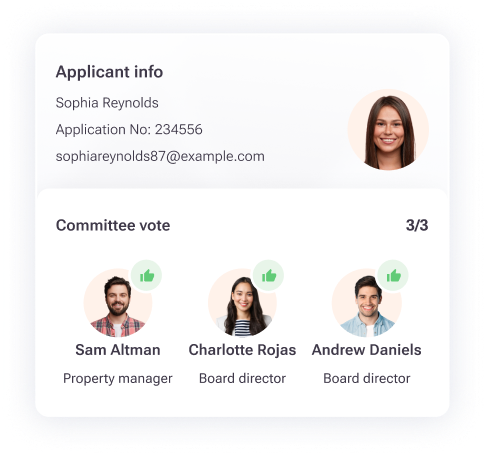
- Board decision: The board votes on the application based on the reviewed report and the documented individualized assessment findings.
- Adverse-action notice: If the association denies the application in whole or in part based on information in a consumer report, it sends a pre-adverse and final adverse-action notice to the applicant, including the name of the reporting agency and the applicant’s right to dispute.
- Record retention: The association retains all authorization forms, reports, assessment documentation, and adverse-action notices in an auditable format for the period required by applicable law.
Florida’s 2026 Screening and Compliance Environment
This eight-step framework operates within a regulatory environment that continues to evolve. Florida community associations operate under Florida Statute Chapter 718 for condominiums and Florida Statute Chapter 720 for homeowners associations. These statutes establish the framework within which associations may adopt and enforce screening criteria. As of 2026, the operational environment for Florida CAMs and boards has shifted in three meaningful ways.
First, identity fraud incidents targeting residential communities have increased, with impersonation attempts and synthetic identities appearing in application pipelines that rely solely on document uploads. This vulnerability is compounded by the accelerated shift to digital onboarding, which has created a gap between associations still using paper-based processes and the compliance infrastructure those processes require. At the same time, regulatory scrutiny of blanket criminal history policies, which deny applicants without individualized review, has intensified at both the federal and state levels, making documented, case-by-case assessment a practical necessity rather than a best practice. Together, these shifts mean associations face new fraud risks and stricter enforcement of how they respond to criminal history findings.
Day-to-Day Screening Realities for CAMs and Boards
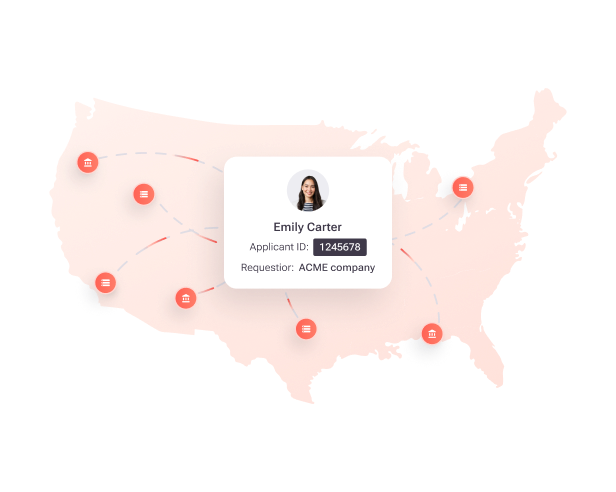
For a CAM managing multiple communities, the screening process generates significant administrative volume. Each application requires collecting a signed authorization, ordering the background check through a permissible-purpose channel, distributing the report to board members, facilitating a vote, and issuing the appropriate approval or adverse-action correspondence. When this workflow runs through email chains, PDF attachments, and spreadsheets, the documentation burden compounds quickly.
Inconsistent processes across communities within the same management portfolio create additional liability. If one community applies its criminal history criteria differently than another, or if a board member makes a decision before the individualized assessment is documented, the association’s exposure increases substantially. The absence of a centralized audit trail means that, in a dispute, the association may be unable to demonstrate that its process was applied uniformly and in compliance with FCRA and FHA requirements. Understanding the specific requirements of each regulatory framework clarifies why these operational gaps create legal exposure.
Compliance Mechanics for Criminal Background Screening
Three regulatory frameworks govern criminal background screening in Florida community associations, and each imposes specific procedural requirements.
The FCRA requires that consumer reports be obtained only for a permissible purpose listed in section 1681b. Additional steps such as a standalone disclosure and written authorization apply only for employment purposes. If the association takes adverse action based on the report, it must provide the notices required under the FCRA.
The Fair Housing Act, as interpreted by HUD, prohibits policies that have a disparate impact on protected classes. Because criminal history correlates with race and national origin at the population level, blanket exclusion policies that automatically deny any applicant with any criminal record carry significant FHA risk. An individualized assessment that considers the nature and severity of the offense, the time elapsed since the offense or completion of sentence, and evidence of rehabilitation or changed circumstances is the mechanism HUD identifies for mitigating that risk.
Florida Statutes 718 and 720 provide the framework for community associations, but these state statutes do not operate in isolation. Associations must ensure their screening criteria are documented in their governing documents, applied consistently, and administered through a process that satisfies both the state-level authority granted by Chapters 718 and 720 and the federal compliance obligations imposed by FCRA and FHA.
Common Screening and Documentation Failure Points
The most frequently observed compliance failures in HOA and condo screening processes fall into a consistent set of categories.
- Missing or defective authorizations: Using a combined authorization embedded in a broader application form rather than a standalone FCRA-compliant disclosure document.
- No documented individualized assessment: Denying an application based on criminal history without a written record showing that the nature, timing, and context of the offense were considered.
- Absent or incomplete adverse-action notices: Failing to send the pre-adverse-action notice with a copy of the report, or omitting the applicant’s dispute rights from the final notice.
- No audit trail: Conducting board votes by email or verbal discussion with no timestamped record of who reviewed what information and when.
- Disconnected lease and payment records: Approving an applicant but failing to connect the approval to a current, executed lease document and confirmed payment of required fees, which creates occupancy and financial record gaps.
- Inconsistent criteria application: Applying criminal history standards differently across applicants or communities without documented justification.
Best Practices for Compliant, Low-Risk Screening
Associations that have reduced their compliance exposure share several operational characteristics. Standardized, written screening criteria, adopted through the governing document amendment process and applied uniformly, form the foundation. Biometric identity verification, such as the IDVerify layer embedded in TenantEvaluation’s workflow, confirms that the person submitting the application matches the identity on the government-issued ID before the background check is ordered and closes the impersonation gap that document-only review leaves open.

Centralized lease tracking connects the approval decision to an executed lease document and real-time occupancy status, which eliminates the disconnect between screening records and active tenancy. Automated payment collection within the same onboarding workflow, rather than through a separate system, ensures that fee and deposit records are tied to the application file and visible to both the CAM and the board. When all of these elements operate inside a single platform, the audit trail remains continuous and complete from application intake through record retention.
TenantEvaluation is an end-to-end, FCRA-compliant platform purpose-built for Florida community associations, alongside competitors such as Coordy, Screening Link, and Applycheck. The platform embeds QuickApprove board dashboards, the biometric verification described above, Lease Tracking, and TEpayments by Zinc inside a single connected workflow. See the workflow in action.

How to Evaluate Any Screening Approach
Five dimensions provide a structured framework when you benchmark a screening process or platform against compliance and operational standards.
- Compliance readiness: Confirm that the process generates a standalone FCRA-compliant authorization, produces a documented individualized assessment, and automates pre-adverse and final adverse-action notices with the required attachments.
- Operational efficiency: Check whether the workflow removes manual handoffs between intake, background check ordering, board review, and decision communication, and whether it reduces processing time from days to hours.
- Transparency: Ensure that CAMs and board members have real-time visibility into application status, report results, and voting outcomes inside a single interface.
- Scalability: Confirm that the process can handle high-volume application seasons across multiple communities without adding administrative headcount.
- Auditability: Verify that the platform retains timestamped records of every action, including authorization, report delivery, board vote, and adverse-action notice, in a searchable, audit-ready format.
A process that scores well across all five dimensions can withstand regulatory scrutiny, support a board decision in a dispute, and scale with portfolio growth. Manual, paper-based, or fragmented digital processes typically fail on auditability and scalability before they fail on any other dimension.
Frequently Asked Questions
Denials Based on Felony Convictions
A Florida HOA or condo association may deny an applicant based on criminal history if its governing documents expressly authorize criminal background screening and the denial follows a documented, individualized assessment process. A blanket policy that automatically rejects any applicant with any felony conviction, without considering the nature of the offense, time elapsed, or evidence of rehabilitation, carries significant Fair Housing Act risk because such policies can have a disparate impact on protected classes. The association must be able to show that its criteria are narrowly tailored to a legitimate safety interest and that each denial reflects a case-by-case review, not an automatic exclusion.
Relevant Convictions for Screening Decisions
No universal statutory list specifies which convictions a Florida community association may or may not consider. Associations typically focus on convictions that present a direct, documented risk to community safety, such as violent offenses, sexual offenses, or offenses involving property within a residential setting. The more recent the conviction and the more directly it relates to the safety of other residents, the more defensible its consideration in a screening decision.
Arrests without convictions, expunged records, and offenses for which the applicant has completed their sentence and demonstrated rehabilitation present higher FHA risk if used as automatic disqualifiers. Legal counsel familiar with both Florida association law and federal fair housing requirements should participate in drafting and reviewing screening criteria.
Screening Prospective Applicants vs. Existing Residents
Criminal background screening in Florida HOAs and condos typically applies at the point of application, to prospective buyers, renters, or occupants seeking approval to reside in the community. Retroactive screening of existing residents raises distinct legal questions, including whether the association’s governing documents authorize such screening, whether the resident consented to ongoing background checks as a condition of residency, and whether applying new criteria to existing residents changes the terms of their occupancy. Associations considering any form of ongoing or periodic screening of current residents should obtain legal guidance before implementing such a policy.
Definition and Use of Individualized Assessment
An individualized assessment is a documented review of a specific applicant’s criminal history that goes beyond the presence or absence of a conviction. It considers the nature and severity of the offense, how much time has passed since the offense or the completion of the sentence, the age of the applicant at the time of the offense, and any evidence of rehabilitation or changed circumstances.
HUD’s guidance under the Fair Housing Act identifies individualized assessment as the mechanism for avoiding disparate-impact liability when using criminal records in housing decisions. In practice, the association creates a written record for each denial based on criminal history that shows this analysis was performed, not simply that a conviction appeared on the report.
FCRA Compliance vs. Fair Housing Act Compliance
The FCRA governs the process by which consumer reports, including criminal background checks, are obtained and used. It requires proper authorization, permissible purpose, and specific adverse-action notice procedures. The Fair Housing Act governs the substance of the criteria applied in housing decisions and prohibits policies that discriminate against protected classes, including facially neutral policies that produce a disparate impact.
An association can be fully FCRA-compliant in its process, with proper authorization and correct adverse-action notices, and still face FHA liability if its substantive screening criteria produce discriminatory outcomes. Both frameworks must be satisfied at the same time, which is why the individualized assessment requirement is procedurally important. It connects an FCRA-compliant process to FHA-defensible criteria.
Next Steps for Florida CAMs and Boards
Florida CAMs and boards managing criminal background screening in 2026 face a compliance environment that rewards documentation, consistency, and end-to-end workflow integration. Benchmarking your current process against the five-dimension evaluation framework above, which covers compliance readiness, operational efficiency, transparency, scalability, and auditability, will highlight where manual or fragmented processes are creating exposure.
The platform described above addresses each dimension of the evaluation framework through its integrated workflow, from application intake through record retention. See how this approach fits your portfolio.
