Written by: Luis Teran, Co-founder, CEO, TenantEvaluation | Last updated: July 5, 2026
Key Takeaways for Florida HOA and Condo Screening
- Florida HOAs and condos may require criminal background checks only when screening authority appears explicitly in governing documents and when processes comply with the FCRA and FHA.
- The FCRA requires written consent, permissible purpose certification, and clear pre-adverse and adverse action notices for every consumer report used in a housing decision.
- FHA compliance requires individualized assessment of criminal records instead of blanket bans, which can create disparate impact on protected classes.
- Manual processes such as spreadsheets and email chains rarely create reliable audit trails for FCRA and FHA scrutiny.
- TenantEvaluation provides a purpose-built platform that automates FCRA workflows, biometric identity verification, and lease tracking for Florida community associations. Explore a live demo of TenantEvaluation to see these capabilities in action.
Why Criminal Background Screening Matters for Florida HOAs and Condos
Criminal background screening supports both risk management and governance accountability for community associations. Boards have a fiduciary duty to protect community safety, and screening prospective residents is one documented way to meet that duty. Screening decisions also create federal civil rights exposure, so informal or ad hoc processes are not sufficient.
Recent Florida legislative activity has not expanded HOA screening authority. HB 1203 (2024), HB 913 (2025), and HB 657 (2026) focus on HOA governance, financial transparency, and board conduct but do not expand homeowners association authority to require criminal background checks for prospective buyers or tenants. Screening authority still comes from each association’s governing documents, including declarations, bylaws, and rules, and remains subject to federal FCRA and FHA requirements.
Core Screening Terminology and Legal Framework
FCRA (Fair Credit Reporting Act): The federal statute that governs how organizations collect, use, and disclose consumer report information, including criminal background data obtained through a consumer reporting agency (CRA).
FHA (Fair Housing Act): The federal civil rights law that prohibits housing discrimination based on race, color, national origin, religion, sex, familial status, and disability. Screening policies that create a disparate impact on a protected class must have a legally sufficient justification.
Adverse Action: Any denial, conditional approval, co-signer requirement, or increased deposit triggered in whole or in part by a consumer report. Each adverse action triggers mandatory FCRA notice obligations.
Individualized Assessment: A case-by-case review of an applicant’s criminal history that considers the nature of the offense, time elapsed, evidence of rehabilitation, and connection to community safety. HUD guidance treats this approach as the standard and rejects blanket bans that violate the FHA.
Screening authority must appear explicitly in the association’s governing documents. Boards that screen without that authority, or that apply screening inconsistently, face both contract risk and civil rights exposure.
2026 Industry Landscape and Regulatory Pressures
Identity fraud now represents a growing operational risk for Florida community associations. Traditional document-based screening that relies on uploaded IDs and database queries cannot reliably detect synthetic identities or impersonation attempts. Biometric verification is becoming the standard response to this risk.
On the regulatory side, HUD issued guidance in April 2024 on how the Fair Housing Act applies to screening applicants for rental housing, highlighting concerns about transparency, inaccurate or irrelevant information, and discriminatory impact from AI and algorithmic tenant screening tools. The November 2024 settlement in Louis v. Saferent Solutions, LLC, a case challenging an algorithm-based tenant screening scoring system for alleged discrimination against Black and Latinx rental applicants, signals active federal enforcement attention on screening methodology. Florida associations that use third-party platforms must confirm that those platforms operate transparently and avoid discriminatory algorithmic outputs.
How Screening Fits Daily Operations in Your Association
A repeatable screening workflow needs clear roles, documented steps, and a defined handoff between data collection and board decision-making. Each step should build on the previous one to create a defensible audit trail. The following checklist reflects operational best practice for Florida community associations.
First, confirm that screening authority exists in the governing documents before you introduce any application requirement. Without this foundation, later steps lack legal support. After confirming authority, publish written screening criteria in advance, including lookback periods and disqualifying offense categories, and apply those criteria uniformly. These written standards become the objective benchmark for every application.
Next, collect written FCRA consent and disclosure from every applicant before you order any consumer report. This consent makes the report legally permissible. Route completed screening reports to a designated reviewer, such as a CAM or board designee, instead of sending them directly to individual board members outside a structured process. Document every decision and identify the specific report data that influenced it.
Before finalizing any denial, issue a pre-adverse action notice, provide the report and the FTC rights summary, and allow a dispute period. If the denial stands after that period, issue a final adverse action notice. Retain all applications, reports, notices, and decisions in an audit-ready format so you can respond quickly to any dispute or regulatory inquiry.
Compliance, Risk, and Governance Requirements for Screening
Written authorization from the applicant is generally required before a Florida community association runs a consumer report, including criminal background checks. The disclosure must clearly state that credit, criminal, eviction, and background reports will be obtained for the housing decision.
On the FHA side, HUD’s 2016 Office of General Counsel Guidance states that blanket bans on applicants with criminal records violate the Fair Housing Act because they have an unjustified discriminatory effect on Black prospective tenants. Individualized assessment is the required compliance standard, not an optional enhancement.
The following decision framework table summarizes the main requirements.
| Factor | Recommended Approach | Risk if Ignored | TenantEvaluation Capability |
|---|---|---|---|
| FCRA Written Consent | Obtain written authorization before ordering any consumer report | Statutory damages (see above) plus attorney fees | Consent and disclosure collected digitally within the application workflow |
| Adverse Action Notice | Issue pre-adverse action notice with report copy and FTC rights summary, then allow at least five business days before final denial | FCRA liability and applicant right to sue | Automated adverse action workflows built into the platform |
| Individualized Assessment | Evaluate offense type, time elapsed, and rehabilitation evidence, and avoid blanket bans | FHA disparate impact liability and potential HUD enforcement action | Structured review workflow with documented decision fields and audit trail |
| Recordkeeping | Retain applications, reports, notices, and decisions in a searchable, audit-ready format | Inability to defend decisions during disputes or litigation | Built-in audit trails and centralized lease and document records via Lease Tracking |
Common Operational Challenges for Florida Associations
Most Florida community associations face a familiar set of operational problems. These include inconsistent application of screening criteria, manual bottlenecks in document collection and report ordering, unclear responsibility for adverse action notices, and a lack of centralized records for screening decisions. These issues compound over time and increase risk.
A board that applies different lookback periods to different applicants, or that issues verbal denials without written adverse action notices, adds liability with every application cycle. Spreadsheets and email chains cannot create an audit trail that withstands regulatory scrutiny. When a denied applicant files a complaint, the association must produce consent records, the report, the notices, and the decision rationale. Manual systems rarely support that level of documentation.
Best Practices and Emerging Screening Standards
Leading Florida community associations are converging on three operational standards. First, boards adopt written screening policies that specify lookback periods and disqualifying offense categories and then include those policies in the application package. Large residential operators often use seven-year lookback periods for felony convictions.
Second, associations document individualized assessment procedures and apply them consistently. A designated reviewer completes the assessment before any adverse action is issued. Third, associations add identity verification to the workflow before ordering reports, confirming that the applicant’s identity is genuine before pulling a consumer report.
Evaluation Criteria for Screening Platforms
Boards and managers should evaluate screening platforms against specific, concrete criteria that reflect Florida association needs.
- FCRA compliance architecture: Confirm that the platform automates consent collection, adverse action workflows, and rights notice delivery, instead of leaving these steps to manual follow-up.
- Data sourcing: Verify whether the platform resells credit bureau data directly or relies on third-party aggregators with less reliable data pipelines.
- Identity verification: Check whether the platform includes biometric verification to confirm applicant identity before screening authorization.
- Audit trail: Ensure that every application, decision, and notice generates a timestamped, searchable record.
- Board integration: Look for a board-facing review and voting workflow rather than a system that requires manual report distribution.
- Florida specificity: Confirm that the platform is configured for Florida governing document structures instead of functioning as a generic rental screening tool.
- Scalability: Assess whether the platform can handle high-volume application seasons without additional manual headcount.
TenantEvaluation: Florida-Focused Screening and Compliance Platform
TenantEvaluation is built specifically for community associations and management companies, with FCRA compliance as the foundation rather than an add-on. Founded in 2007 and serving more than 5,000 communities with about 100,000 applications processed annually, TenantEvaluation is designed exclusively for Florida HOAs and condos instead of adapted from generic rental screening tools.
Direct Credit Bureau Reseller: TenantEvaluation is a legitimate reseller of TransUnion and Equifax data, accessed under strict bureau rules with regular compliance reviews and audits. The platform avoids gray-market and offshore data sources. Community associations reduce the liability that often comes with third-party data aggregators.
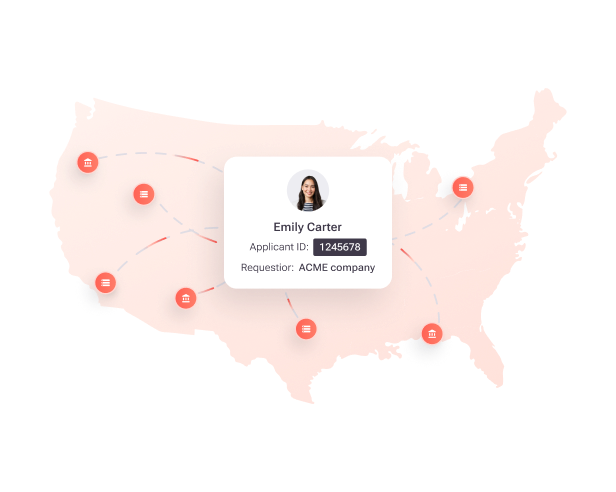
SafeCheck+ Background Checks: TenantEvaluation’s SafeCheck+ delivers nationwide and global criminal background checks, including criminal records, offenses registry, and FBI Most Wanted, within a fully FCRA-compliant workflow. The workflow includes automated consent collection, permissible purpose controls, and built-in adverse action notice generation.
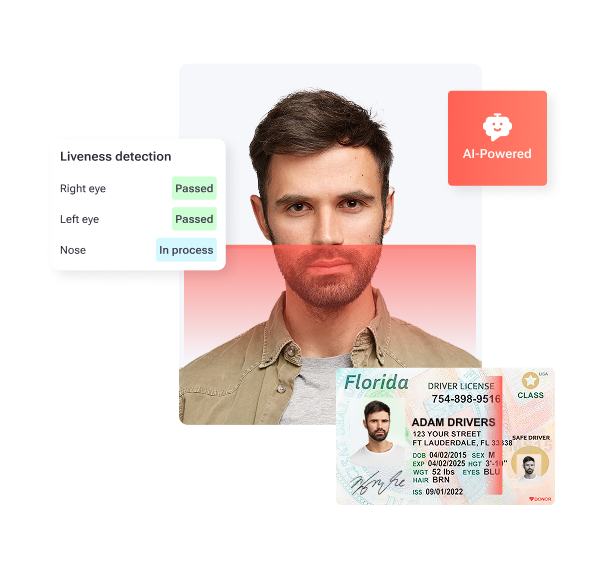
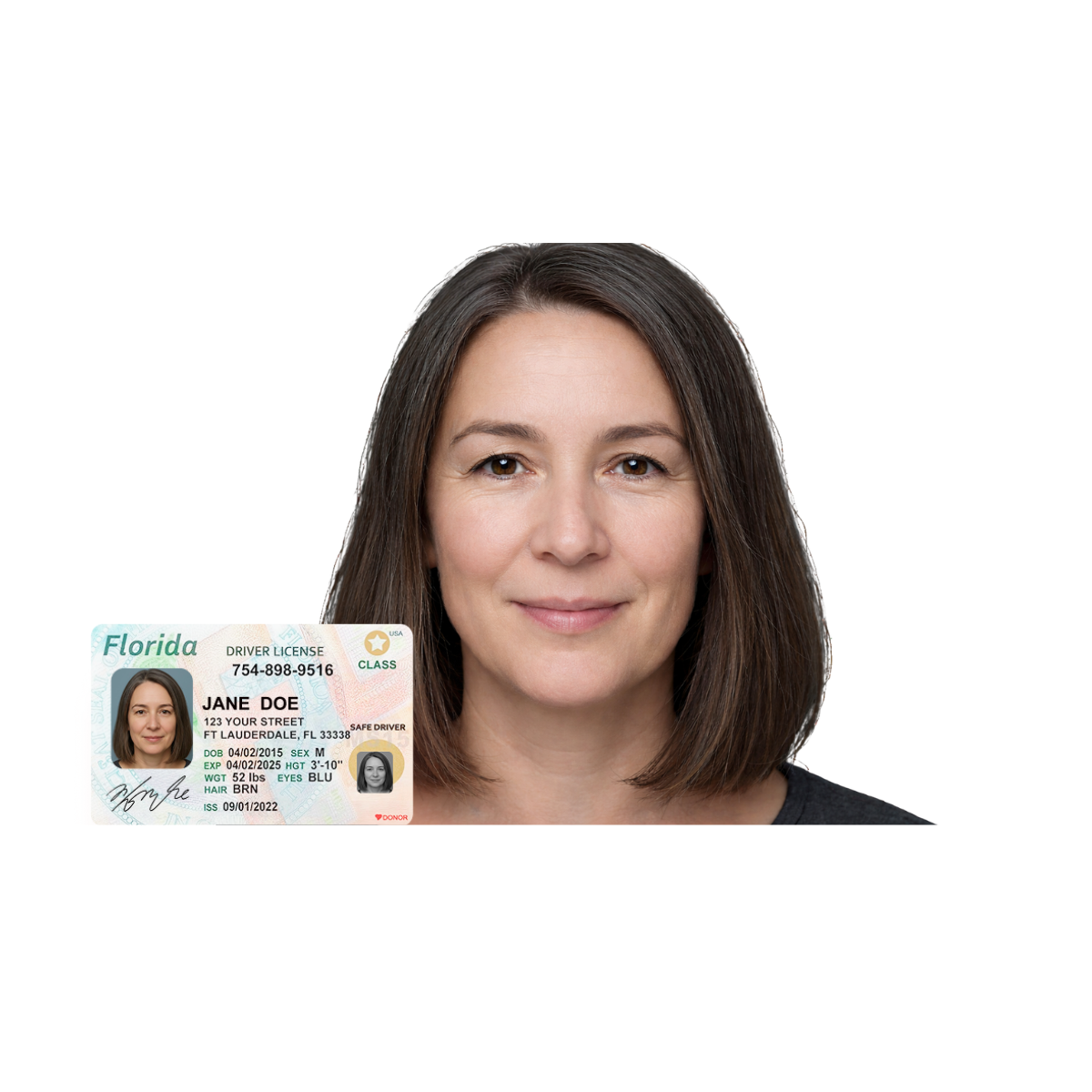
IDVerify: IDVerify adds biometric identity verification directly into the TenantEvaluation screening workflow. It introduces automated KYC verification through government ID validation, AI-powered liveness detection, and biometric facial matching. This process confirms applicant identity before screening authorization and strengthens FCRA-aligned workflows and audit defensibility.

QuickApprove: QuickApprove is TenantEvaluation’s accelerated approval workflow that helps CAMs, boards, and property management teams move applications from submission to decision faster. It supports real-time application tracking, automated communication, customized approval letters, a personalized welcome package, and fewer manual follow-ups while preserving control, compliance, and visibility.

55+ Communities Verification: 55+ Communities Verification helps Florida condos and HOAs standardize how age-restricted requirements are handled across applications. It reduces manual work, improves documentation consistency, and strengthens operational efficiency and control.
Lease Tracking: Lease Tracking provides centralized, real-time lease visibility and lifecycle control. It connects resident onboarding, unit data, approvals, and lease documentation into one streamlined, audit-ready workflow that replaces spreadsheets and scattered email chains. Associations gain real-time lease status views, including active, pending, expired, or missing, and automated lease document collection during onboarding.
TenantEvaluation has generated $150M for communities and holds a 4.8/5 Google rating. Partners include FirstService Residential, Campbell Property Management, Castle Group, and Associa.
Frequently Asked Questions
Can an HOA require a background check in Florida?
A Florida HOA or condo association can require criminal background checks for prospective residents when that authority appears explicitly in the association’s governing documents, typically the declaration, bylaws, or rules and regulations. Screening authority is not automatic and must be established in writing before the association imposes any screening requirement on applicants.
Once that authority exists, the association must apply its screening criteria uniformly across all applicants and comply with FCRA requirements for consent, disclosure, and adverse action notices. Inconsistent application of screening criteria, such as screening some applicants but not others, creates Fair Housing Act exposure even when governing documents authorize screening.
How far back does an HOA background check go?
Florida law does not set a mandatory lookback period for HOA criminal background checks. Each association defines the lookback period in its written screening policy. Industry practice among large residential operators often ranges from seven to ten years for felony convictions.
HUD guidance cautions against lifetime bans and broad exclusions for offenses that do not relate to community safety. Associations should adopt a defined, written lookback period and apply it consistently to every applicant. They should also pair the lookback period with an individualized assessment procedure that considers the nature of the offense, time elapsed, and evidence of rehabilitation. A policy that lacks a defined lookback period, or that varies by applicant, creates FHA disparate impact exposure and FCRA documentation risk.
What disqualifies an applicant from passing a background check in Florida?
Florida law does not provide a single list of disqualifying offenses for HOA or condo applicants. Each association defines its own disqualifying criteria through its written screening policy, subject to FHA limits. HUD guidance prohibits blanket bans on all applicants with any criminal record because such bans create disparate impact on protected classes.
Associations should identify specific offense categories that clearly relate to community safety, such as violent felonies, sexual offenses, or drug manufacturing convictions. They should then apply individualized assessment to each applicant whose record includes a potentially disqualifying offense. Arrest records alone cannot support a housing denial under HUD guidance. The written policy should specify both the disqualifying offense categories and the individualized assessment factors that may mitigate a denial.
What are the new HOA laws in Florida 2026 that affect screening?
The 2026 Florida legislative session, including HB 657, focused on HOA governance, financial accountability, and board member conduct. The 2024–2026 Florida HOA statutes did not expand or restrict HOA authority to require criminal background checks for prospective buyers or tenants. Screening authority and procedures still come from each association’s governing documents at the state level and from the FCRA and FHA at the federal level.
As noted earlier, the 2024–2026 legislative cycle did not change screening authority. Associations should instead monitor ongoing HUD enforcement activity and related guidance on algorithmic screening and disparate impact, which continue to shape federal expectations for screening practices.
Key Takeaways and Next Steps for Your Board
Criminal background screening for Florida HOA and condo residents remains legally permissible when governing documents grant authority, operationally defensible when FCRA consent and adverse action workflows are automated, and FHA-compliant when individualized assessment replaces blanket bans. The 2024–2026 Florida legislative cycle did not change this framework, while federal enforcement attention on algorithmic screening and disparate impact continues to increase.
Manual processes such as spreadsheets, email chains, paper consent forms, and verbal denials cannot create the audit trail that FCRA compliance requires or the consistency that FHA compliance expects. Associations that have not evaluated their current screening workflow against these standards carry growing liability with every application cycle.
TenantEvaluation is a FCRA-first, direct credit bureau reseller platform built exclusively for Florida community associations. It combines SafeCheck+ background checks, IDVerify biometric identity verification, QuickApprove accelerated approval workflows, 55+ Communities Verification, and Lease Tracking into one connected, audit-ready platform.
