Written by: Luis Teran, Co-founder, CEO, TenantEvaluation | Last updated: September 5, 2026
Key Takeaways
- A criminal background check for renters reviews felony and misdemeanor convictions, pending cases, sex offender registry status, and active warrants. These checks help Florida landlords protect residents and property.
- Landlords must follow FCRA rules. That includes obtaining written consent, providing pre-adverse action notices, and sending final adverse action notices when denying applicants based on screening reports.
- Blanket bans on applicants with any criminal record violate fair housing laws. Landlords must instead use individualized assessments that consider offense nature, recency, and relevance to tenancy.
- Florida follows federal FCRA and fair housing requirements with no extra state limits on criminal history screening. Consistent written policies and documentation are essential for compliance.
- TenantEvaluation provides FCRA-compliant screening automation with built-in audit trails and adverse action workflows designed for Florida community associations.
Why Criminal Background Checks Matter for Florida Landlords
Criminal background checks form a core part of responsible resident screening. For Florida community associations such as condos, HOAs, and management companies, the stakes are especially high. Boards have a fiduciary duty to protect residents and property, and a single negligent leasing decision can create significant liability exposure.
The legal landscape is layered. The FCRA governs how screening reports are obtained and used. The Fair Housing Act prohibits discriminatory screening practices. Florida adds its own statutory framework on top of those federal rules. This guide explains what criminal checks reveal and how Florida landlords and Community Association Managers (CAMs) can run them legally, step by step.
See TenantEvaluation in action and walk through a live example of FCRA-compliant screening for a Florida community association.
What Is a Criminal Background Check for Renters?
A criminal background check for renters is a consumer report that shows an applicant’s criminal history. It typically includes:
- Felony and misdemeanor convictions
- Pending criminal cases
- Sex offender registry status
- Active warrants
- Arrest records (with important limitations, explained below)
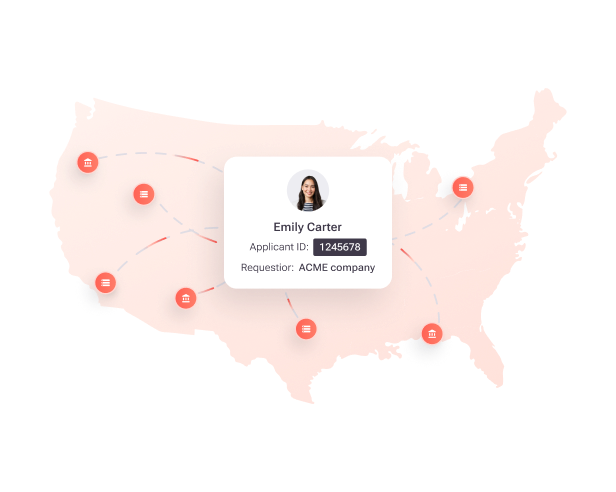
These checks pull data from county court records, state databases, federal records, and nationwide criminal databases. A thorough check fits into a broader tenant screening process that also covers credit history, eviction records, income verification, and rental history.
Key distinction: An arrest is not a conviction. Under the FCRA, arrests that did not lead to convictions generally cannot be reported after seven years, and using them as a basis for denial is legally risky under fair housing rules. Landlords should focus on convictions, which are actual court determinations of guilt.
Legal Rules Every Florida Landlord Must Know
Florida landlords operate under a specific regulatory framework that national guides often overlook. The rules for criminal background checks in Florida sit on three levels: federal FCRA requirements, federal fair housing law, and Florida statutes that shape local screening practices.
FCRA Requirements: Consent, Disclosure, and Adverse Action
The Fair Credit Reporting Act is the federal law that governs tenant background checks. The FCRA covers any report furnished by a consumer reporting agency for use in a housing decision, including criminal background checks, eviction history searches, and rental history traces, not just credit reports. Under the FCRA, landlords must:
- Obtain written consent before running any background check. The consent must be a standalone disclosure. Burying it in a lease or general application fails the requirement, and courts have repeatedly held the disclosure must be a clear, standalone document.
- Provide a pre-adverse action notice if they are considering denying an applicant based on the report. This notice must include a copy of the report and the FTC’s Summary of Consumer Rights.
- Wait a reasonable period. Standard practice is at least 5 business days, with many legal teams advising 7 to 10 business days in higher-risk jurisdictions, so the applicant has time to dispute inaccuracies.
- Send a final adverse action notice if the decision stands. This notice must state the specific reasons for denial, identify the screening company by name, address, and phone number, state that the company did not make the decision, and explain the applicant’s right to a free copy of the report within 60 days and to dispute inaccuracies.
Skipping the waiting period between pre-adverse and final adverse action notices is a leading cause of FCRA-related class actions, and the financial stakes are high. FCRA violations can result in statutory damages between $100 and $1,000 per willful violation, punitive damages in egregious cases, and attorney fees.
Fair Housing: Individualized Assessments Instead of Blanket Bans
The Fair Housing Act prohibits housing discrimination based on race, color, religion, sex, national origin, disability, and familial status. Florida law adds pregnancy and custody status to these protections under Fla. Stat. s. 760.23(6).
The U.S. Department of Housing and Urban Development (HUD) withdrew its 2016 criminal-records guidance effective September 25, 2025. However, the operative federal framework remains the Fair Housing Act itself, the discriminatory-effects rule at 24 CFR section 100.500 (in force since May 1, 2023), and the Supreme Court’s decision in Texas Department of Housing and Community Affairs v. Inclusive Communities Project, Inc., 576 U.S. 519 (2015). That decision held disparate-impact claims cognizable as a matter of statutory interpretation. HUD cannot overrule that Supreme Court construction, so a private disparate-impact claim against a blanket criminal-record ban remains available regardless of HUD’s regulatory actions.
A blanket ban that automatically excludes every applicant with any criminal conviction is the hardest policy to defend under 24 CFR section 100.500(b)(2), because it sweeps in minor and ancient offenses and the rule forbids justifying it on a hypothetical or speculative safety rationale. Landlords should instead conduct an individualized assessment that considers:
- The nature and severity of the offense
- How much time has passed since the offense
- Evidence of rehabilitation
- The relevance of the offense to tenancy
Note: 24 CFR section 100.500 imposes no individualized-assessment step, no pre-denial notice, and no waiting period as a federal command. Those requirements came from the withdrawn 2016 HUD guidance. Where they bind landlords today, they bind through state or local fair-chance laws. HUD has also proposed to remove the discriminatory-effects regulation at 24 CFR section 100.500, with a supplemental proposed rule published August 10, 2026 reopening the comment period through October 9, 2026. The rule remains in force as of this writing.
Florida-Specific Rules for Criminal Screening
Florida Statute § 83.425 prevents local governments from creating their own rules for application screening, application fees, and tenant selection, so landlords across the state follow the same statewide framework. Florida does not place state-level limits on what criminal history landlords can consider. Criminal records are generally public unless sealed by a court, but federal FCRA and fair housing laws still apply in full.
Florida does not impose a state-specific lookback period beyond the FCRA’s rules. Convictions have no federal time limit and may be reported indefinitely, while most non-conviction records generally may not be reported after seven years. Best practice is to focus on recent and relevant offenses and to document why older offenses are or are not disqualifying.
Bottom line: Your screening policy should be written, consistently applied, and based on individualized assessments rather than broad exclusions.
Step-by-Step Process for Running a Criminal Background Check
Florida landlords and community associations can follow this practical compliance workflow:
- Establish written screening criteria before advertising a vacancy. Document which criminal offenses would disqualify an applicant and why, with a genuine nexus to resident safety or property preservation.
- Obtain written consent using a standalone FCRA disclosure form. Do not place this language inside a lease or general application.
- Use a reputable, FCRA-compliant screening service. Avoid free online background check sites, which often pull outdated or inaccurate data. Free or automated “instant” background check tools often pull outdated, incomplete, or incorrectly matched records, whereas professional screening conducts multi-jurisdictional searches across state, county, and federal records.
- Review the report consistently for every applicant. Apply the same criteria to everyone.
- Conduct an individualized assessment if you are considering denial. Document your reasoning, including the nature of the offense, its recency, and any mitigating factors.
- Send a pre-adverse action notice with a copy of the report and the FTC’s Summary of Rights.
- Wait 5–7 business days for the applicant to respond or dispute.
- Send a final adverse action notice if the decision stands, including all required FCRA disclosures.
Throughout this process, documentation serves as your strongest defense. Florida landlords should retain application files, screening reports, verification notes, and a record of the written criterion that drove each decision for at least two years to defend against discrimination claims.
What Disqualifies a Tenant? Red Flags and Individualized Review
Florida community associations often rely on a consistent set of disqualifying factors. Common examples include:
- Violent felonies such as assault, battery, or domestic violence
- Sex offenses requiring registry
- Recent drug-related crimes, especially manufacturing or distribution
- Property crimes like burglary or arson
- Fraud or identity theft
A one-size-fits-all approach rarely holds up legally. Property-relevant offenses such as drug manufacturing, arson, violent crimes against persons, and sex offenses with registration requirements are considered more directly relevant to rental suitability than minor, non-violent, or dated offenses. A drug possession charge from 15 years ago with no subsequent offenses may not justify denial. A recent burglary conviction likely does.
Beyond specific convictions, watch for additional red flags that signal a pattern of risk that may outweigh any single offense:
- Multiple recent convictions
- A pattern of criminal activity
- Offenses directly related to tenancy, such as property damage or disturbing the peace
- Pending charges for serious offenses
Document your individualized assessment for every denial based on criminal history. Documenting the decision-making process, including the exact reasons a conviction posed a direct threat or why rehabilitation evidence was insufficient, helps defend a rental denial if challenged.
Explore TenantEvaluation’s audit trails to see how every application decision is captured for Florida community associations.
How Far Back Can You Look?
Under the FCRA, most criminal records have a seven-year reporting limit for non-conviction items. Convictions are the exception. The federal statute places no time limit on reporting a criminal conviction, so an old conviction can lawfully appear on a consumer report. Florida does not impose a separate state lookback period, so the federal FCRA rules control.
Best practice is to focus on recent and relevant offenses, typically within the past 5–7 years. Document why older offenses are or are not disqualifying in the context of your community’s specific screening criteria.
Best Practices for Community Associations (Condos and HOAs)
Community associations face screening challenges that generic national platforms often overlook. Boards need consistent policies, clear audit trails, and a process that protects the community while limiting liability for the association.
Most professional landlords and associations use a Consumer Reporting Agency (CRA) that provides comprehensive criminal, credit, and eviction screening. Strong services are FCRA-compliant, pull from multiple databases, and provide documentation for adverse action notices.
TenantEvaluation is built specifically for Florida condos and HOAs, with FCRA compliance built into the core of the platform. Trusted by 5,000+ communities and processing 100,000+ applications annually with a Google rating of 4.8/5, TenantEvaluation offers:
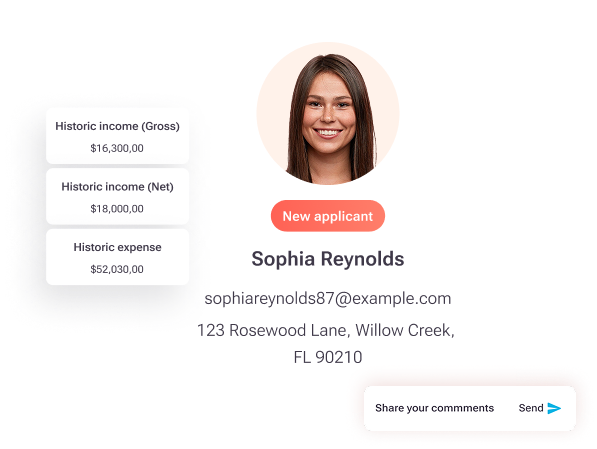
- Automated adverse action workflows that guide associations through pre-adverse and final notices
- Built-in audit trails for every application and decision
- A board dashboard via QuickApprove for transparent, documented approval decisions. It is built for CAMs, Boards, and property management teams, with real-time application tracking and reduced manual follow-ups, while preserving control, compliance, and visibility.
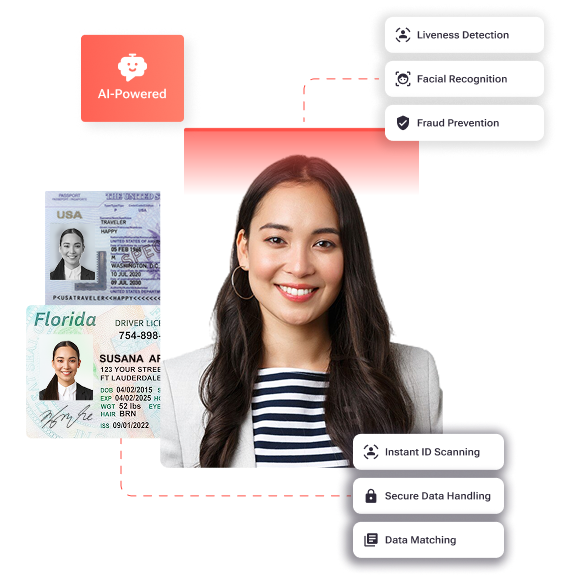
- Biometric identity verification via IDVerify. AI-powered liveness detection, government ID authentication, and biometric facial matching move communities from document-based review to verified physical identity confirmation.
- Direct credit bureau reseller relationships with TransUnion and Equifax, which avoids gray-market data sources.
How to Choose a Screening Service
Florida community associations should evaluate screening services against specific compliance and workflow needs. Key criteria include:
- FCRA compliance as a core feature
- Direct credit bureau reseller status rather than third-party scraping
- Comprehensive criminal searches across county, state, and federal databases
- Automated adverse action support with proper documentation
- Integration with your onboarding workflow
- A board-ready approval process with audit-ready records
Generic screening services may cost less upfront, yet they often lack the compliance infrastructure that community associations require. TenantEvaluation differentiates itself through specialization. It is designed exclusively for community associations and management companies, rather than generic rentals. Features like IDVerify and QuickApprove go beyond what generic tools offer. Both are built specifically for the risk environment of Florida condos and HOAs.
Frequently Asked Questions
Can a landlord run a background check without consent in Florida?
No. Under the FCRA, landlords must obtain written consent from the applicant before running any background check. The consent must be a standalone disclosure and cannot appear only inside a lease application or general rental form. Running a check without proper consent is a violation of federal law and exposes the landlord to statutory damages, punitive damages, and attorney fees. Florida does not add a separate state consent requirement beyond the FCRA, but the federal standard applies in full to all Florida landlords and community associations.
What is the difference between an arrest and a conviction for tenant screening purposes?
An arrest indicates that law enforcement detained someone on suspicion of a crime. It is an allegation, not proof of wrongdoing. A conviction means the person was found guilty in a court of law. Under the FCRA, arrests that did not lead to convictions generally cannot be reported after seven years, and using arrests as a basis for denial is legally risky under fair housing rules because it can produce a disparate impact on protected classes without a legitimate, evidence-based justification. Florida landlords and community associations should focus screening decisions on convictions and should verify that any criminal record matches the applicant’s full legal name, date of birth, and Social Security Number before taking adverse action.
Do I need to send an adverse action notice if I deny a Florida rental applicant?
Yes. If you deny an applicant, require a co-signer, charge a higher deposit, or take any other adverse action based in whole or in part on a background check, the FCRA requires an adverse action notice. The process has two steps: a pre-adverse action notice, including a copy of the report and the FTC’s Summary of Consumer Rights, followed by a waiting period of at least 5 business days, and then a final adverse action notice if the decision stands. The final notice must identify the screening company, state that the company did not make the decision, and inform the applicant of their right to a free copy of the report within 60 days and to dispute inaccuracies. Silence does not satisfy the adverse action process. If a consumer report influenced the decision at all, the notice is required.
Can a Florida community association deny an applicant for a misdemeanor?
The answer depends on the nature, recency, and relevance of the misdemeanor. Florida does not prohibit landlords from considering misdemeanor convictions, but a blanket policy of denying any applicant with any misdemeanor is legally risky under the Fair Housing Act’s disparate-impact framework. The association must conduct an individualized assessment that considers the specific offense, how long ago it occurred, and its relevance to tenancy and community safety. A recent misdemeanor for property damage or disturbing the peace may justify denial. An old, minor offense with no subsequent issues may not. Every denial based on criminal history should be documented with the reasoning for the individualized assessment.
What makes TenantEvaluation different from generic screening platforms for Florida HOAs and condos?
TenantEvaluation is built exclusively for community associations and management companies rather than generic rentals. That specialization matters because Florida condos and HOAs face unique compliance requirements, board governance structures, and operational workflows that generic platforms are not designed to support. TenantEvaluation’s FCRA compliance is built into the platform’s core. It includes automated adverse action workflows, built-in audit trails, direct credit bureau reseller relationships with TransUnion and Equifax, and a board-ready approval dashboard through QuickApprove.
IDVerify adds biometric identity verification directly inside the screening workflow, so teams avoid external portals and workflow disruption. For age-restricted properties, 55+ Communities Verification standardizes how age-restricted application requirements are handled, which reduces manual work and improves documentation consistency. The platform’s scale, including the 5,000+ communities and 100,000+ applications mentioned earlier, reflects its specialization in community associations.
Conclusion: Protect Your Community and Reduce Liability
Running a criminal background check for renters in Florida requires careful navigation of a layered legal landscape. Keep these points in focus:
- Know the law: Understand FCRA consent and adverse action requirements, fair housing limits on blanket bans, and Florida’s statutory framework under Fla. Stat. § 83.425.
- Use a compliant screening service: Generic tools often lack the documentation and compliance infrastructure that community associations need.
- Document everything: Written criteria, consistent application, and individualized assessments create an audit trail that protects the association.
- Treat applicants fairly: Individualized review is both legally defensible and a responsible way to screen.
TenantEvaluation is built specifically for community associations and management companies, and that compliance-first design sets it apart. From automated adverse action workflows to board-ready approval dashboards, the platform carries the compliance burden so Florida CAMs and boards can focus on protecting their communities.
Book a TenantEvaluation walkthrough to see how the platform streamlines compliant resident screening for Florida community associations.
