Written by: Luis Teran, Co-founder, CEO, TenantEvaluation | Last updated: September 1, 2026
Key Takeaways
- Florida condo associations must follow F.S. 718.112(2)(i), which adds board approval workflows and FCRA compliance needs that generic landlord tools do not cover.
- Cost-effectiveness includes compliance risk, staff time, and revenue potential from applicant-paid screening with fee-sharing, not just per-report pricing.
- TenantEvaluation is purpose-built for Florida condos and provides QuickApprove board voting dashboards, biometric ID verification, lease tracking, and automated adverse action workflows.
- Applicant-paid screening removes subscription overhead for associations, and revenue-sharing can turn screening into a net income source for communities.
- Associations that want lower administrative burden and reliable FCRA compliance should evaluate TenantEvaluation to streamline their screening process.
Why Florida Condos Need a Different Screening Approach
Florida condo boards and Community Association Managers (CAMs) manage approval rules that generic landlord tools do not support. Under F.S. 718.112(2)(i), a Florida condo association may screen prospective tenants, and the process must be reasonable and applied uniformly. That statutory requirement creates a compliance baseline that generic screening platforms built for individual landlords do not address.
The gap appears in daily work. Most consumer-facing tools lack board voting dashboards, audit trails, automated adverse action workflows, and Florida-specific compliance support. CAMs then juggle email chains, spreadsheets, and manual follow-ups to keep applications moving. This guide compares seven cost-effective condo tenant screening solutions in Florida and explains how specialized platforms like TenantEvaluation can deliver a lower total cost of ownership than their per-report price suggests.
How to Define Cost-Effective Condo Tenant Screening
The lowest per-report price rarely delivers the lowest total cost. Three factors increase the real cost of generic screening tools for Florida condo associations.
- Compliance risk: FCRA violations carry statutory damages of $100 to $1,000 per incident when adverse action notices are missed or issued incorrectly.
- Administrative burden: Manual tenant screening typically takes 3–4 hours per application across multiple platforms, with a 15–20% error rate in credit and background verification.
- Cost of a bad placement: A single eviction can cost $3,500 to $10,000 in legal fees, lost rent, turnover expenses, and property damage.
Florida condos also need board approval workflows, audit trails, and revenue from an applicant-paid model with fee-sharing. These factors do not appear on a generic pricing page but shape the real cost picture.
7 Cost-Effective Condo Tenant Screening Solutions in Florida
1. TenantEvaluation — Best Overall for Florida Condos
TenantEvaluation is the only platform built from the ground up for Florida community associations and management companies, with FCRA compliance as the foundation. Founded in 2007, it has processed more than 100,000 applications annually across over 5,000 communities and has generated $150M for those communities through its revenue-sharing model.
The applicant-paid model means the association pays no subscription fee. Applicants cover the screening cost, and TenantEvaluation’s revenue-sharing structure returns a portion of the collected fee to the association. Depending on community volume, the platform can be cost-neutral or revenue-generating.

Core features designed for condo associations include:
- QuickApprove is an accelerated approval workflow with a board-ready voting dashboard. It moves applications from submission to decision faster and provides real-time tracking, automated communication support, customized approval letters, and a personalized welcome package inside one connected platform while preserving control, compliance, and visibility.
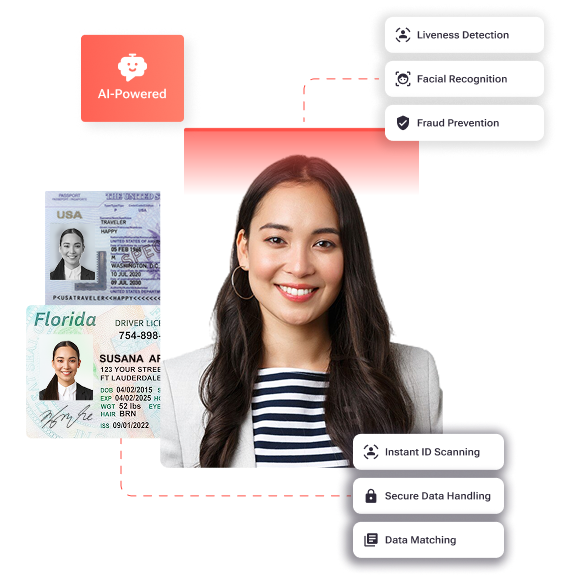
- IDVerify+ delivers biometric identity verification using government ID validation, AI-powered liveness detection, and facial biometric matching embedded directly in the screening workflow.
- 55+ Communities Verification standardizes age-restricted application handling for Florida condos and HOAs, reducing manual work and improving documentation consistency across communities.
- Lease Tracking centralizes real-time lease visibility and lifecycle control. It connects resident onboarding, unit data, approvals, and lease documentation from application to occupancy in one audit-ready platform.
- TEpayments by Zinc provides a connected payment workflow inside TenantEvaluation that collects application fees and deposits during resident onboarding. Payments go directly to the association’s designated account, and TenantEvaluation never holds the funds.
TenantEvaluation is a direct reseller of TransUnion and Equifax data, not a third-party scraper. It uses strict permissible purpose controls, automated adverse action workflows, and built-in audit trails for every application.
See how TenantEvaluation’s applicant-paid, revenue-sharing model works for your community.
2. TransUnion SmartMove — Best for Simple Landlord Screening
SmartMove offers three pay-as-you-go tiers: SmartCheck Basic at $25, SmartCheck Plus at $40, and SmartCheck Premium at $48 per screening, with no subscription fee. Reports include ResidentScore, credit, criminal, and eviction data, and the Premium tier adds Income Insights and an identity check.
SmartMove works well for individual landlords screening occasional applicants. Unlike TenantEvaluation, it lacks board approval workflows, audit trails, and Florida-specific compliance features. Condo associations using SmartMove must handle board review, adverse action notices, and approval documentation manually.
3. TurboTenant — Best for Budget-Conscious Landlords
TurboTenant charges $55 per report on its free plan and $45 per report on paid plans (Essentials at $12.42/month and Pro at $16.58/month, billed annually). The fee is applicant-paid. Income verification is locked behind the Pro plan at $199/year, and screening reports take one to three days.
TurboTenant focuses on small landlords and basic workflows. Like SmartMove, it lacks board voting dashboards and association-specific compliance features. Manual handling is required for every condo approval step, and TurboTenant provides only a free adverse action template, leaving the compliance step to the landlord.
4. RentPrep — Best for Customizable Reports
RentPrep charges $29 per screening for a credit report or full background check and $49 for a complete screening package, with enterprise pricing available for portfolios of 50 or more doors. Reports include an FCRA-certified screener review, SSN verification, eviction history, judgments, and liens. RentPrep is landlord-pay only with no applicant-paid option and no subscription fee.
RentPrep suits landlords that want human-reviewed reports. It has no board approval features, no applicant-paid model, and no Florida-specific condo compliance workflows, so associations must manage the approval process entirely outside the platform.
5. Zillow Rental Manager — Best for Listing Integration
Zillow Rental Manager charges approximately $35 per applicant on an applicant-paid basis. The platform integrates with Zillow listings, which helps landlords already using the Zillow ecosystem.
Zillow Rental Manager focuses on individual rental listings rather than association approvals. It lacks condo-specific features such as board dashboards, audit trails, and Florida compliance workflows, so boards must manage governance steps elsewhere.
6. Innago — Best for Low Applicant Fees
Innago charges $30–$35 per applicant with no subscription cost to the landlord. Reports include credit, criminal, and eviction data, and the platform targets small landlords and self-managed properties.
Innago keeps costs low for basic landlord use cases. It has no dedicated community association board voting workflows, no audit trails designed for condo governance, and no Florida-specific compliance features, which limits its fit for condo boards.
7. Buildium — Best for Full-Service Property Management
Buildium’s standard screening costs $17 per screen when the property manager pays and $35 when the applicant pays; Enhanced Tenant Screening costs $20 per screen and includes customizable approval criteria. Buildium’s subscription plans start at $62/month for Essential, $192/month for Growth, and $400/month for Premium.
Buildium works well for firms that need full-service property management software. For associations that need only screening, the subscription adds overhead unrelated to the screening function. Buildium generates adverse action letters and offers HOA-specific accounting, but its board approval workflow is not purpose-built for condo association governance in the way TenantEvaluation’s is.
Cost Comparison: Applicant-Paid vs. Subscription Models
The table below summarizes per-applicant pricing, subscription costs, and board approval features for each provider. TenantEvaluation is the only option with no subscription cost and full condo-focused board approval tools.
| Provider | Price Per Applicant | Subscription Cost | Board Approval Features |
|---|---|---|---|
| TenantEvaluation | Applicant-paid; revenue-sharing returns portion to association | None | Yes — QuickApprove board voting dashboard, audit trails, automated adverse action |
| TransUnion SmartMove | $25–$48 | None | No |
| TurboTenant | $45–$55 (applicant-paid) | $149–$199/year for paid plans | No |
| RentPrep | $29–$49 (landlord-pay only) | None | No |
| Zillow Rental Manager | ~$35 (applicant-paid) | None | No |
| Innago | $30–$35 | None | No |
| Buildium | $17–$35 (standard); $20 enhanced | $62–$400/month | Partial — adverse action letters; no dedicated board voting dashboard |
Looking beyond the table, Florida does not cap application fees, which gives associations flexibility to set fees that cover screening costs entirely through the applicant-paid model. TenantEvaluation’s revenue-sharing structure goes further. After deducting its service fee, the remainder is returned to the association, creating a compliant income stream from the onboarding process.
Florida Compliance: FCRA, Adverse Action, and No Fee Cap
Under F.S. 718.112(2)(i), a Florida condo association may screen prospective tenants, and the process must be reasonable, applied uniformly, and cannot unreasonably withhold approval. This statutory standard requires defensible, documented screening criteria instead of ad hoc board decisions.
At the federal level, the FCRA requires a written adverse action notice whenever an applicant is denied or offered worse terms based on a screening report. An adverse action for rentals includes a denial and also worse terms, such as requiring a co-signer, charging a higher deposit, or limiting lease options, when the decision is based on a screening report.
TenantEvaluation addresses these requirements with automated adverse action workflows and built-in audit trails for every application. It also relies on direct credit bureau reseller relationships with TransUnion and Equifax, using data accessed under strict bureau rules with no gray-market or offshore sources. The clear separation between decision-making by the association and data provision by TenantEvaluation supports FCRA-aligned permissible purpose controls.

Explore how TenantEvaluation’s compliance infrastructure supports Florida condo associations.
5 Key Features to Prioritize in a Condo Screening Platform
- Board Review and Voting Dashboard — This feature lets board members review applications and vote without email chains. TenantEvaluation’s QuickApprove provides a dedicated board-ready panel with AI-generated applicant summaries, a voting workflow, and real-time application tracking built for CAMs, boards, and property management teams inside one connected platform.
- Biometric Identity Verification — Building on the need for secure decisions, this feature confirms applicant identity to prevent synthetic identity fraud. IDVerify+ combines government ID validation, AI-powered liveness detection, and biometric selfie-to-ID comparison natively inside the TenantEvaluation workflow.
- Lease Tracking — This capability centralizes lease documents and expiration tracking with real-time lease status visibility (active, pending, expired, or missing). It includes automated lease document collection during onboarding, unit-level tracking, and audit-ready digital records, connecting resident onboarding, unit data, approvals, and lease documentation from application to occupancy in one platform.
- 55+ Community Verification — This feature standardizes age-restricted application handling. TenantEvaluation’s 55+ Communities Verification reduces manual work, supports documentation consistency, and improves operational efficiency for Florida condos and HOAs managing age-restricted requirements.
- Accelerated Approval Workflows — This capability reduces approval time with automated communication and structured steps. QuickApprove replaces email chains and spreadsheets with a connected, board-ready approval process designed for high-volume seasons and communities with complex onboarding requirements while preserving board oversight and compliance review.
Real-World Cost Scenarios: 10-Unit vs. 100-Unit Condo
For a 10-unit condo screening one applicant per unit per year:
- Applicant-paid model: $300–$550 in total annual screening charges paid by applicants, with zero subscription cost to the association.
- Subscription model: adds about $84 to $720 per year in platform fees before any per-report charges.
- TenantEvaluation: applicants pay the fee, and revenue-sharing can return a portion to the association, which can make net association cost zero or negative.
For a 100-unit condo screening one applicant per unit per year:
- Applicant-paid model: $3,000–$5,500 in total annual screening charges paid by applicants.
- Subscription model: $600–$1,200 per year in platform fees alone before per-report charges.
- TenantEvaluation: revenue-sharing at this volume can generate meaningful income for the association while delivering condo-specific compliance and board workflow features that subscription tools do not include.
Workflow automation can reduce tenant screening time to 30 minutes per application and lower error rates to 3%, compared to the manual baseline mentioned earlier. At scale, that time savings compounds significantly across a management portfolio.
Frequently Asked Questions
How much does tenant screening cost in Florida?
Typical screening costs range from $25 to $55 per applicant depending on the provider and the package selected. Florida does not cap application fees, so condo associations can set fees that cover the full cost of screening. Applicant-paid models like TenantEvaluation eliminate association overhead entirely, and the revenue-sharing structure can generate income for the association beyond cost recovery.
What is the best tenant screening company for HOAs and condo associations?
TenantEvaluation is the only platform built specifically for Florida community associations, with a board voting dashboard, FCRA compliance as the foundation, direct credit bureau reseller relationships with TransUnion and Equifax, automated adverse action workflows, and a revenue-sharing model. Generic tools like SmartMove, TurboTenant, and Zillow Rental Manager lack condo-specific features and require manual handling of every board approval step, audit trail, and compliance notice.
Are there free tenant screening services for condo boards?
No reputable service offers free comprehensive screening. However, applicant-paid models like TenantEvaluation cost the association nothing upfront because applicants pay the screening fee, and the association can generate revenue through fee-sharing. This structure gives the association a compliant, full-featured platform at no direct cost, funded by the applicant fee that Florida law permits associations to charge.
Is TenantEvaluation cost-effective for small condos?
Yes. TenantEvaluation’s applicant-paid model means no subscription overhead regardless of community size. A 10-unit condo avoids the subscription costs mentioned earlier that traditional platforms charge while gaining board voting dashboards, biometric identity verification, lease tracking, and automated compliance workflows that generic tools do not provide at any price point.
What Florida statute governs condo tenant screening?
F.S. 718.112(2)(i) governs tenant screening for Florida condo associations. It permits associations to screen prospective tenants, requires that the process be reasonable and applied uniformly, and prohibits unreasonable withholding of approval. F.S. 718.110(13) governs rental restrictions in declarations, specifying that amendments restricting rental rights apply only to owners who consented or acquired their units after the amendment was recorded. Both statutes require that screening criteria be documented, consistently applied, and defensible, which favors a platform with built-in audit trails and standardized workflows over manual processes.
Conclusion: Choose the Solution That Pays for Itself
Cost-effectiveness for Florida condo associations depends on more than per-report price. Compliance risk, administrative burden, board workflow efficiency, and revenue potential all shape the true total cost of ownership. Generic landlord tools often advertise low per-report prices but shift compliance risk, manual labor, and missed revenue back to the association.
TenantEvaluation removes subscription overhead through its applicant-paid model, returns revenue to the association through fee-sharing, automates FCRA compliance through direct credit bureau relationships and adverse action workflows, and provides the only board voting dashboard purpose-built for Florida condo governance. Across more than 5,000 communities and over 100,000 applications per year, it delivers a specialized, compliance-first platform that generic screening tools do not match.
