Written by: Luis Teran, Co-founder, CEO, TenantEvaluation
Key Takeaways for Florida Peak Season
- Florida’s November–April peak season creates predictable spikes in rental applications that overwhelm manual processes and increase compliance risk.
- A standardized 7-step compliance checklist covering document audits, DBPR licensing, written screening criteria, complete-submission policies, FCRA checks, board workflows, and record retention turns seasonal pressure into a controlled operation.
- End-to-end workflows with four defined stages, including intake, screening, board approval, and record retention, remove bottlenecks and create audit-ready documentation for every application.
- Key Florida requirements include rental caps, minimum lease terms, DBPR vacation-rental licensing, local ordinances, and consistent 55+ age-verification documentation to avoid enforcement gaps and audit liability.
- Get started with TenantEvaluation to replace spreadsheets and email chains with an all-in-one, FCRA-compliant platform purpose-built for Florida condo and HOA compliance.
How Peak-Season Occupancy Spikes Strain Operations
Florida’s winter population surge creates temporary spikes in leasing activity and maintenance requests from October through April. Understaffing or weak systems during this window delay work orders, slow leasing, and increase compliance and service risks for condominium associations. Common pain points include incomplete applications arriving faster than staff can review them, rental-cap tracking that lives in spreadsheets, board approval chains buried in email threads, and 55+ documentation collected inconsistently across units. A standardized workflow defines responsibilities, automates document checks, and produces an audit-ready record for every application cycle.
7-Step Peak-Season Compliance Checklist for Florida Communities
- Audit governing documents before November 1. Confirm that rental caps, minimum lease terms, board approval requirements, and any 55+ age-verification language in your declaration and bylaws are current and enforceable under Florida Statutes Chapter 718 (condominiums) or Chapter 720 (HOAs).
- Verify DBPR licensing status for applicable units. Units rented more than three times per calendar year for periods under 30 days, or rented at least once for under 30 days when advertised as temporary lodging, require a vacation rental license from the Florida DBPR before legal operation.
- Publish written screening criteria. Minimum credit score, income thresholds, and disqualifying factors must be set in advance and documented to support consistent, Fair Housing Act-compliant application across all applicants.
- Enforce a complete-submission policy. Reject incomplete applications at intake. Required documents, including an executed lease, government-issued ID, proof of income, and any community-specific forms, must be present before the file advances to screening.
- Run FCRA-compliant background and credit checks. Obtain written applicant consent before ordering any consumer report. Under the FCRA, a landlord or property manager may obtain a consumer report only for a permissible purpose, such as evaluating a rental applicant. Issue adverse action notices when required.
- Route applications through a documented board approval workflow. Timestamp every review action. Associations implementing rental caps should follow a structured process that includes clear enforcement procedures and ongoing tracking of rental status.
- Retain records through the full retention period. Store executed leases, screening reports, adverse action notices, board votes, and identity verification results in a secure, searchable system that remains accessible for future audits or disputes.
Four-Stage Compliance Workflow from Intake to Record Retention
A defensible peak-season workflow uses four distinct stages with clear responsibilities for applicants, CAMs, and boards.
Stage 1: Intake (Applicant + CAM). The applicant receives a property code, creates an account, completes the online application, uploads required documents, pays the application fee, and completes biometric identity verification. The CAM confirms that the application is complete before it advances, so partial files never enter the review queue.
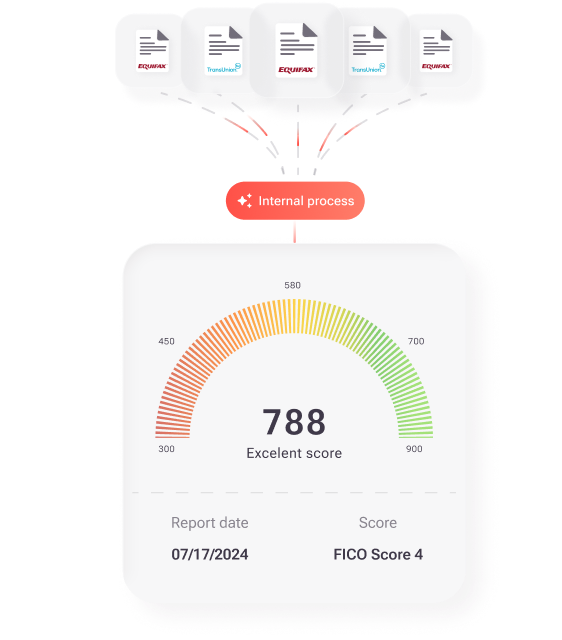
Stage 2: Screening (CAM + Platform). Background, credit, eviction, and income checks run against the association’s pre-set criteria. A comprehensive resident screening program typically includes credit reports, separate eviction searches, criminal background checks, and primary-source verifications such as prior rental history and employment verification. All actions are timestamped and stored.
Stage 3: Board Approval (Board + CAM). The board reviews a summarized applicant report, casts votes through a dedicated dashboard, and issues a decision. Approval letters and welcome packages come from the same workflow. Under Florida Statutes §718.116(11)(a), associations may demand rent directly from tenants when an owner is delinquent on dues, which requires accurate lease and tenant records to enforce.
Stage 4: Record Retention (CAM). All documents, screening reports, board votes, adverse action notices, and identity verification results are archived in an auditable, encrypted record. Consumer reports used in tenant screening must be securely disposed of at end of retention by burning, pulverizing, shredding, or destroying electronic files so information cannot be reconstructed.
Florida Rules on Rental Caps, Lease Terms, Licensing, and 55+ Documentation
Rental caps and minimum lease terms sit primarily in the association’s declaration and bylaws, not in state statute alone. Miami Beach city zoning code, for example, prohibits rentals of less than six months and one day in most listed residential zoning districts such as RM-1 and single-family areas, and requires a Business Tax Receipt, resort tax registration, and Certificate of Use where rentals are allowed. The City of Sarasota requires a seven-day minimum stay for vacation rentals along with occupancy caps. Fort Lauderdale applies occupancy caps, parking standards, and noise ordinances for one- to four-unit dwellings and condos rented 30 days or less. These local variations operate within a statewide framework that limits how far municipalities can go.
State preemption and local patchwork. Under Florida Statutes §509.032(7), local governments generally cannot prohibit vacation rentals or regulate the duration or frequency of stays unless the ordinance existed before June 1, 2011. A 2024 bill (CS/SB 280) that would have centralized more short-term rental rules statewide was vetoed, leaving the 2011 preemption framework and local regulatory patchwork in place for 2025–2026. Condo and HOA declarations can still restrict short-term rentals even when a state DBPR license exists, because state licensing does not override private restrictions.
DBPR licensing. Units meeting the definition of a vacation rental under Florida Statutes §509.013, rented more than three times in a calendar year for periods under 30 days or rented for less than 30 days at least once when available to the public, require a DBPR vacation rental license, annual renewal, and compliance with health and safety standards. The DBPR may issue citations, fines, suspend licenses, or revoke licenses for violations. Beyond vacation rental licensing, associations also face documentation duties when they operate age-restricted communities.
55+ age-restricted communities. Associations operating as housing for older persons must maintain specific documentation standards for each qualifying unit. Inconsistent or fragmented records create audit exposure. A structured, standardized documentation workflow applied uniformly across all applications reduces that risk and supports operational control.
Workflows that Solve Common Peak-Season Pain Points
Incomplete submissions create the single largest source of processing delays during peak season because staff must chase missing documents through multiple email exchanges with applicants and owners. A complete-submission gate at intake, enforced by smart form logic that rejects files missing executed leases, valid IDs, or required documents, removes this back-and-forth by blocking incomplete files from entering the review queue.
Identity fraud now represents a growing exposure for condo and HOA communities. Traditional screening methods that rely primarily on document uploads no longer provide enough protection. Biometric identity verification that combines government ID validation, AI-powered liveness detection, and selfie-to-ID facial matching shifts communities from document-based review to verified physical identity confirmation before approval decisions.
Board approval bottlenecks appear when applications sit in email chains with no visibility into status. Boards should replace informal memory or scattered email records with a unit-by-unit compliance tracker and document follow-up steps for incidents and repeat violations to support enforcement actions. A dedicated board dashboard with real-time application status and a structured voting workflow replaces that fragmentation.
Rental-cap enforcement depends on continuous tracking of owner-occupancy and lease status. Professional community association management companies support rental cap enforcement by tracking owner-occupancy and lease status, maintaining compliant waiting lists, and ensuring fair, uniform enforcement. This structure reduces disputes and compliance errors.
TenantEvaluation: Florida-Focused Platform for Condo and HOA Compliance
TenantEvaluation is an all-in-one resident screening and onboarding platform built for community associations and management companies, with FCRA compliance as the foundation, not an afterthought. Founded in 2007, the platform has processed 100,000+ applications annually across 5,000+ communities and has generated $150M for those communities.
QuickApprove is TenantEvaluation’s accelerated approval workflow that moves resident applications from submission to decision faster inside one connected platform. It delivers real-time application tracking, automated communication support, customized approval letters, a personalized welcome package, and a board-ready approval process without sacrificing control, compliance, or visibility. It supports high-volume seasons and communities with complex onboarding requirements by replacing email chains and spreadsheets with a single connected workflow for CAMs, boards, and property management teams.

IDVerify embeds automated KYC verification directly into the screening workflow using government ID validation, AI-powered liveness detection, and biometric selfie-to-ID comparison. Verification results, including ID authenticity confirmation, liveness status, and biometric match result, appear inside the screening report with a redacted ID copy for compliance documentation. IDVerify can be configured per community or portfolio to match each association’s risk profile.

55+ Communities Verification standardizes how age-restricted application requirements are handled across applications, which reduces manual work, improves documentation consistency, and strengthens operational efficiency and internal controls for Florida condos and HOAs. It is built for Community Association Managers and supports documentation consistency while leaving legal guidance to association counsel.

Additional platform capabilities include PCI Level 1 compliance, end-to-end encryption, automatic redaction of sensitive PII, direct TransUnion and Equifax reseller relationships, automated adverse action workflows, built-in audit trails for every application, community analytics, automated fee collection, and a revenue-sharing model that turns application processing into a compliant income stream.
Comparison: TenantEvaluation vs. Generic Screening and Property-Management Platforms
Generic background screening vendors such as ApplyCheck and Verify Screening Solutions often operate on platforms like TazWorks that are not primarily designed for tenant screening and lack applicant interaction, automated document review and redaction, or a board-facing approval dashboard. Broader property management platforms such as AppFolio and RealPage offer screening as one feature within a larger suite, but they do not provide Florida-specific workflow configuration, biometric identity verification, or a dedicated board voting panel that community associations need during peak season.
TenantEvaluation processes applications in 5 to 10 minutes compared with the 5 to 10 days typical of manual or less automated alternatives. Its revenue-sharing model removes upfront subscription fees and allows the platform to generate revenue for the association instead of drawing from its operating budget. The board dashboard, QuickApprove accelerated approval workflow, IDVerify+ biometric layer, and 55+ Communities Verification capability do not appear in any competing platform reviewed. As a direct reseller of TransUnion and Equifax data under strict bureau rules with regular compliance audits, TenantEvaluation provides a level of regulatory defensibility that generic screening vendors and broader property management platforms do not replicate.
Frequently Asked Questions
What is the difference between a rental cap and a minimum lease term in a Florida condo or HOA?
A rental cap is a restriction in an association’s governing documents that limits the number or percentage of units that may be leased at any one time, expressed as a percentage of total units or a fixed number. A minimum lease term is a separate restriction that sets the shortest allowable rental duration, such as six months and one day, 30 days, or seven days, regardless of how many units are rented. Both restrictions are enforceable through the association’s declaration and bylaws and operate independently of state DBPR licensing. Associations should confirm that both provisions are clearly drafted and consistently enforced, with a unit-by-unit tracker maintained by the CAM.
Who is responsible for obtaining a DBPR vacation rental license, the unit owner or the association?
The individual unit owner holds responsibility for obtaining and maintaining a DBPR vacation rental license when the unit meets the statutory definition of a vacation rental under Florida Statutes §509.013. The association’s role is to track rental activity across the community, enforce its own governing document restrictions, and document compliance status for each unit. Associations do not obtain the DBPR license on behalf of owners, but they can and should require proof of licensure as part of the rental approval process and maintain that documentation in the unit’s compliance record.
What documentation must a Florida 55+ community collect and maintain to support age-restricted status?
Housing for Older Persons Act (HOPA) requirements call for at least 80% of occupied units to have one resident aged 55 or older, publication of intent to operate as 55+ housing, and maintenance of age-verification procedures and records. In practice, this means collecting and retaining documentation, such as government-issued ID confirming date of birth, for qualifying occupants in each unit, applying that process consistently across all applications, and keeping records accessible for audits or disputes. Fragmented manual processes that rely on emails and PDFs create inconsistency and audit exposure. A standardized, platform-based documentation workflow applied uniformly across all applications reduces that risk without replacing the legal guidance of qualified association counsel.
What adverse action obligations apply when a Florida condo or HOA denies a rental application based on a background check?
When an association denies a rental application based in whole or in part on information in a consumer report, the FCRA requires the decision-maker to provide the applicant with an adverse action notice that includes the name, address, and phone number of the consumer reporting agency, a statement that the CRA did not make the denial decision, and notice of the applicant’s right to dispute inaccuracies and obtain a free copy of the report within 60 days. If a credit score contributed to the decision, the notice must also disclose the score, its source, the date it was created, the score range, and the key factors that adversely affected it. Maintaining a documented record of the criteria applied and the adverse action notice issued for each denied application remains essential for audit defensibility.
How should a CAM prepare the board for the November–April application volume increase?
Preparation should begin before October. The CAM should audit governing documents to confirm that rental restrictions are current, configure the screening platform with the association’s criteria, brief board members on the approval workflow and their dashboard access, and establish a complete-submission policy so no incomplete applications enter the review queue. A board-ready approval process with real-time application tracking, summarized applicant reports, and a structured voting workflow removes the email-chain bottlenecks that slow decisions during high-volume periods. Associations that standardize this workflow before peak season begins consistently process applications faster, with fewer errors and a cleaner audit trail.
Conclusion: Build a Clear, Compliant, and Well-Documented Process
Florida’s peak season is a fixed operational reality for every condo and HOA. Associations that manage it without liability exposure and revenue loss rely on a repeatable, documented compliance workflow that covers intake, screening, board approval, and record retention in a single auditable system. TenantEvaluation provides that system, built specifically for Florida community associations, with FCRA compliance as the foundation, biometric identity verification through IDVerify+, accelerated approvals through QuickApprove, and standardized 55+ documentation through 55+ Communities Verification.
Schedule a demo today and build your peak-season compliance workflow before November arrives.
