Written by: Luis Teran, Co-founder, CEO, TenantEvaluation
Key Takeaways for Florida CAMs
- Florida condo peak-season approvals typically take 14–45 days, but incomplete files and fixed board-meeting schedules can stretch timelines to 60–90 days.
- Statutory triggers such as delayed document delivery and estoppel-certificate timing can restart or extend the approval clock before a board vote occurs.
- Quorum failures during summer months and missed agenda cutoffs force applications to wait for the next properly noticed meeting, adding weeks of delay.
- Smart intake checks that flag missing documents at submission prevent the most common and controllable source of approval slowdowns.
- Get started with TenantEvaluation to compress your peak-season approval timeline by up to 70% with QuickApprove, IDVerify+, and 55+ verification tools.
Statutory Triggers That Restart the Application Clock
Several statutory triggers can restart or extend the approval clock before a board ever votes. Under Florida Statutes §718.503(1), a condo buyer may cancel within 15 days after the date of execution of the agreement and receipt of all items required under the statute, so delayed document delivery by the seller directly delays the approval window. Separately, Florida homeowners’ associations must issue an estoppel certificate within 10 business days of a request; the certificate is valid for 30 days if hand-delivered or sent electronically (or 35 days if sent by regular mail). If an application arrives with missing documents, the clock effectively pauses until the file is complete, and the next available board meeting may be weeks away. Rental applications face a parallel problem. Any document gap discovered after submission triggers a manual follow-up cycle that can consume five to ten additional business days before the file is ready for board review. Even when files are complete, the board meeting schedule itself becomes the next bottleneck.
Board Meeting Cadence That Slows Approvals
In a residential condominium association of more than 10 units, the board of administration shall meet at least once each quarter under §718.112(2)(c), which establishes a minimum cadence that can force a four-to-six-week wait when an application misses a meeting agenda. Florida law requires at least 48 hours of posted notice for board meetings, and notices must specifically identify agenda items, so applications that miss the agenda cutoff are pushed to the next properly noticed meeting. A quorum is required for the board to vote; without one, decisions cannot be made even if the meeting is properly noticed.
Summer compounds the problem. A representative Florida community board calendar illustrates the risk:
- June: Regular meeting held, quorum achieved, applications on agenda approved.
- July: Meeting scheduled, two board members on vacation, quorum fails, no votes taken.
- August: Rescheduled meeting, 48-hour re-notice required, applications delayed a full additional month.
Because association actions must be taken at properly called meetings with required membership votes under Florida law, boards cannot simply approve applications informally by email to compensate for quorum failures. This procedural constraint becomes even more complex when applications become contested. Under §720.303(2)(d), if at least 20 percent of HOA voting interests petition the board to address a specific item, the board must place it on the agenda within 60 days, which can create a separate timeline that extends the approval window further for disputed files.
Common Incomplete Application Red Flags
Incomplete files are the single most controllable delay trigger in the condo peak season approval timeline. The following items most frequently arrive missing or defective during high-volume periods:
- Unsigned or unexecuted lease agreements
- Expired government-issued photo identification
- Missing proof of income or employment verification
- Absent pet documentation or vehicle registration where required by governing documents
- Incomplete co-applicant or occupant disclosures
- Missing board-required reference letters or prior landlord contact information
- Unsigned consent forms for background and credit checks
Incomplete files that result in denial can generate additional administrative work and potential dispute exposure. To avoid that downstream cost, catching red flags at submission, before the file reaches the board, is the most efficient intervention point in the entire workflow.
QuickApprove Workflow That Cuts Approval Time by 70%
QuickApprove is TenantEvaluation’s accelerated approval workflow built to move resident applications from submission to decision faster, inside one connected platform. It accelerates resident approvals by replacing email chains and spreadsheets with real-time application tracking, automated communication support, customized approval letters, and a personalized welcome package, all within a board-ready approval process designed for high-volume seasons and complex onboarding requirements, without losing control, compliance, or visibility. The question for CAMs becomes how to capture these gains without adding manual review steps that slow the process further. QuickApprove answers that need with a structured, repeatable workflow.
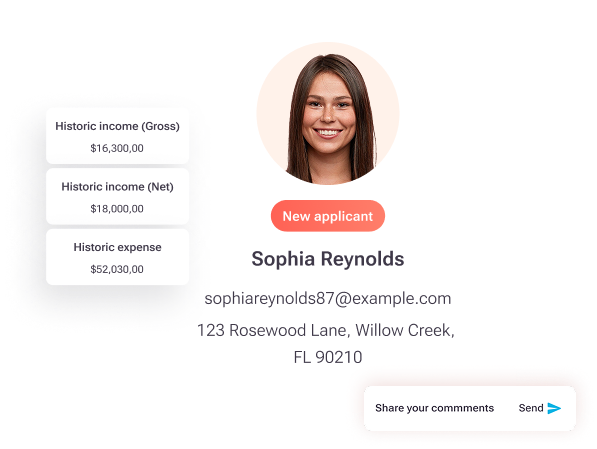
The table below compares the traditional email-chain process against the QuickApprove workflow across four key workflow stages:
| Workflow Stage | Email-Chain Process | QuickApprove | Time Saved |
|---|---|---|---|
| Document collection & completeness check | Manual follow-up emails, 3–7 days per incomplete file | Smart form logic rejects incomplete submissions at entry, automated communication support triggers follow-up instantly | Up to 5 days per application |
| Board review & voting | PDF packets emailed to board members, responses tracked manually across inboxes | Board-ready approval process with dedicated voting dashboard, summarized applicant reports delivered in platform | Up to 3–5 days per cycle |
| Approval communication | Manager drafts and sends approval letters manually | Customized approval letters and personalized welcome package generated automatically | 1–2 days per application |
| Status visibility for applicants | Applicants call or email for updates, managers respond individually | Real-time application tracking with reduced manual follow-ups, applicants see status in platform | Ongoing staff hours recovered daily |
These workflow gains scale across large portfolios. TenantEvaluation has processed 100,000+ applications annually across 5,000+ communities, with documented approval cycle reductions of up to 70%. The platform is built specifically for community associations, not generic rentals, with FCRA compliance as the foundation, not an afterthought.
Schedule a demo today and see how QuickApprove compresses your peak-season approval timeline inside one connected platform.
IDVerify+ Fraud Prevention During High-Volume Periods
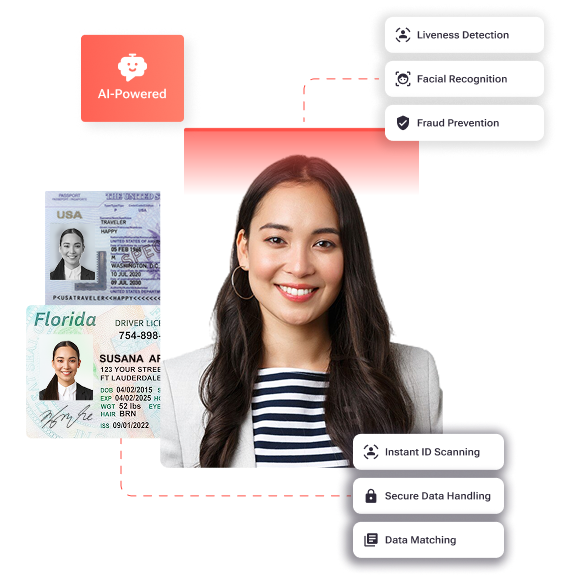
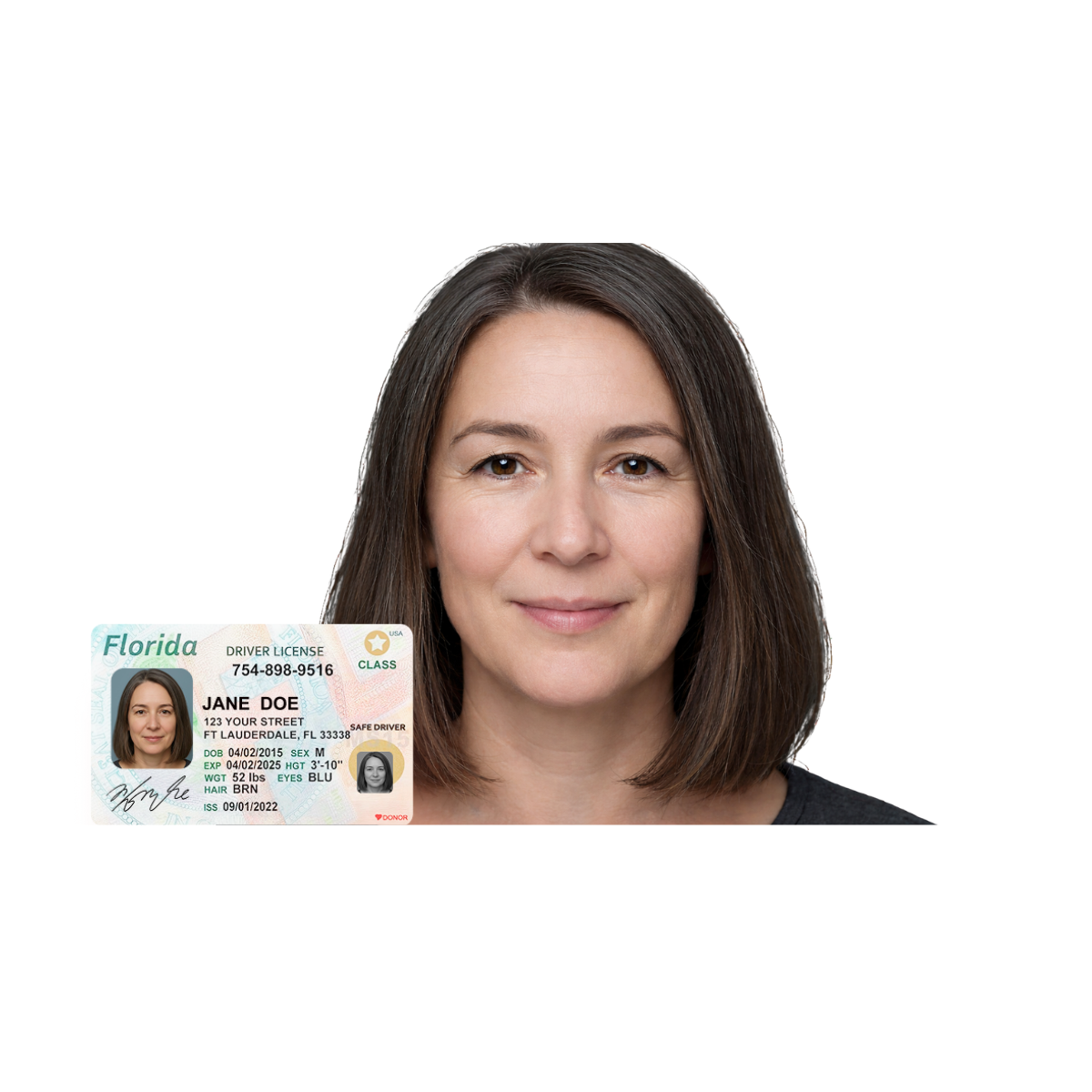
Peak season application volume creates elevated identity fraud exposure. IDVerify+ is TenantEvaluation’s biometric identity verification layer embedded directly into the screening workflow. It introduces automated KYC verification through government ID validation, AI-powered liveness detection, and biometric facial matching, confirming that applicants are real, present, and matched to their identification before any approval decision is made. During high-volume periods when manual document review is most prone to error, the biometric layer strengthens identity confirmation at scale without adding steps for CAMs or slowing the application path. IDVerify+ can be enabled per community and configured per portfolio, supporting different community risk profiles without a one-size-fits-all approach.
55+ Communities Verification Standardization
Age-restricted communities face a distinct layer of application complexity that generic screening tools are not designed to handle. TenantEvaluation’s 55+ Communities Verification capability is built for Florida Condos and HOAs and designed for Community Association Managers who need a more consistent and scalable way to handle age-restricted application requirements. It reduces manual work by replacing fragmented email-and-PDF workflows with a structured process. It also standardizes application handling across all applicants and communities in a portfolio and supports documentation consistency so records are complete and organized rather than scattered across inboxes. The capability improves operational efficiency and strengthens internal processes, creating a more controlled environment for CAMs and boards managing 55+ communities without replacing legal guidance.
Actionable Checklist for Peak-Season Readiness
Use the following checklist before peak season to reduce incomplete-file delays and board-meeting bottlenecks:
- Required documents confirmed in platform: Executed lease or purchase contract, government-issued photo ID (verified via IDVerify+), proof of income, signed background/credit check consent
- Community-specific documents loaded: Pet addendum, vehicle registration, parking assignment form, move-in/move-out scheduling form
- Board meeting calendar published: Dates, agenda cutoff deadlines, and quorum requirements confirmed for June–September
- Agenda submission deadlines communicated: CAMs and realtors notified of the exact date by which complete files must be submitted to appear on the next board agenda
- Quorum contingency plan in place: Virtual meeting option confirmed per Florida statute allowing video-conference board meetings with proper notice
- Incomplete-file red flags flagged at intake: Smart form logic configured to reject submissions missing required documents before they enter the review queue
- 55+ documentation workflow standardized: 55+ Communities Verification enabled for age-restricted communities in portfolio
- Board voting dashboard active: Board members confirmed in QuickApprove voting panel with login credentials verified before peak volume begins
- Approval letter templates configured: Customized approval letters and welcome packages set up for automated delivery upon board decision
Frequently Asked Questions
How long does a Florida condo board approval typically take during peak season?
The standard range is 14–45 days for a complete application moving through a normal board-meeting cycle. That range extends to 60–90+ days when summer quorum failures occur, when applications miss agenda cutoff deadlines, or when incomplete files require multiple rounds of follow-up before the board can review. Communities using TenantEvaluation’s QuickApprove workflow have reduced approval cycles by up to 70% by eliminating manual bottlenecks at every stage.
Is the approval timeline different for rental applications versus purchase applications in Florida condos?
Both paths move through the same board-meeting cadence, but purchase applications carry additional statutory steps. Florida law gives condo buyers a seven-business-day cancellation right that begins only upon receipt of required governing documents, so document delivery timing directly affects the overall closing and approval timeline. Rental applications do not carry this statutory window but are equally subject to incomplete-file delays and board-meeting scheduling constraints. TenantEvaluation’s intelligent form logic applies the correct document requirements to each applicant type automatically, which reduces errors and delays for both paths.
What happens when a Florida condo application is submitted incomplete?
An incomplete application cannot be placed on a board agenda for a vote. The file enters a manual follow-up cycle, the CAM contacts the applicant or realtor, collects missing items, and resubmits the file, often missing the current meeting’s agenda cutoff in the process. This pushes the application to the next properly noticed meeting, adding weeks to the timeline. TenantEvaluation’s smart form logic rejects incomplete submissions at entry, so only complete, reviewable files advance to the board queue.
Can a Florida condo board approve applications between meetings via email?
Florida law requires board actions to occur at properly noticed meetings where a quorum is present. Actions taken outside of compliant meetings may be void or voidable. Boards cannot substitute email chains for formal meeting votes on application approvals. TenantEvaluation’s QuickApprove board-ready approval process is designed to work within this legal framework, giving board members a structured voting dashboard accessible at any properly noticed meeting, including virtual meetings permitted under Florida statute.
Does TenantEvaluation work for both condos and HOAs across Florida?
Yes. TenantEvaluation serves community associations and management companies across Florida, including Miami, Fort Lauderdale, Palm Beach, Tampa, Orlando, Jacksonville, Sarasota, Fort Myers, and beyond. The platform is configured to each community’s governing documents and screening criteria, supporting both Chapter 718 condominium associations and Chapter 720 HOAs with FCRA-compliant workflows, board voting dashboards, biometric identity verification, and 55+ community documentation standardization.
Conclusion: A Connected Workflow for Florida’s Peak-Season Approvals
The condo peak season approval timeline is a process problem that Florida CAMs can control. Board-meeting cadence under §718.112 and §720.303, summer quorum failures, and incomplete files are predictable, recurring delay triggers. Florida CAMs and board members who address these triggers with a connected, auditable platform, rather than email chains and spreadsheets, compress 14–45 day cycles into days.
TenantEvaluation is built specifically for community associations and management companies, with the compliance-first architecture described earlier ensuring every workflow meets FCRA requirements by design. With QuickApprove accelerating resident approvals inside one connected platform, IDVerify+ delivering biometric fraud prevention at peak volume, and 55+ Communities Verification standardizing age-restricted application handling, TenantEvaluation provides the end-to-end workflow that Florida associations need to manage high-volume seasons without losing control, compliance, or visibility. The platform’s track record, including over $150M generated for communities and the processing scale mentioned earlier, demonstrates both reliability and proven ROI for Florida associations.
Schedule a demo today and put TenantEvaluation’s QuickApprove workflow to work before peak season arrives.
