Written by: Luis Teran, Co-founder, CEO, TenantEvaluation
Key Takeaways for Florida Condo Peak Season
- Florida condo peak season compresses months of rental applications into weeks and exposes every weakness in manual approval processes that rely on email, spreadsheets, or paper forms.
- A standardized seven-step checklist that covers document verification, biometric identity checks, FCRA-compliant screening, and board-ready dashboards helps associations handle volume while staying compliant.
- Manual workflows create bottlenecks such as incomplete submissions, delayed board reviews, and identity fraud risks that can cause deferred revenue and legal exposure.
- TenantEvaluation provides an all-in-one platform with QuickApprove, IDVerify, and 55+ Communities Verification that streamlines approvals while maintaining FCRA compliance and audit trails.
- Use TenantEvaluation to replace fragmented manual processes with a faster, compliant approval system built for Florida associations.
7-Step Condo Peak Season Approval Checklist
- Confirm governing document rules before accepting applications. Verify that your declaration, bylaws, and any amendments address minimum lease durations, rental caps, and board approval requirements. Under Florida Statutes section 718.110(13), amendments that restrict rental duration or frequency apply only to owners who consented and to buyers who acquired title after the amendment’s effective date. Outdated documents create direct compliance risk during peak season.
- Publish a complete, community-specific application package. Provide all required forms, fee disclosures, and document checklists before the season opens. Transfer or approval fees for Florida condominiums cannot exceed $150 per applicant (subject to periodic CPI inflation adjustments published by DBPR) under Section 718.112(2)(k), Florida Statutes, with spouses or a parent or parents and any dependent children treated as one applicant.
- Enforce complete submissions at intake. Reject incomplete applications immediately instead of chasing missing documents during review. Required items typically include an executed lease, government-issued ID, proof of income, and any community-specific addenda. Smart form logic that auto-rejects incomplete submissions removes the most common bottleneck before it starts.
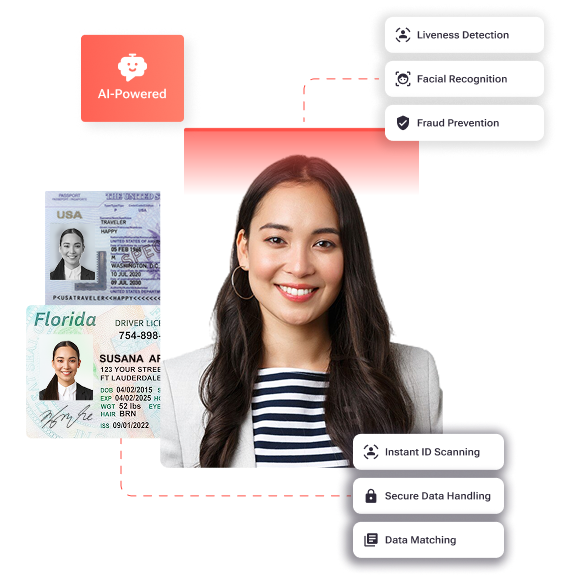
- Run biometric identity verification before screening. Document uploads alone cannot prevent impersonation or synthetic identity fraud. A biometric layer that includes government ID validation, AI-powered liveness detection, and selfie-to-ID facial comparison confirms that the applicant is a real, present individual matched to their identification before the background check proceeds.
- Complete FCRA-compliant background and credit screening. Screening should cover criminal history, credit, eviction records, income verification, and reference checks. Maintain strict permissible purpose controls and built-in adverse action workflows. Use screening data from direct credit bureau relationships, not third-party scraping, to protect the association from liability exposure.
- Route completed applications to a board-ready review dashboard. Board members need summarized applicant reports, timestamped voting records, and real-time application status, not scattered email attachments. A dedicated voting panel with a full audit trail replaces back-and-forth communication and supports defensible, documented decisions.
- Issue approval or denial with a customized letter and onboarding package. Approved applicants receive a formal approval letter and a personalized welcome package. Denied applicants receive a compliant adverse action notice. Retain all records in an auditable, searchable format for future board review or regulatory inquiry.
See how TenantEvaluation executes all seven steps in one platform and keep peak season approvals on track.
The Problem: How Manual Workflows Break Under Peak Season Pressure
Manual approval workflows create compounding failures when application volume spikes. Incomplete submissions arrive by email and trigger individual follow-up calls. Board members receive document packets without summaries, which stretches review cycles from days to weeks. Identity verification relies on visual document inspection, so communities remain exposed to stolen IDs and synthetic identities. Because association rules are legally binding, failure to follow them can result in penalties, leasing suspension, fines, legal action, or forced removal of a noncompliant tenant. Those consequences multiply when processes stay inconsistent across a high-volume season.
Age-restricted communities face an additional layer of complexity. Amendments to governing documents can change rental rights over time if the required voting threshold is met. That structure means 55+ communities that rely on fragmented manual records risk documentation gaps that surface during audits or disputes. The cost of non-compliance appears in delayed approvals that defer rental income, inconsistent documentation that creates legal exposure, and identity fraud that generates liability far beyond the cost of prevention.
The Solution: TenantEvaluation for Florida Peak Season Approvals
Eliminating these risks requires replacing fragmented manual processes with a unified platform that addresses each failure point. TenantEvaluation is the all-in-one resident screening and onboarding platform built specifically for Florida community associations and management companies. Founded in 2007 by property managers, board members, and software engineers, the platform has processed 100,000+ applications annually across 5,000+ communities and generated $150M for those communities, so every feature reflects real peak season pressure.
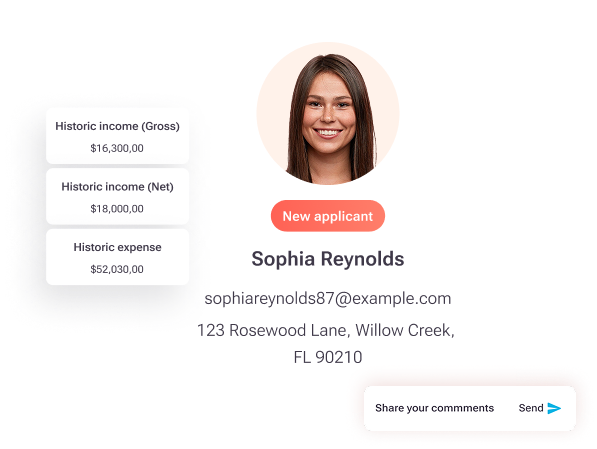
Three capabilities directly address peak season approval volume and compliance:
- QuickApprove is TenantEvaluation’s accelerated approval workflow for CAMs, boards, and property management teams. It moves applications from submission to decision inside one connected platform, with real-time application tracking, automated communication support, fewer manual follow-ups, customized approval letters, and a personalized welcome package. It supports high-volume seasons and complex onboarding requirements while preserving control, compliance, and visibility.
- IDVerify embeds biometric identity verification directly into the screening workflow. Government ID validation, AI-powered liveness detection, and biometric selfie-to-ID comparison run natively inside TenantEvaluation with no external portals and no workflow disruption. CAMs see ID authenticity confirmation, liveness status, and biometric match results inside the screening report.
- 55+ Communities Verification standardizes how age-restricted application requirements are handled across applications. It reduces manual work, improves documentation consistency, and strengthens operational efficiency and internal controls for Florida condos and HOAs that manage 55+ communities.
See how Florida’s top associations handle peak season approvals and keep compliance front and center.

Florida Rental Rules That Directly Affect Peak Season Workflows
A Florida condominium association may collect a security deposit from a prospective tenant, in addition to the landlord’s deposit, to protect common elements, capped at one month’s rent, if authorized by the governing documents under Section 718.112(2)(k), Florida Statutes. The $150 fee cap established in step two applies regardless of application volume, so associations cannot offset peak season processing costs by raising fees.
A Florida condominium association may adopt an amendment requiring all leases to be approved by the association, but such an amendment applies only to unit owners who consent to it and to owners who acquire title after its effective date. Section 718.110(13) keeps rental restriction amendments prospective, which requires CAMs to track each owner’s acquisition date before applying current rules during approvals.
Short-term and seasonal rentals add another compliance layer that affects approval timing. Florida law requires state DBPR licensing for units that qualify as transient public lodging establishments under Florida Statutes section 509.013. Units rented to guests more than three times in a calendar year for periods of less than 30 days, or advertised as regularly rented for such periods, fall under this rule. Local requirements then sit on top of state law. Miami Beach prohibits rentals under six months and one day in most residential zones, and West Palm Beach establishes a six-month-and-one-day minimum rental period for most residential properties. Under Sarasota Ordinance 25-5560, effective in 2026, non-exempt single-, two-, three-, and four-family vacation rental units in residential zones within Sarasota city limits must obtain a Sarasota Vacation Rental Certificate, with annual renewals required. CAMs must reflect these state and local layers in their intake checklists so applications do not stall mid-review.
A condominium association may make written demand that a tenant pay rent directly to the association when the owner is delinquent under Section 718.116(11), Florida Statutes (while Section 720.3085(8) applies to homeowner associations). Effective use of this tool depends on accurate, documented approval records that clearly identify tenants and lease terms.
Common Documentation Red Flags That Slow Condo Approvals
Recorded covenants, conditions, and restrictions define the association’s authority and the owner’s obligations; rental plans that conflict with those documents create a common red flag in condo approvals. Frequent documentation issues include unsigned or unexecuted leases submitted as completed applications and outdated governing documents that predate rental cap or minimum-term amendments. Missing or expired government-issued ID, income documentation that does not match the lease term, and incomplete background check consent forms also stall approvals.
When a rental cap is reached, new owners may be placed on a waiting list before they can lease their unit, creating delays that affect lease approval timelines. That scenario requires real-time tracking to manage fairly and transparently. Many Florida condo communities require a designated responsible party within close proximity to respond to issues, along with compliance with parking limits and documented approval before hosting short-term rental guests. These requirements are often missing from manual submission packages and surface only during review.
Digital tools address these red flags by enforcing complete submissions at intake, auto-rejecting applications with missing documents, and maintaining a searchable audit trail of every submission and decision that boards can reference later.
How Rental Caps Tie Into Fannie Mae and FHA Project Approval
Rental cap enforcement during peak season protects both community governance and financing options for buyers. Fannie Mae’s project approval guidelines require that a condominium project meet concentration limits on investor-owned units, rental caps, and delinquency thresholds before loans in that project are eligible for purchase. FHA condo approval requirements evaluate owner-occupancy ratios, commercial space percentages, and reserve fund adequacy.
For association workflows, this connection means rental cap enforcement and accurate owner-occupancy tracking affect more than internal rules. They directly influence the financing options available to buyers and the marketability of units. Maintaining audit-ready records of approved leases, rental cap status, and owner-occupancy ratios supports both association governance and lender project eligibility reviews.
Best Practices for Boards and CAMs During Peak Season
Workflow standardization is the single highest-leverage improvement available to Florida associations that manage peak season volume. When intake checklists, screening criteria, and board review dashboards stay consistent, ad hoc processes give way to a repeatable, defensible system. That system then enables real-time visibility into application status, which reduces follow-up calls and shortens decision timelines because staff and applicants can check status on demand.
Audit-ready documentation is mandatory for modern associations. Every approval and denial should be supported by a complete record that includes the application, screening results, board vote, and the decision letter. FCRA-compliant adverse action workflows need to trigger automatically for denials. Identity verification results should sit alongside screening reports, and for 55+ communities, age-eligibility documentation must remain consistent across every application in the portfolio.
Digital tools that operate inside a single platform, rather than across email, spreadsheets, and disconnected portals, provide the operational foundation for handling peak season without adding headcount.
Frequently Asked Questions
What is the new condo law in Florida in 2026?
Florida’s 2026 condo regulatory environment builds on earlier laws that address structural safety, reserve funding, and association governance. For rental approvals, the operative statutes remain Section 718.110(13) and Section 718.112(2)(k) of the Florida Statutes. Section 718.110(13) governs how rental restriction amendments apply, prospectively to consenting owners and post-amendment buyers only. Section 718.112(2)(k) caps transfer and approval fees at $150 per applicant and limits security deposits to one month’s rent when authorized by governing documents. At the local level, 2026 introduces new requirements in markets such as Sarasota, where Ordinance 25-5560 mandates a Vacation Rental Certificate for short-term rental units within city limits. CAMs and boards should review their governing documents and consult association counsel so approval workflows reflect current statutes and any applicable local ordinances.
How hard is it to get approved for a condo in Florida?
Approval difficulty varies by community and by the strictness of governing documents. Some associations require board interviews, minimum credit scores, income-to-rent ratios, background checks, and proof of identity in addition to a completed application and executed lease. Communities with rental caps may maintain waiting lists that delay approval regardless of applicant qualifications. The process becomes more predictable when the association publishes clear written criteria and applies them consistently to every applicant. Applicants move fastest when they submit a complete package that includes an executed lease, valid government-issued ID, income documentation, and all required community-specific forms at initial submission.
What are the red flags in condo docs?
Significant red flags in condo documentation include rental restriction amendments that have not been properly recorded or that predate the current ownership structure. Rental caps that sit at or near their limit can trigger waiting lists and delay leasing. Minimum lease term requirements that conflict with the proposed lease duration, transfer fee provisions that exceed the statutory $150-per-applicant cap, and security deposit clauses not authorized by the governing documents also raise concerns. For buyers using financing, red flags include owner-occupancy ratios below lender thresholds and reserve fund deficiencies that can affect Fannie Mae or FHA project approval eligibility. Associations should conduct a governing document audit annually and after any amendment so approval criteria, fee schedules, and rental restrictions remain current, properly recorded, and consistently enforced.
What are FHA and Fannie Mae condo approval requirements?
FHA condo approval requires that a project meet HUD eligibility standards, including minimum owner-occupancy ratios, limits on commercial space, adequate reserve funding, and restrictions on the percentage of units that are FHA-insured. Fannie Mae’s project approval guidelines evaluate investor concentration, delinquency rates, litigation status, and insurance coverage. Both programs require that the association’s governing documents and financial records be available for lender review. For associations, accurate records of owner-occupancy status, approved leases, and rental cap utilization support lender project approval reviews and protect the financing options available to unit buyers. These requirements sit outside the association’s internal tenant screening process but depend on consistent rental and ownership records.
Can a Florida condo association deny a rental application?
Yes. A Florida condominium association that has adopted board approval requirements in its governing documents may approve or deny rental applications based on documented criteria such as credit history, background check results, income verification, and compliance with minimum lease term or rental cap rules. Denials must rely on criteria applied consistently to all applicants and must include a compliant adverse action notice when the denial is based in whole or in part on a consumer report. Associations that lack written, consistently applied criteria face greater legal exposure when denials are challenged. Maintaining a complete audit trail of every application, screening result, board vote, and decision letter remains the primary defense against fair housing or discrimination claims.
Conclusion: Turning Peak Season From Bottleneck to System
Florida condo peak season approval requirements function as an operational system that either holds under pressure or fails in visible ways. Manual processes create bottlenecks at every phase, including incomplete intake, delayed identity verification, slow board review, and inconsistent documentation. Associations then pay the price through deferred revenue, compliance exposure, and staff hours consumed by follow-up work that a digital platform can handle automatically.
TenantEvaluation is the all-in-one resident screening and onboarding platform built for Florida community associations, with FCRA compliance at its core. QuickApprove accelerates the path from submission to decision inside one connected platform. IDVerify confirms applicant identity through biometric verification before approval. 55+ Communities Verification standardizes age-restricted application handling across portfolios. Together, QuickApprove, IDVerify, and 55+ Communities Verification replace email chains, spreadsheets, and manual follow-ups with a faster, clearer, audit-ready workflow while preserving board oversight and compliance.
Move from application to approved resident faster and see the platform in action.
