Benefits of Condo Control Software for CAMs in 2026
Written by: Luis Teran, Co-founder, CEO, TenantEvaluation | Last updated: July 2, 2026
Key Takeaways for Florida CAMs
Condo control software consolidates screening, approvals, document collection, and lease tracking into one centralized system that replaces manual spreadsheets and email workflows.
Automated document requests, board voting panels, and real-time lease status tracking reduce repetitive administrative tasks and free staff time for higher-value work across multi-community portfolios.
Built-in FCRA compliance, audit trails, permissible purpose controls, and automatic PII redaction help CAMs meet regulatory requirements without relying on fragmented manual processes.
Biometric identity verification, standardized 55+ documentation, and revenue-sharing models represent emerging 2026 standards that improve fraud protection and convert onboarding into a potential income stream.
TenantEvaluation delivers these capabilities through QuickApprove, IDVerify, and Lease Tracking, helping Florida CAMs streamline operations and maintain compliance at scale.
The Current Industry Landscape for Florida Associations
Florida community associations face a convergence of pressures in 2026. Identity fraud targeting residential communities has increased, with impersonation attempts, synthetic identities, and stolen government IDs representing a growing share of fraudulent applications. Traditional document-based screening, which relies on uploaded copies of IDs and leases, provides insufficient protection against these methods. FCRA obligations also require strict permissible purpose controls, adverse action workflows, and data handling standards that manual processes struggle to satisfy consistently.
Age-restricted communities operating under 55+ requirements face additional documentation demands. Eligibility records must be consistent, organized, and defensible across every application. The operational baseline has shifted. CAMs who relied on spreadsheets and email folders three years ago now manage compliance exposure that those tools were never designed to address. Modern condo control software addresses these challenges by changing how associations handle daily operations and compliance.
Day-to-Day Operational Benefits for CAM Teams
Condo control software reduces repetitive administrative tasks that consume CAM schedules. Document collection moves from manual follow-up to automated requests with real-time status tracking. This automation catches incomplete submissions before they reach the manager’s queue, which eliminates back-and-forth with applicants and realtors that usually slows approvals. With cleaner applications flowing through faster, board voting workflows shift from email threads to structured digital panels where members review summarized applicant reports and cast timestamped votes.
Lease tracking also improves when records move from disconnected folders to centralized files with real-time status visibility, including active, pending, expired, or missing leases. This visibility connects directly to the onboarding workflow so teams see the full picture for each unit. Automated notifications keep applicants, owners, and board members informed without manual outreach from staff. The cumulative effect across a multi-community portfolio is substantial. Teams that previously spent hours daily on follow-ups redirect that time toward resident service, vendor management, and strategic projects.
Compliance and Governance Advantages for Associations
Condo control software built for community associations maintains audit trails at every stage of the application process. Each action, including document upload, board vote, approval decision, and adverse action notice, is timestamped and stored in a format that supports regulatory review. Permissible purpose controls restrict access to sensitive applicant data so only authorized parties can view it. Automatic redaction of personally identifiable information, including Social Security numbers and banking details, reduces the risk of data exposure during document handling.
Record retention standards require that associations maintain application records in an organized, retrievable format. Centralized digital platforms satisfy this requirement by default and make document retrieval faster during audits or disputes. For CAMs managing communities with FCRA obligations, the difference between a platform built on compliance and one that treats it as an add-on is significant. A compliance-first platform reduces legal exposure and simplifies board oversight.
Common Failure Points in Manual Processes
Manual condo management processes fail in predictable ways. Lease records become fragmented across inboxes, shared drives, and physical folders, which makes occupancy confirmation slow and unreliable. Manual lease expiration tracking produces gaps that create compliance exposure and resident disputes. Incomplete applications move forward because no automated logic rejects them at submission. Board members lack visibility into application status, which creates delays that compound during peak seasons.
Approval letters and welcome communications also require separate manual effort after each decision. Identity verification relies on document review alone, with no biometric confirmation of physical presence. Each of these failure points is individually manageable at low volume. Across a portfolio of 10 to 50 communities, they accumulate into a structural operational problem that strains staff and frustrates residents.
Emerging Technology and Revenue Standards in 2026
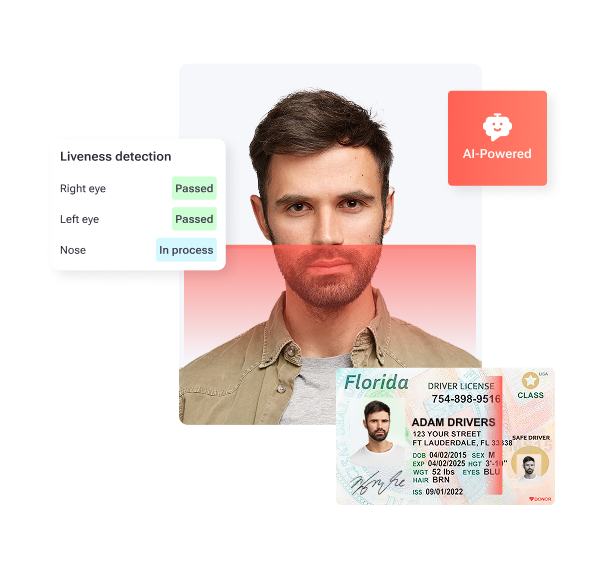
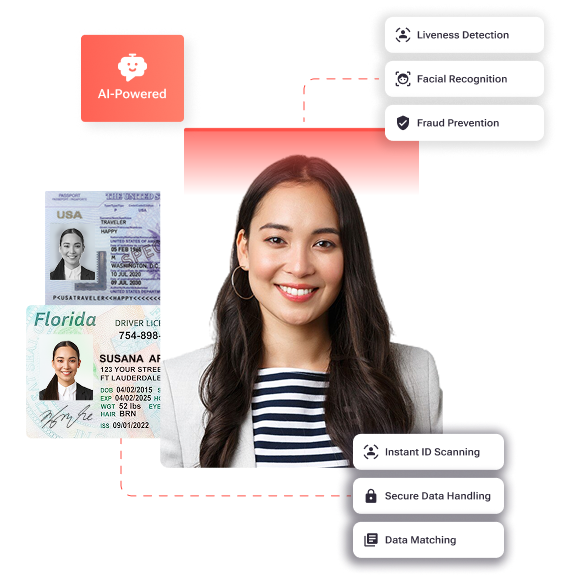
Industry standards in 2026 respond directly to these manual failure points. Three developments now reshape expectations for condo control platforms. First, biometric identity verification has moved from an optional enhancement to an emerging baseline for communities concerned about fraud. AI-powered liveness detection and selfie-to-ID biometric comparison provide a layer of identity confirmation that document uploads cannot match.
Expanding upon the Basic package, IDVerify Plus includes a critical Liveness feature, ensuring the person present matches the photo on the ID through sophisticated facial recognition technology. This advanced level of verification is ideal for high-security needs.
Second, workflow standardization, especially for age-restricted communities, is replacing ad hoc processes with structured, repeatable documentation frameworks. These frameworks reduce inconsistency across applications and make audits more straightforward. Third, revenue-sharing models are changing how associations think about the cost of onboarding software. Platforms that collect application fees and return a portion to the association convert a cost center into a controlled income stream. This alignment of platform incentives with association outcomes encourages long-term adoption.
Evaluation Framework for CAMs Selecting Software
CAMs evaluating condo control software in 2026 can use six criteria to compare platforms and set priorities.
Compliance readiness: FCRA compliance should be built into the platform architecture, not added as a surface feature. The platform needs permissible purpose controls, automated adverse action workflows, and built-in audit trails that stand up to regulatory review.
Time savings quantification: The vendor should demonstrate measurable reductions in application processing time and staff hours, with benchmarks from similar portfolios. Some platforms document reductions in processing time exceeding 70 percent when end-to-end onboarding is automated.
Board dashboard access: Boards need a dedicated review and voting interface instead of email-based approvals. Centralized dashboards improve transparency, speed, and record keeping for every decision.
Lease lifecycle visibility: Strong platforms connect applications, approvals, unit data, and lease documentation into one centralized, real-time workflow. When lease management remains a separate manual process, gaps and disputes become more likely.
Scalability for multi-community portfolios: The platform should handle higher onboarding volume without added complexity or additional headcount. Configuration for new communities should follow a repeatable pattern that supports growth.
Integration with screening tools: Background screening, income verification, and identity confirmation should operate inside the same platform. Third-party portals that disrupt the workflow slow teams and increase error risk.
Dedicated board dashboard with real-time voting panel
Email chains, no centralized view
Not available
Lease Visibility
Centralized, real-time lease status connected to onboarding
Spreadsheets and folder searches
Not available
ROI Callout: TenantEvaluation automates the entire onboarding process, reducing application cycles and freeing significant staff time each day. One Florida-based management company documented $240,000 in annual savings after switching from manual processes.
How TenantEvaluation Delivers These Benefits
TenantEvaluation is built specifically for community associations and management companies, with FCRA compliance as the foundation, not an afterthought. As a direct reseller of TransUnion and Equifax data, TenantEvaluation accesses credit bureau information under strict bureau rules with no gray-market or offshore data sources. This structure positions community associations to stay protected from liability exposure that third-party scraping arrangements cannot address.
QuickApprove is TenantEvaluation’s accelerated approval workflow for CAMs, boards, and property management teams inside one connected platform. It replaces email chains and spreadsheets with real-time application tracking, automated communication support, customized approval letters, and a personalized welcome package. Teams gain faster, clearer, and more consistent approvals while maintaining control, compliance, and visibility. The workflow supports high-volume seasons and communities with complex onboarding requirements.
QuickApprove: Fast, Informed Decisions at the Click of a Button
IDVerify introduces biometric identity verification directly into the screening workflow. Government ID validation, AI-powered liveness detection, and biometric selfie-to-ID comparison run natively inside TenantEvaluation with no external portals and no workflow disruption. The result is a multi-layer fraud prevention system that confirms applicants are real, present, and matched to their identification before approval decisions are made.
ID Verify
55+ Communities Verification is a built-in capability that helps Florida condos and HOAs standardize how age-restricted requirements are handled across applications. It reduces manual work, supports documentation consistency, improves operational efficiency, and strengthens internal processes. The feature is designed for Community Association Managers managing age-restricted communities at scale.
+55 Communities
Lease Tracking delivers centralized, real-time lease visibility and lifecycle control from application to occupancy. It connects resident onboarding, unit data, approvals, and lease documentation inside one platform. CAMs see real-time lease status, automated lease document collection during onboarding, unit-level tracking, searchable digital history, and audit-ready digital lease records. The feature reduces manual follow-ups, spreadsheets, and scattered email chains across every community in a portfolio.
TenantEvaluation has processed 100,000+ applications annually across 5,000+ communities and has generated $150 million for those communities through its revenue-sharing model, which returns a portion of collected application fees directly to associations.
Schedule a demo today to see QuickApprove, IDVerify, and Lease Tracking in a live walkthrough built for Florida CAMs.
Frequently Asked Questions
What ROI can a Florida CAM realistically expect from condo control software?
The measurable ROI from condo control software comes from cost reduction and revenue generation. On the cost side, automating document collection, application review, board voting, and lease tracking eliminates the manual labor hours that accumulate across a multi-community portfolio. Documented cases show significant savings, including the example mentioned in the ROI callout above. On the revenue side, TenantEvaluation’s revenue-sharing model returns a portion of collected application fees to the association, which converts a cost center into a controlled income stream. For CAMs managing 10 to 50 communities, the combined effect becomes meaningful at the portfolio level.
How much time does condo control software actually save community association managers?
Time savings vary by portfolio size and the complexity of each community’s onboarding requirements, but the primary drivers remain consistent. Automated document collection eliminates manual follow-up with applicants, realtors, and owners. Smart form logic rejects incomplete submissions before they reach the manager’s queue. Board voting workflows replace email threads with structured digital panels. Lease tracking replaces folder searches and spreadsheet updates with real-time centralized records. As noted in the ROI discussion above, these efficiencies compound significantly at the portfolio level as more communities adopt the same standardized workflows.
Is condo control software worth the investment for smaller management companies?
Smaller management companies also feel the impact of manual processes, even with a limited number of communities. Incomplete applications, manual lease tracking, email-based board approvals, and identity verification through document review alone create operational risk that grows with each additional community. Condo control software built on a pay-per-application model, such as TenantEvaluation, removes upfront subscription costs so the platform generates value only when applications are processed. This model lowers the financial barrier to adoption while delivering the same compliance infrastructure, audit trails, and workflow automation available to enterprise-level portfolios.
How does condo control software help Florida associations manage 55+ age-restricted requirements?
Age-restricted communities in Florida face documentation requirements that manual processes handle inconsistently. Eligibility records collected through emails, PDFs, and manual follow-ups create fragmented documentation that increases exposure during audits or disputes. TenantEvaluation’s 55+ Communities Verification standardizes how age-restricted requirements are handled across applications. It reduces manual work, supports documentation consistency, improves operational efficiency, and strengthens internal processes. The feature is built specifically for Florida condos and HOAs and supports Community Association Managers who need a scalable, repeatable process across multiple age-restricted communities. It supports documentation and consistency without replacing legal guidance.
What makes TenantEvaluation different from generic tenant screening platforms?
Generic tenant screening platforms are built for rental property managers, not community associations. They typically provide background checks and credit reports without the board voting dashboards, lease lifecycle tracking, biometric identity verification, age-restricted community workflows, or FCRA-first compliance architecture that Florida CAMs require. TenantEvaluation is built exclusively for community associations and management companies, with direct credit bureau reseller relationships with TransUnion and Equifax, built-in adverse action workflows, automatic PII redaction, a dedicated board approval panel, and Lease Tracking that connects every stage of the resident journey into one audit-ready platform. The platform operates at the scale described earlier in this article, which exceeds the volume that generic tools are designed to support.
Conclusion: Selecting a Condo Control Platform with Confidence
Condo control software in 2026 delivers clear, measurable operational gains for Florida CAMs. Manual processes create costs through hours spent on follow-ups, fragmented lease records, identity fraud exposure, inconsistent documentation for age-restricted communities, and board approval delays that compound during peak seasons. The evaluation criteria are clear: compliance readiness, time savings, board visibility, lease lifecycle control, scalability, and integrated screening. Platforms that treat compliance as a foundation and connect every stage of the resident journey into one centralized workflow deliver the operational control that modern community association management requires.
TenantEvaluation was built for this environment by property managers and board members who understood the problem from the inside. Schedule a demo today and evaluate TenantEvaluation against your current processes using the criteria outlined in this guide.