Written by: Luis Teran, Co-founder, CEO, TenantEvaluation
Key Takeaways
- Florida buyers now have a non-waivable seven-business-day window under Fla. Stat. § 718.503 to review a complete condo document package before closing.
- The required package includes the declaration, bylaws, budget, financial statements, reserve study or SIRS, estoppel certificate, and other key records that must be delivered before the review clock starts.
- Red flags such as reserve funding below 70%, delinquency rates above 15%, pending litigation, or missing SIRS reports can signal high financial or compliance risk for buyers.
- Manual review processes create delays, data security risks, and compliance gaps, while automated platforms enforce completeness, protect sensitive data, and deliver board-ready decisions faster.
- TenantEvaluation helps Florida associations streamline condo document review with QuickApprove workflows, biometric ID verification, and FCRA-compliant audit trails.
Florida’s Seven-Day Condo Document Review Window
Effective July 1, 2025, HB 913 extended the Florida condo buyer rescission period from three business days to seven full business days, excluding weekends and holidays, under Fla. Stat. § 718.503. The clock begins only when the buyer receives a complete document package. If the package is incomplete, the seven-day period does not begin to run, which creates a critical compliance obligation for associations and sellers.
This rescission right is non-waivable. No contract clause can shorten or eliminate it. For new construction, Florida statutes provide a 15-day cancellation window for developer sales of condominium units, beginning on the later of the contract signing date or the date all required disclosures are received. A 15-day voidability period applies in connection with required developer disclosures for condominium contracts.
Many Florida condo deals close within 30 to 60 days from contract execution. Associations that take 10 or more days to deliver documents compress the buyer’s review window and can push closings past agreed deadlines. Automated document collection and delivery, as provided through TenantEvaluation’s platform, directly reduces this risk.
Core Documents for Florida Condo Board Review
The required Florida condo document package includes the following records, all of which must be delivered before the seven-day review period begins:
- Declaration of Condominium
- Articles of Incorporation and Bylaws
- Rules and Regulations
- Current annual budget
- Most recent financial statements
- Frequently Asked Questions (FAQ) sheet
- Reserve study or Structural Integrity Reserve Study (SIRS)
- Board and membership meeting minutes (last 12–24 months)
- Estoppel certificate
- Insurance declaration pages
- Milestone inspection report (where applicable)
HB 913 includes provisions for milestone inspection and SIRS reports, ensuring availability for prospective buyers. Under HB 1021, effective January 1, 2026, associations with 25 or more units must post governing documents, budgets, financial reports, meeting notices, agendas, and at least 12 months of meeting minutes on a password-protected website or owner portal within 30 days of receipt or creation.
Once these documents are assembled, associations need a systematic approach to review them efficiently while meeting Florida’s statutory deadlines. The following seven-step process reflects current requirements and best practices for 2026.
A 7-Step Florida Condo Board Review Workflow
Florida associations and their Community Association Managers (CAMs) benefit from a standardized, repeatable review process. The steps below organize requests, protect timelines, and support consistent board decisions.
- Request initiation: The buyer or their realtor submits a formal written request for the complete document package. Under Fla. Stat. § 720.303(5), homeowners’ associations must make official records available within 10 business days of a written request (condominium associations under § 718.111(12) must allow inspection at reasonable times).
- Completeness check: The CAM or association manager verifies that all required documents are present, current, and executed. An incomplete package prevents the seven-day review clock from starting and should trigger an immediate follow-up list.
- Financial analysis: The reviewer examines the budget, reserve study, financial statements, and estoppel certificate for reserve funding levels, delinquency rates, pending assessments, and operating deficits. Any gaps or inconsistencies should be flagged for board attention.
- Legal and structural review: The declaration, bylaws, milestone inspection reports, and SIRS are reviewed for restrictions, litigation disclosures, and structural findings. Any pending or recently passed special assessments are legally required to be disclosed during this stage.
- Red-flag scan: The association applies threshold-based criteria, described in the table below, to identify reserve underfunding, delinquency levels, insurance gaps, and deferred maintenance patterns across meeting minutes and financial records.
- Board decision: The board reviews the application using uniform, documented criteria. Associations cannot move a package through review if required items are missing, unsigned, expired, or inconsistent. TenantEvaluation’s QuickApprove provides a board-ready voting dashboard that replaces email chains with a connected, auditable approval workflow.
- Record retention: All documents, decisions, and communications are archived in an audit-ready format. HB 913 added meeting minutes, video-conference recordings, and officer affidavits to the list of official records associations must maintain.
Financial and Governance Red Flags in 2026
Buyers and their advisors should apply specific financial and governance thresholds when evaluating condo association documents. The following table summarizes the most material red flags identified in Florida’s 2026 regulatory environment:
| Category | Red Flag Threshold | Risk |
|---|---|---|
| Reserve funding | Below 70% funded (Association Reserves classification: “fair” below 70%, “weak” below 30%) | High special assessment risk; 74% of associations are currently below 70% funded |
| Owner delinquency | Above 15% of units 60+ days past due | Project ineligible for Fannie Mae, Freddie Mac, and FHA financing |
| Pending litigation | Any active construction defect, structural, or injury claim | Lenders may refuse financing; legal costs can deplete reserves |
| Insurance gaps | Elevated insurance deductibles | Non-warrantable status; financing denial |
| Deferred maintenance | Same repair item appearing across 3+ board meeting cycles without resolution | Signals funding or decision-making failure; precedes emergency assessments |
| SIRS compliance | No completed SIRS for buildings 3+ stories (deadline December 31, 2026) | Statutory non-compliance; financing and resale risk |
| Reserve contributions | Below 10% of annual budgeted income (rising to 15% effective January 4, 2027 under Fannie Mae LL-2026-03) | Active underfunding; potential non-warrantable status |
Champlain Towers South had significantly underfunded reserves before its 2021 collapse, resulting in a large special assessment. That history shows why reserve analysis is non-negotiable in Florida condo due diligence.
Board Authority to Approve or Reject Buyers
Florida condominium associations may reject buyers when the governing documents grant approval authority, provided the rejection is based on uniform, documented criteria and does not violate the Fair Housing Act. Valid rejection grounds include financial insufficiency, incomplete applications, or failure to meet established community standards. Boards cannot reject applicants based on race, national origin, religion, sex, disability, familial status, or other protected classes under federal law.
A condominium association may charge a transfer or approval fee only if authorized in the governing documents, and the fee may not exceed $150 per applicant under Florida Statute 718.112, with spouses or a parent and dependent child counted as one applicant.
Incomplete applications are among the most common grounds for delayed or rejected reviews. Incomplete application packages will not be processed, and the review clock does not begin until all required materials are received. TenantEvaluation’s smart application logic automatically checks for executed documents, valid IDs via IDVerify, and required supporting materials. The system rejects incomplete submissions before they reach the board and removes the most common source of review delays.
Typical Costs for Florida Condo and HOA Documents
Florida law establishes specific caps on the fees associations may charge in connection with document production and unit transfers. The primary costs buyers and sellers encounter include the following items.
- Estoppel certificate: Capped at $299 for a standard request, with an additional $119 permitted for expedited requests and up to $179 more if the account is delinquent under Fla. Stat. § 718.116(8). The seller is responsible for this fee.
- Transfer or approval fee: Capped at $150 per applicant under Florida Statute 718.112, payable by the buyer. This fee is only chargeable if the governing documents specifically authorize it.
- Document copying: Florida statutes allow associations to charge only their actual costs for copies and, for HOAs under §720.303, personnel retrieval time that exceeds 30 minutes; no statutory per-page or hourly caps are prescribed.
- Resale document package: Florida HOA document fees typically total $300–$660, including a resale certificate ($200–$400), transfer fee ($75–$200), and portal fee ($25–$60).
Florida requires production of an estoppel certificate within 10 business days under § 718.116. Associations that miss this deadline face statutory penalties and a rebuttable presumption of willful non-compliance.
Manual Review Burdens for Florida Associations
Manual condo board document review creates compounding operational problems for Florida associations. Incomplete submissions arrive without the required documents, which forces CAMs to chase applicants and owners through email chains. Sensitive personal information such as Social Security numbers, bank statements, and tax returns circulates in unencrypted formats, creating data security exposure. Board members receive disorganized document packages with no clear summary of what requires a decision, which leads to delayed votes and missed statutory deadlines.
Well-managed buildings often provide document packages in 48 hours, while others require 10 days or more, which directly compresses the buyer’s statutory review window and can derail closings. Recent Florida legislation includes penalties for records-access violations by associations, adding financial risk to operational delays.
Audit readiness remains a persistent gap. Without centralized, timestamped records of every document received, every board vote, and every communication, associations face liability exposure in disputes and regulatory reviews. TenantEvaluation’s Lease Tracking capability connects resident onboarding, unit data, approvals, and lease documentation into one centralized, real-time, audit-ready workflow. This structure removes spreadsheets and scattered email chains from application to occupancy.
Building a Consistent, Compliant Review Process
Florida associations that standardize their document review processes reduce delays, minimize compliance risk, and deliver more consistent outcomes for buyers and boards. Effective governance in 2026 rests on several connected practices that work together as one system.
Start by adopting a written, board-approved checklist of required documents aligned to current Florida statutes, including SIRS, milestone inspection reports, and insurance declarations. This checklist becomes the foundation for uniform screening criteria that you apply to every applicant, and consistency in both documentation and evaluation protects against Fair Housing exposure. Before any application enters board review, establish a defined completeness check that uses your checklist to verify all required materials are present and return incomplete packages with a specific list of missing items.
During financial review, maintain at least a 24-month lookback on board meeting minutes. Buyers should review at least 24 months of meeting minutes to capture one full annual budget adoption, recurring deferred maintenance, and early discussions of special assessments. Associations should retain all application materials, board votes, and adverse action notices in a timestamped, searchable audit trail to support FCRA compliance and regulatory review. They should also post all required documents to the association’s website or owner portal within 30 days of receipt or creation, as required under HB 913 for associations with 25 or more units.
How TenantEvaluation’s Digital Platform Changes Review
Automated platforms address the structural failures of manual document review by centralizing collection, enforcing completeness, protecting sensitive data, and delivering board-ready decision workflows. TenantEvaluation, built specifically for community associations and management companies with FCRA compliance as the foundation, is a leading platform for Florida associations managing this process at scale.
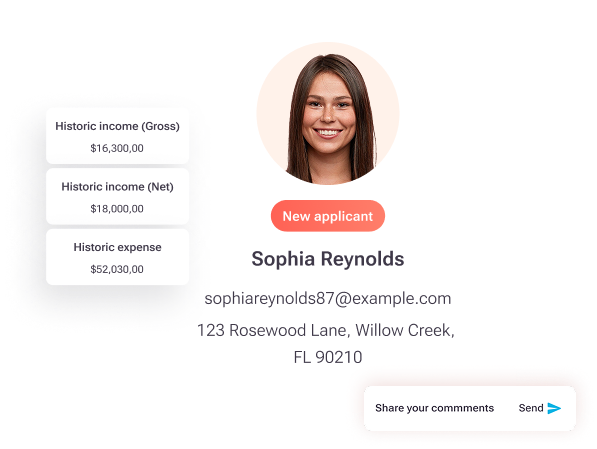
TenantEvaluation’s QuickApprove accelerates resident approvals inside one connected platform. It gives CAMs, boards, and property management teams real-time application tracking, automated communication support, a board-ready approval process with a dedicated voting dashboard, customized approval letters, and a personalized welcome package. Applications no longer stall in email chains or spreadsheets. Boards receive AI-generated applicant summaries and cast timestamped votes inside the same platform where documents were collected.
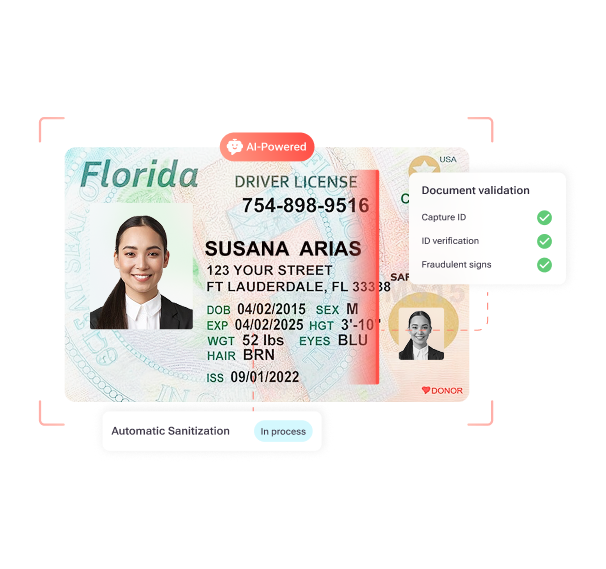
IDVerify adds a biometric identity verification layer directly into the screening workflow, combining government ID validation, AI-powered liveness detection, and facial biometric matching. This shift moves communities from document-based review to verified physical identity confirmation, which is a critical upgrade as identity fraud increases across Florida condo and HOA communities.

TenantEvaluation’s automatic redaction of sensitive personal information (PII), PCI Level 1 compliance, and end-to-end encryption protect associations from data breach liability. Built-in adverse action workflows and direct credit bureau reseller relationships with TransUnion and Equifax ensure every screening decision meets FCRA standards. With 100,000+ applications processed annually across 5,000+ communities, TenantEvaluation has generated $150 million for communities while reducing approval times by up to 70%.
Schedule a demo today to see how TenantEvaluation’s QuickApprove workflow and automated document review work for your Florida association.
Frequently Asked Questions
What is condo board document review and why does it matter in Florida?
Condo board document review is the process by which a prospective buyer, their realtor, and the association examine the governing documents, financial records, reserve studies, inspection reports, and meeting minutes of a condominium association before a purchase closes. In Florida, this process is governed by Fla. Stat. § 718.503, which grants buyers a seven-business-day right to cancel after receiving a complete document package. The review matters because it is the primary mechanism through which buyers identify financial risks such as underfunded reserves, pending special assessments, or active litigation that could result in significant unexpected costs after closing. For associations, a well-managed document review process reduces liability, supports consistent board decisions, and ensures compliance with Florida’s 2026 statutory requirements under HB 913 and HB 1021.
Who is responsible for delivering condo documents to the buyer in Florida?
Under Florida law, the seller is responsible for providing the buyer with the required condominium document package, including the declaration, bylaws, rules, current budget, most recent financial statements, and FAQ sheet. The association is responsible for producing the estoppel certificate within 10 business days of a written request, and the seller bears the cost of that certificate. For additional records such as meeting minutes, insurance declarations, and inspection reports, the association must make official records available within 10 working days of a written request under Fla. Stat. § 718.111. Associations with 25 or more units are now required under HB 1021 to maintain a password-protected website or owner portal where most of these documents are posted within 30 days of receipt or creation, which simplifies access for buyers and their agents.
What financial thresholds should a Florida condo buyer use when reviewing association documents?
Florida buyers should apply specific thresholds when evaluating association financial health. They can apply the 70% reserve funding threshold discussed in the red flags section above, because anything below that level indicates elevated special assessment risk. A delinquency rate above 15% of units 60 or more days past due renders the project ineligible for Fannie Mae, Freddie Mac, and FHA financing. Reserve contributions below 10% of annual budgeted assessment income currently fail Fannie Mae standards, with that threshold rising to 15% effective January 4, 2027 under Lender Letter LL-2026-03. Buyers should also review at least 24 months of board meeting minutes for recurring unresolved maintenance items, insurance premium increases, and any preliminary discussions of special assessments, which often appear months before formal votes.
Can a Florida condo board reject a buyer, and what are the legal limits?
Florida condominium associations may reject buyers when the governing documents grant approval authority and the rejection is based on uniform, documented criteria. Valid grounds include financial insufficiency, an incomplete application, or failure to meet established community standards such as credit score minimums or income thresholds. Boards cannot reject applicants based on any protected class under the federal Fair Housing Act, including race, national origin, religion, sex, disability, or familial status. The transfer or approval fee is capped at $150 per applicant under Florida Statute 718.112 and is only chargeable if the governing documents specifically authorize it. Associations that apply inconsistent criteria or fail to document their decision-making process face Fair Housing liability and audit exposure. TenantEvaluation’s platform enforces uniform criteria across every application and maintains a complete, timestamped audit trail of every board decision.
How does TenantEvaluation help Florida associations manage condo board document review?
TenantEvaluation is an all-in-one resident screening and onboarding platform built specifically for Florida community associations and management companies, with FCRA compliance as the foundation. Its QuickApprove workflow moves applications from submission to board decision faster inside one connected platform, replacing email chains and spreadsheets with real-time application tracking, automated communication support, and a board-ready voting dashboard. Smart application logic automatically checks for required documents and rejects incomplete submissions before they reach the board. IDVerify adds biometric identity verification, including government ID validation, AI-powered liveness detection, and facial biometric matching, directly into the screening workflow. Automatic PII redaction, PCI Level 1 compliance, and end-to-end encryption protect sensitive applicant data. Built-in adverse action workflows and direct reseller relationships with TransUnion and Equifax ensure every decision meets FCRA standards. TenantEvaluation has processed 100,000+ applications annually across 5,000+ communities and generated $150 million for associations.
Conclusion: Digital Compliance Protects Florida Communities
Florida’s 2026 regulatory environment, shaped by HB 913, HB 1021, mandatory SIRS requirements, and updated Fannie Mae financing standards under Lender Letter LL-2026-03, has raised the stakes for every participant in the condo board document review process. Buyers face a non-waivable seven-business-day review window that only begins when a complete package is delivered. Associations face statutory penalties, financing eligibility consequences, and Fair Housing liability when their review processes are inconsistent, incomplete, or undocumented.
Manual workflows cannot reliably meet these demands. Automated platforms that enforce completeness, protect sensitive data, deliver board-ready decision tools, and maintain audit-ready records have become essential for Florida associations that manage volume and compliance at the same time. TenantEvaluation, built by property managers, board members, and engineers with over 50 years of combined experience, is a purpose-built solution for this environment. Schedule a demo today and see how TenantEvaluation’s QuickApprove workflow, automated document review, and FCRA-compliant screening platform can protect your community and accelerate your approvals in 2026.
