Written by: Luis Teran, Co-founder, CEO, TenantEvaluation
Key Takeaways
- Condo board approval in Florida is a required screening process that checks renters against community rules before move-in.
- Applicants must submit complete documentation, including ID, income verification, lease agreements, and pay fees up to the $150 statutory cap.
- Common delays come from incomplete applications, monthly board meetings, rental caps, and manual background check workflows.
- Florida’s 2026 laws increase penalties for identity fraud and keep the $150 screening fee limit, so accurate, verifiable applications matter more.
- Get started with TenantEvaluation to move condo board approvals through digital screening and faster processing.
How Florida Condo Board Approval Works
Condo board approval is the formal review process a condominium association uses to compare a renter’s application to the community’s governing documents before allowing occupancy. The board or its management company reviews submitted materials, runs background screening, and then issues a decision as an approval, conditional approval, or denial.
Every renter should prepare the following before submitting an application:
- Government-issued photo identification for each adult applicant
- Executed lease agreement signed by both landlord and tenant
- Proof of income (pay stubs, tax returns, or employer verification letter)
- Completed written application form with all fields filled
- Rental history covering the past seven years, including landlord contact information
- Application fee payment (up to $150 per applicant under Florida Statute 718.112(2)(k))
- Pet, vehicle, and occupant disclosure forms as required by the specific community
Associations will not advance an incomplete package. As this checklist shows, missing, unsigned, expired, or inconsistent items are the most common reason files stall at the intake stage.
Ready to eliminate paper-based bottlenecks for your community? Schedule a demo today.
Step-by-Step: Getting Approved to Rent a Condo
The approval process follows a defined sequence. Each step must be completed before the next begins.
- Obtain the community’s application packet. Request it from the owner, listing agent, or management company. Confirm the current rental policy, eligibility rules, and any rental-cap status before submitting.
- Complete every field on the application. Incomplete applications are returned and cannot be processed until corrected. One application is required per unmarried adult.
- Gather and attach all required documents. Use the checklist in the section below. Attach originals or certified copies. Expired IDs or unclear photocopies are rejected.
- Pay the application fee. Payment is typically required at submission. No fee may be charged for renewal of a lease with the same tenant.
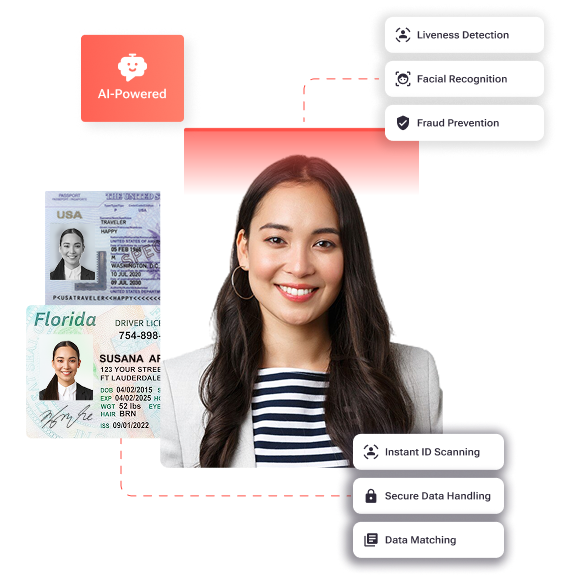
- Complete identity verification. Many communities now require biometric or government-ID verification as part of the digital workflow to reduce identity fraud. TenantEvaluation’s IDVerify confirms physical presence and identity authenticity through AI-powered liveness detection and biometric selfie-to-ID comparison, all inside the application platform.
- Attend an interview if required. Some boards schedule in-person or virtual interviews as part of the review process.
- Await the board’s written decision. The board reviews the complete file and then issues a formal approval or denial.
Document Checklist for Florida Condo Board Approval
Florida condo approval packets commonly require the following, based on MIAMI REALTORS’ tenant screening guidance:
- Completed written application form (one per unmarried adult)
- Government-issued photo identification (driver’s license or passport)
- Executed lease or rental contract signed by all parties
- Full list of all occupants, including minors
- Income verification: recent pay stubs, W-2s, tax returns, or direct employer letter
- Employment history for the past two years
- Residential history for the past seven years with landlord references
- Credit report authorization and background check consent
- Pet disclosure (breed, weight, vaccination records if applicable)
- Vehicle registration and description
- Three character references from non-family members (required by some associations)
- Application fee payment
Completeness standards are strict. False or omitted information may constitute grounds for rejection, termination of occupancy rights, and forfeiture of fees. Every document must be current, fully executed, and consistent with the information on the application form.
Typical Timelines for Florida Condo Board Approval
The Florida condo rental approval process, including tenant application intake, background checks, and board review, often takes several weeks. Associations set their own timelines for board review and final decisions after a complete application is received.
There is no single statewide Florida rule requiring a condo association to approve a buyer or tenant within a fixed number of days. Timelines are governed by each community’s declaration and procedures.
Understanding what slows files helps renters set realistic expectations and plan move-in dates. Common delay factors include:
- Missing or unsigned documents requiring follow-up
- Scheduled board meetings that occur only monthly
- Interview scheduling conflicts
- Rental-cap waitlists when a community is at its leasing limit
- Background check processing backlogs with manual workflows
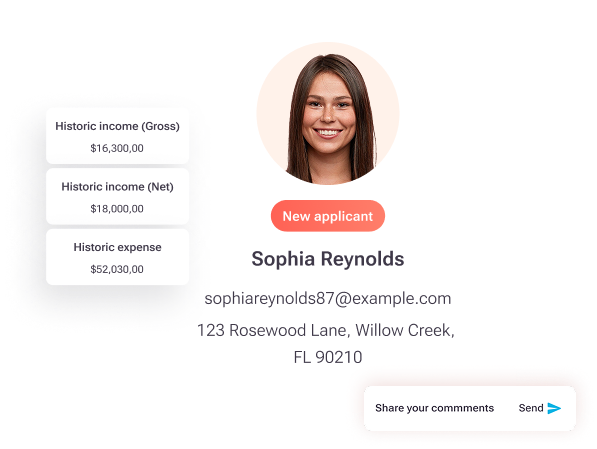
Digital platforms reduce processing time significantly. TenantEvaluation’s QuickApprove accelerates resident approvals inside one connected platform, with real-time application tracking, automated communication support, customized approval letters, and a personalized welcome package. It is built for CAMs, boards, and property management teams that want speed without losing control, compliance, or visibility.
Top Reasons Florida Condo Boards Reject Applications
Boards evaluate applications against the criteria in the community’s governing documents. The most frequent rejection triggers include:
- Incomplete or inconsistent application: Missing fields, unsigned forms, or documents that contradict each other
- Criminal history: Convictions flagged during background screening, particularly violent or drug-related offenses
- Insufficient income or poor credit: Failure to meet the community’s stated credit score or income-to-rent ratio requirements
- False or omitted information: Any material misrepresentation on the application
- Rental-cap violation: The community has reached its maximum allowable percentage of rented units
- Lease term non-compliance: The proposed lease duration is shorter than the community’s minimum term
- Unverified identity: Inability to confirm the applicant’s identity through submitted documents
Board-created rules not found in recorded governing documents may not be enforceable in Florida courts, so renters should request and review the declaration and all recorded amendments to understand the actual criteria being applied.
Rental Caps and Limits on Renters in Florida Communities
Florida condominium associations and HOAs may impose rental caps through their governing documents. A rental-cap restriction typically limits the share of units that may be leased at one time, commonly between 15% and 25%. When a community reaches its cap, applicants are placed on a waitlist.
The retroactive reach of rental restrictions is limited by statute. Under Section 718.110(13), Florida Statutes, any condominium amendment that prohibits rentals, alters rental duration, or limits rental frequency applies only to unit owners who consent to the amendment and owners who acquire title after the amendment’s effective date. For HOAs, under Section 720.306(1)(h), Florida Statutes, any governing document amendment enacted after July 1, 2021 that prohibits or regulates rental agreements generally applies only to parcel owners who acquire title after the effective date or who consent to the amendment.
Florida 2026 Laws That Affect Condo Renters
Two significant developments from the 2026 Florida legislative session directly affect the rental approval process.
Identity fraud felony provision: SB 1293 makes it a felony to occupy a rental property using forged documents or false identity and allows landlords to quickly remove individuals who gained access through fraud. This provision raises the legal stakes for applicants who misrepresent their identity and increases the value of biometric identity verification in the screening workflow.
Screening fee cap remains at $150: The $150 screening fee cap established in Section 718.112(2)(k) remains in effect in 2026.
Governing document amendment rules: HB 657, which would have required HOAs to automatically update governing documents to comply with new state laws, did not become law. This means renters must still verify that their community’s stated requirements match the recorded governing documents, since existing amendment procedures and retroactivity protections under Sections 718.110(13) and 720.306(1)(h) remain unchanged.
How Renters Can Speed Up Condo Board Approval
As noted in the application requirements section, submitting a complete package on the first attempt is the single most effective way to avoid delays. Additional steps that reduce processing time include:
- Request the association’s full requirements list before preparing any documents
- Confirm the exact requirements and submit one complete package rather than sending documents piecemeal
- Verify the community’s rental-cap status before signing a lease
- Respond to any board requests for additional information within 24 hours
- Ensure the executed lease reflects the community’s minimum term requirements
For renters applying to communities using TenantEvaluation, the QuickApprove workflow moves applications from submission to decision faster and more consistently. Real-time application tracking, automated communication, reduced manual follow-ups, customized approval letters, and a personalized welcome package help renters see where they stand and reduce back-and-forth.
For renters in communities that use IDVerify, identity confirmation becomes a quick, automated step instead of a common bottleneck. The platform completes verification in minutes rather than days, which matters even more under Florida’s 2026 identity fraud felony law that makes accurate identity documentation critical for both renters and associations.
If you are applying to an age-restricted community, ask whether the association uses TenantEvaluation’s 55+ Communities Verification. This feature standardizes age-verification requirements, reduces back-and-forth over documents, and helps applicants understand exactly what proof they must provide.

TenantEvaluation has processed 100,000+ applications annually across 5,000+ communities and has generated $150M for those communities. Schedule a demo today to see how QuickApprove and the full TenantEvaluation platform can reduce approval cycles by up to 70%.
Frequently Asked Questions
What is the maximum screening fee a Florida condo can charge?
Florida condominium associations may charge a screening and transfer approval fee of up to $150 per applicant under Section 718.112(2)(k), Florida Statutes. To determine how many applicants you are paying for, note that a married couple or a parent with a dependent child counts as one applicant, so a family of four with married parents would pay one $150 fee, not four separate fees. The fee must be authorized in the community’s declaration, articles, or bylaws and may only be used for screening and transfer approval, not as a capital contribution, which means associations cannot use it to fund reserves or capital projects. If you are renewing your lease with the same landlord, no fee may be charged. HOAs operate under different rules. There is no statutory cap, but the amount must be reasonable. Some associations charge a higher fee for international applicants, though this must be authorized by the governing documents.
Who is responsible for submitting the application — the renter or the owner?
Responsibility for application submission varies by community and is defined in the governing documents. In most Florida condominiums, the unit owner (landlord) is the party obligated to ensure the association receives a complete application before the tenant takes occupancy. In practice, the renter typically completes and signs the application forms and provides the required documents, while the owner or the owner’s realtor coordinates submission to the management company or board. Realtors representing either party should confirm the submission process directly with the association before the lease is executed to avoid delays.
Can a board reject an application without providing a reason?
Florida law does not universally require condo boards to provide a written reason for rejecting a rental application, and many associations exercise broad discretion under their governing documents. However, rejection decisions must be based on criteria contained in the recorded declaration, bylaws, or rules, not on arbitrary or discriminatory grounds. Boards that apply criteria not found in recorded governing documents risk unenforceability in Florida courts. Federal Fair Housing Act and Florida Civil Rights Act protections prohibit rejection based on race, color, national origin, religion, sex, familial status, disability, or other protected characteristics. Applicants who believe a rejection was discriminatory or procedurally improper should consult a Florida real estate attorney.
Do rental caps apply to existing owners or only new purchasers?
Florida law protects many existing owners from retroactive rental restrictions through the provisions described in the rental caps section above. This means a condominium amendment that prohibits rentals, alters rental duration, or limits rental frequency generally binds only owners who consent to the amendment or who acquire title after its effective date, and similar protections apply to many HOA owners under Section 720.306(1)(h). However, this retroactivity protection has an important limit. It applies to rental bans and frequency or duration caps, but not to board approval requirements, which associations may enforce against all owners regardless of purchase date. As a practical matter, an owner who purchased before a rental cap was enacted can often still rent their unit, but must still submit their tenant for board approval if the community requires it. Owners and renters should review the specific amendment language and its effective date to determine applicability.
Conclusion: Faster, Compliant Florida Condo Approvals
Florida’s condo board approval process relies on defined document requirements, statutory fee caps, board-specific timelines, and new identity fraud protections under 2026 law. Renters who submit complete, accurate packages and understand their community’s governing documents move through the process faster. Boards and CAMs that replace manual workflows with a connected digital platform reduce delays, remove bottlenecks, and maintain full compliance and visibility at every stage.
TenantEvaluation is the all-in-one resident screening and onboarding platform built specifically for Florida community associations and management companies, with FCRA compliance as the foundation, not an afterthought. From QuickApprove board-ready approval workflows to IDVerify biometric identity verification and 55+ Communities Verification for age-restricted properties, the platform connects each step into a single, auditable process. Schedule a demo today and see why 5,000+ communities trust TenantEvaluation to manage their resident onboarding.
