Written by: Luis Teran, Co-founder, CEO, TenantEvaluation
Key Takeaways for Florida Condo Board Approval
- The condo board approval process in Florida is a formal review that checks financial stability, background, and compliance with governing documents before a buyer or renter can move into a unit.
- Most associations follow a five-step workflow that includes application intake, document submission, fee payment, background and credit review, and a written board decision.
- Typical required documents include government ID, financial records, signed contracts or leases, background authorizations, and references, with extra items for 55+ communities or resale packages.
- Approval timelines usually range from 24–72 hours for rentals to 3–8 weeks for purchases, depending on meeting schedules, application completeness, and association type.
- TenantEvaluation’s all-in-one platform streamlines condo board approval workflows and can reduce processing times by up to 70%. Schedule a demo today.
Five Core Steps in the Florida Condo Board Approval Process
Florida associations follow a structured sequence from application intake to final decision. Exact steps vary by governing documents, but this five-step framework reflects standard practice across the state.
- Obtain and complete the association’s application package. Each association maintains its own application form based on its Declaration and Bylaws. Buyers and renters must request the correct package from the management office or CAM before submitting any documents.
- Compile and submit all required documents. Incomplete submissions frequently cause delays. Every required item, including IDs, financial records, executed contracts or leases, background authorizations, and any community-specific forms, must be included before the package counts as complete.
- Pay applicable fees. Florida Statute 718.112 caps transfer or approval fees at $150 per applicant, with spouses or a parent and dependent child counted as one applicant. Fees must appear in and be authorized by the governing documents.
- Complete background, credit, and identity review. The association or its management company reviews the submitted package, runs background and credit checks, and may schedule an in-person interview. Some Miami luxury buildings require an interview as a standard step, while others rely entirely on document review.
- Receive the board’s written decision. The board votes to approve, deny, or exercise its right of first refusal. Written approval is issued and, for purchases, recorded with the deed. Age-restricted communities also verify that occupancy satisfies 55+ requirements before granting final approval.
Meeting cadence directly affects how quickly Step 5 occurs. Most Florida condo boards meet once per month, which compresses the decision window for applicants who miss a submission cutoff.
Required Documents for a Florida Condo Board Package
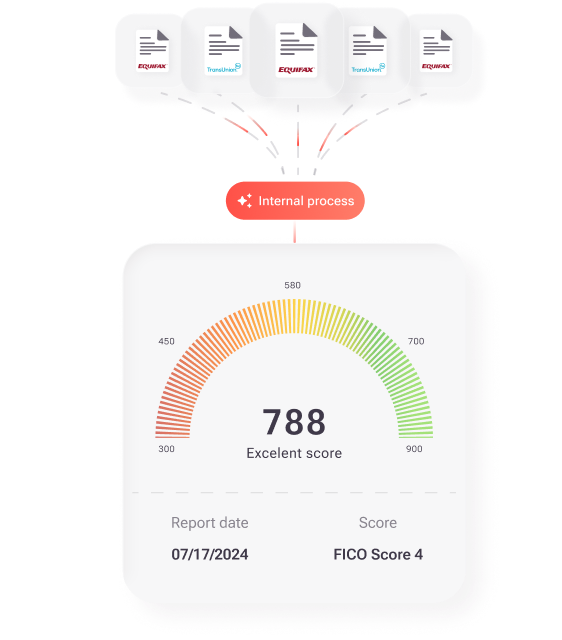
Because incomplete submissions often delay approvals and can push applicants past key board meeting dates, understanding documentation requirements is essential. The checklist below reflects documents commonly required by Florida condominium associations for both purchase and rental applications. Individual communities may require additional items based on their governing documents.
| Document Category | Typical Items Required | Applies To |
|---|---|---|
| Identity | Government-issued photo ID, passport copy for international buyers | Buyers and renters |
| Application Forms | Association-specific application for each adult occupant, list of all occupants | Buyers and renters |
| Contract or Lease | Fully executed purchase and sale contract or signed lease agreement | Buyers and renters |
| Financial Records | Two years of federal tax returns, 3–6 months of bank statements, proof of funds or mortgage pre-approval | Primarily buyers |
| Background Authorization | Signed consent for criminal background check, credit report authorization | Buyers and renters |
| References | Two to four personal or professional references, rental history or prior landlord contacts | Buyers and renters |
| Vehicle and Pet Information | Vehicle make, model, and plate, pet breed, weight, and photos if applicable | Buyers and renters |
| Immigration or SSN Documentation | Social Security number or immigration documents for non-citizen applicants | Buyers and renters |
| 55+ Verification (where applicable) | Age verification documentation for qualifying occupant in age-restricted communities | Buyers and renters in 55+ communities |
| Resale Package Items | Declaration, bylaws, latest financial statement, budget, FAQ document, milestone inspection summary, and SIRS where required | Buyers (provided by seller) |
Florida Statute 718.111 requires associations to make official records available within 10 working days of a written request, which includes records relevant to the approval process.
Manual handling of this documentation volume creates heavy administrative work for CAMs and boards. Schedule a demo today to see how TenantEvaluation automates document collection, identity verification, and board review in one connected platform.
Typical Timelines for Florida Condo Board Approval
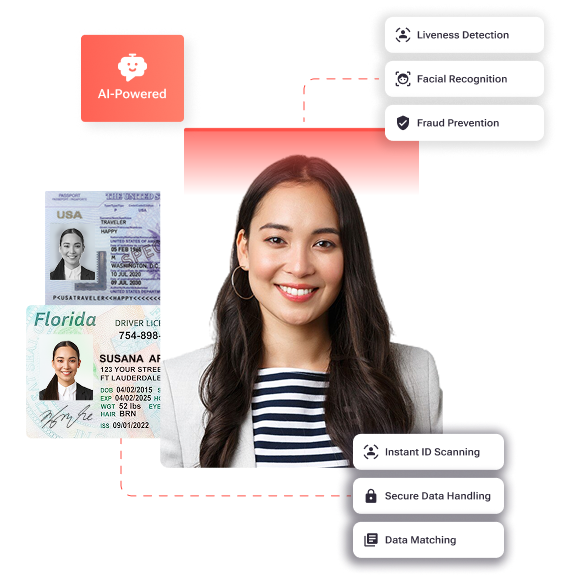
Approval timelines vary significantly by association type, meeting cadence, and application completeness. The table below reflects 2026 data from across Florida’s major markets.
| Scenario | Typical Timeline | Key Variable | Source Region |
|---|---|---|---|
| Standard board-driven purchase approval | 5–8 weeks | Monthly board meeting cadence | Miami luxury market |
| Rolling committee review (progressive governance) | 3–4 weeks | Bi-weekly committee cycle | Newer Miami buildings |
| Rental packet processing (complete submission) | 24–72 hours, up to 5 business days | Completeness of packet | Orlando area |
| South Florida purchase approval (general) | Up to 30 days | Credit threshold and interview scheduling | South Florida |
| Investor or rental with HOA notice requirement | 3–4 weeks from tenant selection | Fifteen-day written notice period plus processing | Orlando area |
For purchases, the realistic range is 3–8 weeks, depending on whether the association uses monthly board meetings or rolling committee reviews. Submitting a complete package at least one week before the monthly board meeting can yield a decision in 5–6 weeks. Missing the cutoff often extends the timeline to 7–8 weeks. For rentals with a complete packet, processing can be as fast as 24–72 hours, although board-driven communities add time based on meeting schedules.
Common timeline extenders include incomplete document submissions, missing signatures, expired financial statements, interview scheduling delays, and unresponsive management companies, which are the most frequent cause of documentation delays in lender and buyer approval processes.
Right of First Refusal and Outright Rejection in Florida Condos
Florida associations exercise two distinct powers when reviewing purchase applications: the right of first refusal (ROFR) and outright rejection. These mechanisms have different legal foundations and practical implications.
Right of First Refusal (ROFR) is a contractual right embedded in the association’s Declaration and Bylaws. ROFR activates only when a signed purchase agreement exists, and the association may then match the third-party offer on the same terms. The association cannot add new fees, impose new buyer obligations, or renegotiate contract economics. The association’s choice is binary: match the deal as written or waive. Many associations routinely waive ROFR, but buyers should calendar the decision window because failure to act within the prescribed time may result in automatic waiver.
Outright rejection is a separate power granted by the governing documents. Florida condo associations with approval rights in their governing documents may reject buyers for financial instability, incomplete applications, or failure to meet community standards. Rejection authority is constrained by the Fair Housing Act.
Florida condo boards cannot reject buyers or renters based on race, color, religion, sex, national origin, disability, or familial status. Penalties for Fair Housing Act violations are capped at $26,262 per violation for first-time offenders. Associations must apply written approval criteria consistently across all applicants. Any denial should prompt a call to association counsel, because denials are where legal exposure under fair housing laws grows quickly.
Common Approval Pitfalls and Practical Fixes
The following issues account for most delays and compliance risks in Florida condo board approval workflows.
- Incomplete application packages. Associations cannot move a package through review if required items are missing, unsigned, expired, or inconsistent. Avoid this pitfall by giving applicants a complete document checklist and using automated validation to flag incomplete packages at intake.
- Missed board meeting cutoffs. Missing the submission cutoff before a monthly board meeting often extends the timeline by 2–3 weeks. Reduce this risk by clearly communicating meeting schedules and submission deadlines to applicants and realtors at the start of the process.
- Failure to meet minimum lease terms. Some Florida condo associations require a one-year minimum lease term, prohibit leasing during the first year or two of ownership, or cap the total number of leased units. Confirm these restrictions before an applicant signs a lease to avoid last-minute denials.
- Inconsistent application of screening criteria. Approval criteria must be applied uniformly across all applicants, because inconsistent enforcement creates pretext claims under the Fair Housing Act. Document every decision with a clear rationale tied to written criteria and keep those records organized.
- Inadequate recordkeeping. Time-stamped records of applications, communications, and outcomes must be maintained. Avoid this pitfall by using a centralized digital platform that automatically logs application events, communications, and decisions with timestamps, instead of relying on paper files or scattered emails.
- Criminal background blanket exclusions. HUD presumes race discrimination in application denials based on criminal background due to statistical correlations. Associations should focus on recent offenses that pose genuine threats to persons or property and avoid blanket exclusions that apply to all criminal history.
How Florida Associations Streamline Condo Board Approvals
Florida associations and management companies that shorten approval timelines and reduce administrative burden rely on a shared set of operational practices. Each practice targets manual bottlenecks and creates consistent, auditable workflows.
Workflow standardization. Associations that define every step of the approval process in writing, from intake requirements to decision timelines, remove ambiguity for applicants, realtors, and board members. Standardized checklists cut down on back-and-forth and support consistent application of governing document requirements.
Digital document collection. Most associations managing 50 or more units now use dedicated software for at least some functions, and the gap between communities using integrated platforms and those running on spreadsheets is widening. Online submission portals reduce manual data entry, speed document review, and support automatic redaction of sensitive personal information.
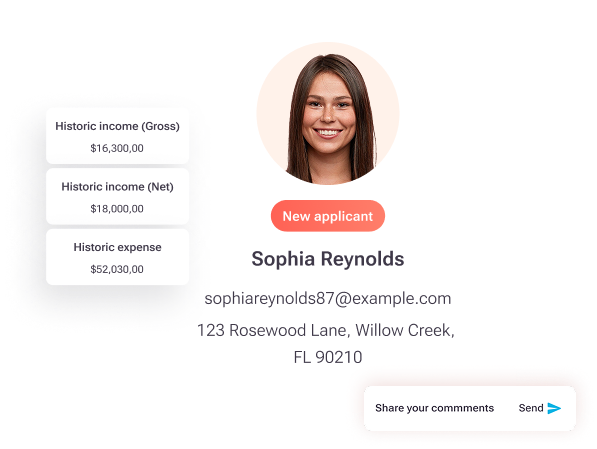
Real-time application visibility. When CAMs, board members, and applicants can track application status in real time, follow-up calls and email chains drop sharply. Board members benefit from a review dashboard that summarizes applicant information and supports a structured voting workflow without manual document distribution.
Audit-ready records. Florida’s HB 59 (2024) requires HOAs to provide copies of the association’s rules and covenants to members, either physically or digitally. Centralized digital records, including lease documentation, approval decisions, and communication logs, support compliance readiness and reduce exposure in disputes or audits.
Centralized lease lifecycle management. Connecting resident onboarding, unit data, approvals, and lease documentation in one platform closes the operational gaps created by disconnected spreadsheets and scattered email chains. Real-time lease status visibility, including active, pending, expired, or missing, gives CAMs and boards the control needed to manage higher application volumes without adding staff.
TenantEvaluation’s platform combines these capabilities in one connected workflow built for Florida community associations. Schedule a demo today to see how QuickApprove, IDVerify, and Lease Tracking work together to cut approval timelines by up to 70%.
Conclusion: Building a Reliable Florida Condo Approval Workflow
A structured, documented condo board approval process reduces delays, limits Fair Housing Act exposure, and creates a consistent experience for buyers, renters, and associations. Florida-specific requirements, including governing document authority, statutory fee caps, monthly board meeting cycles, and age-restricted community verification, make a standardized workflow essential for CAMs and boards handling any meaningful application volume.
Associations that consolidate application intake, document collection, identity verification, board review, and lease tracking in a single digital platform operate with greater efficiency and stronger compliance readiness than those relying on manual processes. TenantEvaluation is built for Florida community associations and management companies, with FCRA compliance as a core design principle. With 5,000+ communities and approximately 100,000 applications processed annually, the platform delivers workflow standardization, audit-ready records, and real-time visibility that Florida CAMs and boards need in 2026.
Schedule a demo today and see how TenantEvaluation can transform the condo board approval process for your community.
Frequently Asked Questions
Can a Florida condo board reject a buyer or renter without explanation?
Florida condo associations with approval rights in their governing documents may reject applicants for financial instability, incomplete applications, or failure to meet community standards established in the Declaration and Bylaws. The board cannot reject an applicant based on race, color, religion, sex, national origin, disability, or familial status under the Fair Housing Act. Associations should document every denial decision with a written rationale tied to specific, consistently applied criteria. Association counsel should review any denial before it is communicated to the applicant, because this stage carries the greatest fair housing risk.
What is the difference between right of first refusal and board approval in a Florida condo?
Board approval is the general power granted by governing documents to review and accept or reject a prospective buyer or renter before occupancy. Right of first refusal (ROFR) is a separate, narrower contractual right that allows the association to purchase a unit itself by matching a third-party buyer’s offer on the exact same terms. ROFR activates only when a signed purchase agreement exists and requires the association to act within the timeframe specified in the Declaration. The association cannot modify the contract terms, add fees, or impose new conditions when exercising ROFR. Many associations hold ROFR rights but routinely waive them, so buyers should confirm the decision window and waiver mechanics in the governing documents before closing.
How does TenantEvaluation help Florida CAMs manage the condo board approval process?
TenantEvaluation provides an all-in-one resident screening and onboarding platform built for Florida community associations and management companies. The platform digitizes and automates the entire approval workflow, from online application intake and document collection to identity verification, background screening, board review, and lease tracking. Key capabilities include QuickApprove, an accelerated approval workflow with a board-ready voting dashboard, and IDVerify, a biometric identity verification layer using AI-powered liveness detection and government ID validation. Lease Tracking connects resident onboarding, unit data, approvals, and lease documentation in one centralized, audit-ready workflow. The platform has processed over 100,000 applications annually across 5,000+ communities and has reduced approval processing times by up to 70%.
What Florida statutes govern the condo board approval process?
The primary statute governing Florida condominium associations is Florida Statute Chapter 718, which covers the formation, operation, and governance of condominiums. Florida Statute 718.112 addresses transfer and approval fees and sets the $150-per-applicant limit discussed earlier, with spouses or a parent and dependent child counted as one applicant. Florida Statute 718.111 governs official records and requires associations to make records available within 10 working days of a written request. Florida Statute 553.899 establishes milestone inspection requirements for condominium buildings of three or more habitable stories. Fair housing requirements are governed federally and reinforced by Florida Statute 760, which prohibits discrimination based on the seven protected classes. HOA-specific governance falls under Florida Statute Chapter 720. Associations should consult qualified association counsel for guidance on how these statutes interact with their specific governing documents.
What documents are required for a Florida condo board approval package?
Required documents vary by association and are determined by each community’s Declaration of Condominium and Bylaws. A standard Florida condo board approval package for buyers typically includes a completed association application form, government-issued photo ID, the fully executed purchase and sale contract, two years of federal tax returns or equivalent financial statements, three to six months of bank statements, proof of funds or mortgage pre-approval, credit report authorization, two to four personal or professional references, a signed background check authorization, and vehicle and pet information where applicable. Rental approval packages generally require an application for each adult occupant, government-issued ID, Social Security number or immigration documentation, the executed lease, background and credit check authorization, and vehicle and pet information. Age-restricted communities also require age verification documentation for the qualifying occupant. Submitting an incomplete package remains one of the most common causes of approval delays in Florida associations.
