Written by: Luis Teran, Co-founder, CEO, TenantEvaluation
Key Takeaways for Florida Condo Approvals
- The condo board approval meeting process follows a structured seven-stage workflow from package submission through decision notification. Most delays come from incomplete applications and manual follow-ups.
- Manual workflows create bottlenecks such as missed board meeting deadlines, fragmented communication, and higher identity fraud exposure when communities rely on paper packets and email chains.
- Digital platforms like TenantEvaluation can reduce approval cycle times by up to 70% through automated completeness checks, FCRA-compliant screening, and real-time board dashboards.
- Key compliance requirements include 48-hour meeting notice under Florida Statutes §718.112, FCRA adverse action notices for denials, and formal Right of First Refusal waivers when required by governing documents.
- Communities can streamline their entire approval workflow with TenantEvaluation’s QuickApprove, IDVerify+, and Lease Tracking tools. Schedule a demo today to see the difference.
The 7-Stage Condo Board Approval Meeting Process
| Stage | Owner | Typical Duration | Key Output |
|---|---|---|---|
| 1. Package Submission | Applicant / Realtor | Day 1 | Completed application + documents |
| 2. Completeness Review | CAM / Management | 1–3 business days | Accepted or returned for corrections |
| 3. Background & Screening | CAM / Platform | 1–2 business days | FCRA-compliant screening report |
| 4. Board Forwarding | CAM | 1–2 business days | Package distributed to board members |
| 5. Board Review & Interview | Board of Directors | 1–4 weeks (meeting-dependent) | Interview conducted (if required) |
| 6. Formal Vote | Board of Directors | At scheduled meeting | Approval, denial, or Right of First Refusal waiver |
| 7. Decision Notification | CAM | 1–2 business days post-vote | Approval letter or adverse action notice |
Stage 1: Package Submission
Applicants or their realtors submit a package that typically includes a completed application form, executed lease or purchase contract, government-issued photo ID, proof of income or financial statements, pet documentation when applicable, and payment of the application fee. Florida governing documents vary by community, so CAMs must confirm which documents their specific declaration and bylaws require before treating a package as complete.
Stage 2: Completeness Review
Management reviews every document for accuracy and completeness before forwarding anything to the board. Incomplete packages are the single most common cause of timeline delays, because a missing signature or unsigned lease restarts the clock entirely. Smart application logic, such as that built into TenantEvaluation, automatically rejects incomplete submissions before they reach the management queue.
Stage 3: Background & Screening
FCRA-compliant background checks covering criminal history, credit, eviction records, and income verification are ordered and reviewed at this stage. Identity verification also occurs here. Traditional document-only review creates fraud exposure because forged documents and stolen identities can pass visual inspection. TenantEvaluation’s IDVerify+ addresses this risk by adding biometric identity verification using AI-powered liveness detection, government ID authentication, and selfie-to-ID facial matching, all natively inside the platform.

Stage 4: Board Forwarding
Once the package is complete and screening results are available, management forwards the full application to the board. In manual workflows, this step often involves emailing PDFs to multiple board members, which creates version-control issues and fragmented communication threads.
Stage 5: Board Review & Interview
Under Florida Statutes §718.112(2)(c), Florida condominium boards must provide at least 48 hours’ notice (or 14 days for certain matters) for their meetings. Approval timelines are therefore directly constrained by the board’s regular meeting calendar unless a special meeting is called. Most Florida condominium board meetings require at least 48 continuous hours of conspicuous posted notice that specifically identifies all agenda items, and items not on the agenda may not be acted upon.
If an applicant’s package arrives after the agenda is posted, the vote moves to the next meeting cycle, which can add weeks to the timeline. Some communities require an in-person or video interview. Florida law permits board meetings via video conference when the notice includes the hyperlink, conference number, and a physical location for in-person attendance.
Stage 6: Formal Vote
Board action on approval matters is generally conducted with a quorum present and in open session, subject to limited statutory exceptions. Many Florida condominium declarations include a Right of First Refusal clause, which requires the association to formally waive that right before a lease or sale can proceed. The waiver is typically issued as part of the approval letter following an affirmative vote.
Stage 7: Decision Notification
After the vote, management issues either a formal approval letter, often including the Right of First Refusal waiver, or an adverse action notice. FCRA-compliant adverse action notices are mandatory when a denial is based in whole or in part on a consumer report. TenantEvaluation automates this adverse action step, which reduces liability exposure for the association.
While this seven-stage process provides the structure needed for compliant approvals, manual execution introduces operational risks and delays at nearly every step.
Why Manual Workflows Create Delays and Compliance Risks
The administrative burden of a paper-based approval process falls almost entirely on the CAM. Each incomplete package triggers a manual follow-up cycle that includes calls to realtors, emails to applicants, and re-review of corrected documents. Because agenda items not listed on the properly noticed meeting agenda may not be acted upon, a package that arrives after the agenda deadline can delay a decision until the next board meeting.
Board members who review emailed PDFs have no centralized visibility into application status, no audit trail of who reviewed what, and no structured voting mechanism. Sensitive applicant data, including Social Security numbers, bank statements, and income records, circulates across personal email inboxes and creates data-breach exposure. Identity fraud risk compounds this problem because stolen IDs and synthetic identities are indistinguishable from legitimate documents in a manual review environment.
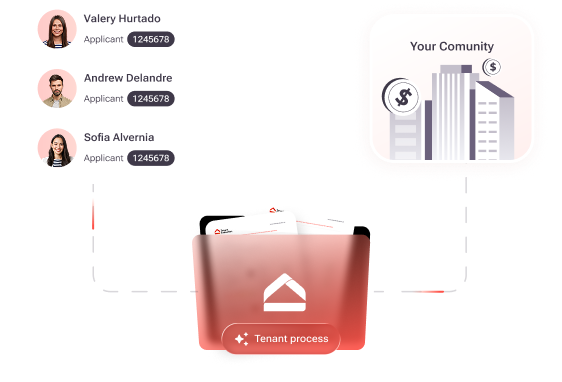
These operational and security challenges have pushed many Florida communities to adopt digital platforms that address each bottleneck in a systematic way.
Accelerating Board Decisions with TenantEvaluation
QuickApprove is TenantEvaluation’s accelerated approval workflow that helps community associations move resident applications from submission to decision faster, while maintaining control, compliance, and visibility. It replaces email chains and spreadsheets with real-time application tracking, automated communication support, customized approval letters, a personalized welcome package, and a board-ready review and voting dashboard, all inside one connected platform.

For boards, QuickApprove provides a dedicated panel with AI-generated applicant summaries and a structured voting workflow that keeps decisions organized and documented. For CAMs, it reduces manual follow-ups and improves application visibility during peak seasons and in communities with complex onboarding requirements.
IDVerify+ moves communities from document-based validation to biometric-confirmed identity verification. Its biometric verification capabilities, described in Stage 3 above, run natively inside TenantEvaluation, so there are no external portals and no workflow disruption. CAMs see verification results embedded directly in the screening report, including ID authenticity confirmation, liveness status, and biometric match result.
TenantEvaluation’s Lease Tracking capability delivers centralized, real-time lease visibility and lifecycle control from application to occupancy. It connects resident onboarding, unit data, approvals, and lease documentation into one streamlined, audit-ready workflow. Communities replace spreadsheets and scattered email chains with real-time lease status views, automated lease document collection, unit-level tracking, and searchable digital history.
Schedule a demo today to see QuickApprove, IDVerify+, and Lease Tracking in action.
Best-Practice Approaches That Reduce Manual Work
Submission Checklist for Florida Condo Applications
- Completed and signed application form
- Executed lease agreement or purchase contract
- Government-issued photo ID for all adult occupants
- Proof of income such as pay stubs, tax returns, or bank statements
- Application fee payment confirmation
- Pet documentation when required by governing documents
- Vehicle registration when required by community rules
- Signed authorization for background and credit check
Red-Flag Checklist: Common Reasons for Rejection or Delay
- Missing or unsigned lease agreement
- Expired or unverifiable government-issued ID
- Credit score below the community-specified threshold
- Criminal history that conflicts with governing document criteria
- Eviction history within the lookback period
- Income insufficient to meet the community rent-to-income ratio
- Incomplete application with missing occupant information
- Application submitted after the agenda posting deadline
Sample Board Agenda Language for Approval Items
“New Resident Application Review — Unit [#]: The Board will consider the application submitted for Unit [#]. Management has confirmed the package is complete and screening results are available for board review. The Board will conduct any required interview and vote on approval, denial, or issuance of a Right of First Refusal waiver in accordance with the Declaration and Florida Statutes §718.112.”
The operational differences between manual and digital workflows become clear when you compare key metrics side by side.
Manual vs. Digital Workflow Comparison
| Metric | Manual Process | TenantEvaluation | Difference |
|---|---|---|---|
| Application processing time | 5–10 days | 5–10 minutes | Up to 70% faster approval cycle |
| Board visibility | Fragmented email PDFs | Real-time board dashboard | Centralized, audit-ready |
| Identity verification | Document review only | Biometric + liveness detection | Fraud-prevention layer added |
| Audit readiness | Manual records, scattered | Built-in audit trail | Full compliance documentation |
TenantEvaluation replaces spreadsheets and email chains with one connected workflow from package submission through Right of First Refusal waiver issuance. The platform serves more than 5,000 communities and processes approximately 100,000 applications annually across Florida.
Frequently Asked Questions
How long does the Florida condo board approval process typically take?
The timeline depends on meeting frequency, package completeness, and whether an interview is required. As noted in the process overview, Florida’s 48-hour meeting notice requirement means a package that misses an agenda deadline can wait weeks for the next meeting. Most communities target a one to four week approval window from complete package submission to decision. Digital platforms like TenantEvaluation can compress the management-side stages significantly and reduce overall cycle time by up to 70% when completeness review, screening, and board forwarding are automated.
What are the most common reasons a condo board rejects an application in Florida?
Rejections most commonly result from credit scores below the community’s stated threshold, criminal history that conflicts with governing document criteria, eviction history within the applicable lookback period, insufficient income relative to the rental or purchase price, or an incomplete application package. Some denials also occur when an applicant fails to appear for a required interview. When a denial is based in whole or in part on a consumer report, FCRA-compliant adverse action notices are required, and TenantEvaluation automates this step to help protect associations from liability.
What is a Right of First Refusal waiver and when is it required?
Many Florida condominium declarations include a Right of First Refusal clause, which gives the association the option to purchase or lease a unit under the same terms as a proposed transaction before the owner can proceed with a third party. In practice, most associations do not exercise this right but must formally waive it as part of the approval process. The waiver is typically issued alongside the approval letter following an affirmative board vote. CAMs should confirm whether their community’s governing documents include this clause and ensure the waiver is issued in writing for every approved transaction.
Is there a difference between the board approval process for renters versus buyers in Florida?
The structural stages are similar, but the required documents differ. Rental applications typically require an executed lease agreement, proof of income, and tenant background screening. Purchase applications typically require a purchase contract, financial qualification documents, and buyer background screening. Some communities apply stricter financial thresholds to buyers or require additional documentation such as mortgage pre-approval letters. Governing documents control the specific requirements for each transaction type, and TenantEvaluation’s intelligent form logic dynamically adjusts the application workflow based on whether the applicant is a renter or buyer.
How does TenantEvaluation support FCRA compliance during the board approval process?
TenantEvaluation is built specifically for community associations and management companies, with FCRA compliance as the foundation rather than an afterthought. As a direct reseller of TransUnion and Equifax data, TenantEvaluation accesses credit information under strict bureau rules with no gray-market or offshore data sources. The platform maintains strict permissible purpose controls, automated adverse action workflows, clear separation between decision-making by the association and data provision by TenantEvaluation, and built-in audit trails for every application. IDVerify+ further strengthens permissible-purpose validation by confirming applicant identity before screening authorization proceeds.
Conclusion
The Florida condo board approval meeting process is a structured, multi-stage workflow governed by statutory meeting requirements, governing document criteria, and FCRA obligations. Manual execution of that workflow creates bottlenecks at every stage, including incomplete packages, missed agenda deadlines, fragmented board communication, and growing identity-fraud exposure. TenantEvaluation is an all-in-one platform built specifically for Florida CAMs and boards to digitize and accelerate the entire process from package submission to Right of First Refusal waiver issuance, while preserving control, compliance, and visibility.
With QuickApprove, IDVerify+, and Lease Tracking operating inside one connected platform, communities across Florida are realizing the time savings and operational clarity described above and replacing guesswork with audit-ready workflows. Schedule a demo today and see how TenantEvaluation transforms your condo board approval process.
