Written by: Luis Teran, Co-founder, CEO, TenantEvaluation | Last updated: August 12, 2026
Key Takeaways for Florida Condo Associations
- Condo association risk management software replaces manual workflows with connected systems that enforce identity verification, centralize lease records, and generate audit-ready trails. These capabilities directly lower legal exposure and can reduce insurance costs.
- Florida’s liability environment remains severe. The state accounted for 41.29% of nationwide homeowner insurance lawsuits in 2025, and multiple associations filed for bankruptcy when litigation costs exceeded their reserves.
- Effective platforms deliver biometric identity verification, FCRA-compliant screening with audit trails, and centralized lease visibility. These capabilities support Chapter 718 compliance and help prevent fraud.
- Generic property management tools lack the Florida-specific configuration needed for HB 1021 digital posting mandates, 55+ community verification, and documented board approval workflows.
- TenantEvaluation provides Florida-built biometric verification, lease tracking, and FCRA-first screening that reduces liability across identity fraud, compliance, and recordkeeping—explore the platform’s liability-reduction features.
Why Florida’s Liability Environment Demands Specialized Tools
Florida’s liability environment for condo associations remains severe despite recent reforms. Florida accounted for 41.29% of all nationwide homeowner insurance lawsuits in 2025, and claims involving litigation cost nearly five times more than non-litigated claims. Multiple South Florida condo associations filed for Chapter 11 bankruptcy in 2025 and 2026 after litigation costs exceeded their financial capacity. Florida has also seen elevated deed fraud activity in recent years, with Miami-Dade, Broward, and Palm Beach counties leading in case volume. Generic software platforms were not built for this environment, so Florida-specific condo association risk management software has become the key operational distinction.
Core Capabilities of Condo Liability Software
Three capabilities define effective condo liability software in 2026.
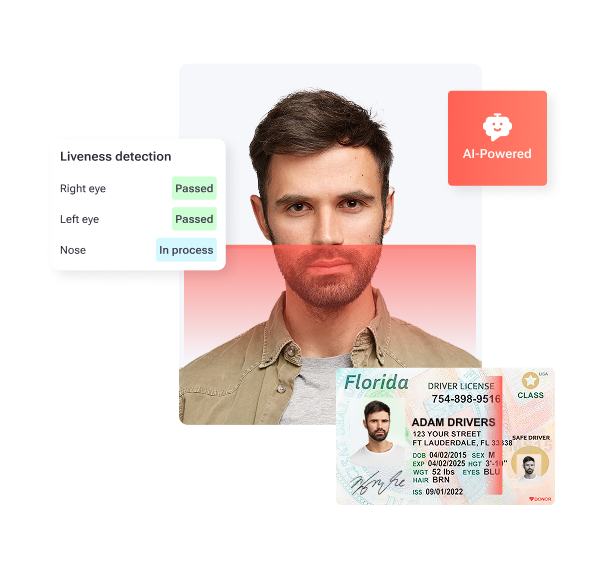
- Biometric identity verification. Automated KYC validation combines government ID authentication, AI-powered liveness detection, and facial biometric matching to confirm an applicant’s physical identity before approval. Under Florida Chapter 718, associations bear responsibility for who occupies their communities, and biometric verification directly supports that governance obligation.
- FCRA-compliant screening. Background and credit checks run under the Fair Credit Reporting Act with permissible purpose controls, adverse action workflows, and built-in audit trails. Florida Chapter 718 §718.111 mandates that official records be available within 10 working days of a written request, so audit-ready documentation functions as a compliance requirement, not a preference.
- Centralized lease visibility. Real-time, lifecycle-connected tracking of lease status (active, pending, expired, or missing) from application submission through occupancy. HB 1021 (2024) made destroying or falsifying official records a criminal offense, which raises the legal stakes of fragmented or incomplete lease documentation.
Regulatory and Market Forces Shaping the Landscape
Several converging pressures in 2025–2026 are accelerating adoption of specialized HOA risk management software.
- Many confirmed deed fraud victims in Florida are absentee or seasonal property owners, a group heavily concentrated in condo communities. In Palm Beach County, fraudsters impersonated HOA management to facilitate fraudulent transfers on high-value seasonal properties.
- HB 913 (2025) requires associations to complete milestone inspection reports and Structural Integrity Reserve Studies and mandates that bank statements and ledgers be classified as official records posted on association websites within 30 days of any change.
- Effective January 1, 2026, condominium associations with 25 or more units that do not contain timeshare units must post digital copies of key records on a password-protected website or mobile app under HB 1021 (2024). This requirement creates new operational compliance obligations for smaller buildings.
- National federal tort cases have increased in recent years due to high concentrations of lawyers and aggressive litigation practices, which further heightens perceived risk.
- In 2026, boards expect community management partners to maintain documented AI and cyber governance protocols including 72-hour crisis escalation, fraud detection controls, and audit-ready documentation. These expectations push associations toward platforms that can support structured oversight.
How Florida CAMs Experience the Shift in Practice
The before-and-after contrast for Florida CAMs is concrete. Before specialized condo association risk management software, identity fraud enters through document-only screening, lease records live across folders and email chains, payment confirmations are chased by phone, and board approvals stall in spreadsheets. After implementation, biometric verification blocks impersonation at the application stage, leases are centralized and searchable, payments flow directly to the association’s account within the onboarding workflow, and boards vote through a connected dashboard with full audit trails.

That operational transformation depends on selecting a platform built for Florida’s liability environment rather than a generic property management tool. The following seven solutions represent the current market for Florida condo compliance software. Three platforms—TenantEvaluation, AppFolio, and Verify Screening Solutions/ApplyCheck—represent distinct categories and appear in the detailed scorecard. The remaining four provide additional market context.
- TenantEvaluation. Florida-built, all-in-one resident screening and onboarding platform for community associations, with biometric identity verification (IDVerify+), accelerated approval workflow (QuickApprove), centralized lease tracking, 55+ Communities Verification, FCRA-first design as a direct TransUnion and Equifax reseller, and TEpayments by Zinc. TenantEvaluation serves 5,000+ communities with 100,000+ applications annually.
- AppFolio. Broad property management platform with screening and some onboarding features, but it lacks a dedicated board voting dashboard and Florida-specific compliance configuration.
- Verify Screening Solutions / ApplyCheck. Background check platforms using the TazWorks infrastructure that focus on screening only, without applicant interaction, automated document redaction, lease tracking, or board dashboards.
- Buildium. Property management software with core operational features, but it lacks a strong screening focus and does not provide biometric identity verification or Florida-specific onboarding workflows.
- Vantaca. Community association management software with operational tools, but it offers limited screening depth and no biometric fraud prevention layer.
- RealPage. Enterprise property management solution that serves many asset types and is not configured for Florida Chapter 718 compliance workflows by default.
- RentSpree. Screening and application services for rental communities that remain simpler than end-to-end community association platforms and are not designed for Florida condo governance requirements.
Florida CAMs and board presidents evaluating these options need a risk-feature framework, not a feature list. The list above categorizes seven platforms by their ability to deliver the three core capabilities described earlier and highlights which tools address Florida-specific liability risks versus generic property management needs. The scorecard that follows quantifies these differences across five risk features.
Evaluation Criteria: Risk-Feature Scorecard
The table below compares three representative platforms across the five risk features that most directly reduce liability exposure for Florida condo associations. This comparison isolates the operational differences between Florida-built compliance tools and generic property management platforms, showing where biometric verification, audit trails, and centralized lease visibility are native versus absent.
| Risk Feature | TenantEvaluation | AppFolio | Verify Screening / ApplyCheck |
|---|---|---|---|
| Biometric fraud prevention | IDVerify+: government ID validation, AI liveness detection, facial biometric matching, native to platform | Standard document-based screening, no biometric layer | Document upload only, no biometric verification |
| FCRA audit trails | Direct TransUnion and Equifax reseller, built-in adverse action workflows, permissible purpose controls, full audit trail per application | Third-party screening integrations, audit trail depth varies | TazWorks platform with FCRA-compliant screening, limited audit trail integration with onboarding |
| Centralized lease visibility | Real-time lease status (active, pending, expired, missing), automated document collection, unit-level tracking, audit-ready digital records | Lease storage available, not connected to onboarding lifecycle | Not available |
| Board voting dashboard | QuickApprove with dedicated board review panel, real-time application tracking, voting workflow, AI-generated applicant summaries | No dedicated board voting dashboard | Not available |
| Florida 55+ verification | Built-in 55+ Communities Verification that standardizes age-restricted application handling and improves documentation consistency | Not available as a dedicated capability | Not available |
Data points: TenantEvaluation scale figures (5,000+ communities, 100,000+ annual applications) and feature descriptions come from company documentation. AppFolio and Verify Screening Solutions feature characterizations reflect publicly available product positioning and competitive analysis. This feature gap, particularly the absence of biometric verification and centralized lease visibility in generic platforms, connects directly to the compliance and risk considerations that Florida associations face under Chapter 718, which the next section details.
Compliance and Risk Considerations for Florida Condos
Florida Chapter 718 updates since 2024 have materially increased the compliance surface for condo associations.
- For Florida condominiums under Chapter 718, failure to produce official records within 10 working days creates a rebuttable presumption of willful noncompliance that triggers statutory damages of $50 per day up to a $500 maximum, which creates direct financial liability tied to recordkeeping systems.
- HB 913 (2025) requires board officers and directors to sign an affidavit acknowledging receipt of a completed SIRS, adding formal governance documentation requirements that must be stored and retrievable.
- HB 797 (2026), effective July 1, 2026, expands personal liability immunity to directors and officers of nonprofit corporations including community associations, but only for actions taken in their official roles, which makes documented, structured decision processes more important, not less.
- Vendor COI tracking remains a persistent gap. A 2021 Evident study found that 75% of third-party vendors did not meet the insurance requirements of the companies that hired them, which exposes associations when claims arise.
- Stolen-ID liability exposure is rising. Florida HB 1419 (2023) strengthens identity verification for deed recordings via a Lee County pilot but does not address or elevate penalties for fraudulent transfers, so associations still need strong front-end identity controls.
Common Operational Liability Sources
Florida CAMs and board presidents consistently encounter four operational liability sources.
- Administrative burden. Manual follow-ups with applicants, realtors, and owners create delays and documentation gaps that increase legal exposure during disputes. These delays also compound the next challenge.
- Fragmented lease management. Missing or outdated lease copies, manual expiration tracking, and disconnected spreadsheets create occupancy blind spots and compliance risk tied to incomplete records under Chapter 718. When lease records are fragmented, the association cannot easily verify that the occupant matches the approved applicant, which amplifies identity fraud risk.
- Manual COI processes. When a vendor with a lapsed certificate causes damage or injury, liability that the vendor’s policy was intended to cover can transfer back to the property management firm, potentially exceeding a year’s management margin on a single claim.
- Identity fraud exposure. Traditional document-based screening cannot reliably prevent impersonation or synthetic identity fraud, which leaves communities exposed to fraudulent occupants and the downstream liability they create. Once a fraudulent occupant is approved, incomplete lease records and delayed follow-ups make early detection difficult.
Best Practices for Reducing Condo Association Liability
The following practices reflect the current standard for liability reduction in Florida community association management and form a connected workflow inside TenantEvaluation.
- Deploy biometric identity verification at the application stage. IDVerify+ introduces automated KYC verification through government ID validation, AI-powered liveness detection, and biometric facial matching. This shift moves communities from document-based review to verified physical identity confirmation before approval decisions and prevents fraudulent applicants from entering the workflow.
- Accelerate approvals without losing compliance or board oversight. QuickApprove provides an accelerated approval workflow built for CAMs, boards, and property management teams inside one connected platform. It supports real-time application tracking, automated communication, customized approval letters, a personalized welcome package, and a board-ready approval process that maintains the rigor established by biometric verification.
- Centralize lease records from application to occupancy. Lease Tracking connects resident onboarding, unit data, approvals, and lease documentation into one streamlined, audit-ready workflow. This structure provides real-time lease status visibility and removes spreadsheets and scattered email chains, so verified approvals translate into complete, searchable records.
- Standardize age-restricted application handling. 55+ Communities Verification reduces manual work, standardizes application handling, supports documentation consistency, and improves operational efficiency for Florida condos and HOAs that manage age-restricted communities.
- Connect payment collection to the onboarding workflow. TEpayments by Zinc operates as a connected payment workflow inside TenantEvaluation that collects application fees and deposits during resident onboarding. Payments go directly to the association’s designated account, and TenantEvaluation never holds the funds, which preserves financial visibility and clean audit trails.
FAQ
What is the difference between generic HOA software and Florida condo association risk management software?
Generic HOA software typically covers property management functions such as maintenance requests, accounting, and communication. Florida condo association risk management software adds a liability-reduction layer that includes biometric identity verification to prevent impersonation fraud, FCRA-compliant screening with built-in audit trails, centralized lease visibility connected to the onboarding lifecycle, and board voting dashboards that create documented approval records. Florida-specific platforms also come configured for Chapter 718 recordkeeping mandates, HB 1021 digital posting requirements, and 55+ community documentation standards, which generic tools do not address by design.
How does biometric identity verification reduce liability for Florida condo associations?
Biometric identity verification confirms that an applicant is physically present and matched to their government-issued ID before an approval decision. This shift moves communities from document-based review, which cannot detect impersonation or synthetic identities, to verified physical identity confirmation. For Florida condo associations, this matters because fraudulent occupants create downstream liability including property damage, HOA fee disputes, and potential legal exposure for the association that approved them. IDVerify+ operates natively within the TenantEvaluation screening workflow without redirecting applicants to external portals, which keeps the experience consistent while adding a strong fraud-prevention layer.
What vendor COI tracking practices reduce liability for community associations?
Effective vendor insurance compliance relies on four connected functions. Associations establish coverage requirements by vendor risk tier, collect certificates of insurance through a structured channel rather than scattered email threads, verify that coverage types and limits match contract requirements, and continuously monitor expirations with automated renewal reminders. A certificate of insurance confirms that a policy existed when issued but does not confirm that the policy remains active, so continuous monitoring matters more than initial collection. When a vendor with a lapsed certificate causes damage or injury, liability can transfer back to the property management firm. Automated COI tracking with tiered reminders and dispatch-time enforcement helps prevent this exposure.
What Chapter 718 recordkeeping requirements most directly affect condo association risk management in 2026?
Several Chapter 718 provisions create direct financial liability for recordkeeping failures. For Florida condominiums under Chapter 718, failure to produce official records within 10 working days creates a rebuttable presumption of willful noncompliance that triggers statutory damages of $50 per day up to a $500 maximum. HB 1021 (2024) made destroying or falsifying official records a criminal offense and requires condominium associations with 25 or more units that do not contain timeshare units to post key records on a password-protected website or app, effective January 1, 2026. HB 913 (2025) requires associations to complete milestone inspection reports and Structural Integrity Reserve Studies and classifies bank statements and ledgers as official records. These requirements make audit-ready, centralized document management a legal necessity rather than an operational preference.
How does TenantEvaluation’s revenue-sharing model work for Florida community associations?
TenantEvaluation operates on a pay-per-application model with no upfront subscription fees. The platform deducts its service fee from the collected application fee, and the remainder is rebated directly to the association or management company. This structure turns the application process into a compliant, controlled income stream rather than a cost center. TenantEvaluation has generated over $150 million for communities through this model. Because payments collected through TEpayments by Zinc flow directly from the applicant to the association’s designated account, with TenantEvaluation organizing the workflow but never holding the funds, boards maintain full financial visibility and traceable records throughout the process.
Conclusion: Building a Defensible Risk Posture in Florida
Florida condo associations face a liability environment defined by rising fraud, stricter Chapter 718 recordkeeping mandates, litigation costs that have driven associations into bankruptcy, and board governance requirements that demand documented, audit-ready decision trails. Manual processes and generic platforms do not address this environment. Condo association risk management software that combines biometric identity verification, FCRA-compliant screening with direct bureau access, centralized lease visibility, connected payment workflows, and board voting dashboards can measurably reduce exposure across each of these liability vectors. TenantEvaluation is built specifically for Florida community associations and management companies, with FCRA compliance as the foundation, serving 5,000+ communities and processing 100,000+ applications annually.
