Written by: Luis Teran, Co-founder, CEO, TenantEvaluation | Last updated: July 1, 2026
How TenantEvaluation Grows Application Fee Revenue
- Manual condo application processes lose revenue through incomplete submissions, delayed payments, and fragmented follow-up that cut association income every cycle.
- Automated platforms like TenantEvaluation require payment at submission, so every completed application becomes guaranteed revenue without raising dues.
- Automatic revenue splitting returns the association’s share after each transaction, removing invoicing, reconciliation, and staff intervention.
- Built-in IDVerify+ biometric verification, QuickApprove dashboards, and 55+ Communities Verification streamline approvals while maintaining FCRA compliance and audit-ready records.
- Learn how TenantEvaluation can increase your association’s application fee revenue—see the revenue model in action.
How to Collect Application Fees Without Raising Dues
Automated fee capture ties application submission to payment, so the platform accepts only applications with fees paid in full. Manual processes allow applicants to submit incomplete forms, pay late, or skip payment entirely, while staff spend hours chasing collections. Each breakdown point creates a moment where fee revenue can leak out of the system and reduce association income. An automated platform closes every leak by making payment a prerequisite for submission, so every completed application becomes a confirmed revenue event. The association receives its share automatically with no upfront platform cost and no dues increase.
Revenue Impact of Automated Fee Collection
The revenue mechanics described above translate into measurable financial impact for Florida condo associations. The table below quantifies the revenue gap: a representative association processing 200 applications per year at $150 each can capture thousands in previously lost fees by switching from manual to automated collection. The key difference is the 100% collection rate, where every submitted application becomes guaranteed revenue.
| Metric | Manual Process | TenantEvaluation Automated | Annual Difference |
|---|---|---|---|
| Applications per year | 200 | 200 | – |
| Fee collection rate | Less than 100% | 100% (mandatory payment at submission) | Improved |
| Gross fees collected | Less than maximum potential | $30,000 | Increased |
| Association revenue share (after platform fee) | Partial (minus staff time cost) | Automatic split returned to association | Net gain without dues increase |
Note: Actual results vary by community size, fee structure, and application volume.
Step-by-Step Workflow for Automated Fee Collection
- Applicant receives Property Code. The association shares a unique code that opens the community’s customized application inside TenantEvaluation.
- Mandatory payment during application submission. Before the application is accepted, the platform requires full fee payment online. Incomplete or unpaid submissions are rejected automatically, so staff no longer chase missing payments.
- Automatic revenue splitting. TenantEvaluation deducts its service fee and routes the association’s share back automatically. The process removes invoicing, reconciliation, and manual staff intervention.
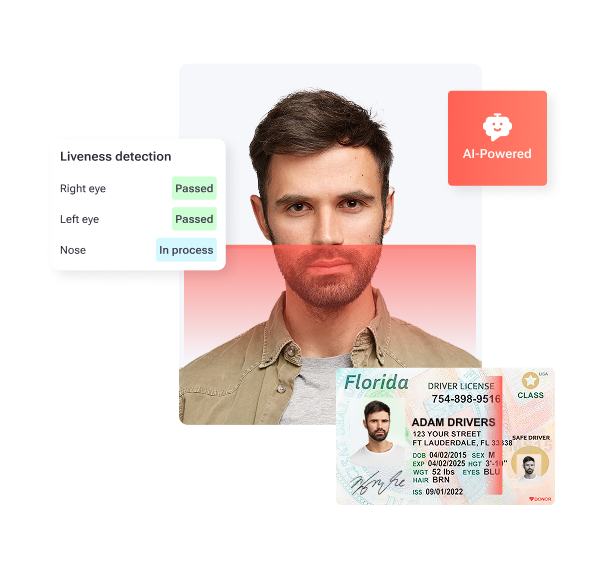
- IDVerify+ biometric verification. The applicant completes government ID validation and AI-powered liveness detection inside the same workflow. The system confirms physical identity before the file reaches the board.
- Board-ready dashboard review. Board members access summarized applicant reports and a voting panel through QuickApprove. This replaces email chains with a connected approval process.
- Audit-ready record retention. Every payment, document, and decision is timestamped and stored in a searchable, FCRA-compliant audit trail.
How TenantEvaluation Differs from Other HOA Software
This workflow delivers results that most property management platforms cannot match. Many HOA and property management platforms, including Buildium, AppFolio, and RealPage, focus on broad property management workflows instead of the specific revenue mechanics that Florida community associations need. They may offer online payments, but they often do not enforce mandatory payment during application submission or provide automatic revenue splitting back to the association. They also may not combine these capabilities with biometric verification, a dedicated board voting dashboard, and 55+ community handling in one platform.
TenantEvaluation is built exclusively for community associations and management companies. Its revenue model uses pay-per-application pricing with no upfront fees or monthly subscriptions, so the platform earns only when applications move through the system. Competitors such as ApplyCheck and Verify Screening Solutions focus on background checks and screening and often lack the applicant-facing payment enforcement and automatic revenue splitting that convert submissions into guaranteed income.
FCRA Compliant Application Fee Revenue
FCRA compliant application fee revenue requires more than collecting money, because every credit and background check must follow bureau rules. Each report must run under strict permissible purpose controls, with automated adverse action workflows and a complete audit trail for every application. This compliance foundation keeps fee collection tied to a legally defensible screening process.
Key compliance proof points start with direct reseller relationships with TransUnion and Equifax, which ensure data integrity without third-party scraping. Those relationships enable strict permissible purpose controls that govern when and how credit data can be accessed. When an application triggers adverse action, automated workflows send legally required notices. Throughout the process, a clear separation between decision-making by the association and data provision by TenantEvaluation protects both parties, and built-in audit trails document every step for regulatory review. IDVerify+ further strengthens permissible-purpose validation by confirming applicant identity before screening authorization, which reinforces audit defensibility. This compliance infrastructure is purpose-built for the unique requirements of community associations and protects fee income by preventing applications and fees outside a documented workflow.

Best Software for Florida Condo Application Fees
Florida condo associations manage application volumes that spike seasonally, especially in Miami, Fort Lauderdale, Palm Beach, and Tampa. IDVerify+ embeds automated KYC verification, including government ID validation, AI-powered liveness detection, and biometric selfie-to-ID comparison, directly inside the TenantEvaluation workflow. This approach reduces abandoned applications caused by external verification portals and strengthens approval confidence before risk reaches the community.
Board-ready dashboards through QuickApprove give board members real-time access to summarized applicant reports and a voting panel inside one connected platform. This accelerates resident approvals without losing control, compliance, or visibility. During peak seasons, QuickApprove supports high-volume intake and complex onboarding requirements, reduces manual follow-ups, and delivers automated communication support, customized approval letters, and a personalized welcome package. TenantEvaluation has processed 100,000+ applications annually across 5,000+ communities and has generated $150M for those communities.

55+ Community Application Fee Automation
Age-restricted communities in Florida carry additional documentation requirements that manual processes often handle inconsistently. Fragmented email chains, PDFs, and manual follow-ups create incomplete records that increase risk during audits or disputes. 55+ Communities Verification operates as a built-in capability within TenantEvaluation that reduces manual work, standardizes application handling across all applicants, supports documentation consistency, and strengthens internal processes for age-restricted communities.

This capability addresses the operational needs of Florida Condos, HOAs, and Community Association Managers by replacing fragmented manual handling with a structured, scalable workflow. The solution focuses on documentation-first onboarding and workflow standardization, not legal verification and not a guarantee of compliance. It supports internal operational control and consistency while legal guidance remains the responsibility of the association’s counsel.
Frequently Asked Questions
How does TenantEvaluation guarantee 100% application fee collection?
TenantEvaluation requires mandatory payment during application submission, so the platform will not accept or process an application until the fee is paid online. This removes incomplete submissions and delayed collections that cause fee leakage in manual processes. Because payment functions as a prerequisite instead of a follow-up step, every submitted application represents a confirmed fee event.
How does automatic revenue splitting work, and does the association need to invoice anyone?
No invoicing is required. When an applicant pays the application fee, TenantEvaluation automatically deducts its service fee and routes the association’s share back directly. The association receives its revenue without manual reconciliation, payment chasing, or upfront platform costs. The pay-per-application model removes monthly subscription fees, so the platform remains cost-neutral or revenue-generating from the first application.
What does FCRA compliance mean for application fee collection in a Florida condo association?
FCRA compliance in this context means that every credit report and background check tied to an application fee is conducted under documented permissible purpose. Automated adverse action notices are issued when required, and a complete audit trail is retained for every application. TenantEvaluation is a direct reseller of TransUnion and Equifax data, operates under strict bureau rules, and maintains built-in audit trails for every application. This protects the association from liability exposure and keeps fee collection connected to a legally defensible screening workflow.
How does TenantEvaluation handle 55+ community application requirements in Florida?
TenantEvaluation’s 55+ Communities Verification standardizes how age-restricted requirements are handled across applications. It reduces manual work for CAMs and boards, supports documentation consistency, and improves operational efficiency by replacing fragmented email and PDF-based processes with a structured workflow. The feature is designed for Florida Condos and HOAs and strengthens internal processes while legal guidance remains with the association’s counsel.
Can TenantEvaluation integrate board voting into the application approval process?
Yes. QuickApprove includes a board-ready approval process with a dedicated voting panel inside TenantEvaluation. Board members access real-time application status, AI-generated applicant summaries, and a voting workflow inside one connected platform. This replaces email chains and spreadsheets with a faster, clearer, and more consistent approval process, with real-time application tracking and automated communication support, while preserving board oversight and compliance review.
Conclusion: Turn Every Application Into Guaranteed Revenue
Manual application handling leaks fees, delays approvals, and exposes associations to compliance risk. TenantEvaluation closes these gaps by requiring mandatory payment during application submission, which captures fees that manual processes lose, and by returning funds to the association through automatic revenue splitting without dues increases. IDVerify+ biometric verification reduces fraud and abandoned applications, QuickApprove accelerates board decisions, and 55+ Communities Verification standardizes age-restricted handling across Florida communities. The revenue impact described throughout this article is not theoretical, because it is documented across thousands of communities and repeatable in yours.
