Written by: Luis Teran, Co-founder, CEO, TenantEvaluation
Key Takeaways
- The HOPA 80/20 rule requires at least 80% of occupied units in 55+ communities to have one resident aged 55 or older, supported by biennial surveys.
- Florida condos can enforce age restrictions through HOPA while aligning with state statutes Chapters 718 and 720, without FCHR registration since 2020.
- Acceptable age verification documents include a driver’s license, passport, birth certificate, or military ID, collected at move-in and retained for audits.
- The 12-step checklist below creates a repeatable verification process that supports HOPA’s occupancy, policy, and documentation requirements.
- Florida communities can replace manual verification tasks with TenantEvaluation’s 55+ solution to run faster, more consistent, and compliant workflows.
How the HOPA 80/20 Rule Protects 55+ Status
The Housing for Older Persons Act of 1995 requires that at least 80% of occupied units in a 55+ community must be occupied by at least one resident who is 55 years of age or older. This federal standard allows qualifying communities to enforce age restrictions while claiming an exemption from familial status protections under the Fair Housing Act.
The 80/20 rule applies only to occupied units, so vacant properties do not affect the percentage calculation. Communities must track and document occupancy to confirm ongoing compliance. Only one resident per unit must be 55 or older, and up to 20% of occupied units may have no residents who meet the age requirement.
HOPA compliance rests on three connected requirements that work together to prove a community’s legitimate status as housing for older persons. First, the 80% occupancy standard provides the numeric threshold. Second, written policies show the community’s intent to serve older adults. Third, reliable, consistent age verification methods create a documentation trail that supports both the occupancy numbers and the enforcement of those policies.
Florida Rules for Age-Restricted Condo Communities
Florida condominiums can enforce age restrictions by following HOPA. Florida law aligns with the federal 80/20 standard described above for communities that claim the Fair Housing Act exemption.
Florida mirrors federal HOPA requirements through Chapters 718 and 720 of the Florida Statutes, which govern condominium and homeowners associations. Florida eliminated the registration requirements for 55+ communities with the Florida Commission on Human Relations in 2020, so communities now focus on internal records instead of state registration.
Florida 55+ communities still need clear paperwork to claim HOPA exemptions and must consistently present themselves as housing for older persons in marketing materials and governing documents. Download the checklist to align your governing documents, policies, and marketing with HOPA requirements and avoid gaps that weaken your exemption claim.
Required Documents for Condo Age Verification
HOPA-compliant age verification relies on clear, government-issued identification. Driver’s licenses, state identification cards, passports, birth certificates, military IDs, or other official government documents serve as primary proof of age.
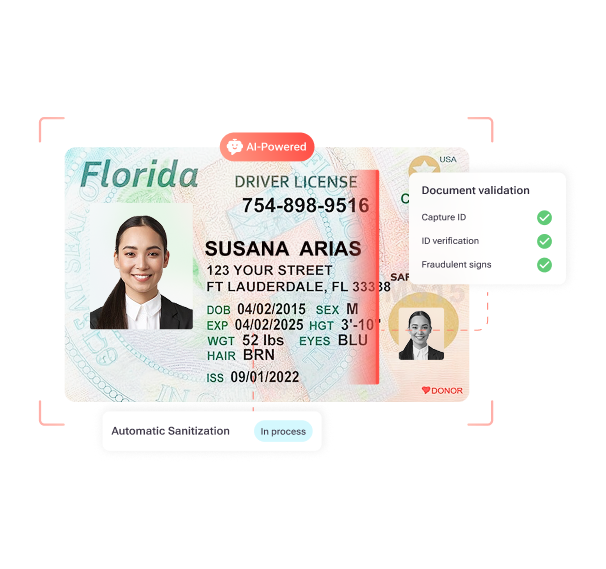
HUD rules permit reliable methods for age verification. Strong procedures collect documentation at move-in, keep current records for all occupied units, and apply the same steps to every application. Tools like IDVerify support secure, automated ID checks that reduce manual review time.
Communities should retain verification records for audit purposes and refresh information when new residents move in. Third-party affidavits can supplement primary documentation when government-issued IDs are unavailable, but direct documentation remains the stronger option for defending compliance.
Biennial HOPA Survey Checklist for Ongoing Compliance
Age verification procedures must provide for regular updates through surveys or other means, with updates taking place at least once every two years. Biennial surveys keep the 80/20 calculation current and create documentation that holds up in administrative or judicial proceedings.
Systematic survey procedures prevent missed units and inconsistent follow-up. Effective processes include distribution to all occupied units, clear completion instructions, firm deadlines, and defined follow-up steps for non-responsive residents. Use the downloadable checklist PDF for a step-by-step survey plan that supports consistent execution every cycle.
Your Complete Condo Age Verification Checklist (Florida 55+ Communities)
The following 12-step process creates a structured workflow that supports HOPA’s occupancy, policy, and documentation requirements while keeping your records audit-ready.
| Step # | Action | Required Documents | Purpose |
|---|---|---|---|
| 1 | Collect Primary ID | Driver’s License, State ID, Passport | Establish resident identity and age |
| 2 | Verify Date of Birth | Birth Certificate, Government ID | Confirm 55+ age requirement |
| 3 | Document Household Members | All resident information forms | Track unit occupancy composition |
| 4 | Complete Age Verification Survey | Signed affidavit or certification | Create legally admissible record |
| 5 | Obtain Resident Signatures | Verification forms with witness | Establish legal compliance |
| 6 | Calculate Unit Compliance | Occupancy tracking spreadsheet | Monitor 80/20 rule adherence |
| 7 | File Documentation | Organized verification records | Maintain audit-ready files |
| 8 | Update Internal Registry | Community occupancy database | Maintain internal compliance tracking |
| 9 | Schedule Follow-ups | Non-compliant unit notices | Address verification gaps |
| 10 | Retain Auditable Records | All verification documents | Support compliance defense |
| 11 | Conduct Biennial Survey | Community-wide age verification | Maintain ongoing HOPA status |
| 12 | Update Written Policies | Board-approved procedures | Demonstrate intent compliance |
Automate with TenantEvaluation to streamline these verification steps and cut manual processing time.
Operational Challenges in Manual Age Verification
Manual verification creates heavy workloads for Florida Community Association Managers. Incomplete documentation forces repeated follow-up, and inconsistent handling of applications opens compliance gaps and audit risk. Fraud risk also increases when staff rely only on uploaded files without biometric or automated checks.
Processing delays slow move-in timelines and strain relationships with realtors and prospective residents. Florida’s diverse applicant population adds complexity, since communities often need multilingual support and culturally aware communication. Poor record-keeping practices then expose communities to Fair Housing complaints and regulatory scrutiny.
These operational challenges become much worse at scale as communities grow or management companies oversee multiple properties. Manual processes do not scale efficiently, which creates bottlenecks, slows approvals, and raises administrative costs. See how automation eliminates these bottlenecks in a live demo.
How TenantEvaluation’s 55+ Solution Streamlines Verification
TenantEvaluation’s 55+ Communities Verification reduces manual work, standardizes application handling, and supports documentation consistency for Florida condos and HOAs. The platform is designed for Community Association Managers and improves operations through automated workflows that connect with existing community management systems.
The platform automates the checklist steps while keeping FCRA compliance at the core. With 5,000+ communities served and 100,000+ applications processed annually, TenantEvaluation delivers scale that supports busy Florida associations managing age-restricted requirements.
The table below highlights how TenantEvaluation’s purpose-built approach differs from generic screening platforms across the five areas that matter most for 55+ community management.
| Feature | TenantEvaluation | ApplyCheck/Verify Screening Solutions |
|---|---|---|
| Workflow Automation | End-to-end digital standardization | Manual/fragmented processes |
| Florida 55+ Focus | Built-in for Condos/HOAs | Generic background checks |
| Documentation Consistency | Structured records/audit trails | Email/PDF reliance |
| CAM Integration | Purpose-built for association workflows | Rental-focused platforms |
| Compliance Foundation | FCRA-first design | Compliance as afterthought |
Request a walkthrough of these features in action to see how digital workflows replace manual tracking.
Next Steps to Build a HOPA-Ready 55+ Workflow
Implementing this checklist gives Florida 55+ communities immediate structure for age verification and record-keeping. Manual execution still consumes staff time and leaves room for missed documents or inconsistent follow-up, which keeps compliance risk on the table.
Communities that want to scale verification and strengthen audit readiness should move toward digital workflows that reduce administrative work and centralize records. Schedule your personalized demo to transform your community’s verification process.
FAQ: Condo Age Verification Checklist
What documents prove 55+ age for HOPA compliance?
Government-issued identification serves as the primary verification documentation. Driver’s licenses, state ID cards, passports, birth certificates, and military IDs provide acceptable proof of age. Third-party affidavits may supplement primary documentation when government-issued IDs are unavailable, but direct documentation remains the stronger option for compliance. All verification documents must be current and clearly display the resident’s date of birth.
How often must communities conduct HOPA surveys?
HOPA requires communities to update age verification information at least once every two years through surveys or other reliable methods. Many communities also verify age at move-in and during title transfers to keep records current between survey cycles. Regular surveys then provide documentation that supports the community’s 80/20 calculations if regulators or courts review the file.
What are Florida-specific rules for 55+ communities?
Florida aligns with federal HOPA requirements through state statutes that govern condominium and homeowners associations. Since 2020, Florida no longer requires communities to register with the Florida Commission on Human Relations, but communities must still maintain internal documentation that proves HOPA compliance. Florida Statutes Chapters 718 and 720 add governance rules for condominium and HOA operations that sit alongside these federal standards.
Can digital tools help streamline age verification?
Digital platforms significantly reduce manual verification work and improve documentation consistency. TenantEvaluation’s 55+ Communities Verification automates checklist steps, standardizes application handling, and creates structured audit trails. These tools replace paper-based processes, cut follow-up communications, and give Community Association Managers real-time visibility into compliance status.
What happens if a community fails the 80/20 rule?
Communities that fall below 80% occupancy by residents 55 or older risk losing their HOPA exemption from Fair Housing Act familial status protections. Loss of the exemption exposes the community to discrimination complaints and potential legal action. Communities must quickly correct non-compliance through updated resident verification, stronger policy enforcement, or occupancy changes that restore HOPA qualification.
