Written by: Luis Teran, Co-founder, CEO, TenantEvaluation | Last updated: June 25, 2026
Key Takeaways for Florida HOA Screening Software
- Florida HOAs face specific compliance pressures under FCRA, Fair Housing, and state fee caps that generic platforms often handle inconsistently.
- Resident screening covers application intake, biometric identity verification, FCRA-compliant checks, and structured board approval workflows.
- Automated platforms cut processing time, reduce manual follow-ups, and give boards real-time visibility through dedicated dashboards.
- Key evaluation criteria include FCRA reseller status, biometric fraud prevention, audit trails, and Florida-specific fee and documentation controls.
- Learn how TenantEvaluation supports the full resident lifecycle for Florida associations at TenantEvaluation.
How Resident Screening and Onboarding Work in Daily CAM and Board Operations
A standard HOA application cycle moves through five stages: application intake, document collection, identity verification, board review, and lease lifecycle management. In manual environments, each stage introduces friction and delay. Applicants submit incomplete forms, managers chase missing documents by email, and board members receive PDFs through separate channels with no unified view of application status. Lease copies then sit across folders and spreadsheets with no expiration alerts or easy way to confirm occupancy.
The compounding effect of these pain points is measurable and disruptive. Manual follow-ups consume staff hours that could support higher-value tasks. These delays cascade, because incomplete applications push back approvals, which then delay move-in dates and, in revenue-sharing models, postpone fee collection. Meanwhile, fragmented lease records create audit exposure when regulators or attorneys request documentation, forcing staff to reconstruct files that should be immediately available. The cumulative result is that boards without a structured review dashboard make decisions more slowly and with less confidence, which further extends the approval cycle.
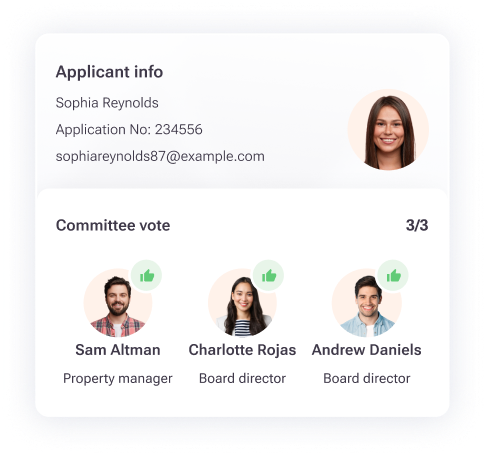
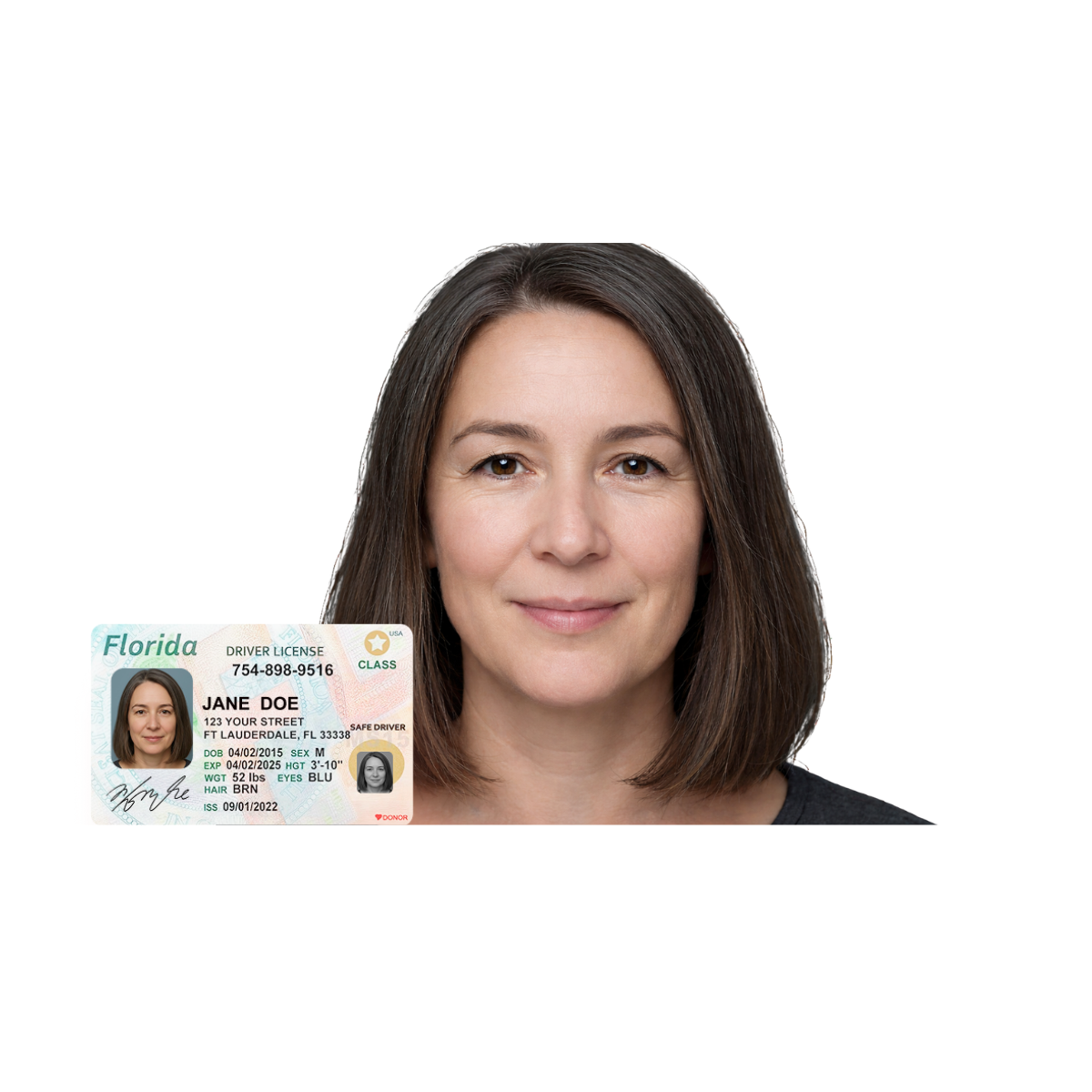
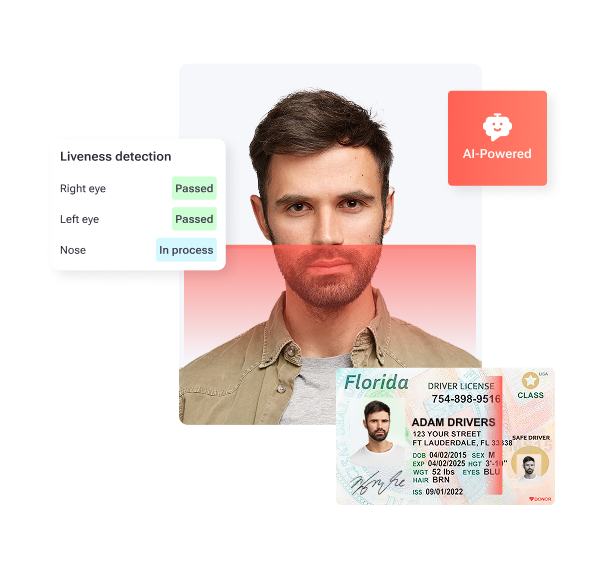
Automated platforms address each stage in sequence. Smart form logic rejects incomplete submissions before they reach the manager’s queue. Biometric identity verification, such as IDVerify, confirms physical presence and ID authenticity before the application proceeds. Board dashboards surface summarized applicant data and voting panels in one interface, so decisions move faster and stay documented. Lease tracking then connects the approved application directly to an active lease record, closing the gap between onboarding and occupancy management.
Florida Compliance Requirements for HOA Screening Platforms
FCRA compliance forms the foundation for any platform that orders or delivers consumer reports in connection with housing decisions. Platforms operating as FCRA resellers must maintain direct relationships with credit bureaus and enforce permissible-purpose controls so reports are only pulled for authorized transactions. They also need to generate automated adverse action notices when a consumer report contributes to a denial or other adverse decision. Federal law requires providing an adverse action notice to the applicant when associations take adverse action based on a tenant screening report.
Under Florida Statutes § 718.112(2)(k), condominium associations may charge a lease approval fee only if authorized in the governing documents, and the fee may not exceed $100 per applicant. Platforms that automate fee collection must be configurable to these statutory limits and reflect them consistently across communities.
Fair housing obligations add a second compliance layer that platforms must support. Florida HOAs and COAs must apply resident screening criteria evenly to every applicant, with no exceptions, to avoid claims of discrimination under the Federal Fair Housing Act and Florida statutes. Any criteria must be documented in writing within the governing documents; unwritten or case-by-case rules expose the association and board members to legal risk. Platforms should maintain complete audit trails with timestamped records of every screening action, board vote, and communication to demonstrate consistent application of documented criteria.
Data security expectations complete the compliance picture. PCI Level 1 certification, end-to-end encryption, and automatic redaction of personally identifiable information (PII) now function as baseline requirements for platforms handling Social Security numbers, financial records, and biometric data.
Practical Criteria for Evaluating HOA Screening and Onboarding Platforms
Six evaluation criteria apply across any platform comparison and give boards a practical checklist.
Compliance readiness: The platform should hold FCRA reseller status with direct bureau relationships. It should automate adverse action notices, maintain permissible-purpose controls, and allow configuration to Florida statutory fee limits.
Operational efficiency: The platform should automate document collection, form validation, and communication rather than relying on manual intervention at each stage. Boards and managers should see a clear, measurable reduction in processing time.
Transparency: CAMs and board members need real-time visibility into application status. A dedicated board dashboard with voting capability works better than approvals that still flow through email.

Scalability: The platform should handle high-volume application seasons without adding headcount. Portfolio-level management across multiple communities should feel manageable from a single interface.
Auditability: All actions should be timestamped and searchable. Lease records should connect to onboarding records in one audit-ready workflow, so associations can respond quickly to audits or legal requests.
Fraud prevention: The platform should go beyond document uploads and include biometric identity verification. Identity confirmation should be embedded natively in the workflow instead of redirecting applicants to external portals.

TenantEvaluation vs. Generic Property-Management Suites: Side-by-Side Comparison
The table below compares TenantEvaluation against the broader category of generic property-management suites (AppFolio, Buildium, Vantaca) and background-check platforms (ApplyCheck, Verify Screening Solutions) across criteria relevant to Florida community associations. All TenantEvaluation figures are drawn from company-published data.
| Evaluation Criterion | TenantEvaluation | Generic PM Suites (AppFolio, Buildium, Vantaca) | Background-Check Platforms (ApplyCheck, Verify Screening Solutions) |
|---|---|---|---|
| Platform specialization | Built exclusively for Florida community associations and management companies | General-purpose property management, HOA features are secondary modules | Background checks only, no onboarding or board workflow |
| FCRA reseller status | Direct TransUnion and Equifax reseller, strict permissible-purpose controls and automated adverse action | Varies by platform, often relies on third-party screening integrations | ApplyCheck and Verify use the TazWorks platform, reseller structure varies |
| Biometric identity verification | IDVerify: government ID validation, AI liveness detection, biometric selfie-to-ID comparison, native to the workflow | Not available as a native feature in community-association workflows | Not available |
| Board approval dashboard | QuickApprove: dedicated board voting panel, real-time application tracking, automated approval letters, personalized welcome package | No dedicated board dashboard, approvals managed through general task queues or email | Not applicable |
| 55+ community support | 55+ Communities Verification: standardized age-restricted application handling, consistent documentation, reduced manual work | Not available as a purpose-built feature | Not available |
| Lease tracking | Centralized, real-time lease visibility (active, pending, expired, missing), automated document collection, unit-level tracking, audit-ready records, connected to onboarding in one platform | Lease storage available but typically disconnected from screening and approval workflows | Not available |
| Revenue model | Pay-per-application with revenue-sharing, no upfront subscription fees, application fees generate income for associations | Monthly subscription fees (AppFolio, Buildium), no revenue-sharing model | Per-report pricing, no revenue-sharing |
| Processing time | Application processing in 5–10 minutes, approval cycle reduced by up to 70% | Manual steps extend processing to multiple days | Report delivery varies, no end-to-end workflow automation |
Best Platform Fit for Self-Managed Communities
Self-managed communities carry the full administrative burden on volunteer board members, so they need software that stays simple and low maintenance. These associations benefit from a platform that requires minimal configuration, automates routine follow-ups, and gives board members direct access to application status without routing everything through a manager. TenantEvaluation’s QuickApprove workflow supports this scenario by giving board members a dedicated panel where they review AI-summarized applicant reports and cast votes inside the platform, replacing email chains and spreadsheet tracking. The revenue-sharing model matters here as well, because it turns application processing into a cost-neutral or income-generating function without upfront software investment.
Best Platform Fit for Management Companies
Management companies that oversee portfolios of 10, 50, or 500 communities need a platform that scales without adding headcount. TenantEvaluation processes approximately 100,000 applications per year across 5,000+ communities, which demonstrates portfolio-level scalability in real operations. The platform’s automated document collection, smart form logic, and real-time notification system reduce the per-application labor cost that makes manual processing unsustainable at scale. Centralized lease tracking gives regional directors and district managers a unified view of occupancy status across communities, replacing the disconnected spreadsheets that create operational blind spots in multi-community portfolios. Enterprise clients including FirstService Residential, RealManage, and Campbell Property Management already operate on the platform.
Best Platform Fit for 55+ Communities
Age-restricted communities carry documentation requirements that generic platforms usually ignore. Florida condos and HOAs operating under 55+ designation must collect and retain consistent age-verification documentation across every application, which often produces fragmented records and inconsistent outcomes when handled manually. TenantEvaluation’s 55+ Communities Verification standardizes how age-restricted requirements are handled across applications, reduces manual work, and improves documentation consistency. This structure strengthens operational efficiency and internal control. The module is built for Florida condos and HOAs and designed specifically for Community Association Managers managing age-restricted communities, not a generic add-on repurposed from multifamily rental workflows.
Frequently Asked Questions
What are the most recent Florida regulatory requirements for resident screening?
Florida community associations conducting resident screening must comply with the federal Fair Credit Reporting Act, which governs how consumer reports are ordered, used, and disclosed. Associations must have a permissible purpose to pull a report, apply screening criteria consistently across all applicants to avoid fair housing violations, and issue adverse action notices when a consumer report contributes to a denial or other adverse decision. As noted in the compliance section, Florida law caps condo lease approval fees at $100 per applicant when authorized by governing documents. Screening criteria must be documented in writing within the association’s governing documents, because unwritten or inconsistently applied rules create legal exposure for the association and individual board members. Platforms used for screening should maintain complete, timestamped audit trails to demonstrate consistent application of documented criteria.
How does biometric identity verification reduce fraud in HOA applications?
Traditional document-based screening relies on applicants uploading copies of government-issued IDs, which cannot confirm that the person submitting the application is the same person named on the document. Biometric identity verification adds a physical confirmation layer by guiding the applicant through a selfie verification that is compared against the uploaded ID using facial landmark recognition and AI-powered liveness detection. This process confirms physical presence, validates ID authenticity, and produces a biometric match result, so communities move from document review to verified identity confirmation before approval. TenantEvaluation’s IDVerify runs natively inside the screening workflow, so applicants stay on the platform and managers receive verification results embedded directly in the screening report, including ID authenticity status, liveness verification status, and biometric match result.
Can lease tracking replace spreadsheets for community associations?
Spreadsheet-based lease management creates operational blind spots, because leases expire without alerts, copies go missing, and occupancy status becomes difficult to confirm. There is also no direct connection between the approved application and the active lease record. A centralized lease tracking system replaces these disconnected processes with real-time lease status visibility, including active, pending, expired, or missing leases. It also supports automated lease document collection during onboarding, unit-level tracking tied to occupancy records, and a searchable digital history of all lease activity. TenantEvaluation’s Lease Tracking capability connects resident onboarding, unit data, approvals, and lease documentation into one audit-ready workflow, giving CAMs, boards, and community operations teams a single source of truth from application submission through occupancy.
How long does the typical HOA application approval process take with specialized software?
Manual HOA application processes typically take five to ten days from submission to decision because of incomplete applications, manual document review, email-based board communication, and disconnected approval steps. Specialized platforms with automated form validation, biometric identity verification, and board-ready approval dashboards compress this timeline significantly by removing those bottlenecks. TenantEvaluation accelerates the applicant-facing intake stage to a few minutes and uses the QuickApprove workflow to shorten the overall approval cycle by up to 70 percent compared with manual processes. Actual time to final board decision still depends on community-specific governing document requirements and board availability, but the software removes most of the avoidable delay from follow-ups, rework, and email coordination.
Next Steps for Evaluating HOA Resident Screening Platforms
Florida CAMs, property managers, and HOA boards evaluating screening and onboarding platforms in 2026 should compare their current workflows against the six criteria outlined above: compliance readiness, operational efficiency, transparency, scalability, auditability, and fraud prevention. Generic property-management suites and standalone background-check platforms usually address only subsets of these criteria, while purpose-built platforms address all six within a single connected workflow. TenantEvaluation, founded in 2007 and serving the scale described earlier, is built specifically for community associations and management companies with FCRA compliance as the foundation, not an afterthought. The platform’s combination of IDVerify biometric verification, QuickApprove board-ready workflows, 55+ Communities Verification, and centralized lease tracking covers the full resident lifecycle in one audit-ready system.
