
Key Takeaways
- Florida HOAs need screening providers that align with Fair Housing, FCRA, and state rules, with clear, written criteria that avoid blanket criminal record bans.
- Stronger screening programs verify income, employment, rental history, and prior HOA violations, which reduces payment risk and improves community stability.
- Integrated platforms with dashboards, automation, and digital document collection shorten approval timelines and cut manual work for managers and boards.
- Robust security, including PCI Level 1 compliance, encryption, and automatic redaction, lowers data breach and liability risks for associations.
- Tenant Evaluation offers Florida-focused compliance, advanced screening, QuickApprove board tools, multilingual support, and revenue-sharing options that HOAs can access by scheduling a demo.
1. Compliance with Florida-Specific Regulations and Fair Housing Laws
Florida HOAs must follow federal Fair Housing laws, the Fair Credit Reporting Act (FCRA), and state statutes that shape landlord-tenant and association practices. Screening rules work best when written into the governing documents and then applied the same way to every applicant.
The Fair Housing Act limits blanket criminal record denials and requires reasonable, non-discriminatory decisions. Associations need to assess each case, including the type of offense, how long ago it occurred, and any evidence of rehabilitation. Sexual offenders can be excluded if that rule appears in the documents, but other criminal issues require a documented, case-by-case review.
Clear criteria in the governing documents, applied uniformly, help reduce discrimination risk. Criminal convictions must relate directly to housing safety, so providers that understand these standards help boards make defensible decisions in 2026.
2. Comprehensive Screening Capabilities beyond Basic Checks
Florida communities gain more protection from providers that go beyond simple credit and criminal checks. Common HOA checks include criminal records, arrests, incarcerations, sex offender registries, and work authorization, but many boards also need foreclosure, eviction, and prior HOA violation history.
Income and employment verification work best when the provider validates data directly with employers instead of relying only on uploaded documents. This extra step reduces income fraud and helps prevent future delinquency or non-compliance.
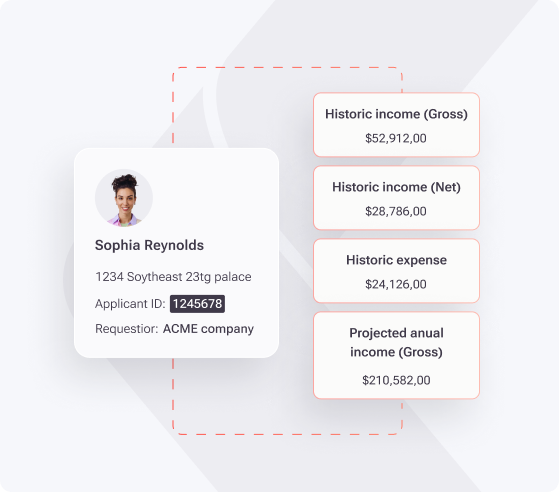
Many apartment checks review income, rental history, evictions, and criminal records over a seven-year window. HOA communities often expect equal or greater depth because residents share amenities, rules, and close proximity.
3. Integration with HOA Management Workflows and Platforms
HOA teams save time when background checks connect directly to their existing systems. Manual re-entry of applicant data increases errors and slows down approvals, especially in busy Florida markets.
Integrated platforms route applications through clear workflows, collect documents online, and show real-time status updates for managers, applicants, and board members. Automated checks for missing items help avoid delays before files reach the board.
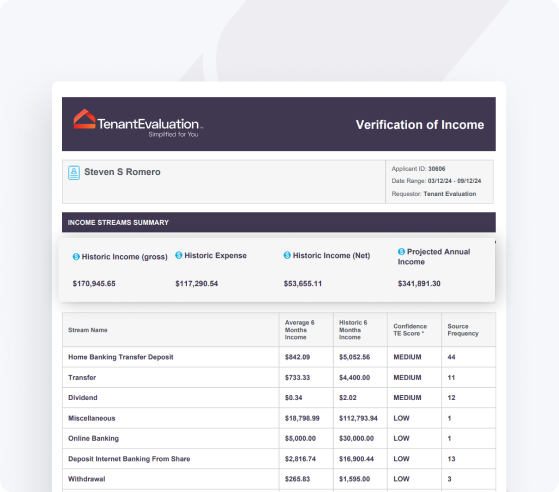
Property management companies that rely on automation often report large reductions in staff hours spent on routine follow-up, which frees teams to focus on owner relations, maintenance, and long-term planning.
4. Data Security, Privacy, and PCI Level 1 Compliance
Background checks require Social Security numbers, dates of birth, bank statements, and other sensitive information. Any provider that handles this data for an HOA must deliver strong security controls.
PCI Level 1 compliance sets a high bar for payment card data protection, and effective partners extend similar safeguards across the full platform. Encryption in transit and at rest, strict user access controls, and automatic redaction of fields such as Social Security numbers limit exposure if accounts are misused.
Data breaches can lead to fines, legal fees, credit monitoring costs, and long-term damage to the community’s reputation. Providers that invest in security and privacy controls help boards reassure applicants that their information will be handled responsibly.
5. Transparency and Board Member Access with QuickApprove
Board members make better and faster decisions when they do not rely on email chains and forwarded PDFs. Centralized access to reports, summaries, and votes keeps everyone aligned.
QuickApprove-style dashboards give board members a secure place to review applications, see AI-generated summaries, and cast votes from any device. The same data appears for each decision-maker, which supports fair and consistent approvals.
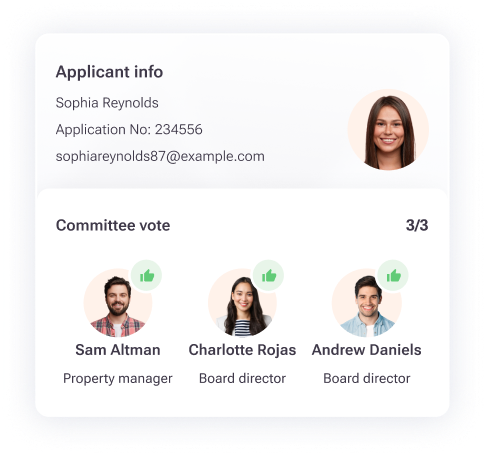
Communities that adopt these tools often shorten approval timelines, reduce confusion, and create a clear record of how and when decisions were made, which is valuable if disputes arise later.
6. Support and Multilingual Capabilities for Diverse Communities
Florida associations serve residents from many language and cultural backgrounds. Background check providers that offer multilingual support help applicants complete forms correctly and on time.
AI chat, email, and phone support in multiple languages reduce errors and abandoned applications. When applicants can ask questions in their preferred language at any hour, property managers handle fewer basic support calls and can focus on exceptions or complex issues.
Boards also benefit from consistent guidance about screening rules, documentation needs, and next steps, which reduces misunderstandings during sales and lease approvals.
7. Cost Structure and Revenue Sharing Opportunities
HOAs should examine both the direct price per application and the wider financial impact of their screening program. Providers that treat checks as a simple pass-through cost may miss chances to support the community budget.
Revenue-sharing models create a structured way for the provider to collect application fees, retain an agreed portion for services, and return the balance to the association or management company. Some specialists have delivered substantial cumulative revenue to partner communities through this approach.
Programs with no setup costs and transparent pricing help boards plan annual budgets and may offset administrative expenses, fund amenity upgrades, or strengthen reserves.
Comparison Table: Key Features of Top HOA Background Check Providers
|
Feature |
Provider A (Generic) |
Provider B (Generic) |
Tenant Evaluation (HOA-focused) |
|
Florida-specific compliance |
Limited |
Moderate |
Comprehensive |
|
Screening depth |
Basic |
Moderate |
Advanced |
|
Workflow integration |
Manual steps |
Partial integration |
End-to-end automation |
|
Data security and privacy |
Standard |
Good |
PCI Level 1, auto-redaction |
|
Board member dashboard |
No |
Basic reports |
QuickApprove dashboard |
|
Multilingual support |
English only |
Limited |
11 languages, 24/7 AI chat |
|
Revenue sharing |
No |
Sometimes |
Yes |
Schedule a demo to see how Tenant Evaluation compares for your Florida HOA.
Frequently Asked Questions (FAQ)
What are the legal requirements for HOAs conducting background checks in Florida?
Florida HOAs must follow the Fair Housing Act, FCRA, and state laws that govern associations. Screening criteria should appear in the governing documents and must apply equally to every applicant. Sexual offender checks can be explicit when documents allow, but blanket bans on all criminal records are not permitted. Boards need to evaluate whether a conviction is directly related to housing safety, including the type of offense, time elapsed, and rehabilitation.
Can an HOA deny an applicant based on a criminal record in 2026?
HOAs may deny applicants when individual review shows that a specific conviction presents a genuine safety or security concern. The board should document how the offense relates to housing, consider how long ago it occurred, and note any rehabilitation efforts. Associations can also deny applicants for clear rule violations, unpaid assessments, or material misstatements on the application, as long as those standards are applied consistently.
How can HOAs keep their background check process compliant and efficient?
HOAs improve both compliance and efficiency when they use specialized providers that understand Florida regulations and Fair Housing guidance. Strong programs combine automated document collection, comprehensive verification, PCI Level 1 security with redaction, and a transparent board review portal. Integration with the management platform and multilingual support further reduce errors and speed up approvals.
Which background check components matter most for HOA communities?
Key components include Fair Housing-compliant criminal checks, credit and financial history, verified employment and income, eviction and rental performance, and sex offender registry searches where allowed by documents. Identity verification adds an extra safeguard against fraud and ensures that associations evaluate accurate information.
How do revenue-sharing models with background check providers work?
In a revenue-sharing setup, the provider collects application fees, keeps a defined amount for screening services, and returns the remainder to the HOA or management company. This arrangement removes upfront costs, helps offset administrative time, and can fund reserves or projects. Some HOA-focused providers have generated significant cumulative revenue for partner communities through this model.
Conclusion: Choose a 2026-Ready Screening Partner for Your Florida HOA
Florida HOAs that select background check providers tailored to associations gain stronger compliance, faster approvals, better applicant experiences, and improved financial outcomes. Attention to regulation, screening depth, security, workflow integration, support, and cost structure helps boards protect both residents and budgets.
Tenant Evaluation focuses on HOA needs in Florida, with compliance-informed screening, integrated workflows, QuickApprove tools, multilingual support, and revenue sharing. Schedule a demo today to see how Tenant Evaluation can support your community in 2026.