Written by: Luis Teran, Co-founder, CEO, TenantEvaluation | Last updated: July 15, 2026
Key Takeaways for Florida HOA Screening in 2026
- Resident screening serves as a core governance function for Florida HOAs. It protects community safety, supports financial stability, and reduces legal exposure under federal and state law.
- Florida’s 2026 HOA screening environment operates under HB 1417 preemption, FCRA rules, and HUD individualized assessment standards. Documented, consistently applied workflows perform best in this landscape.
- Common red flags such as criminal convictions, eviction history, and credit issues must be evaluated with written criteria and objective standards. Automatic disqualification increases fair housing risk.
- Manual screening processes create serious compliance risks. Inconsistent criteria, missing adverse action notices, and fragmented lease records expose associations to legal and operational problems.
- TenantEvaluation delivers FCRA-first screening automation for Florida HOAs through QuickApprove, IDVerify, and centralized lease tracking. These tools turn compliance requirements into efficient, repeatable workflows. Learn more at TenantEvaluation.
Florida’s 2026 HOA Screening Landscape Under HB 1417
HB 1417, effective July 1, 2023, preempted local Florida ordinances governing rental application terms, fees, source-of-income protections, screening disclosures, and credit-check transparency. Florida Statute 83.425 now supersedes local ordinances such as Hillsborough County’s Tenant Bill of Rights and creates a statewide framework that ranks among the most permissive screening environments in the United States.
For 2026, Florida community associations must work within this preemption framework while still complying fully with the federal Fair Housing Act and FCRA. Florida landlords must provide a separate flood disclosure form for all residential rental agreements of one year or longer, as required by Fla. Stat. § 83.512. Fla. Stat. §718.112 caps condominium screening and transfer fees at $150 per applicant, subject to CPI adjustments, while §720.306 imposes no cap on HOA screening fees and instead requires that they remain reasonable.
Core HOA Screening Terms for Florida Associations
HOA resident screening describes how a community association evaluates a prospective tenant or purchaser against documented criteria before granting occupancy approval. Key terms include:
- Permissible purpose: Under the FCRA, associations must certify to the screening company that any consumer report will be used only for the housing application.
- Objective criteria: Written, measurable standards such as income thresholds, credit floors, and rental history windows that apply identically to every applicant for a given unit.
- Governing documents authority: Florida HOAs may charge administrative processing fees and conduct screening only when the association’s governing documents authorize those actions.
- Adverse action: Any denial, co-signer requirement, or higher deposit demand triggered by a consumer report. Each outcome requires a written FCRA-compliant notice to the applicant.
Florida’s 7-Year Background Check Rule in Practice
Florida imposes no state-level time limit on reporting criminal convictions; felonies and misdemeanors can appear on background checks indefinitely. The federal FCRA’s seven-year limit applies to non-conviction records such as arrests without conviction, dismissed charges, and acquittals in certain screening contexts.
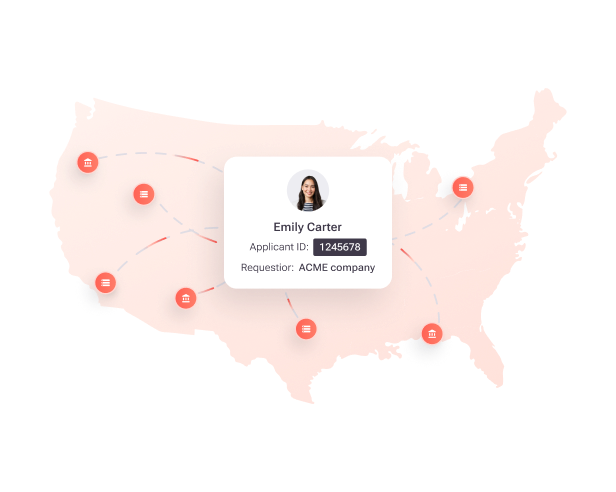
Many Florida community associations still limit criminal history denials to convictions within the last seven years for offenses that relate directly to tenancy. Examples include violence in housing, drug-related crimes, or fraud. This practice aligns with HUD’s April 4, 2016 Office of General Counsel guidance, which calls for individualized assessments that consider offense type, time elapsed, and relevance to resident, neighbor, or property safety instead of blanket bans.
Background Check Red Flags for Florida HOA Screening
Common red flags in Florida tenant and HOA screening include late payments or collections, criminal or eviction history, unverifiable income, and inconsistent rental history. Each flag requires objective, documented evaluation rather than automatic disqualification.
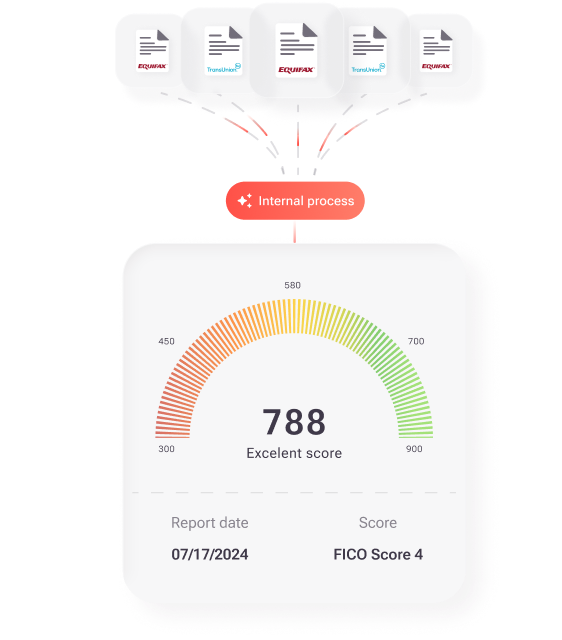
Key red flags and evaluation guidelines include:
- Criminal convictions: Assess nature, severity, recency, and evidence of rehabilitation per HUD 2016 guidance. Arrest records alone never justify denial.
- Eviction history: Florida landlords may consider eviction history only when the eviction resulted from nonpayment of rent or a lease violation.
- Credit derogatory marks: Collections, charge-offs, and patterns of late payment should be measured against the community’s documented credit floor and applied uniformly.
- Unverifiable income: Inability to confirm income through pay stubs, tax returns, bank statements, or employer contact.
- Identity inconsistencies: Discrepancies between submitted ID documents and application data. Biometric verification tools can flag these issues before a decision.
A credit score requirement that almost no applicant could meet will not stand as a legitimate standard under fair housing rules. Every red flag evaluation should be documented with the specific reason for the outcome. Once associations have evaluated applicants against these criteria, they must also manage the practical details of fees and processing timelines.
Screening Fees and Processing Timelines in Florida HOAs
Florida condominium associations may charge a lease approval fee only if the governing documents authorize it, subject to the $150 cap discussed earlier. HOA screening fees under § 720.306 must be reasonable but are not subject to a statutory cap.
Typical fee and timeline patterns across Florida markets include:
- Associations often charge screening fees per adult applicant or per married couple.
- Some Florida management companies charge a $50 processing fee plus a variable background and credit check fee set by the specific community.
- Once a complete packet is submitted, Orlando-area associations typically process applications in 24–72 hours, up to a maximum of 5 business days.
- Other management companies report processing timelines of 10–30 days after receiving a complete application package.
- Many communities require several weeks for the full approval process, with timelines that shift by season.
Standard Document Checklist for Florida HOA Screening
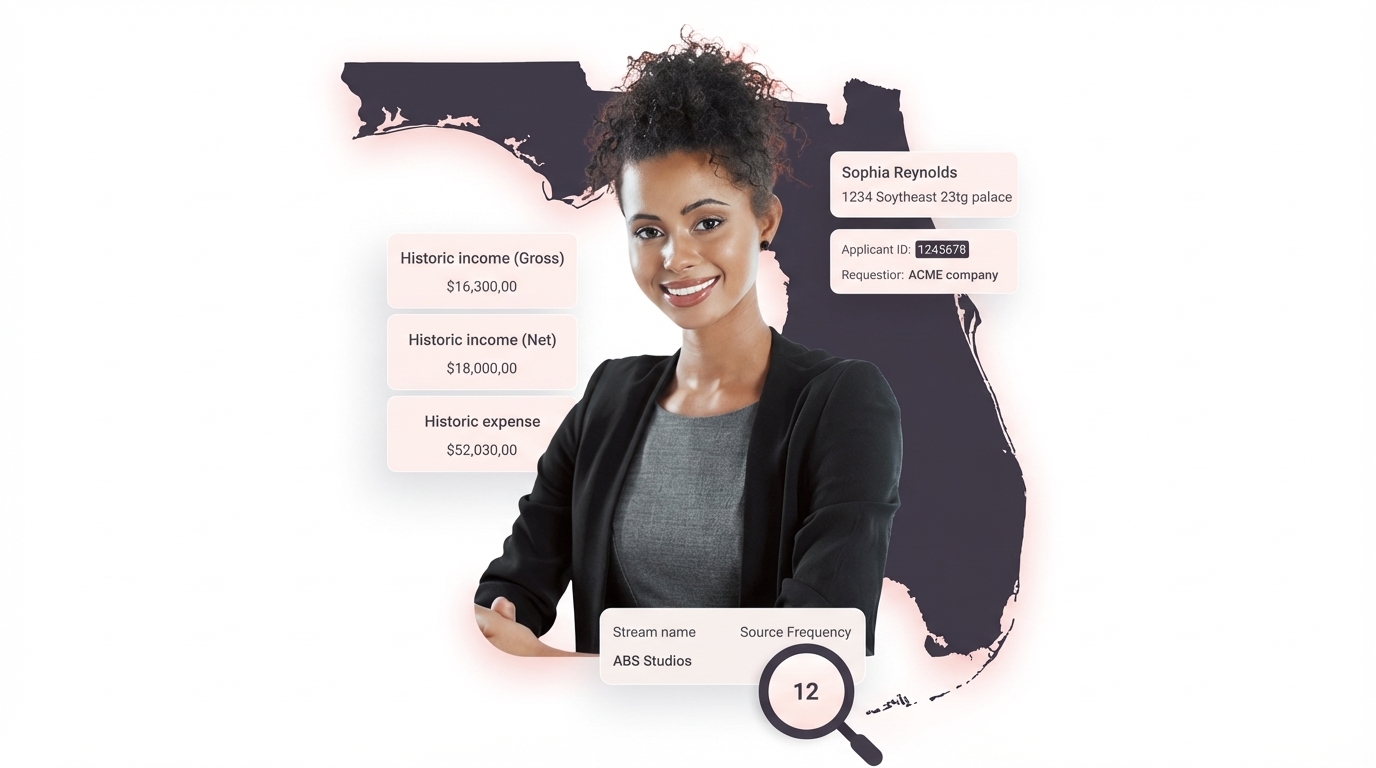
Typical documents for Florida HOA resident screening include:
- Completed application form for every adult occupant over age 18
- Government-issued photo ID such as a driver’s license or passport
- Social Security documentation or immigration documentation where applicable
- Signed lease or purchase contract
- Signed written authorization for background and credit checks, kept separate from the application form per FCRA
- Income verification such as two recent pay stubs, two prior years of tax returns for self-employed applicants, bank statements showing consistent deposits, or Social Security and investment income statements for retirees
- Vehicle and parking registration forms
- Pet disclosure with vaccination records when applicable
- Signed mandatory lease addenda that incorporate association rules
- Application fee payment
Objective Approval Criteria Table
| Criterion | Recommended Standard | Application Rule |
|---|---|---|
| Income | 2.5×–3× gross monthly rent | Apply identically to every applicant for the same unit |
| Credit score | Minimum floor, commonly 620–650 | Document before marketing and enforce without exception |
| Rental history | No evictions from nonpayment or lease violations within a defined lookback window | Verify two prior landlord references by direct contact |
| Criminal history | Convictions within the last 7 years for offenses related to tenancy | Use individualized assessment per HUD 2016 guidance and avoid blanket bans |
Seven-Step Screening Workflow for Florida Community Associations
- Publish written screening criteria. Document all thresholds for income, credit, rental history, and criminal history in the governing documents or a board-adopted policy before accepting applications.
- Collect a complete application package. Require every adult occupant to submit the standard document checklist, signed authorization forms, and applicable fees at the same time.
- Verify identity. Confirm government-issued ID authenticity for every applicant. Biometric verification tools add a layer of fraud prevention beyond document review.
- Verify income and employment. Review pay stubs, tax returns, or bank statements. Contact employers directly when documentation appears incomplete or inconsistent.
- Order FCRA-compliant consumer reports. Run credit, criminal, and eviction reports through a permissible-purpose screening provider. Obtain reports only after confirming written authorization.
- Conduct individualized assessment. Evaluate each criterion against the written policy. Document pass, conditional, or deny outcomes with specific objective reasons for every applicant.
- Issue decision and required notices. Communicate the board’s decision in writing. Send an FCRA-compliant adverse action notice for any denial or adverse condition based on a consumer report and retain the full application file.
Schedule a demo today to see how TenantEvaluation runs this seven-step workflow automatically for Florida HOAs and community associations.
Compliance, Risk, and Governance for Florida HOA Screening
A substantial share of Fair Housing complaints relate to the screening process, and first-time violations can carry civil penalties and compensatory damages. To minimize this exposure, Florida community associations must maintain compliance across three federal frameworks that shape every screening decision:
- FCRA: Willful FCRA violations can expose associations to actual damages or statutory penalties up to $1,000 per instance. Written authorization, permissible purpose certification, and adverse action notices remain mandatory.
- Fair Housing Act and Florida Fair Housing Act (Chapter 760): Florida law prohibits housing discrimination based on marital status, HIV and AIDS status, pregnancy, and age 40 or older in addition to the seven federally protected classes.
- Record retention: The full application file, including application, credit report, screening report, adverse action notice, and communications, must be retained for the longer of two years or the Florida statute-of-limitations window for fair housing claims.
Board oversight requires that the board or an appointed committee makes the final approval decision. The management company processes paperwork but does not decide. Occupancy before written board approval is prohibited in properly governed communities.
Operational Challenges in Manual Screening Workflows
Manual, paper-based screening workflows create compounding operational and compliance risks for Florida community associations. Each weakness in the manual process amplifies the others. Inconsistent criteria application creates legal exposure that fragmented records cannot support, while approval bottlenecks delay adverse action notices that inconsistent criteria already fail to generate correctly. The five most critical failure points include:
- Inconsistent criteria application: One inconsistency in how screening criteria are applied can support a plaintiff’s claim; every decision, approval and denial, requires documentation.
- Identity fraud exposure: Traditional document-upload screening cannot reliably detect stolen IDs, synthetic identities, or impersonation attempts without biometric validation.
- Fragmented lease management: Missing or outdated lease copies, manual expiration tracking, and disconnected spreadsheets create occupancy blind spots and compliance gaps.
- Approval bottlenecks: Applications stuck in email chains and manual board follow-ups extend timelines, especially during peak seasons.
- Adverse action gaps: Common FCRA violations include failing to provide proper notices after an adverse decision such as denial, higher deposit, or co-signer requirement.
Best Practices and Digital Standards for 2026 Screening
Florida community associations that adopt current best practices in 2026 are shifting toward standardized, digital, and audit-ready workflows. Key standards include:
- Written screening criteria documented and board-adopted before any application cycle opens
- Identical application packages and screening sequences applied to every applicant in the order received
- Biometric identity verification embedded in the application workflow to move communities from document review to confirmed physical identity
- Automated adverse action notice generation tied directly to consumer report outcomes
- Centralized, real-time lease tracking that connects onboarding, approvals, and occupancy records in one audit-ready system
- Standardized documentation workflows for age-restricted 55+ communities to reduce fragmentation across emails, PDFs, and manual follow-ups
- PCI-compliant, encrypted data handling with automatic redaction of sensitive personal information
Five-Part Framework to Evaluate Your Screening Platform
Florida CAMs and boards can evaluate their current screening approach across five dimensions:
- Compliance readiness: Confirm that written criteria are documented, FCRA authorization forms remain separate from applications, and adverse action notices generate automatically on every applicable denial.
- Efficiency: Check whether the workflow reduces processing from days to hours, eliminates manual follow-ups, and frees staff time for higher-value tasks.
- Transparency: Ensure that boards have real-time visibility into application status and that every decision has a documented audit trail.
- Scalability: Confirm that the process can handle peak-season volume without adding headcount or creating bottlenecks.
- Risk controls: Verify that the platform includes identity fraud prevention, encrypted data handling, and record retention aligned with Florida’s statute-of-limitations window.
How TenantEvaluation Supports FCRA-First Screening for Florida HOAs
TenantEvaluation is built specifically for community associations and management companies, with FCRA compliance as the foundation, not an afterthought. Founded in 2007 and serving more than 5,000 communities with approximately 100,000 applications processed annually, TenantEvaluation converts Florida HOA resident screening requirements and best practices into automated, compliant workflows.

Core capabilities include:

- QuickApprove: An accelerated approval workflow for CAMs, boards, and property management teams inside one connected platform. QuickApprove delivers real-time application tracking, a board-ready approval process, automated communication support, customized approval letters, and a personalized welcome package. These features reduce manual follow-ups and move applications from submission to decision faster while preserving control, compliance, and visibility.
- IDVerify: A biometric identity verification layer embedded directly in the screening workflow. It combines government ID validation, AI-powered liveness detection, and biometric facial matching and moves communities from document-based validation to biometric-confirmed identity verification before approval decisions.
- 55+ Communities Verification: A built-in capability that helps Florida condos and HOAs standardize how age-restricted requirements are handled across applications. It reduces manual work, improves documentation consistency, and strengthens operational efficiency and internal controls.
- Lease Tracking: Centralized, real-time lease visibility and lifecycle control from application to occupancy. The feature connects resident onboarding, unit data, approvals, and lease documentation into one streamlined workflow with real-time lease status, automated lease document collection, unit-level tracking, and audit-ready digital lease records.
TenantEvaluation is a legitimate reseller of TransUnion and Equifax data and maintains strict permissible purpose controls, automated adverse action workflows, and built-in audit trails for every application. The platform clearly separates decision-making by the association from data provision by TenantEvaluation. It has generated $150M in revenue for communities and maintains a 4.8/5 Google rating, which signals both financial impact and user satisfaction.
Schedule a demo today and see how Florida HOAs and community associations use TenantEvaluation to meet 2026 screening requirements with a fully automated, FCRA-first platform.
Frequently Asked Questions
What is the 5-year rule for HOA in Florida?
Florida law does not create a universal “5-year rule” for HOA resident screening. The term usually refers to community-specific governing document provisions that restrict how far back certain records, such as rental history or financial delinquencies, are evaluated during approval. Some associations adopt internal policies that limit review of certain non-criminal financial history to five years as a matter of practice. However, Florida statutes do not mandate this window. Criminal convictions can appear on background checks indefinitely under Florida law, while the FCRA limits non-conviction records to seven years in applicable contexts. Any lookback window an HOA applies should be documented in writing, applied consistently to every applicant, and reviewed by a compliance professional to avoid fair housing disparate-impact exposure.
What are the most common HOA violations related to screening?
The most common HOA screening violations in Florida fall into three main categories. First, inconsistent criteria application, such as running a credit check on one applicant but not another or applying different income thresholds to different applicants for the same unit, creates direct Fair Housing Act exposure. Second, missing or deficient adverse action notices frequently violate the FCRA. Any denial, co-signer requirement, or higher deposit demand based on a consumer report requires a written notice that identifies the screening agency, states that the agency did not make the decision, and informs the applicant of their right to dispute and obtain a free copy of the report within 60 days. Third, blanket criminal history bans that automatically disqualify any applicant with any conviction, regardless of offense type, recency, or relevance, can create disparate-impact liability under HUD 2016 guidance. Associations should also avoid changing screening standards after applications arrive, relying on undocumented subjective judgment, and failing to retain complete application files for the required retention period.
What is the best tenant screening approach for community associations?
The most defensible and efficient screening approach for Florida community associations combines written objective criteria, a standardized workflow, FCRA-compliant consumer reports, and a digital platform that automates compliance steps. Criteria should be documented before any application cycle opens and applied identically to every applicant in the order received. The screening sequence should follow a consistent order that covers identity verification, income verification, rental history, credit review, and criminal background assessment with individualized evaluation. Every decision, including approval, conditional approval, or denial, should be recorded with specific objective reasons. Adverse action notices must generate automatically for any denial based on a consumer report, and records should be retained for at least two years. Biometric identity verification adds a fraud-prevention layer that document-based review cannot match. Centralized lease tracking keeps approved residents’ lease documentation connected to their application records from onboarding through occupancy and supports audit readiness and operational continuity. TenantEvaluation’s all-in-one platform integrates these elements into a single FCRA-first workflow built for Florida community associations.
Conclusion: Florida HOA Screening Priorities and Next Steps
Florida HOA and community association resident screening in 2026 operates within a defined statutory framework that includes HB 1417 preemption, the condominium fee cap, FCRA adverse action requirements, and HUD’s individualized criminal history assessment standard. Associations that adopt documented, consistently applied, digital workflows gain stronger protection, while those that rely on manual processes face higher legal and operational risk.
Key takeaways for CAMs, property managers, and board members include:
- Written, board-adopted screening criteria applied identically to every applicant form the primary defense against fair housing and FCRA claims.
- Adverse action notices are mandatory for every denial or adverse condition based on a consumer report; silence never satisfies FCRA requirements.
- Criminal history requires individualized assessment, and blanket bans create disparate-impact exposure.
- Biometric identity verification now represents an emerging standard that moves communities beyond document-based fraud risk.
- Centralized lease tracking connects onboarding to occupancy and replaces spreadsheets and scattered records with audit-ready digital workflows.
- A platform built specifically for Florida community associations delivers compliance architecture, board visibility, and operational efficiency that manual processes cannot match.
TenantEvaluation’s FCRA-first architecture, described throughout this guide, provides the compliance foundation that manual processes lack. Schedule a demo today to see how Florida HOAs and community associations use TenantEvaluation’s QuickApprove, IDVerify, 55+ Communities Verification, and Lease Tracking to meet 2026 screening requirements inside one integrated platform.
