Written by: Luis Teran, Co-founder, CEO, TenantEvaluation
Key Takeaways for Florida Lease Tracking
- Spreadsheet-based lease tracking becomes unreliable past 5–10 active leases, which leads to missed renewals, rent escalations, and insurance expirations that create operational and financial risk.
- Florida associations carry added compliance burdens under statutes like § 720.306(1)(h), including rental caps and minimum lease terms that demand accurate, real-time recordkeeping.
- Centralized lease tracking replaces fragmented storage with one connected workflow and delivers real-time lease status visibility and automated lease document collection.
- Property managers using integrated systems save 10–20 hours per week per employee, with major gains in leasing workflows and reporting.
- Replace spreadsheets with TenantEvaluation’s connected lease workflow to eliminate blind spots and maintain compliance—see how it works for your association.
The Problem: How Spreadsheets and Emails Put Florida Associations at Risk
Spreadsheet-based lease tracking breaks down past 5–10 active leases because the volume of dates, terms, and tenant communications becomes too much to manage manually. Errors and missed deadlines follow. A missed lease renewal notice can lock a property manager into another year on unwanted terms. A forgotten rent escalation causes loss of the scheduled increase for the entire lease term. An overlooked insurance expiration leaves the property exposed, and a skipped renewal opportunity can result in a sudden vacancy.
Property managers spend an average of 10–15 hours per month per property on management tasks when using spreadsheets and manual processes. When a portfolio triples from 50 to 150 units, manual workload often multiplies by five or more. Staff spend that time on duplicated effort, error correction, and chasing siloed data across multiple systems.
Florida associations manage more than standard lease oversight. Under Florida Statutes § 720.306(1)(h), HOAs may adopt amendments that prohibit rental terms of less than six months or limit rentals to no more than three times per calendar year. Condominium associations may require board approval of all leases and enforce rental caps expressed as a fixed number or percentage of total units. Tracking rental percentages, maintaining waitlists, and verifying compliance with rental caps requires consistent recordkeeping and staff time, which manual systems cannot reliably absorb.
Failing to set lease expiration alerts at least 90–120 days in advance leaves property managers scrambling with only 30 days to negotiate renewals or find replacements. In Florida’s high-volume HOA and condo market, which employed 64,584 residential property managers as of September 2024, ranking second only to California, the operational cost of manual lease management is not a minor inconvenience. It is a competitive liability.
The Solution: Centralized Lease Tracking for Florida Communities
Centralized lease tracking creates an operational layer that replaces fragmented storage with one connected workflow from application submission through occupancy. Instead of storing lease documents across folders, inboxes, and spreadsheets, a centralized system connects resident onboarding, unit data, approvals, and lease documentation inside a single platform with real-time visibility at every stage.
TenantEvaluation’s Lease Tracking starts with centralized lease records that provide one source of truth for all lease documentation. This foundation enables real-time lease status visibility across your entire portfolio, including active, pending, expired, or missing leases. Because the system automates lease document collection during onboarding, records stay complete from day one and remain tied to unit-level occupancy data. The result is searchable, audit-ready digital lease records that remain connected from application to occupancy and support confident decision-making.
How TenantEvaluation’s Centralized Lease Tracking Operates Day to Day
TenantEvaluation’s Lease Tracking operates as a native capability inside the same platform used for resident screening, document collection, and board approvals. The workflow follows a straightforward lifecycle:
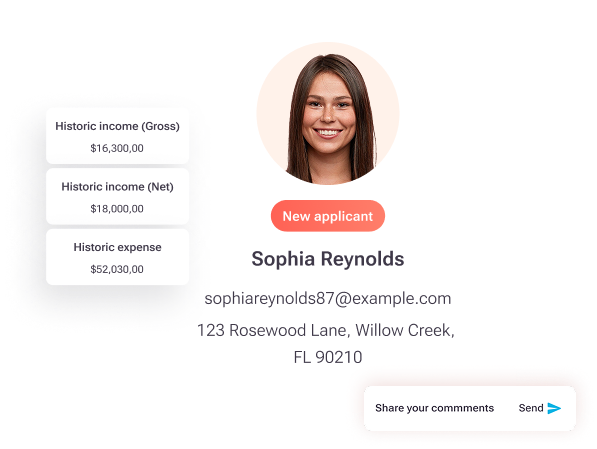
- Application intake: A prospective tenant submits an application through TenantEvaluation’s 100% online platform. Lease documentation flows in automatically during onboarding, so staff avoid separate follow-up.
- Board approval: The application moves through the QuickApprove workflow, which gives CAMs and board members real-time visibility and a connected approval process without email chains or spreadsheets.
- Lease record creation: After approval, the lease links to the unit record inside TenantEvaluation. This creates a searchable digital history tied to that specific occupancy.
- Active occupancy tracking: Lease status updates in real time as active, pending, expired, or missing. Managers and boards see an accurate operational picture at any moment.
- Record retention: All lease documents, approval records, and document trails remain searchable and audit-ready inside the platform. Boards receive the reporting they need without manual assembly.
Firms using modern property management software report saving 10–20 hours per week per employee, with the largest gains in leasing processing and report generation. Properties using integrated systems routinely process qualified rental applicants in under 24 hours, compared to 7–10 days for those relying on disconnected or manual processes.
Real-Time Lease Status and Rental-Cap Control
TenantEvaluation’s Lease Tracking assigns every lease one of four statuses: active, pending, expired, or missing. CAMs and boards gain an accurate, real-time view of occupancy across the entire community. Managers no longer need to cross-reference spreadsheets or search inboxes to confirm whether a unit is occupied, pending renewal, or overdue for documentation.
For Florida associations enforcing rental caps, this visibility becomes operationally critical. Enforcement of rental caps is complicated by informal or unreported rentals, family occupancy arrangements, and short-term leasing platforms, which increase the risk of disputes and compliance errors. A centralized system that tracks unit-level lease status in real time supports more consistent cap enforcement and waitlist management. Staff no longer rely on manual counts or periodic audits of disconnected records.
Professional community association management companies support rental cap enforcement by tracking owner-occupancy and lease status, maintaining compliant waiting lists, and ensuring fair, uniform enforcement. TenantEvaluation’s Lease Tracking provides the operational infrastructure that supports this process at scale.
Automated Lease Documents and Board-Ready Reporting
Manual lease management consumes time because staff must chase documents. Lease copies arrive late, get stored in the wrong folder, or never make it into a centralized record. TenantEvaluation’s automated lease document collection solves this at the source. Documents flow directly from the application and onboarding workflow into the lease record, which removes the follow-up cycle before it starts.
Automation can save up to 30% of a company’s time by automating tasks like inserting company information and cross-referencing data in document workflows. It also reduces the risk of costly mistakes from inaccurate information and manual data entry.
For boards, TenantEvaluation’s built-in dashboard delivers a clear operational picture of occupancy and resident activity across communities. Audit-ready digital lease records stay organized and searchable inside the platform. Teams avoid manual report assembly and exports from multiple systems. In 2026, the consolidation trend sees accounting, assessment collection, resident communication, and board document storage increasingly living in one system, which removes manual handoffs between tools.
Manual vs. Centralized Lease Tracking: Side-by-Side View
| Metric | Manual Spreadsheets & Email | TenantEvaluation Centralized Lease Tracking | Source |
|---|---|---|---|
| Application processing time | 7–10 days with disconnected manual processes | Under 24 hours with integrated workflow | ExactEstate |
| Lease visibility | Breaks down past 5–10 active leases, no real-time status | Real-time status (active, pending, expired, missing) across all units | MochaManage |
| Administrative time per property | 10–15 hours per month per property on manual tasks | 10–20 hours saved per week per employee with modern software | ExactEstate; DoorLoop |
| Audit readiness | Documents scattered across folders, inboxes, and spreadsheets, manual assembly required | Searchable, audit-ready digital lease records inside one connected platform | TenantEvaluation |
Why TenantEvaluation’s Connected Lease Tracking Stands Out
Generic property management tools treat lease storage as a file cabinet. TenantEvaluation treats it as a connected operational workflow. The difference is structural. TenantEvaluation’s Lease Tracking is built natively inside the same platform used for resident screening, IDVerify biometric identity verification, QuickApprove accelerated approvals, and board dashboards. Every lease record connects directly to the application that created it, the approval that authorized it, and the unit it governs.

This native connection delivers what spreadsheets cannot match. CAMs managing portfolios across Miami, Fort Lauderdale, Tampa, or Orlando access the same real-time lease status, the same document history, and the same board-ready reporting inside one platform. Staff avoid toggling between systems or manually reconciling records.
For Florida associations managing 55+ Communities Verification requirements alongside standard lease oversight, TenantEvaluation’s unified platform reduces the operational complexity of running multiple compliance workflows at the same time.

The operational outcome is direct. Associations gain audit-ready digital lease records that support board reporting and internal controls. Teams improve efficiency without adding headcount and reduce risk exposure tied to incomplete or disconnected records.
TenantEvaluation has processed 100,000+ applications annually across 5,000+ communities and generated $150M for those communities. The platform is built specifically for Florida CAMs, boards, and property management companies, rather than adapted from generic rental tools.
Frequently Asked Questions
How many leases can spreadsheets reliably track before errors appear?
Spreadsheet-based lease tracking typically becomes unreliable past 5–10 active leases. At that volume, the combination of expiration dates, tenant communications, document versions, and renewal timelines exceeds what manual processes can consistently manage. Errors compound quickly: a missed renewal window, an untracked rent escalation, or a lapsed insurance requirement each carry direct operational and financial consequences. For Florida associations managing dozens or hundreds of units, this failure point is not theoretical but a routine operational reality that centralized lease tracking is designed to eliminate.
What Florida regulations affect lease tracking in HOAs and condos?
Florida associations operate under several statutes that directly affect how leases must be tracked and enforced. Under Florida Statutes § 720.306(1)(h), HOAs may adopt amendments restricting rental terms to a minimum of six months or limiting rentals to no more than three times per calendar year. Under Florida Statutes § 718.112(2)(k), condominium associations may not charge transfer or approval fees exceeding $100 per applicant. Associations enforcing rental caps must track the number of currently leased units against the cap threshold, maintain compliant waitlists, and document approval decisions, all of which require organized, accessible lease records. Landlord-tenant obligations under Chapter 83 Part II of the Florida Statutes apply to the rental of dwelling units, subject to specific exclusions such as transient occupancies, owner-occupied condominium units, and certain facilities. These requirements make accurate, centralized lease documentation a practical operational necessity for Florida CAMs and boards.
How does centralized lease tracking support rental-cap enforcement?
Rental-cap enforcement depends on knowing, at any given moment, exactly how many units are actively leased, how many are pending approval, and how many are on a waitlist. Manual systems such as spreadsheets, email threads, and shared folders cannot reliably provide that picture in real time. Centralized lease tracking assigns each unit a live status, including active, pending, expired, or missing, and connects that status directly to the application and approval record that authorized the tenancy. CAMs and boards gain an accurate, up-to-date count of leased units relative to the cap, support consistent waitlist management, and maintain a documented record of enforcement decisions that reduces the risk of disputes. TenantEvaluation’s Lease Tracking delivers this visibility as a native capability inside the same platform used for applications and approvals, not as a separate system that requires manual reconciliation.
What time savings do associations report after moving from manual processes to centralized lease tracking?
Associations and property management firms that move from manual processes to integrated platforms consistently report significant reductions in administrative time. As noted earlier, property managers using modern software save 10–20 hours per week per employee, with the largest gains in leasing processing and report generation. As shown in the comparison above, processing time drops from more than a week with disconnected workflows to under 24 hours with integrated systems. One Florida-based management company that adopted TenantEvaluation freed up 50 hours per day for their team, cut processing time by 50%, and achieved $240,000 in annual savings. These gains compound as portfolio size grows because centralized systems absorb higher volume without proportional increases in staff time or error rates.
Conclusion: Shift from Reactive Spreadsheets to Proactive Lease Control
Florida CAMs, property managers, and board members managing rental activity in HOAs and condos cannot accept the operational blind spots that spreadsheets and scattered emails create. Missing lease copies, manual expiration tracking, and disconnected records slow approvals, complicate board reporting, and increase risk exposure tied to incomplete documentation.
Centralized lease tracking replaces that fragmented reality with one connected workflow that spans applications, approvals, and occupancy. TenantEvaluation’s Lease Tracking delivers real-time lease status visibility, automated document collection, unit-level tracking, and audit-ready digital lease records inside the same platform used for resident screening, identity verification, and board approvals. Associations gain consistent visibility and control instead of manual guesswork.
