Written by: Luis Teran, Co-founder, CEO, TenantEvaluation
Key Takeaways for Florida CAMs
- CAM document automation software digitizes and automates the full resident application workflow for Florida HOAs and condos, replacing manual email and spreadsheet processes.
- Florida associations face rising identity fraud, FCRA compliance obligations, and new governance requirements under HB 1203 and HB 1021, which increase the need for audit-ready digital platforms.
- Leading platforms are evaluated on FCRA-first architecture, biometric identity verification, board voting dashboards, 55+ community standardization, and revenue-sharing models.
- TenantEvaluation ranks first among the five tools reviewed, delivering native FCRA compliance, biometric IDVerify, QuickApprove board workflows, and 55+ standardization in a single ecosystem.
- Start reducing processing time by up to 70% and generating revenue through TenantEvaluation’s compliant application fee sharing model.
Industry Landscape: Fraud Risk, FCRA Pressure, and Digital Onboarding
Identity fraud exposure in residential communities is accelerating. The US identity verification market is projected to reach USD 8.16 billion by 2030 from USD 4.34 billion in 2025, driven by demand for biometric authentication and real-time identity confirmation during digital onboarding. The KYC and onboarding segment accounts for a substantial share of that market, which shows how broadly organizations are adopting automated identity workflows.
Florida’s regulatory environment has intensified at the same time. Florida’s HB 1203 and companion HB 1021, effective 2024, represent the most significant changes to Florida HOA law in decades. These laws impose structural inspection mandates and accelerated reserve funding requirements on condominium associations. They also increase board oversight demands and raise the cost of administrative errors.
Under the Fair Credit Reporting Act (FCRA), 15 U.S.C. § 1681 et seq., and Regulation V (12 CFR Part 1022), any entity that procures or uses consumer reports, including HOAs, condos, and their screening vendors, must certify permissible purpose, issue compliant adverse-action notices, and maintain audit-ready records. Willful failure to provide a compliant Adverse Action Notice under the FCRA exposes the user to actual damages sustained or statutory damages of $100–$1,000, whichever the consumer elects, plus punitive damages and attorney fees.
Against this backdrop, the gap between communities using integrated platforms and those still running on spreadsheets and email threads is getting wide enough to matter operationally, with most associations managing 50 or more units now using dedicated software for at least some functions.
How CAM Automation Supports Screening and Onboarding
To understand how modern platforms address these pressures, it helps to map the complete workflow they must automate. A complete CAM document automation workflow spans five operational stages:
- Application intake: Digital form submission with intelligent logic that adjusts fields by applicant type (tenant, purchaser, occupant), rejects incomplete submissions, and collects fees automatically.
- Identity verification: Biometric confirmation of government-issued ID, liveness detection, and facial matching before screening authorization.
- Background and credit screening: FCRA-compliant consumer report retrieval from direct bureau sources, with permissible-purpose certification and auto-redaction of sensitive PII.
- Board review and approval: A dedicated dashboard where board members access summarized applicant reports, cast votes, and generate approval letters, replacing email chains.
- Record retention: Timestamped audit trails, adverse-action workflow automation, and encrypted document storage for every application.
Compliance and Governance Requirements for Florida Associations
FCRA Module 1 procedures require users of consumer reports to maintain internal controls, policies, and training sufficient to ensure reports are obtained only for permissible purposes and that adverse-action notices comply with technical disclosure requirements, including credit-score information. For Florida associations, the platform, not just the manager, must enforce separation between data provision and decision-making.
Regulation V also includes address-discrepancy rules and identity-theft red-flag requirements that automated screening systems must address. Biometric verification strengthens permissible-purpose validation by confirming identity before screening authorization and reinforces audit defensibility.

Effective compliance automation platforms require centralized policy management with version control, approval workflows, distribution tracking, and comprehensive audit trails to replace error-prone manual processes. For CAMs, this translates directly to role-specific access controls, automated adverse-action generation, and immutable application records.
Operational Pain Points in Manual CAM Workflows
Many compliance teams remain stuck using manual processes, and community association management is no exception. The most frequently cited failure points include:
- Incomplete submissions: Applicants submit missing documents via email, which triggers repeated manual follow-ups across managers, realtors, and owners.
- Email-chain bottlenecks: Communities that route all requests through email create friction that shows up as inbound call volume, meeting complaints, and reduced satisfaction.
- Missed property transfers: Missed property transfers can result in significant at-risk revenue from unpaid assessments due to incomplete transfer workflows.
- Inconsistent 55+ documentation: Age-restricted communities relying on PDFs and manual follow-ups produce fragmented records that create risk exposure in audits or disputes.
- No real-time board visibility: Boards receive application packages through email with no centralized status tracking, which delays decisions and creates liability gaps.
Best Practices Shaping CAM Document Automation in 2026
Three practices are defining the leading platforms in 2026. First, biometric verification is moving from optional to standard. Identity systems are shifting from one-time verification events toward continuous identity assurance that incorporates biometrics, device posture, and network context. Second, workflow standardization, particularly for age-restricted communities, is replacing fragmented email-and-PDF processes with structured, auditable intake. Third, revenue enablement through application fee sharing is converting onboarding from a cost center into a compliant income stream for associations.
Evaluation Framework for CAM Document Automation Tools
Florida CAMs should assess platforms against six criteria, starting with the compliance foundation and building toward operational value:
- Compliance readiness: FCRA-first architecture, direct bureau reseller status, automated adverse-action workflows, and permissible-purpose controls. Without this foundation, other features cannot offset the liability created by non-compliance.
- Operational efficiency: Once compliance is assured, measure end-to-end automation from intake through approval, with measurable time savings and headcount neutrality.
- Board transparency: Efficiency gains matter only when boards can see and trust the process. Look for dedicated voting dashboards with real-time application status and summarized reports.
- Scalability: Configurable per community, portfolio-level management, and support for high-volume application seasons.
- Auditability: Timestamped records, auto-redaction of PII, and immutable audit trails for every application action.
- Risk controls: Biometric identity verification, identity-theft red-flag detection, and separation of data provision from decision-making.
See how TenantEvaluation scores across all six evaluation criteria
Top CAM Document Automation Tools Ranked for Florida Associations
1. TenantEvaluation was founded in 2007 and built exclusively for Florida community associations and management companies. TenantEvaluation is the only native platform that combines FCRA-first design, direct TransUnion and Equifax reseller status, biometric identity verification, and a board-ready approval workflow in a single ecosystem. It processes 100,000+ applications annually across 5,000+ communities and has generated $150M for associations through its revenue-sharing model. Key differentiators include:

- QuickApprove: An accelerated approval workflow that moves applications from submission to decision faster, with real-time application tracking, automated communication support, customized approval letters, a personalized welcome package, and a board-ready voting dashboard. All of this lives inside one connected platform, without losing control, compliance, or visibility. QuickApprove is designed for high-volume seasons and communities with complex onboarding requirements.
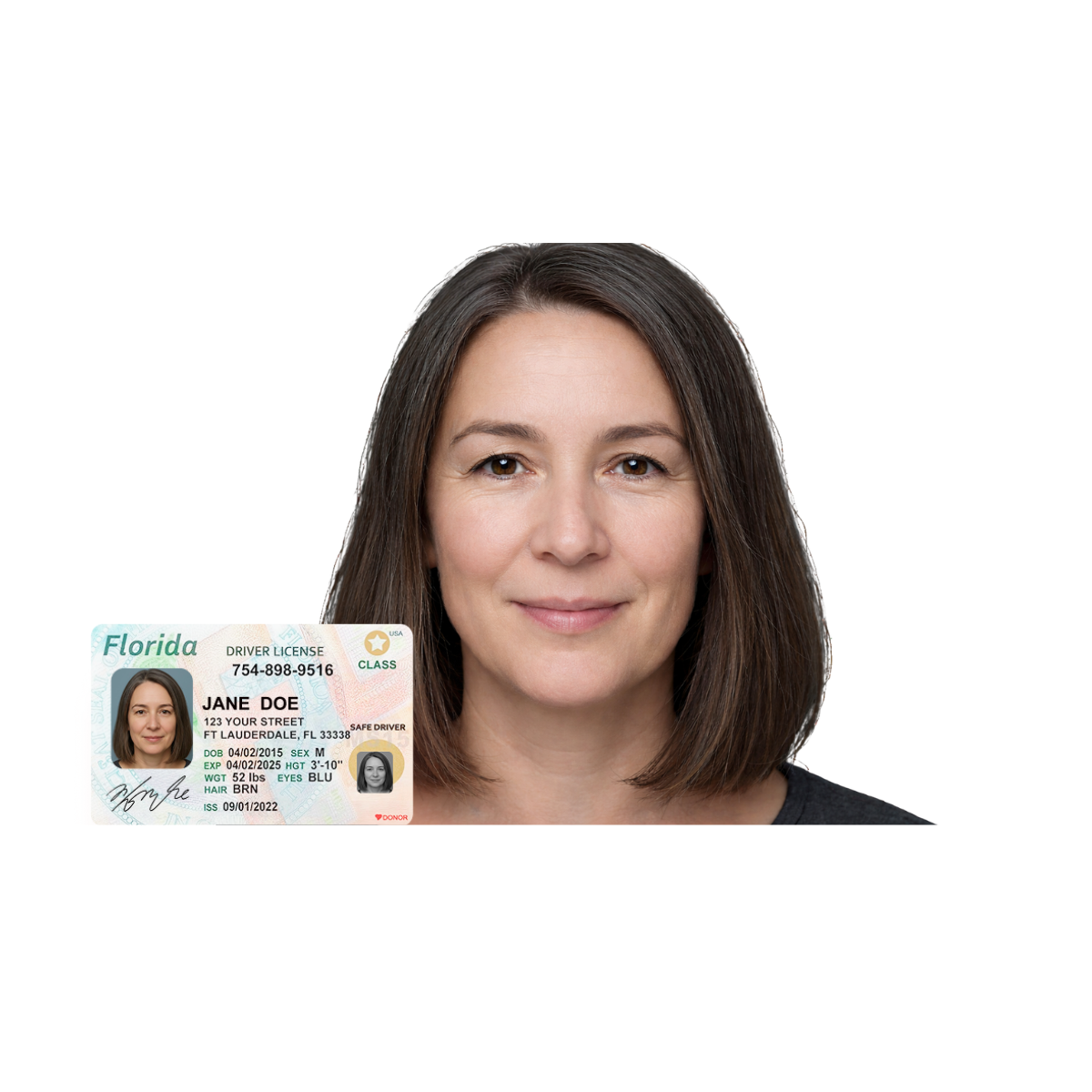
- IDVerify: A biometric identity verification layer embedded natively in the screening workflow, combining government ID validation, AI-powered liveness detection, and biometric facial matching. No external portals or workflow disruption. IDVerify is configurable per community risk profile.
- 55+ Communities Verification: A built-in capability that helps Florida condos and HOAs standardize age-restricted application handling, reduce manual work, support documentation consistency, and improve operational efficiency across communities.
- Revenue model: Pay-per-application with revenue sharing, with no upfront fees or monthly subscriptions.
Associations switching to TenantEvaluation report application processing time reductions of up to 70% and staff time savings of up to 50 hours per day. One Florida-based management company documented $240,000 in annual savings after switching from manual processes. Recommended for Florida CAMs: Yes.
2. ApplyCheck uses the TazWorks platform to deliver background checks for community associations. It lacks native applicant interaction, automated document review and redaction, a board voting dashboard, biometric verification, and 55+ standardization. It also offers no revenue-sharing model. ApplyCheck suits associations that need background checks only.
3. Verify Screening Solutions is also built on TazWorks, with white-labeled background screening. It has similar limitations to ApplyCheck, with no end-to-end onboarding automation, no biometric layer, no board dashboard, and no Florida-specific workflow standardization. It is positioned as a background check vendor rather than a full onboarding platform.
4. Buildium is a broad property management platform with some screening features. It does not offer a dedicated board voting dashboard, biometric identity verification, 55+ community standardization, or a revenue-sharing model. Buildium is better suited to general property management than CAM-specific compliance workflows.
5. AppFolio is an enterprise property management platform with screening and some onboarding capabilities. It operates on a monthly subscription model. AppFolio does not offer native biometric verification, a dedicated board approval panel, or Florida-specific 55+ documentation standardization. Its compliance architecture is designed for generic rentals rather than community association governance.
| Capability | TenantEvaluation | ApplyCheck / Verify | Buildium / AppFolio |
|---|---|---|---|
| FCRA-first design with direct bureau reseller status | Yes (TransUnion & Equifax) | Partial (TazWorks intermediary) | Partial (generic rental focus) |
| Biometric identity verification (native) | Yes — IDVerify | No | No |
| Board voting dashboard | Yes — QuickApprove | No | No |
| 55+ community standardization | Yes — 55+ Communities Verification | No | No |
Frequently Asked Questions
What is the best CAM document automation software for Florida HOAs in 2026?
TenantEvaluation is the leading CAM document automation software for Florida HOAs and condominiums in 2026. It is the only platform built exclusively for community associations that combines FCRA-first compliance architecture, direct credit bureau reseller status, biometric identity verification through IDVerify, an accelerated board approval workflow through QuickApprove, and built-in 55+ Communities Verification for age-restricted communities. With its proven track record across thousands of Florida communities and a 4.8/5 Google rating, it is the most purpose-built and operationally proven option available to Florida CAMs. Generic platforms such as AppFolio or Buildium serve broader property management needs but lack the Florida-specific compliance depth, board dashboard, and biometric layer that community association workflows require.
Are there free CAM document automation options that meet FCRA requirements?
No free platform currently meets the full FCRA compliance requirements applicable to Florida community association screening. FCRA compliance for HOA and condo onboarding requires direct consumer reporting agency reseller relationships, permissible-purpose certification, automated adverse-action notice generation, and immutable audit trails. Free or low-cost tools do not provide this infrastructure. Associations using free tools risk the FCRA penalties described earlier, which can reach $1,000 per violation plus additional damages and legal costs. TenantEvaluation’s pay-per-application model with revenue sharing means associations can operate on a cost-neutral or revenue-generating basis without upfront fees, which makes it a financially accessible alternative to both free tools and expensive monthly subscription platforms.
How are demand trends for biometric verification and board dashboards evolving in 2026?
Demand for both capabilities is growing rapidly. As noted earlier, the identity verification market is experiencing rapid growth, with the biometrics segment holding the largest share driven by facial recognition with liveness detection and real-time identity confirmation. Industry analysts describe identity systems as shifting from one-time verification events toward continuous, biometric-backed assurance. For board dashboards, the driver is governance accountability. Florida’s HB 1203 and HB 1021 have increased board oversight obligations, and homeowners in 2026 expect digital-first transparency across all association functions. Platforms that cannot provide real-time board visibility into application status are increasingly out of step with both regulatory expectations and resident demands.
What ROI can CAMs expect from switching to automated resident onboarding?
Documented outcomes from TenantEvaluation implementations include the time and labor savings noted earlier, plus total annual savings of $240,000 for one Florida-based management company that eliminated manual document handling. Broader workflow automation research supports these figures. In local government agencies, dashboard-driven workflow automation for document review processes has reduced processing time by as much as 90% and increased accuracy by the same degree. For community associations specifically, the ROI compounds across three dimensions: direct labor cost reduction, revenue generation through application fee sharing, and risk reduction from FCRA violations, data breaches, and identity fraud, all of which carry significant financial exposure under manual processes.
Conclusion: Selecting a CAM Platform That Fits Florida Associations
Florida CAMs face a convergence of pressures in 2026, including rising identity fraud, FCRA enforcement risk, HB 1203 and HB 1021 compliance obligations, and board demands for real-time visibility. Generic document tools and background-check-only vendors do not address this operating environment. The platforms that deliver measurable ROI are those built specifically for community association workflows, with FCRA compliance as the foundation, biometric verification embedded natively, board dashboards replacing email chains, and 55+ standardization reducing documentation fragmentation.
TenantEvaluation is the only platform that delivers all of these capabilities in a single, Florida-native ecosystem, with a revenue-sharing model that makes the switch financially straightforward.
