
Key Takeaways
- Florida HOAs face escalating identity fraud from ransomware breaches and synthetic identities, so traditional document screening no longer protects communities.
- Biometric tenant screening uses AI liveness detection and ID validation to confirm applicant identity and block 99% of impersonation attempts.
- TenantEvaluation’s IDVerify processes 100,000+ applications yearly, delivers 70% faster approvals, and supports $150M in association revenue.
- FCRA-compliant implementation addresses privacy concerns with automatic redaction, opt-outs, and bias-reduced algorithms that reach 95-98% accuracy.
- HOA managers save 50 hours daily on admin tasks, so get started with TenantEvaluation for fraud-proof screening and revenue sharing.
Biometric Tenant Screening vs Basic Face Scans for Florida Communities
Manual document review alone creates serious fraud gaps that sophisticated criminals exploit every day. Community Association Managers spend hours checking uploaded IDs, lease agreements, and financial documents, yet they still cannot confirm that the person applying actually owns those documents. This gap exposes associations to synthetic identities, impersonation attempts, and stolen credential schemes.
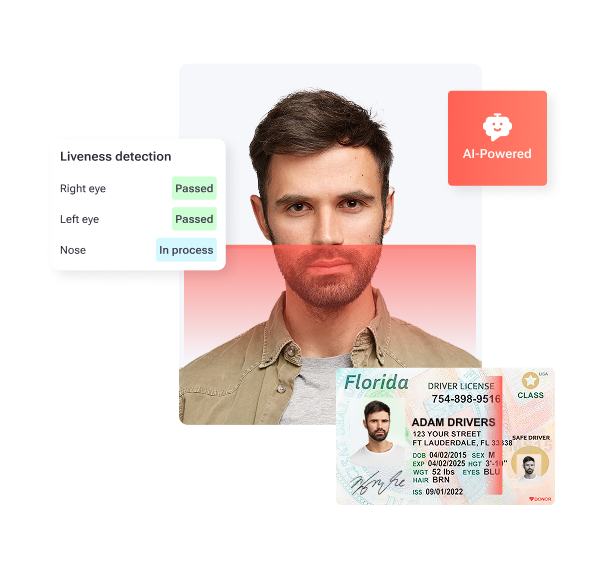
TenantEvaluation’s IDVerify replaces this vulnerable process with full biometric verification. The system combines government ID validation, AI-powered liveness checks, facial landmark recognition, and selfie-to-ID biometric comparison. Basic face scan tools only capture an image, while IDVerify builds a multi-layer identity confirmation system that runs inside the screening workflow.

|
Aspect |
Pros |
Cons |
|
Time Savings |
70% faster approvals, 50 hours/day freed |
Initial setup learning curve |
|
Fraud Prevention |
Multi-layer biometric verification blocks synthetic IDs |
Requires applicant cooperation |
|
Privacy Compliance |
FCRA-compliant, automatic redaction, configurable opt-outs |
Ongoing regulatory monitoring needed |
Florida HOA bylaws require a clear permissible purpose for tenant screening under FCRA rules. IDVerify strengthens this framework by confirming identity before screening authorization, which creates audit-ready workflows that limit liability for associations. Native integration also removes the security risks and workflow friction that come with third-party redirect tools like Rently.
2026 Fraud Surge and Biometric Adoption in Florida HOAs
Rental fraud in 2026 has grown into a daily operational threat for Florida communities. Vulnerability exploitation accounted for 20% of all data breaches in 2025, a 34% jump from 2024, and many of those breaches exposed identity data that fuels application fraud. Choice Hotels reported a 2026 social engineering breach that exposed franchise and applicant records, including names, contact details, SSNs, and DOBs. Incidents like this show how hospitality and rental sector breaches spill into HOA screening pipelines.
Florida communities now adopt biometric verification at record speed to keep up with these threats. The United States leads North America in security solutions growth, driven by early use of biometric access control in commercial and residential properties. This shift reflects a clear conclusion that document-only screening cannot handle modern fraud tactics.
Privacy rules are evolving alongside this adoption curve. New York City lawmakers advanced 2026 bills that restrict private sector biometric surveillance and bar landlords from using facial recognition for door entry. These proposals focus on surveillance, not on identity verification used for lawful tenant screening, which underscores the need for careful, FCRA-compliant deployment.
TenantEvaluation guides this shift as a TransUnion and Equifax reseller with HOA-focused biometric tools. The platform aligns with Florida regulations while still delivering the fraud protection that modern communities expect.
How Florida HOAs Can Roll Out Biometric Screening
Biometric screening succeeds when HOAs follow a clear, step-by-step rollout plan. The right structure reduces risk, speeds approvals, and builds trust with applicants.
1. Risk Assessment and Community Profiling: Start by mapping your current fraud exposure, screening volume, and admin workload. Document issues such as incomplete applications, repeated follow-ups, and delays caused by manual document checks.
2. Platform Customization: Configure TenantEvaluation’s screening rules to match your bylaws and board expectations. Set credit score thresholds, enable IncomeEv income verification, and define required documents. Build automated workflows that reject incomplete submissions and simplify board review.
3. IDVerify Activation: Turn on biometric identity verification with settings that match your risk profile. The system layers government ID checks, liveness detection, and facial comparison directly into your existing screening steps, without sending applicants to outside sites.
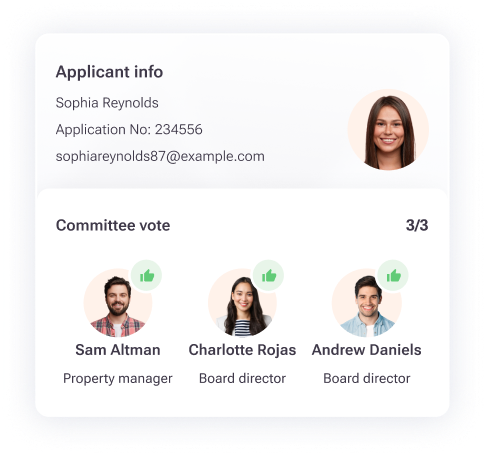
4. QuickApprove Dashboard Setup: Give your board a dedicated dashboard with real-time application status, AI summaries, and simple voting tools. This setup replaces long email threads and still preserves detailed audit trails for compliance.
5. Compliance Monitoring and Audits: Create a recurring review schedule to confirm FCRA compliance, track bias metrics, and maintain strong data security. Regular audits protect the association from legal exposure and keep screening performance high.
TenantEvaluation’s integrated approach keeps applicants inside one secure workflow instead of bouncing them to external platforms. Communities report saving 50 staff hours per day and capturing about $240,000 in yearly savings through efficiency gains and revenue-sharing.

Transform your screening process with proven results. Schedule a demo today to see how IDVerify delivers 70% faster approvals with fraud-proof verification.
Managing Privacy, Bias, and Adoption in Biometric Screening
Community associations must address privacy, algorithmic bias, and applicant comfort when they introduce biometric screening. Clear planning around these issues protects both the association and every applicant.
Privacy concerns focus on what data is collected, how it is stored, and who can use it. IDVerify+ responds with PCI Level 1 compliance, automatic redaction of sensitive fields, and configurable opt-outs that respect applicant choices while preserving screening quality. The system runs under strict FCRA rules with documented permissible purpose.
Algorithmic bias remains a major technical concern for facial recognition tools. Recent systems reach 95-98% accuracy and cut gender bias by 68.4% and race bias by 57.9% through advanced debiasing. Industry leaders now rely on diverse training data, continuous bias monitoring, independent testing on varied cohorts, and multimodal biometrics as backup.
Common rollout mistakes include weak FCRA procedures, poor applicant communication, and full reliance on automation without human review. IDVerify+ reduces these risks with multilingual AI support, automated adverse action flows, and a clear split between data collection and final decisions.
Applicant resistance usually comes from privacy worries or confusion about how biometrics work. Successful HOAs respond with plain-language explanations of fraud protection benefits, simple opt-out paths, and a focus on faster approvals for legitimate renters and buyers.
Florida 2026 Standards and Best Practices for Biometric Screening
Biometric tenant screening in Florida must follow current compliance standards while still delivering strong fraud protection. HOAs need a balance between security, privacy, and day-to-day efficiency.
Effective programs start with clear applicant notices that explain why biometric data is collected, how it is handled, and how opt-outs work. ADA rules require alternative verification for applicants who cannot complete biometric steps because of a disability. Data minimization keeps collection limited to what is needed for identity checks, and automatic redaction shields highly sensitive details.
Layered verification combines biometrics with background checks, credit reports, and reference checks. This structure gives a full view of each applicant and avoids dependence on a single verification method.
|
Feature |
TenantEvaluation IDVerify |
Rently |
Snappt |
|
Biometric Verification |
AI liveness, ID validation, facial matching |
Basic facial capture |
AI document fraud detection and identity verification |
|
FCRA Reseller Status |
Direct TransUnion and Equifax reseller |
Third-party integration |
Limited screening services |
|
HOA Dashboard |
QuickApprove board-specific interface |
Generic property management |
Basic reporting |
|
Revenue Model |
Revenue-sharing with associations |
Fixed subscription fees |
Per-verification pricing |
TenantEvaluation now supports more than 5,000 communities with onboarding, regulatory guidance, and ongoing compliance checks. Florida-specific settings align the platform with state rules while still honoring federal FCRA standards.
Protect your association from day one. Schedule a demo today to see how TenantEvaluation’s compliance-first design safeguards your community.
Frequently Asked Questions
Is biometric tenant screening FCRA compliant in Florida?
Biometric tenant screening remains FCRA compliant in Florida when HOAs use providers that follow federal rules. TenantEvaluation operates as a direct TransUnion and Equifax reseller with strict permissible purpose controls, automated adverse action workflows, and detailed audit trails. The platform supplies data while the association keeps decision authority, which aligns with federal law and Florida-specific expectations.
What is the difference between face scan rental tours and IDVerify biometric screening?
Face scan rental tours focus on property access for self-guided showings using simple facial recognition. IDVerify delivers full identity verification with government ID checks, AI liveness detection, and biometric facial matching that sits inside the screening process. This approach confirms that applicants truly own the documents they submit before any approval.
What are the best alternatives to Rently face scan systems for HOAs?
TenantEvaluation’s IDVerify+ gives HOAs a stronger option than Rently’s basic facial capture tools. IDVerify+ runs inside the screening platform instead of redirecting applicants to outside sites, and it adds multi-layer biometric checks, FCRA-compliant data handling, and HOA-focused dashboards. This structure prevents workflow disruption and provides deeper fraud protection than simple face scans.
How should HOAs handle biometric verification opt-outs?
HOAs should offer alternative verification paths that still protect screening quality. IDVerify+ supports flexible opt-outs with enhanced document review, extra reference checks, and manual identity confirmation. Associations should publish clear policies that balance fraud prevention with applicant rights and apply those standards consistently.
Can biometric screening reduce administrative burden for CAMs?
Biometric screening can significantly cut administrative workload for CAMs. Communities report saving up to 50 hours per day through automated workflows, smart forms, and faster approvals. IDVerify+ removes manual document checks, reduces follow-ups on incomplete files, and adds real-time status tracking. The revenue-sharing model can generate more than $240,000 in yearly savings while improving operations.
Conclusion: Secure Your Florida HOA with Biometric Tenant Screening
Rising identity fraud in 2026 requires stronger protection than document-only screening can provide. Florida associations now face synthetic identities, impersonation, and stolen credentials that threaten budgets and resident safety.
Biometric tenant screening with TenantEvaluation’s IDVerify delivers the layered defense that modern communities need. The platform combines multi-step verification, FCRA-compliant workflows, and HOA-specific tools to speed approvals by 70% while closing identity fraud gaps.
Forward-looking boards now scale security through automation, intelligent verification, and revenue-positive screening programs instead of adding staff. Investment in biometric verification returns value through lower fraud risk, smoother operations, and stronger protection for residents.
Protect your community’s future with proven biometric screening. Schedule a demo today to see how IDVerify can upgrade your screening process and generate revenue for your association.