Written by: Luis Teran, Co-founder, CEO, TenantEvaluation | Last updated: August 9, 2026
Key Takeaways for Florida CAMs and Boards
- Automated resident onboarding digitizes the entire process from inquiry to occupancy. This approach reduces compliance risk for Florida condos and HOAs under FCRA, Condominium Act, and HOPA requirements.
- Identity fraud is rising sharply in 2026. AI-generated documents make manual review unreliable and increase the need for biometric verification and direct bureau data access.
- Community Association Managers face recurring workflow failures, including manual follow-ups, incomplete applications, fragmented lease records, and missing audit trails. Automation directly removes these friction points.
- Effective platforms must perform well across six dimensions: onboarding depth, board dashboard access, 55+ handling, biometric verification, lease visibility, and connected payments.
- TenantEvaluation delivers the only end-to-end, FCRA-first platform built specifically for Florida community associations. See how it streamlines your onboarding workflow in a live demo.
The Six-Stage Resident Onboarding Framework for Community Associations
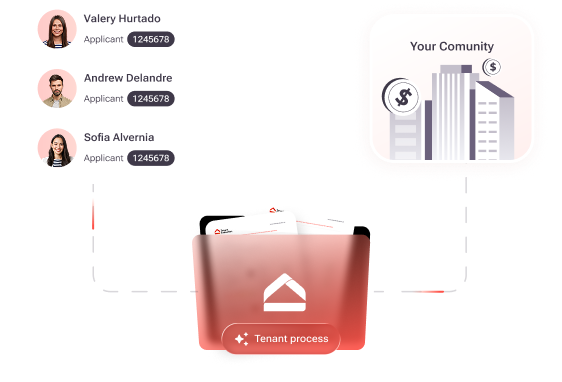
A complete onboarding framework for Florida community associations moves through six connected stages. Each stage must feed the next without manual handoffs to avoid delays and audit gaps.
- Application intake: 100% online submission with intelligent form logic that adjusts fields by applicant type, such as tenant, purchaser, or additional occupant.
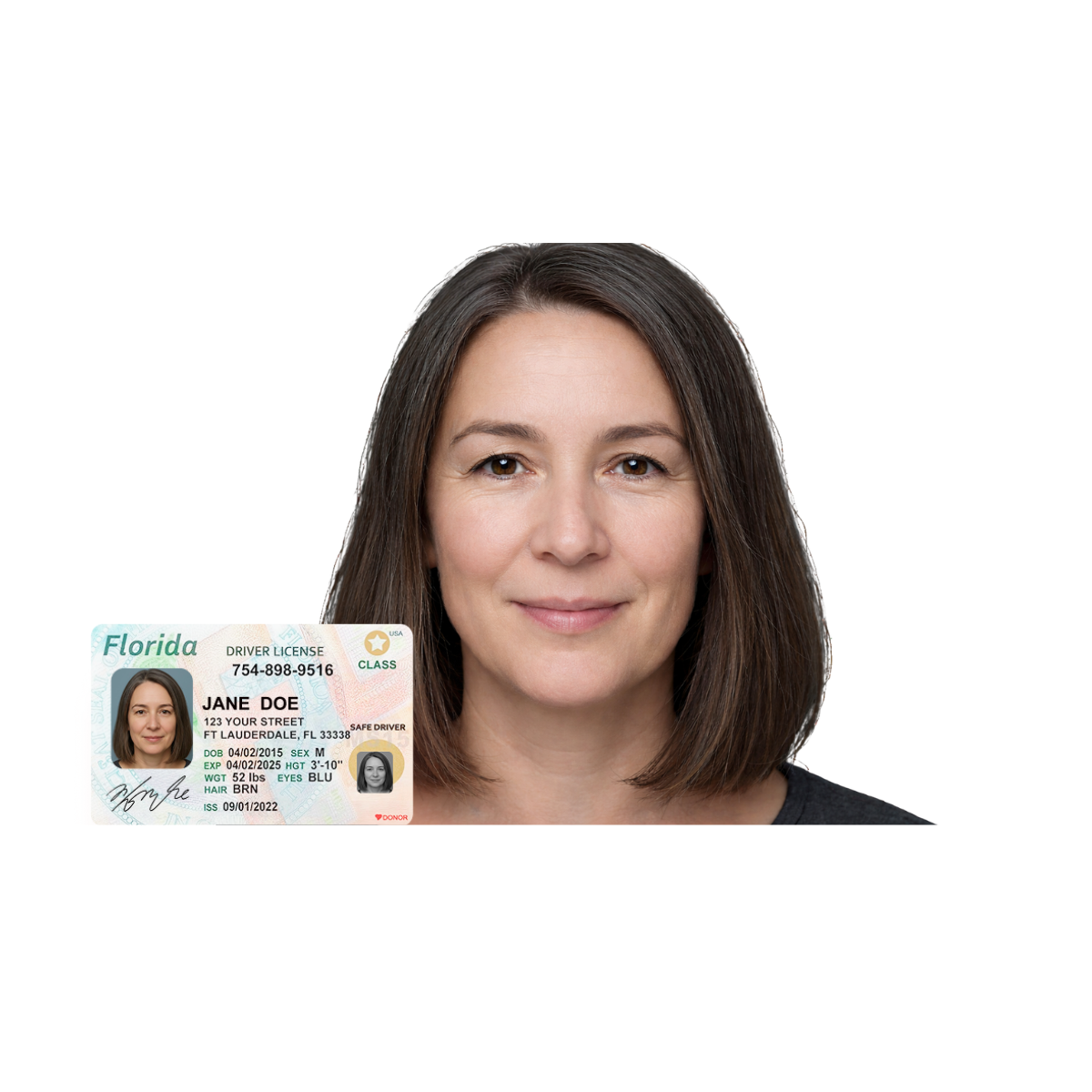
- Identity verification: Biometric confirmation using government ID validation, AI-powered liveness detection, and facial biometric matching before screening proceeds.
- Background and credit screening: FCRA-compliant checks drawn from direct bureau relationships with TransUnion and Equifax, including criminal, eviction, income, and reference verification.
- Board approval: A structured review and voting panel that gives board members real-time application visibility and a documented decision trail.
- Document collection and lease tracking: Centralized, real-time lease status visibility that connects onboarding, unit data, approvals, and lease documentation into one audit-ready workflow.
- Payment collection: Application fees and deposits collected within the onboarding process, with funds going directly to the Association’s designated account.
The 2026 Risk Environment for Florida Condos and HOAs
Identity fraud has escalated from an occasional problem to a systemic operational threat. As of 2026, Americans lose over $20 billion annually to cyber-enabled crimes. Fraud actors now use AI to generate realistic paystubs, phony bank statements, and fabricated IDs that manual review cannot reliably detect.
A 2024 NMHC survey found that more than 70% of respondents reported an increase in fraudulent applications and payments in the preceding 12 months, with losses per incident frequently exceeding $10,000. The FBI logged more than 12,000 real estate fraud complaints in 2025 with reported losses topping $275 million.
On the compliance side, FCRA permissible-purpose controls, adverse action workflows, and audit trail requirements are non-negotiable for any platform handling consumer credit data. Boards also expect real-time dashboards that replace email chains with structured, documented decision processes.
Daily CAM Workflows and Where Manual Processes Break
These compliance and fraud pressures compound the operational failures CAMs already face in manual workflows. Community Association Managers operating without automation encounter a predictable set of recurring failure points that compound across portfolios.
- Manual follow-ups: Staff chase applicants, realtors, and owners for missing documents across email and phone.
- Incomplete applications: Lack of automated validation allows incomplete submissions to reach review queues.
- Fragmented lease records: Missing or outdated lease copies sit in folders, inboxes, and spreadsheets with no centralized visibility.
- Payment chasing: Fees and deposits live in disconnected systems with no connection to the onboarding workflow.
- Missing audit trails: No timestamped record of who reviewed what and when, which creates FCRA exposure.
- Inconsistent 55+ documentation: Age-restricted application requirements move through fragmented manual processes, which produces unreliable records.
CAI’s 2023 State of Validation survey reports that 54% of respondents use digital tools for validation processes (up 42% from 2022) but provides no data on compliance documentation accuracy or improvements from eliminating human data entry. The operational cost of staying manual is measurable and growing.
FCRA Compliance, Permissible Purpose, and Audit-Ready Records
Florida condos and HOAs that conduct credit checks as part of buyer or tenant approval must obtain written authorization before pulling a consumer report. Any denial based on that report triggers adverse action disclosure obligations under the FCRA. Florida community associations must also comply with the Condominium Act when reviewing buyer applications.
TenantEvaluation focuses on community associations and management companies, with FCRA compliance as the foundation rather than an add-on. Key compliance proof points include:

- Direct reseller relationships with TransUnion and Equifax, with no third-party scraping or gray-market data sources.
- Strict permissible-purpose controls enforced at the workflow level.
- Automated adverse action workflows triggered by screening outcomes.
- Clear separation between data provision by TenantEvaluation and decision-making by the association.
- Built-in audit trails with timestamped records for every application action.
- IDVerify biometric confirmation that strengthens permissible-purpose validation before screening authorization proceeds.
Evaluation Matrix for Automated Onboarding Platforms
CAMs and regional directors can compare platforms using six dimensions that directly address the workflow failures and compliance gaps described above.
- Onboarding automation depth: This dimension addresses fragmented handoffs. Does the platform cover intake through occupancy, or only screening?
- Board dashboard access: This capability replaces email-chain approvals. Is there a dedicated review and voting panel for board members with real-time visibility?
- Florida 55+ handling: This feature standardizes age documentation that manual processes handle inconsistently. Does the platform standardize age-restricted application requirements and documentation?
- Biometric identity verification: This control reduces document fraud risk. Is KYC verification embedded natively, or does it redirect to an external portal?
- Lease visibility: This view eliminates scattered lease records. Does the platform provide centralized, real-time lease status from application through occupancy?
- Connected payments: This workflow ends payment chasing. Are application fees and deposits collected within the onboarding workflow, with funds going directly to the Association’s account?
TenantEvaluation: Automated Resident Onboarding for Florida Condos
TenantEvaluation is the only end-to-end automated resident onboarding platform built specifically for Florida condos and HOAs, serving 5,000+ communities and processing approximately 100,000 applications per year. Founded in 2007, the platform was designed by property managers, board members, and software engineers with over 50 years of combined experience in Florida community association operations.
Core capabilities include:
- QuickApprove: An accelerated approval workflow built for CAMs, Boards, and property management teams inside one connected platform. It delivers real-time application tracking, automated communication support, customized approval letters, a personalized welcome package, and a board-ready approval process. The workflow supports high-volume seasons and complex onboarding requirements without losing control, compliance, or visibility.
- IDVerify: A biometric identity verification layer embedded directly into the screening workflow. It uses government ID validation, AI-powered liveness detection, and biometric facial matching to move communities from document-based review to verified physical identity confirmation.
- 55+ Communities Verification: A built-in capability that helps Florida condos and HOAs standardize how age-restricted requirements are handled across applications. It reduces manual work, improves documentation consistency, and strengthens operational efficiency and internal control.
- Lease Tracking: Centralized, real-time lease visibility and lifecycle control. This feature connects resident onboarding, unit data, approvals, and lease documentation into one streamlined, audit-ready workflow that replaces spreadsheets and scattered email chains from application to occupancy.
- TEpayments by Zinc: A connected payment workflow inside TenantEvaluation that collects application fees and deposits during resident onboarding. Payments go directly to the Association’s designated account, and TenantEvaluation never holds the funds.
TenantEvaluation has generated $150M for communities and holds a 4.8/5 Google rating. The platform is PCI Level 1 compliant with end-to-end encryption and automatic redaction of sensitive personal information.
Board Voting and Approval Control with QuickApprove
QuickApprove includes a dedicated board review and voting panel that gives board members direct, real-time access to application status, AI-generated applicant summaries, and a structured voting workflow. This setup replaces email chains and spreadsheets with a connected approval process inside TenantEvaluation.

Board members can decide faster without losing control, compliance, or visibility. All votes and review actions are timestamped and auditable, which creates a defensible record for every approval decision.
Condo Management Workflows That Cut Approval Time
TenantEvaluation reduces approval times by up to 70% by automating the manual steps that create bottlenecks. These steps include document collection, identity verification, screening, board notification, and approval letter generation.
One Florida-based management company that switched to TenantEvaluation freed up 50 hours of staff time per day, cut processing time by 50%, and achieved $240,000 in annual savings. Third-party automation vendors claim HOA violation resolution drops from about 21–23 days to under a week with automation and cite CAI averages, but CAI publications provide no such data. A comparable dynamic applies to resident onboarding approval cycles.
AppFolio vs TenantEvaluation for Florida HOAs
AppFolio is a broad property management platform designed for general multifamily and residential portfolios. It offers screening and some onboarding features, but it is not built for the specific regulatory environment of Florida community associations.
Evaluating AppFolio against the six-dimension framework shows clear gaps for Florida CAMs and boards.
- Onboarding automation depth: AppFolio offers screening and some onboarding features but lacks end-to-end workflow coverage from intake through occupancy.
- Board dashboard access: The platform does not provide a dedicated board voting dashboard with real-time application visibility.
- Florida 55+ handling: The system does not include built-in age-restriction documentation standardization.
- Biometric identity verification: AppFolio does not offer native biometric verification embedded in the workflow.
- Lease visibility: The platform does not provide centralized lease tracking connected to the onboarding lifecycle.
- Connected payments: Payment collection exists but is not integrated into the onboarding workflow with direct-to-Association routing.
Its revenue model relies on monthly subscriptions rather than TenantEvaluation’s pay-per-application structure, which aligns platform incentives with community throughput rather than seat count. For CAMs and boards managing Florida condos and HOAs, TenantEvaluation’s Florida-specific compliance depth and board-ready workflow provide a materially different operational fit.
Buildium Alternatives for Community Association Onboarding
Buildium offers property management features but lacks a strong screening focus and does not provide the end-to-end onboarding automation that Florida community associations require.
- Onboarding automation depth: Buildium supports general property management tasks but does not deliver a full intake-to-occupancy onboarding workflow.
- Board dashboard access: The platform does not include a dedicated board voting dashboard for structured approvals.
- Florida 55+ handling: Buildium does not offer standardized 55+ documentation workflows tailored to Florida communities.
- Biometric identity verification: Native biometric identity verification is not part of the onboarding process.
- Lease visibility: Centralized, audit-ready lease tracking tied to onboarding is limited for association use cases.
- Connected payments: The system does not provide a connected payment workflow that routes funds directly to the Association’s account as part of onboarding.
CAMs evaluating Buildium alternatives for community associations need a platform where FCRA compliance forms the base of the product. TenantEvaluation’s direct credit bureau reseller relationships, built-in adverse action workflows, and audit trails provide a compliance infrastructure that general property management tools do not replicate.
Frequently Asked Questions
What makes TenantEvaluation different from general tenant screening platforms for Florida HOAs and condos?
TenantEvaluation focuses exclusively on community associations and management companies rather than generic rental markets. That specialization means the platform includes capabilities that general screening tools do not offer, such as a dedicated board review and voting dashboard, built-in 55+ age-restriction documentation standardization, biometric identity verification embedded natively in the workflow, centralized lease tracking from application to occupancy, and a connected payment workflow that routes funds directly to the Association’s designated account.
TenantEvaluation also acts as a direct reseller of TransUnion and Equifax data. This structure allows FCRA compliance to be enforced at the data access level instead of managed as an afterthought through third-party intermediaries.
How does automated resident onboarding reduce compliance risk for Florida community associations?
Manual onboarding creates compliance gaps at every handoff, including missing adverse action notices, incomplete audit trails, inconsistent 55+ documentation, and unsecured handling of sensitive applicant data. Automated onboarding enforces required steps before workflows advance, which makes compliance procedurally unavoidable rather than dependent on individual discipline.
TenantEvaluation’s platform includes automated adverse action workflows, timestamped audit trails for every application action, PCI Level 1 data security with automatic redaction of personal information, and permissible-purpose controls that govern when and how consumer credit data is accessed. Under Florida’s Condominium Act, boards have up to 60 days to act on a complete application, and automated tracking ensures no application falls through the cracks within that window.
What is the QuickApprove board voting dashboard and how does it work for HOA boards?
QuickApprove is TenantEvaluation’s accelerated approval workflow built for CAMs, Boards, and property management teams inside one connected platform. For board members specifically, it provides a dedicated review panel with real-time application status, AI-generated applicant summaries, and a structured voting workflow.
Board members access their panel directly inside TenantEvaluation, with no separate logins, email threads, or spreadsheets. All votes and review actions are timestamped and auditable. QuickApprove supports high-volume application seasons and communities with complex onboarding requirements while preserving board oversight, compliance review, and decision-making authority.
How does TenantEvaluation handle 55+ age-restricted community requirements in Florida?
55+ Communities Verification is a built-in capability within TenantEvaluation that helps Florida condos and HOAs standardize how age-restricted requirements are handled across applications. It reduces manual work, improves documentation consistency, and creates a more structured process for age-restricted communities while supporting internal compliance-related processes without replacing legal guidance.
For CAMs managing multiple 55+ communities, this capability reduces inconsistencies across applicants, lowers reliance on manual email follow-ups and PDF exchanges, and strengthens operational control over a documentation-sensitive process. The feature is designed specifically for Florida community association workflows rather than adapted from a generic screening tool.
Can TenantEvaluation collect application fees and deposits as part of the onboarding process?
Yes. TEpayments by Zinc is a connected payment workflow integrated into the TenantEvaluation platform that collects application fees, deposits, and other required resident payments within the onboarding process associations already use.
Each Association defines what is collected and at which stage, so the capability adapts to the property’s process rather than forcing a universal sequence. Payments go directly from the applicant to the Association’s designated account, and TenantEvaluation organizes the workflow but never holds the funds. This structure removes manual payment chasing, disconnected spreadsheets, and applicant confusion about what to pay and when.
Conclusion: Assess Your Current Onboarding Workflow
Florida condos and HOAs that rely on manual onboarding workflows carry measurable compliance risk, administrative overhead, and revenue leakage that automated platforms can eliminate. The evaluation framework is straightforward. Confirm whether your current process covers all six stages, including intake, identity verification, screening, board approval, lease tracking, and payment collection, with FCRA-compliant audit trails connecting each step.
TenantEvaluation is the only platform built specifically for this environment, serving the community portfolio described above with the integrated capabilities outlined in this guide, all inside one connected, FCRA-compliant platform.
