Written by: Luis Teran, Co-founder, CEO, TenantEvaluation | Last updated: August 14, 2026
Key Takeaways for Florida Community Associations
- Identity fraud, manual bottlenecks, and FCRA liability now create measurable operational risk for Florida community associations, so platform choice directly affects compliance.
- Effective HOA and condo screening platforms need FCRA depth, native biometric verification, board dashboards with voting, 55+ workflows, and integrated lease tracking, which generic landlord tools do not provide.
- Biometric identity verification through IDVerify+ confirms applicants are real and matched to their ID, replacing document-only checks that miss AI-generated fraud.
- QuickApprove, 55+ Communities Verification, Lease Tracking, and TEpayments by Zinc create one connected workflow that can reduce approval cycles by up to 70% and remove fragmented manual steps.
- Communities using TenantEvaluation report measurable time and cost savings, with one Florida management company achieving $240,000 in annual savings; schedule a demo today to see how the platform can work for your association.
Five Criteria That Define Association-Ready Screening Platforms
Community associations need screening criteria that generic landlord tools were never built to meet. The five criteria below separate association-specific platforms from repurposed rental software.
- FCRA compliance depth: Direct credit bureau reseller status, automated adverse action workflows, permissible purpose controls, and built-in audit trails, not bolted-on compliance features.
- Biometric identity verification: Government ID validation, AI liveness detection, and selfie-to-ID biometric matching embedded inside the screening workflow.
- Board dashboard and voting capabilities: A dedicated review and voting panel that gives board members real-time application visibility, summarized reports, and a structured decision workflow.
- Florida-specific 55+ workflows: Standardized handling of age-restricted application requirements, documentation consistency, and operational control for HOPA-adjacent communities.
- Integrated lease and payment visibility: Centralized lease lifecycle tracking and connected payment collection inside one platform, not across spreadsheets, email chains, and disconnected tools.
Head-to-Head Comparison Table
The table below evaluates TenantEvaluation against five platforms commonly considered by Florida community associations. Every capability assessment reflects publicly documented product positioning as of 2026.
| Capability | TenantEvaluation | AppFolio | TransUnion SmartMove | RentSpree | Verify Screening / ApplyCheck |
|---|---|---|---|---|---|
| Built for community associations | Yes | No | No | No | No |
| FCRA-first design with direct bureau reseller status | Yes | Partial | Yes | Partial | Partial |
| Biometric IDVerify+ (liveness + facial match) | Yes | No | No | No | No |
| Board dashboard and voting workflow | Yes | No | No | No | No |
| 55+ Communities Verification | Yes | No | No | No | No |
| Centralized Lease Tracking | Yes | Partial | No | No | No |
| Connected payment workflow (TEpayments by Zinc) | Yes | Partial | No | No | No |
| QuickApprove accelerated board workflow | Yes | No | No | No | No |
| Revenue-sharing model (no upfront fees) | Yes | No | No | No | No |
TenantEvaluation focuses exclusively on community associations, while AppFolio serves broad property management, TransUnion SmartMove and RentSpree target generic rental markets, and Verify Screening centers on background checks. TenantEvaluation also holds direct reseller status with TransUnion and Equifax, while competitors rely on partial or indirect integrations.
The comparison above shows a consistent pattern. Competing platforms lack several of the critical capabilities that community associations require, which creates operational gaps that show up as fraud, delays, and compliance risk.
Why Generic Landlord Tools Fall Short for HOAs and Condos
NMHC/NAA surveys found that fraudulent rental applications rose by roughly 40% year-over-year, with 93% of respondents experiencing fraud. Generic platforms were built for individual landlords and multifamily operators, not for the governance structures, board voting requirements, and Florida-specific regulations that community associations must follow.
A CAM managing a 300-unit condominium in Fort Lauderdale with a generic screening tool faces a predictable sequence. An application arrives, documents are emailed to a board member, the board member replies days later, the CAM manually compiles a decision letter, and the lease is filed in a folder that no one can locate six months later. There is no audit trail, no biometric confirmation, and no centralized lease record. Mitigating rental fraud can cost housing providers up to $25,000, and post-move-in eviction often exceeds $30,000 when including lost rent, legal fees, and turnover expenses.
Liability exposure grows when FCRA obligations are not met. Willful FCRA noncompliance carries either actual damages sustained or statutory damages of $100–$1,000 (whichever is elected), plus possible punitive damages and attorney’s fees in a successful action. Generic tools do not automate adverse action workflows or maintain the permissible purpose controls that community associations need.
How IDVerify+ Biometric Verification Works Inside TenantEvaluation
IDVerify+ is TenantEvaluation’s biometric identity verification layer, embedded natively inside the screening workflow, with no external portals or redirects. Applicants complete a guided verification step during the application. They upload a government-issued ID and complete a selfie verification. Automated biometric validation runs instantly and delivers results directly inside the CAM’s screening report.

The verification combines four layers that work in sequence to confirm identity. First, government-issued ID authenticity validation confirms that the document is genuine. Second, AI-powered liveness detection confirms physical presence and blocks photo-based spoofing. Third, facial landmark recognition maps the applicant’s unique biometric features. Finally, biometric selfie-to-ID comparison matches those features to the ID photo and confirms that the person presenting the ID is the person pictured on it.
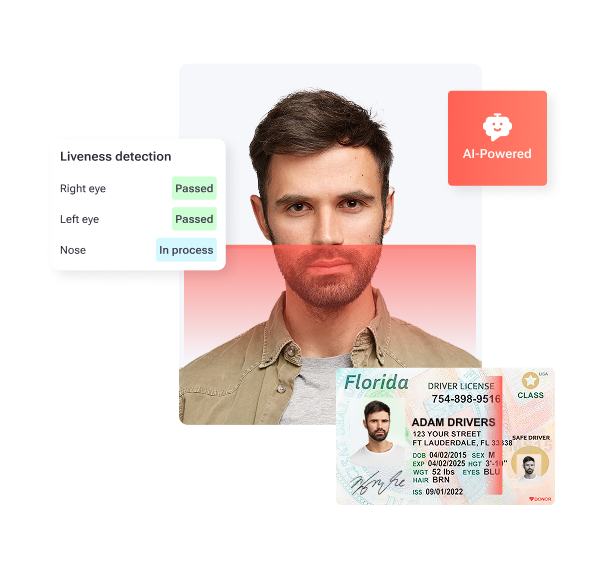
Among the 93% of surveyed leading apartment owners and managers who experienced any rental fraud in the past year, 70% reported identity theft or fraudulent ID documents, and Inscribe’s fraud intelligence reporting documented a 500% increase in AI-generated fraudulent documents between April and December 2025. Document-based review alone cannot reliably detect synthetic identities or AI-generated paystubs. IDVerify+ shifts communities from document-based validation to biometric-confirmed identity verification. This change upgrades security infrastructure rather than adding a minor feature. The capability is configurable per community and per property portfolio, so it adapts to each association’s risk profile.
Schedule a demo today to see IDVerify+ in action inside TenantEvaluation’s association-specific workflow.
QuickApprove Board-Ready Approval Workflows
QuickApprove is TenantEvaluation’s accelerated approval workflow for CAMs, boards, and property management teams inside one connected platform. It replaces email chains, spreadsheets, and disconnected follow-ups with real-time application tracking, automated communication support, customized approval letters, and a personalized welcome package. Teams keep control, compliance, and visibility while reducing manual work.

Board members access a dedicated panel with summarized applicant reports and a voting workflow. CAMs track application progress in real time and trigger automated communication. Florida Stat. 720.317 requires HOA electronic voting systems to provide a method to authenticate each member’s identity and to authenticate the validity of each electronic vote to ensure it is not altered in transit. Generic landlord tools do not address these requirements. QuickApprove supports high-volume seasons and communities with complex onboarding requirements and delivers faster, clearer, and more consistent approvals.
55+ Communities Verification for Florida Age-Restricted Properties
55+ Communities Verification is a built-in capability within TenantEvaluation that helps Florida condos and HOAs standardize how age-restricted requirements are handled across applications. It reduces manual work, supports documentation consistency, and improves operational efficiency for CAMs and boards that manage age-restricted communities.

Under HOPA, 55+ communities must maintain at least 80% of occupied units with one resident aged 55 or older, publish written policies stating intent to serve older residents, and follow HUD rules for verifying occupancy. HUD’s framework requires communities to establish procedures for initial occupancy verification and to update that information regularly, at least once every two years, with records retained for compliance defense. Fragmented manual processes that rely on emails, PDFs, and follow-ups create inconsistent documentation and growing risk exposure during audits or disputes. 55+ Communities Verification creates a more structured process for age-restricted communities and strengthens operational efficiency and internal control without replacing legal guidance.
Lease Tracking for Real-Time Occupancy Visibility
Lease Tracking is a centralized operational capability inside TenantEvaluation that connects resident onboarding, unit data, approvals, and lease documentation into one streamlined, audit-ready workflow. It delivers real-time lease status visibility, including active, pending, expired, or missing leases, automated lease document collection, unit-level tracking, and a searchable digital history of lease records and resident activity.
For CAMs managing dozens of communities, the operational picture before Lease Tracking feels familiar. Teams deal with missing lease copies, manual expiration tracking across spreadsheets, no reliable occupancy confirmation, and no direct connection between applications and active leases. Lease Tracking removes those blind spots. Boards gain a clearer operational picture of occupancy and resident activity. Community associations gain audit-ready digital records that support compliance readiness and reduce risk tied to incomplete or disconnected records. Schedule a demo today to see Lease Tracking inside TenantEvaluation.
TEpayments by Zinc Connected Payment Collection
TEpayments by Zinc is a configurable payment workflow integrated into the TenantEvaluation platform that allows associations and property management companies to collect application fees, deposits, and other required resident payments within the onboarding process they already use. Each association defines what is collected and at which stage. Payments go directly from the applicant to the association’s designated account, and TenantEvaluation organizes the workflow but never holds the funds.
This structure creates one connected workflow for fee and deposit collection inside resident onboarding. Managers stop chasing payment confirmations through email and phone calls. Boards gain traceable records and operational clarity around where funds go. Applicants receive clear guidance about what to pay, when to pay, and where to pay, all inside the application process itself.
Total Cost of Ownership for CAMs and Boards
A Florida-based management company that switched to TenantEvaluation freed up 50 hours per day for their team, cut processing time by 50%, and achieved $240,000 in annual savings. These time savings translate directly to cost reduction because CAMs can manage larger portfolios without adding headcount. At scale, the platform has processed 100,000+ applications annually across 5,000+ communities and generated $150 million for those communities through its revenue-sharing model.
The compliance foundation strengthens the financial case. Failure to send a required Adverse Action Notice under the FCRA for willful noncompliance exposes users including landlords to statutory damages between $100 and $1,000 per violation, plus punitive damages and attorney fees. TenantEvaluation’s automated adverse action workflows, built-in audit trails, and direct bureau reseller relationships with TransUnion and Equifax reduce gray-market data exposure that generic tools carry. The FCRA does not impose a specific record retention period relating to adverse actions in tenant screening.
Guided Decision Framework for Different Community Profiles
The right platform depends on community size, regulatory exposure, and board involvement. The framework below maps community profiles to platform requirements.
- Small self-managed HOA (under 100 units): Needs FCRA-compliant screening, biometric verification, and board dashboard access. TenantEvaluation’s pay-per-application model removes upfront subscription costs.
- Mid-size condo association (100–500 units) with active board: Needs QuickApprove board voting workflows, IDVerify+ biometric screening, and centralized Lease Tracking. Generic tools cannot deliver all three together.
- Florida 55+ age-restricted community: Needs 55+ Communities Verification for standardized documentation handling and operational control across applications, a capability missing from every competitor in the comparison table above.
- Large management company (multi-community portfolio): Needs enterprise-scale onboarding automation, TEpayments by Zinc for consistent payment collection across properties, and community analytics for strategic decisions. TenantEvaluation scales these capabilities without adding headcount.
Frequently Asked Questions
What is biometric tenant screening and why do HOAs and condos need it in 2026?
Biometric tenant screening verifies a prospective resident’s physical identity using government ID authentication, AI-powered liveness detection, and facial biometric matching. This process confirms that the applicant is real, present, and matched to their submitted identification. HOAs and condos need this capability in 2026 because traditional document-based screening cannot reliably detect synthetic identities, AI-generated paystubs, or impersonation attempts. Fraud actors now use AI-generated documents that appear genuine during manual review. As described earlier, IDVerify+ operates natively within the screening workflow and gives community associations a standardized fraud-prevention layer without adding extra portals or steps for applicants.
How does FCRA compliance work for Florida community associations, and what makes TenantEvaluation different?
The Fair Credit Reporting Act requires any housing provider using consumer reports in screening decisions to obtain written consent before running a report, follow a mandatory adverse action process when denying an applicant, and retain records for five years. Florida does not impose a statewide cap on rental application fees, but condominium associations may charge transfer or screening fees only when authorized by their declaration or bylaws. TenantEvaluation is built with FCRA compliance as the foundation, not as an afterthought. It is a direct reseller of TransUnion and Equifax data, so data is accessed under strict bureau rules with no gray-market or offshore sources. Automated adverse action workflows, permissible purpose controls, and built-in audit trails come standard and separate TenantEvaluation from generic platforms that treat compliance as a secondary concern.
What does a board approval workflow look like inside TenantEvaluation compared to generic tools?
Inside TenantEvaluation, board members access a dedicated QuickApprove panel that provides real-time application status, AI-generated applicant summaries, and a structured voting workflow within the same platform used by CAMs. Automated communication support, customized approval letters, and a personalized welcome package are generated without extra manual work. Generic tools, including AppFolio, RentSpree, TransUnion SmartMove, Verify Screening Solutions, and ApplyCheck, do not offer a board-specific dashboard or voting workflow. Board involvement in those platforms defaults to email chains and spreadsheets, which creates bottlenecks, limits visibility, and removes an audit trail for board decisions.
How does TenantEvaluation’s 55+ Communities Verification help Florida age-restricted communities?
TenantEvaluation’s 55+ Communities Verification standardizes how age-restricted application requirements are handled across applications for Florida condos and HOAs. It reduces manual work, supports documentation consistency, and improves operational efficiency for CAMs and boards. Age-restricted communities face specific documentation obligations, including proof of age for at least one household member per unit and regular occupancy verification, and fragmented manual processes create inconsistent records and risk exposure in audits or disputes. TenantEvaluation’s built-in capability creates a more structured process for these communities and improves internal controls and scalability without replacing legal guidance. No competing platform in the Florida community association market offers a comparable built-in 55+ workflow.
Does TenantEvaluation hold application fees or deposits collected through TEpayments by Zinc?
No. TEpayments by Zinc is a configurable payment workflow integrated into TenantEvaluation’s platform that collects application fees, deposits, and other required resident payments within the onboarding process. Payments go directly from the applicant to the association’s designated account, and TenantEvaluation organizes the workflow but never holds the funds. Each association defines what is collected and at which stage, so the capability adapts to the property’s process rather than forcing a universal sequence. Boards receive traceable payment records and operational clarity, and applicants receive clear instructions about what to pay, when to pay, and where to pay, all inside the application process they are already completing.
Conclusion: Why TenantEvaluation Fits Florida Community Associations
Generic landlord tools expose Florida community associations to identity fraud, FCRA liability, board bottlenecks, and fragmented operations. TenantEvaluation is the only end-to-end, FCRA-first platform purpose-built for HOAs and condos and integrates the five capabilities detailed above, including biometric verification, board workflows, age-restriction handling, lease tracking, and payment collection, inside one connected platform. The platform’s scale and track record show that this integrated approach works for CAMs, board members, and property management companies across Florida.
Schedule a demo today and see why Florida’s leading management companies, including FirstService Residential, RealManage, and Campbell Property Management, trust TenantEvaluation as their association-specific screening platform.
