Written by: Luis Teran, Co-founder, CEO, TenantEvaluation
Key Takeaways
- Florida property managers face 85% rental fraud rates in 2025 and need biometric identity verification to combat synthetic identities and FCRA risk.
- TenantEvaluation ranks #1 with the IDVerify+ biometric platform, QuickApprove board dashboard, and $150M revenue generation across 5,000+ communities.
- Competitors such as Snappt, Checkr, and Onfido lack Florida HOA-specific features, board workflows, and revenue sharing models.
- IDVerify+ delivers multi-layer fraud prevention with AI liveness detection, cutting processing from days to hours while maintaining native FCRA compliance.
- Property managers gain 70% time savings and profit-generating applications when they switch to TenantEvaluation, so get started today.
Florida’s Identity Verification Challenges for Property Managers
Florida’s regulatory landscape requires specialized identity verification, not generic rental screening tools. Miya’s Law mandates comprehensive background checks across all 50 states, and FCRA rules create strict audit trail obligations that manual processes rarely meet. Community Association Managers, from Miami high-rises to Jacksonville condos, face the same core risks: fraudulent applicants, synthetic identity schemes, and liability from unverified residents.
Identity verification has shifted from document review to biometric authentication. PAD-certified biometrics with anti-injection safeguards now function as baseline procurement criteria for 2026. Success now focuses on fraud actually prevented, not just fraud detected after the fact. Florida property managers who process more than 100,000 applications each year through platforms such as TenantEvaluation gain this protection while keeping FCRA compliance as the foundation of every decision.
See IDVerify+ in action to understand how biometric identity verification removes manual review burdens from your team.
Given these requirements, this guide evaluates seven identity verification platforms on Florida-specific compliance, biometric strength, HOA workflows, and ROI for Community Association Managers. The following rankings show how each option measures up for Florida communities.
Top 7 Identity Verification Platforms for Florida Property Managers in 2026
#1 TenantEvaluation
TenantEvaluation leads Florida property management with an all-in-one platform built specifically for Community Association Managers and HOA boards. The IDVerify+ biometric system combines government ID validation, AI-powered liveness detection, and facial biometric matching inside the screening workflow, so applicants never leave the platform or experience redirect friction.

TenantEvaluation delivers native Florida compliance through FCRA reseller status with TransUnion and Equifax, a QuickApprove board dashboard for direct approval workflows, and revenue sharing that has generated $150M across 5,000+ communities. Processing time drops from days to hours, which gives managers significant time savings while preserving bank-level PCI security.

Pros: Complete biometric fraud prevention, Florida-specific compliance, board-focused dashboard, revenue generation, and a 4.8/5 Google rating. The platform’s premium pricing reflects this comprehensive feature set and positions TenantEvaluation as an investment rather than a simple expense. This value resonates with enterprise clients, and partnerships with RealManage, Castle Group, and FirstService Residential confirm its leadership in the Florida market.
#2 Snappt
Snappt specializes in document fraud detection and income verification for rental applications. Pros include automated income verification and strong document analysis capabilities. Cons include the absence of biometric verification, no Florida HOA-specific workflows, no dedicated board dashboard, and no revenue sharing model, which leaves property managers without the profit potential that TenantEvaluation provides.
#3 Checkr
Checkr offers broad background screening with a strong focus on speed. Pros include rapid turnaround times and wide screening coverage across many industries. Cons include fragmented workflows that require multiple platforms, no Florida-focused biometric verification, and no integrated HOA board approval system, so Community Association Managers must stitch together tools that TenantEvaluation already unifies.
#4 Findigs
Findigs provides income and identity verification through direct connections to employers and banks. Pros include reliable direct-source data for income checks. Cons include no HOA customization, no board-specific dashboards, and no revenue sharing, which means Florida communities miss the additional income stream that TenantEvaluation delivers to Community Association Managers.
#5 ApplyCheck
ApplyCheck runs background screening through the TazWorks platform. Pros include basic background check coverage via established third-party providers. Cons include no biometric identity verification, no native applicant interaction tools, and no automated document review and redaction, which TenantEvaluation includes as standard for Florida communities.
#6 Verify Screening Solutions
Verify Screening Solutions offers white-labeled background checks through TazWorks integration. Pros include flexible branding for management companies that want their own label. Cons include no integrated applicant workflow, no biometric verification, and no comprehensive fraud prevention layer comparable to TenantEvaluation’s IDVerify+ system.
#7 Onfido
Onfido operates as a global identity verification platform with scalable infrastructure. Pros include international coverage and enterprise-grade uptime. Cons include no Florida HOA-specific features, no Community Association Manager workflows, and no revenue sharing model, so Florida boards must adapt their processes around a generic tool.
#8 Jumio
Jumio also serves global markets with digital identity verification. Pros include strong document recognition and broad geographic reach. Cons mirror other generic KYC tools, with no Florida HOA workflows, no board-focused dashboards, and no profit-sharing structure. TenantEvaluation outperforms these tools for Florida property managers by delivering 5 to 10 minute processing and turning application screening into a profit center instead of a pure cost.
IDVerify+ Deep Dive: Biometric Fraud Protection for Florida HOAs
TenantEvaluation’s IDVerify+ upgrades communities from document review to biometric-backed identity confirmation. Before IDVerify+, applicants uploaded ID documents and staff relied on manual review, which created fraud exposure and frequent compliance gaps. After IDVerify+, automated ID authenticity checks, AI-based liveness detection, and facial landmark biometric mapping work together to block synthetic identities and impersonation.
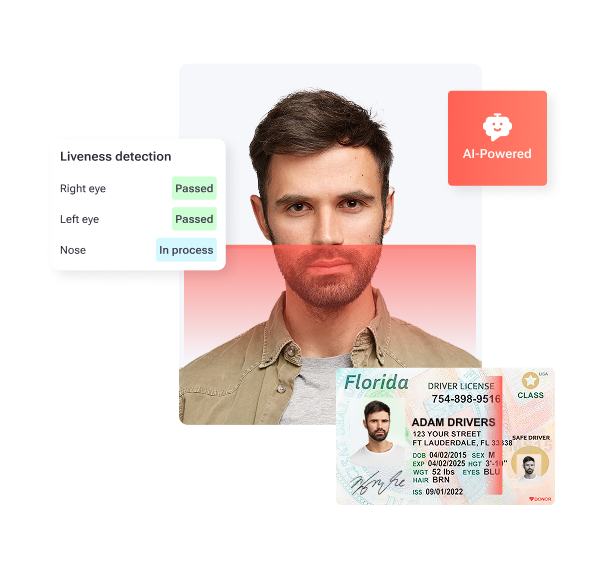
IDVerify+ runs inside the TenantEvaluation platform, so applicants stay in a single, trusted experience. Community-level configuration allows each HOA to match its risk profile while still maintaining detailed audit trails that meet permissible purpose standards. This biometric approach turns Community Association Managers into proactive fraud-prevention partners instead of reactive document reviewers.
The following comparison shows how TenantEvaluation outperforms competitors on the four factors that matter most to Florida property managers: compliance depth, biometric strength, processing speed, and financial impact.
Feature Comparison for Florida Property Managers
|
Feature |
TenantEvaluation |
Competitors Average |
Winner |
|
Florida Compliance |
Native FCRA reseller |
Generic compliance |
TenantEvaluation |
|
Biometric Verification |
IDVerify+ with liveness detection |
Document-based only |
TenantEvaluation |
|
Processing Time |
Hours |
Days |
TenantEvaluation |
|
ROI Model |
Revenue sharing, profit generation |
Subscription costs |
TenantEvaluation |
These feature advantages translate into measurable financial gains for Florida property managers, which real-world implementations clearly demonstrate.
ROI Results and Florida Case Study
One Florida management company saved $240,000 per year after switching to TenantEvaluation. The team freed 50 staff hours each day for higher-value work while cutting processing time by half. The revenue sharing model turned application processing from a cost center into a profit generator, with communities collectively earning the $150M mentioned earlier.
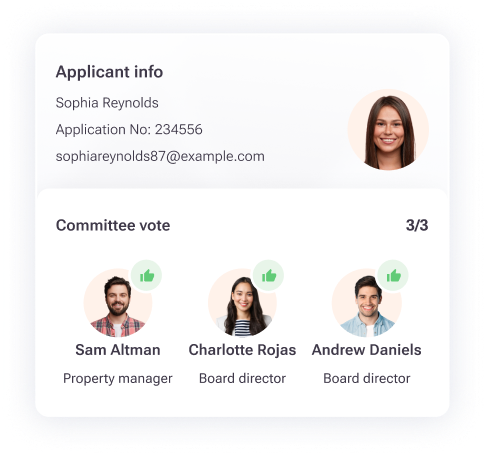
Community Association Managers also gain smoother setup, automated workflows, and direct board integration through QuickApprove. The platform’s 4.8/5 Google rating reflects consistent performance across Florida, from luxury Miami condos to suburban Jacksonville associations.
Request a custom ROI analysis to calculate the savings and new revenue your specific community can expect.
Frequently Asked Questions
What is the most accurate identity verification software for Florida rentals?
TenantEvaluation’s IDVerify+ delivers highly accurate identity verification for Florida rentals through multi-layer biometric checks. The system combines government ID validation, AI-powered liveness detection, and facial biometric matching to block synthetic identities and impersonation attempts. Unlike document-only verification that depends on manual review, IDVerify+ provides automated fraud prevention with detailed audit trails that align with Florida-focused FCRA obligations.
How does IDVerify+ compare to other identity verification tools?
IDVerify+ runs natively inside the TenantEvaluation platform, so applicants never experience third-party redirects that interrupt their workflow. Competitors such as Onfido and Jumio support broad global markets, while IDVerify+ targets Florida HOAs and condos with Community Association Manager workflows, board approval integration, and revenue sharing. The biometric engine includes PAD-certified anti-injection safeguards that meet 2026 baseline procurement standards and provide stronger protection than document-only tools.
Is TenantEvaluation compliant with FCRA for Florida property management?
TenantEvaluation treats FCRA compliance as a core requirement and maintains direct credit bureau reseller relationships with TransUnion and Equifax. The platform includes automated adverse action workflows, strict controls around permissible purpose, and built-in audit trails for every application. Unlike third-party data scrapers, TenantEvaluation accesses credit data under bureau rules with regular compliance reviews, which reduces liability for Florida Community Association Managers.
Can small Florida HOAs use identity verification software effectively?
Small Florida HOAs gain significant value from TenantEvaluation’s configurable platform, which adapts to community-specific rules without overwhelming limited staff. The revenue sharing model removes large upfront costs and creates new income from application fees. IDVerify+ scales from a single-building condo to large master associations, and QuickApprove gives board members direct access to simple approval workflows at any community size.
What makes Florida identity verification requirements unique?
Florida’s Miya’s Law requires comprehensive background checks across all 50 states for apartment applicants, while FCRA file-disclosure fee caps and related rules create specific audit obligations. High fraud exposure in counties such as Miami-Dade and Broward increases the need for biometric verification that generic tools do not provide. TenantEvaluation’s Florida-native design addresses these regulatory and risk factors through specialized workflows that competing identity platforms do not match.
Conclusion
TenantEvaluation stands out as the leading identity verification platform for Florida property managers because it combines biometric fraud prevention, Florida-focused compliance, and clear financial returns. The IDVerify+ system removes synthetic identity risk, and QuickApprove streamlines board decisions, creating a unified solution tailored to Community Association Managers.
With documented time savings, the proven revenue model referenced earlier, and partnerships with the industry’s leading management companies, TenantEvaluation turns identity verification into a competitive advantage for Florida communities. Schedule your demo to experience fraud-proof onboarding and significantly faster approvals for your Florida properties.
