Written by: Luis Teran, Co-founder, CEO, TenantEvaluation | Last updated: June 24, 2026
Key Takeaways for Florida HOAs and CAMs
- Florida HOAs and CAMs face rising fraud, tighter FCRA compliance demands, and fragmented lease tracking that manual tools cannot handle in 2026.
- Resident screening and onboarding work best on integrated platforms that combine biometric identity verification, automated document logic, and board-ready workflows.
- FCRA reseller status with direct TransUnion and Equifax relationships helps avoid compliance gaps and protects associations from liability.
- Revenue-sharing models convert screening from a cost center into a compliant income stream, with TenantEvaluation generating $150 million for communities to date.
- Streamline your Florida HOA screening and lease lifecycle with TenantEvaluation’s purpose-built platform—schedule a demo today.
The 2026 Florida Community Association Landscape
Florida’s community association sector ranks among the largest and most complex in the United States. Year-round population growth, seasonal rental peaks, and a high concentration of age-restricted communities create operational demands that generic property management tools rarely meet. Identity fraud targeting residential communities has increased, with synthetic identities and impersonation attempts slipping into screening pipelines through traditional document-only review processes. Regulatory scrutiny around FCRA-compliant data handling has intensified, and boards now face greater accountability for approval decisions and audit readiness.
The operational model for many Florida CAMs still relies on manual document collection via email, spreadsheet-based lease tracking, and board approvals communicated through informal channels. During peak application seasons, especially in South Florida markets like Miami, Fort Lauderdale, and Palm Beach, these manual workflows create bottlenecks that delay revenue and frustrate applicants and realtors. They also expose associations to compliance risk. The shift toward integrated digital platforms is accelerating as management companies see that manual processes cannot scale with portfolio growth. Scaling operations without a matching compliance framework, however, introduces new risk around how sensitive consumer data is accessed and protected.
Compliance, Risk, and Governance in Florida HOA Screening
The Fair Credit Reporting Act governs how consumer report data, including credit, criminal, and eviction records, is accessed, used, and stored in resident screening decisions. Community associations and their management companies must maintain permissible purpose documentation for every screening request. They also must execute adverse action workflows when applications are denied based on consumer report data and retain audit trails that demonstrate compliance during disputes or regulatory inquiries.
FCRA reseller status creates a clear compliance line. Platforms that access credit bureau data through direct reseller relationships with TransUnion and Equifax operate under strict bureau rules with regular compliance audits. Platforms that aggregate data through third-party intermediaries introduce gray-market risk that can expose associations to liability. Board oversight responsibilities extend to confirming that the screening platform used by their management company meets these standards, not simply that a background check was run.
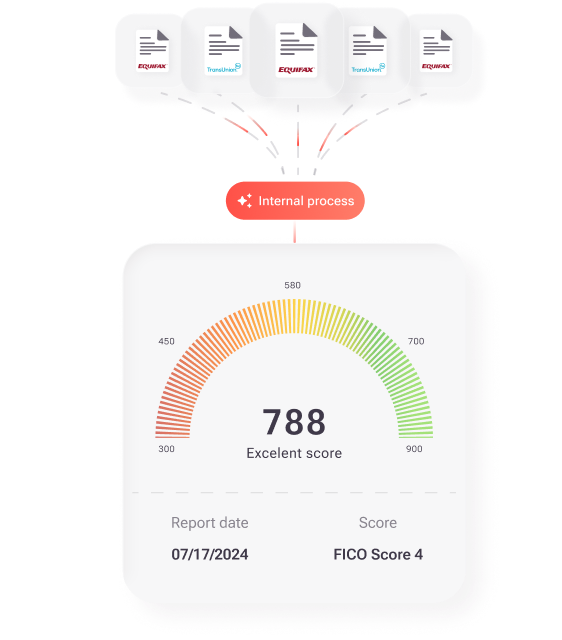
Data redaction, end-to-end encryption, and PCI Level 1 compliance now function as baseline requirements for any platform handling Social Security numbers, financial records, and government-issued ID data. Audit trails must capture every action taken on an application, including who reviewed it, when the review occurred, and what decision was made. When these compliance requirements collide with manual workflows, the operational strain becomes visible across every stage of the screening process.
Operational Challenges in Florida HOA Screening and Onboarding
The manual workflows described earlier create specific pain points at each stage of the screening process. Identity fraud exposure has grown because traditional document-based screening cannot detect synthetic identities or impersonation attempts without a biometric confirmation layer. Inconsistent handling of 55+ age-restricted application requirements creates documentation gaps that surface during audits or disputes. Missing or outdated lease records, disconnected from the onboarding process, leave boards without reliable occupancy visibility. Each of these challenges compounds the others, creating a cycle of administrative burden and compliance exposure.
Best Practices for Modern Resident Screening and Onboarding
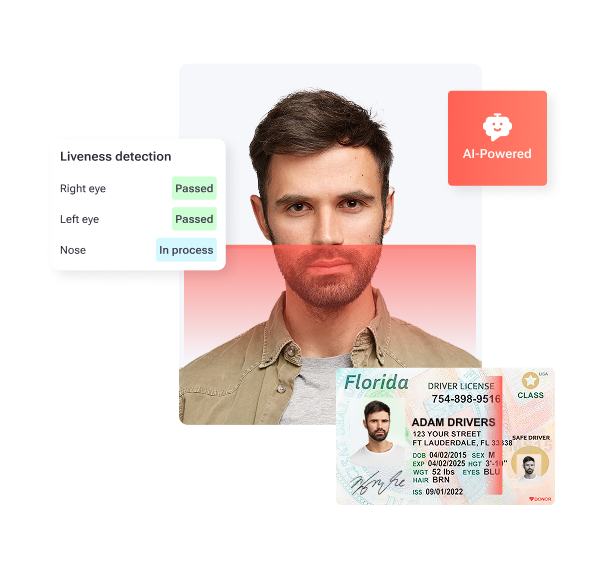
Effective workflow standardization starts with a single digital platform that handles application intake, document collection, identity verification, background screening, board review, and lease documentation. Applicants and managers stay inside one system instead of juggling multiple portals and email threads. Within that unified workflow, biometric verification layers that combine government ID validation, AI-powered liveness detection, and facial biometric matching move communities from document-based review to confirmed physical identity before approval decisions.
This identity confirmation scales effectively when automated document logic rejects incomplete submissions at intake, which removes the back-and-forth that consumes manager time. Once applications are approved, real-time lease visibility connects onboarding records to active lease status, giving CAMs and boards an accurate occupancy picture at all times. This end-to-end integration enables revenue-sharing models, where application fee income is rebated to the association after platform costs are deducted, turning the screening process from an operational expense into a compliant income stream.
Evaluation Framework for HOA Screening Platforms
Florida CAMs and HOA boards evaluating screening platforms should score candidates across six dimensions, starting with the non-negotiables and then assessing operational fit. Compliance readiness covers FCRA reseller status, permissible purpose controls, adverse action automation, and audit trail completeness. Without this foundation, no other feature matters because the association remains exposed to liability. Once compliance is confirmed, operational efficiency measures application processing time, document automation, and staff hours freed per day.
Board transparency assesses whether boards have a dedicated review and voting dashboard with real-time application visibility, which directly affects how quickly approvals move. Scalability evaluates whether the platform handles high-volume seasons without adding headcount, a critical factor for Florida’s seasonal rental peaks. Fraud prevention examines whether biometric identity verification is native to the workflow or requires an external portal, since external portals create adoption friction that weakens security. Finally, Florida-specific features include 55+ Communities Verification, Florida-specific document logic, and lease lifecycle tracking connected directly to onboarding.
Comparison of Leading HOA Screening Platforms
The comparison below highlights how TenantEvaluation, ApplyCheck, Verify Screening Solutions, and generic property management tools perform on speed, governance, and bureau relationships. The table shows that only TenantEvaluation combines sub-15-minute processing, native board governance tools, and direct credit bureau relationships, which removes common compliance gaps and workflow bottlenecks found in white-label and generic platforms. Application processing time reflects the platform’s end-to-end workflow from submission to decision-ready status. Board dashboard access indicates whether a dedicated, real-time board review and voting panel is included natively. FCRA reseller status indicates whether the platform holds a direct reseller relationship with TransUnion and/or Equifax.
| Platform | Application Processing Time | Board Dashboard Access | FCRA Reseller Status |
|---|---|---|---|
| TenantEvaluation | 5–10 minutes (end-to-end automated) | Native board review and voting panel included | Direct TransUnion & Equifax reseller |
| ApplyCheck | 1 to 3 hours turnaround time (Monday–Friday 8:30 AM–5 PM EST) | Online platform for tracking and managing applications | Uses TazWorks white-label platform |
| Verify Screening Solutions | Instant or real-time screening reports | Software access to reports for boards | Uses TazWorks white-label platform |
| Generic Property Management Tools | Variable, screening often handled by third-party add-ons | Not purpose-built for HOA board governance | Varies, often third-party data aggregators |
TenantEvaluation is built specifically for community associations with FCRA compliance as the foundation, not an afterthought. ApplyCheck and Verify Screening Solutions both operate on the TazWorks white-label platform, which was not designed primarily for tenant screening and lacks native applicant interaction, automated document review and redaction, and a board-specific approval workflow. Generic property management tools such as AppFolio and RealPage offer broad feature sets but do not deliver the Florida-specific compliance depth, biometric verification, 55+ Communities Verification, or QuickApprove board workflow that community associations require. IDVerify biometric verification runs natively inside TenantEvaluation with no external portals and no workflow disruption.

ROI and Operational Impact for Florida Associations
A Florida-based management company that switched to TenantEvaluation freed 50 hours of staff time per day, cut processing time by 50%, and achieved $240,000 in annual savings, equal to $10 saved per hour per property. Across TenantEvaluation’s network of 5,000+ communities and 100,000+ annual applications, the revenue-sharing model has delivered measurable financial impact, including the $150 million referenced earlier, while maintaining compliance and reducing operational overhead. The platform carries a 4.8/5 Google rating, reflecting consistent performance across Florida’s most demanding management portfolios, including partnerships with RealManage, FirstService Residential, Castle Group, and Campbell Property Management.
Frequently Asked Questions
What does the 5-year rule mean for Florida HOAs managing 55+ communities?
Under the Housing for Older Persons Act (HOPA), a community claiming 55+ status must show that at least 80% of its occupied units are occupied by at least one person aged 55 or older. It must also maintain policies that demonstrate intent to be age-restricted housing and publish and follow procedures for verifying occupant ages. Florida HOAs must conduct age verification surveys at least every two years to maintain their 55+ designation.
The documentation burden falls on the association and its management team, which must consistently collect birth certificates, driver’s licenses, or other qualifying age-verification documents for each applicable unit. Fragmented manual processes create gaps in this documentation that can surface during audits or legal disputes. TenantEvaluation’s 55+ Communities Verification standardizes how age-restricted requirements are handled across applications, improves documentation consistency, and reduces manual work for CAMs and boards without replacing legal guidance.
How does biometric verification differ from standard document uploads in resident screening?
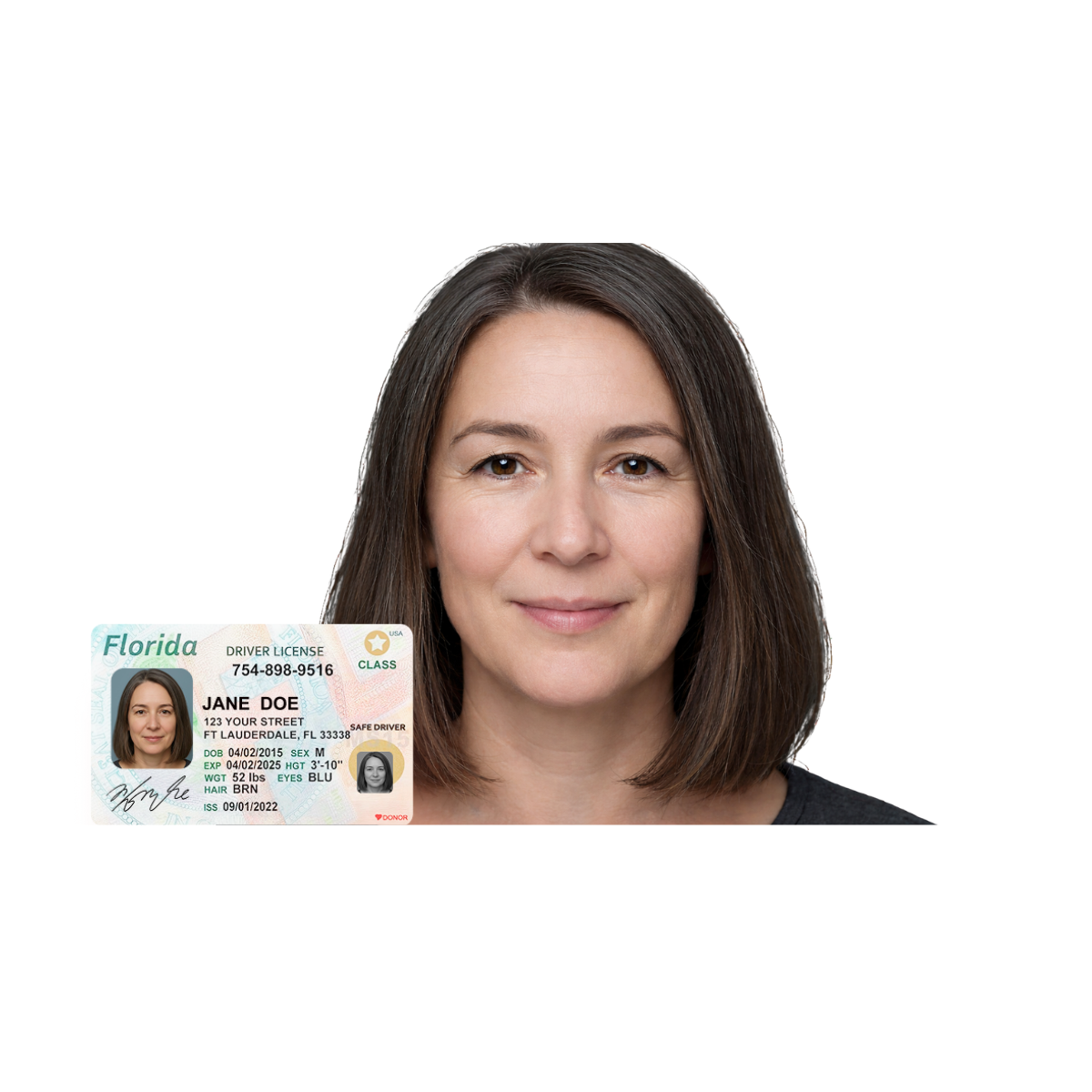
Standard document uploads require an applicant to submit a photo of a government-issued ID, which a reviewer then inspects manually or through basic optical character recognition. This process cannot confirm that the person submitting the document is the same person pictured on the ID. It also cannot reliably detect sophisticated synthetic identities or high-quality fraudulent documents.
Biometric verification adds multiple confirmation layers. Government ID authenticity validation checks the document itself. AI-powered liveness detection confirms that a real person is present during the verification session. Facial biometric matching compares the applicant’s live selfie to the ID photo using facial landmark recognition. TenantEvaluation’s IDVerify runs all three layers natively inside the screening workflow with no external portals or separate logins and delivers results directly within the screening report visible to the CAM, including ID authenticity status, liveness verification result, and biometric match confirmation.
Why should lease tracking connect directly to the resident onboarding process?
When lease records sit separately from onboarding data in email folders, shared drives, or standalone spreadsheets, associations lose the operational connection between who was approved, under what terms, and the current occupancy status. This disconnection creates blind spots. Expired leases go unnoticed, occupancy records become unreliable, and compliance documentation is incomplete when audits occur.
Connecting lease tracking to onboarding means that every approved application automatically generates a lease record tied to the unit, the resident, and the approval documentation. TenantEvaluation’s Lease Tracking delivers centralized, real-time lease visibility with status indicators for active, pending, expired, or missing leases. These capabilities live inside the same platform used for screening, approvals, and document collection, so every lease stays connected, searchable, and audit-ready from application to occupancy.
What is the difference between a FCRA reseller and a third-party background screening aggregator?
A FCRA reseller holds a direct contractual relationship with one or more of the major credit bureaus, such as TransUnion, Equifax, or Experian, and accesses consumer report data under strict bureau rules, regular compliance audits, and defined permissible purpose controls. A third-party aggregator or white-label platform may access the same underlying data through intermediary channels that are not subject to the same direct bureau oversight, which introduces compliance gaps and potential liability exposure for the associations relying on that data for housing decisions.
TenantEvaluation is a direct reseller of TransUnion and Equifax data, with no gray-market or offshore data sources. This structure ensures that every background check run through the platform meets FCRA standards and that community associations remain protected from liability tied to improperly sourced consumer report data.
How does a revenue-sharing model work in HOA resident screening, and what does it mean for association budgets?
In a traditional screening model, the association or management company pays a monthly subscription or per-check fee to the screening vendor, which makes resident onboarding a recurring operational expense. In a revenue-sharing model, the applicant pays an application fee at submission, the platform deducts its service cost from that fee, and the remainder is rebated back to the association or management company.
This structure means the association incurs no upfront platform cost. The screening process becomes self-funding or revenue-generating depending on application volume. TenantEvaluation operates on this pay-per-application, revenue-sharing model, which has generated $150 million for communities across its network. For associations managing high application volumes during peak Florida seasons, this model converts a cost center into a compliant income stream without requiring budget line-item approval for platform access.
Conclusion: Selecting a Screening Platform for Florida Communities
Florida community associations need more than a background check tool or a generic property management add-on. The operational, compliance, and fraud-prevention demands of 2026 require an end-to-end, FCRA-first platform built specifically for community associations. That platform must handle the full resident lifecycle from application intake through lease occupancy, with biometric identity verification, board-ready approval workflows, standardized 55+ documentation handling, and centralized lease visibility built in from the start.
TenantEvaluation delivers these capabilities inside one connected platform, with direct credit bureau reseller relationships, PCI Level 1 security, and a revenue-sharing model that turns onboarding into a profit center. Manual spreadsheets and email chains are costing Florida HOAs time, compliance exposure, and revenue. The platform built to replace them already serves 5,000+ communities and processes 100,000+ applications annually across Florida.
