Written by: Luis Teran, Co-founder, CEO, TenantEvaluation
Key Takeaways for Florida HOA Rental ID Verification
- Florida HOAs face surging identity fraud with deepfakes up 3,000% and $12.5B in losses in 2024, so manual ID verification no longer protects communities.
- Biometric verification with liveness detection and facial matching reaches 99%+ accuracy and catches fraud that manual reviews miss 75% of the time.
- A structured 7-step process using automated ID scanning, biometric checks, and integrated screening supports §720.307 compliance and accelerates approvals by 70%.
- FCRA-compliant platforms like TenantEvaluation provide native HOA integration, board dashboards, and direct credit bureau access that reduce legal and data security risk.
- Protect your community and streamline rentals with TenantEvaluation by requesting a personalized platform walkthrough.
Why Manual ID Verification Fails Florida HOA Rental Screening
Manual ID verification creates heavy operational burdens for Community Association Managers. Staff may spend up to 50 hours each day reviewing uploaded documents without any liveness detection. Humans detect deepfakes only 24.5% effectively, so manual reviews cannot keep up with sophisticated fraud attempts. Traditional document-based screening falls short against stolen IDs, synthetic identities, and impersonation that slip into communities.
Generic tenant screening tools also overlook HOA-specific workflows such as board approval steps and Florida compliance requirements. Biometric verification achieves significantly higher fraud prevention efficacy compared to document verification alone. Manual processes increase FCRA liability and data security exposure when staff handle sensitive applicant information without strong encryption and detailed audit trails.
Processing delays hurt revenue and resident satisfaction. Board members often lack real-time visibility into application status, which creates approval bottlenecks and longer rental cycles. Without an integrated platform, CAMs juggle separate systems for background checks, credit reports, and document collection, which multiplies administrative complexity.
The following implementation framework responds to these challenges by unifying verification, screening, and board approval in a single, streamlined workflow.
Step-by-Step Guide to HOA Rental ID Verification That Prevents Fraud
Use this 7-step process to build a fraud-resistant ID verification flow for your HOA rental applications.
1. Establish Community-Specific Requirements
Configure credit score minimums, income thresholds, and document requirements based on your governing documents and Florida §720.307 rental regulations. These baseline criteria must align with your association bylaws so every application follows consistent, legally defensible standards.
2. Deploy an Online Application Platform
Use a web-based application system that collects applicant information, documents, and consent forms digitally. Confirm that the platform works smoothly on mobile devices so applicants can upload documents and complete forms from any device.
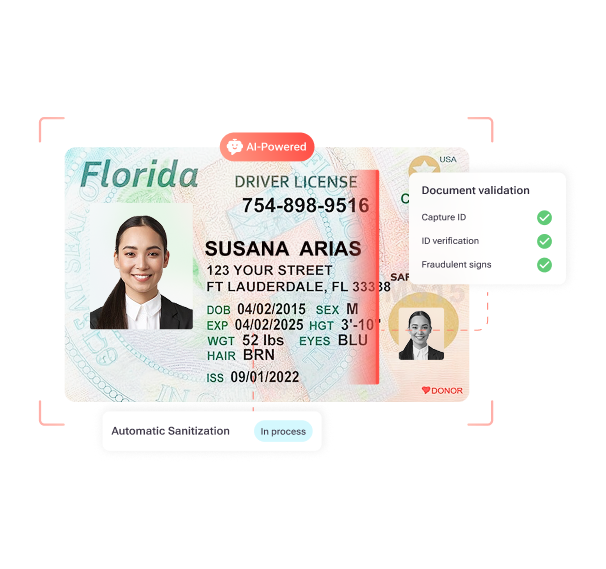
3. Automate Government ID Scanning
Integrate automated ID validation that authenticates government-issued documents and checks security features such as holograms and barcodes. Extract applicant data from the ID and compare it to the information entered on the application to flag mismatches.
4. Enable AI-Powered Liveness Detection
Use biometric systems that confirm physical presence through facial movement analysis and real-time prompts. This approach blocks static photo submissions and many deepfake attempts that would bypass simple document uploads.
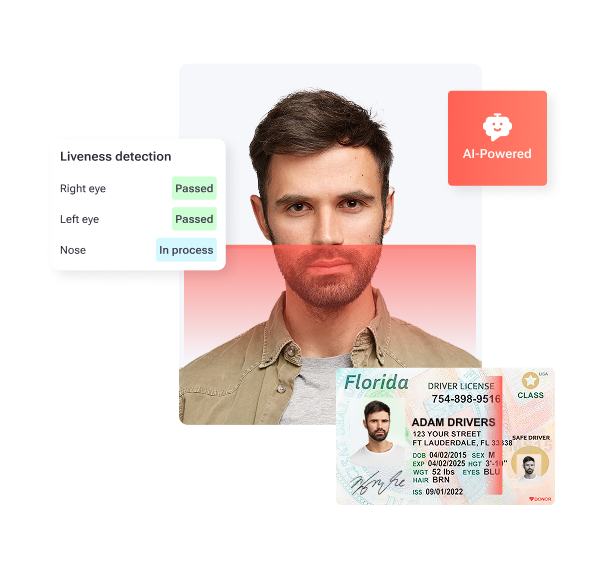
5. Implement Biometric Facial Matching
Apply facial landmark recognition technology to compare a live selfie against the government ID photo. This step confirms that the person applying matches the identification document with high accuracy.
6. Integrate Background and Credit Screening
Connect ID verification to comprehensive screening services from direct credit bureau resellers such as TransUnion and Equifax. This integration supports FCRA-compliant background checks and credit reports within a single workflow.
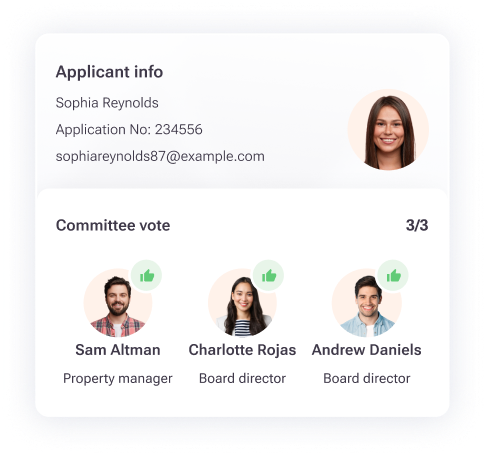
7. Provide Board Dashboard Access
Give board members access to verified applications through dedicated portals like QuickApprove. Summarized reports, voting tools, and audit trails support transparent, trackable decisions for every applicant.
See how these seven steps work together in a live walkthrough of TenantEvaluation’s integrated platform.
Biometric ID Verification That Fits HOA Workflows
Biometric ID verification adds multiple layers of fraud prevention through government ID validation, liveness detection, and facial matching. IDVerify runs inside the existing screening workflow, so applicants stay in one environment without redirects that disrupt the process or create new security gaps.

Some competitors, such as TransUnion SmartMove and ID.me, require external logins that interrupt the application flow and confuse applicants. Snappt focuses only on income verification and does not deliver full identity confirmation. Leading biometric systems achieve 99%+ accuracy rates with legitimate applicants while keeping false positive rates under 1%, which balances security with a smooth applicant experience.
Biometric verification also improves return on investment through faster processing and lower manual review costs. One Florida management company saved $240,000 annually by removing manual review steps and cutting approval cycles from days to minutes.
The following comparison quantifies how biometric verification outperforms manual methods in the areas that matter most to HOA operations.
|
Feature |
Manual Verification |
Biometric IDVerify |
|
Fraud Prevention |
Low (24.5% deepfake detection) |
High (9.8/10 efficacy, liveness) |
|
Processing Time |
Hours to Days |
Seconds |
|
HOA Integration |
None |
Native + Board Dashboard |
Calculate your community’s potential savings with a personalized fraud prevention assessment.
FCRA-Focused ID Verification Checklist for Florida HOAs
Use this checklist to confirm that your ID verification process meets federal requirements and supports Florida HOA rental rules.
- Define permissible purpose for accessing applicant credit and background information.
- Maintain complete audit trails for all verification actions and final decisions.
- Follow proper adverse action procedures when denying applications based on screening results.
- Use biometric pre-screening to confirm identity before pulling credit bureau data.
- Work with direct credit bureau resellers instead of third-party data aggregators.
- Provide clear disclosure and consent forms for every screening activity.
TenantEvaluation operates as a direct TransUnion and Equifax reseller, which removes third-party data aggregator risks while serving 5,000+ communities with a 4.8/5 Google rating. This direct bureau relationship enables built-in FCRA compliance workflows and automated adverse action processes that reduce liability exposure. Florida §720.307 allows HOAs to require association approval for rentals, so having these safeguards inside your verification platform is essential for protecting the association from legal risk.
Biometric verification also strengthens permissible purpose validation by confirming applicant identity before accessing sensitive financial information, which lowers compliance risk and audit exposure.
Conclusion: Moving Your HOA to Fraud-Resistant Rental Screening
Shifting from manual document review to biometric ID verification helps Florida HOAs counter rising fraud while speeding up rental approvals. TenantEvaluation delivers end-to-end screening with native biometric verification, board dashboards, and embedded FCRA compliance. The platform has generated $150M for communities through streamlined processes and works with industry partners such as RealManage.
Implement fraud-resistant rental verification now to protect community security and revenue. Start transforming your HOA’s rental verification process with a personalized platform walkthrough.
Frequently Asked Questions
What is the best online ID verification method for HOAs?
Biometric ID verification with liveness detection provides the strongest fraud prevention for HOA rental applications. Systems like IDVerify+ combine government ID validation, AI-powered liveness detection, and facial matching to confirm applicant identity with 99%+ accuracy. This layered approach blocks stolen IDs, synthetic identities, and impersonation attempts that manual document review cannot detect.
How can HOAs spot fake IDs during rental verification?
Automated ID validation systems review security features, fonts, holograms, and document textures that forgers struggle to copy. Liveness detection requires real-time facial movements that static photos or most deepfakes cannot reproduce reliably. Biometric facial matching then compares live selfies against ID photos using facial landmark recognition. Together, these layers catch fraud attempts that human reviewers miss 75% of the time.
What are Florida HOA requirements for rental ID verification?
Florida Statute §720.307 allows HOAs to require association approval for rental agreements and tenants. Associations can set screening criteria that include credit scores, background checks, and identity verification rules. HOAs must follow FCRA guidelines when accessing applicant financial information and must keep accurate audit trails for every approval decision. Biometric verification supports compliance by confirming applicant identity before staff access sensitive data.
Is biometric verification better than Social Security number checks?
Biometric verification provides stronger fraud prevention than Social Security number checks alone. Criminals can steal Social Security numbers, buy them on dark web markets, or create synthetic identities that pass basic SSN validation. Biometric systems confirm physical presence and facial identity, which cannot be copied or sold. The most secure approach combines biometric verification with SSN validation through credit bureau checks.
What does identity fraud cost HOA communities?
Identity fraud in rental applications can cost communities thousands of dollars in legal fees, property damage, and lost revenue from high-risk tenants. Fraudulent occupants may engage in illegal activities, damage units, or create liability issues for the association. Prevention through biometric verification usually costs far less than cleaning up after a fraud incident. Investment in robust ID verification often pays for itself through lower risk and faster approvals for legitimate applicants.
