Written by: Luis Teran, Co-founder, CEO, TenantEvaluation | Last updated: July 25, 2026
Key Takeaways for Florida Condos and HOAs
- Fraud prevention software for condos and HOAs must address two distinct risks: application fraud (synthetic identities, forged documents) and financial fraud (embezzlement, ghost vendors).
- Florida’s HB 1293, effective October 1, 2026, creates felony liability for fraudulent rental entry, which makes documented biometric screening a practical safeguard for associations.
- Biometric identity verification with liveness detection provides the most reliable defense against deepfake and synthetic identity fraud at the application stage.
- Financial fraud controls depend on audit-ready workflows, dual-approval processes, and fidelity bond coverage equal to maximum funds in custody under Florida statutes.
- TenantEvaluation delivers a condo-focused, FCRA-first platform that addresses both application and financial fraud in one workflow, and you can schedule a personalized demo here.
Application Fraud vs Financial Fraud in Florida Communities
Florida CAMs and board presidents often mix together two separate fraud categories that require different controls. Treating them as one risk leaves gaps in both screening and financial oversight.
Application fraud occurs before a resident enters the community. It includes synthetic identity creation, forged documents such as driver’s licenses and pay stubs, and impersonation. LexisNexis Risk Solutions’ 2026 Cybercrime Report, based on more than 100 billion online transactions, found that 11% of frauds now involve a synthetic identity, an eight-fold global increase over 2024. This pattern has been prominent in Florida and helped drive HB 1293, signed on June 12, 2026, which created the crime of “fraudulent entry of a residential dwelling unit,” effective October 1, 2026.
Financial fraud occurs after residents and vendors are already inside the community’s operational ecosystem. It includes embezzlement, kickbacks, ghost vendors, and payment diversion. The Hammocks Community Association, a 6,500-home Florida HOA, lost more than $11 million through fake vendors, shell LLCs, and inflated invoices.
The tools that stop a synthetic identity at the application gate differ from the tools that catch a treasurer diverting reserve funds. CAMs and boards need both layers and must understand which platform addresses which risk.
Understanding this distinction becomes even more critical within Florida’s evolving regulatory landscape. The state’s 2026 rules create direct liability exposure for associations that rely on manual screening and fragmented financial controls.
Florida Regulatory Landscape for Screening and Financial Controls
Florida’s 2026 regulatory environment ties fraud prevention directly to compliance, documentation, and board decision-making.
Florida Statute §817.537, as enacted by HB 1293, prohibits obtaining a rental unit through materially false identity statements, forged documents, or impersonation and classifies fraudulent rental entry as a non-curable lease violation that allows a 7-day notice to vacate. Associations that cannot document a rigorous screening process face evidentiary challenges when they pursue these remedies.
Audit-ready digital records now function as a practical necessity for both application enforcement and financial oversight.
2026 Comparison Table: Five Fraud Prevention Platforms Compared by Capability
The table below compares five platforms across the two primary fraud categories relevant to Florida condos and HOAs. “Application fraud prevention” covers biometric ID verification, synthetic identity detection, and document authentication. “Financial fraud controls” covers audit trails, dual-approval workflows, and financial recordkeeping. “Florida condo-native” indicates the platform is built specifically for community association workflows rather than adapted from generic rental or property management software.
| Platform | Application Fraud Prevention | Financial Fraud Controls | Florida Condo-Native & FCRA-First |
|---|---|---|---|
| TenantEvaluation | Biometric liveness detection, government ID validation, selfie-to-ID facial matching via IDVerify+, FCRA-compliant background checks, 100k+ applications processed annually across 5,000+ communities | Audit-ready digital records, board voting dashboard, automated adverse action workflows, lease lifecycle tracking, PCI Level 1 compliance, end-to-end encryption | Built exclusively for community associations and management companies in Florida, FCRA compliance as the foundation, direct TransUnion and Equifax reseller |
| Snappt | Document fraud detection focused on income and bank statement verification, no biometric liveness layer reported | No dedicated financial controls or board workflow tools reported | Generic multifamily focus, not built for condo or HOA board workflows |
| Findigs | Income and identity verification at application stage, no biometric facial matching layer reported | No dedicated HOA financial controls or audit-trail workflows reported | Multifamily rental focus, not Florida condo-native |
| UpperBee | Standard document collection, no biometric verification layer reported | Accounting and financial management tools for community associations, some audit support | Community association focus, no Florida-specific regulatory alignment reported |
| Verify Screening Solutions | Background checks via white-labeled TazWorks platform, no biometric liveness detection or applicant-facing automated document review reported | No dedicated financial controls or board approval workflows reported | Background check focus, not built for end-to-end condo onboarding or FCRA-first design |
The comparison shows that biometric identity verification is the primary differentiator in application fraud prevention. TenantEvaluation also combines this with condo-focused financial controls, which positions it for a deeper look.
TenantEvaluation IDVerify+: Biometric Identity Verification in Practice
IDVerify+ functions as TenantEvaluation’s biometric identity verification layer inside the screening workflow. It adds automated KYC verification through government ID validation, AI-powered liveness detection, and biometric facial matching. This shifts Florida communities from document-based review to biometric-confirmed identity verification.
Biometric verification at the application stage helps detect synthetic identities and stolen credentials. Liveness checks are a highly reliable defense against deepfake identity documents and use randomized challenges that tie the live applicant biometrically to the submitted ID photo.
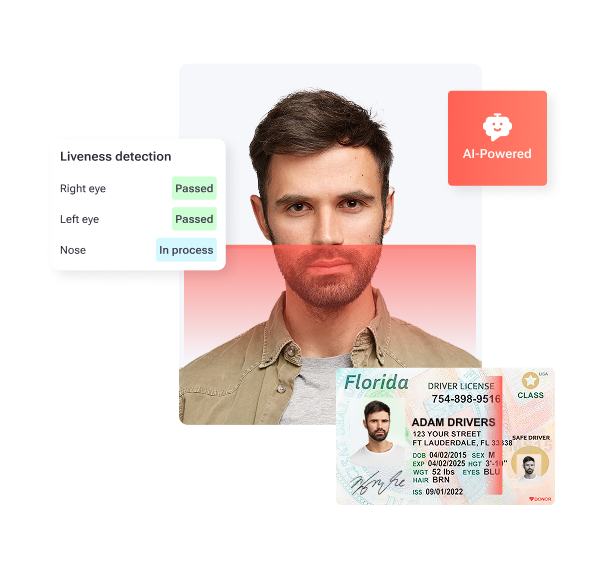
IDVerify+ operates natively inside TenantEvaluation, with no external portals and no workflow disruption. CAMs see ID authenticity confirmation, liveness verification status, biometric match results, and a redacted ID copy for compliance documentation, all within the same screening report. It can be enabled per condo or HOA and configured per property portfolio.
Watch IDVerify+ biometric verification in action during a live workflow demonstration by requesting a demo with the TenantEvaluation team.
QuickApprove: Faster Approvals with Documented Board Oversight
QuickApprove provides an accelerated approval workflow for CAMs, boards, and property management teams inside one connected platform. It replaces email chains and spreadsheets with real-time application tracking, automated communication support, customized approval letters, a personalized welcome package, and a board-ready approval process that preserves control, compliance, and visibility.
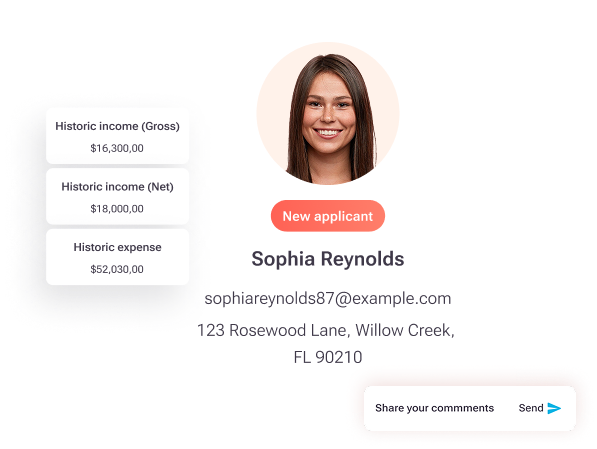
For boards, QuickApprove delivers a dedicated review and voting dashboard with AI-generated applicant summaries and timestamped voting records. For CAMs, it reduces manual follow-ups and keeps applications moving during high-volume seasons and in communities with complex onboarding requirements. Approval times can drop by up to 70% while maintaining documented oversight.
Lease Tracking: Real-Time Lease Visibility and Lifecycle Control
TenantEvaluation’s Lease Tracking capability gives CAMs and boards centralized, real-time lease visibility and lifecycle control from application submission through occupancy. It connects resident onboarding, unit data, approvals, and lease documentation into one streamlined, audit-ready workflow that replaces spreadsheets and scattered email chains.
CAMs gain real-time lease status visibility, automated lease document collection during onboarding, unit-level tracking tied to occupancy records, and a searchable digital history of lease records and document trails. Boards gain a clearer operational picture of occupancy and resident activity across communities. Every record is audit-ready and supports compliance readiness without guaranteeing any specific legal outcome.
55+ Communities Verification for Age-Restricted Properties
55+ Communities Verification is a built-in capability within TenantEvaluation that helps Florida condos and HOAs standardize how age-restricted requirements are handled across applications. It reduces manual work, improves documentation consistency, and strengthens internal processes for Community Association Managers who manage age-restricted communities at scale. It supports documentation and consistency while leaving legal guidance to association counsel.
Unified Fraud-Prevention Implementation Checklist for CAMs and Boards
- Audit your current screening process. Identify whether your community relies on document uploads alone or has biometric liveness detection in place. Deepfakes account for roughly one in five biometric fraud attempts, which makes document-only review weak under Florida HB 1293 standards.
- Configure community-specific screening criteria. Set credit score thresholds, income verification rules, and custom document requirements inside TenantEvaluation so each association follows a consistent, board-approved standard.
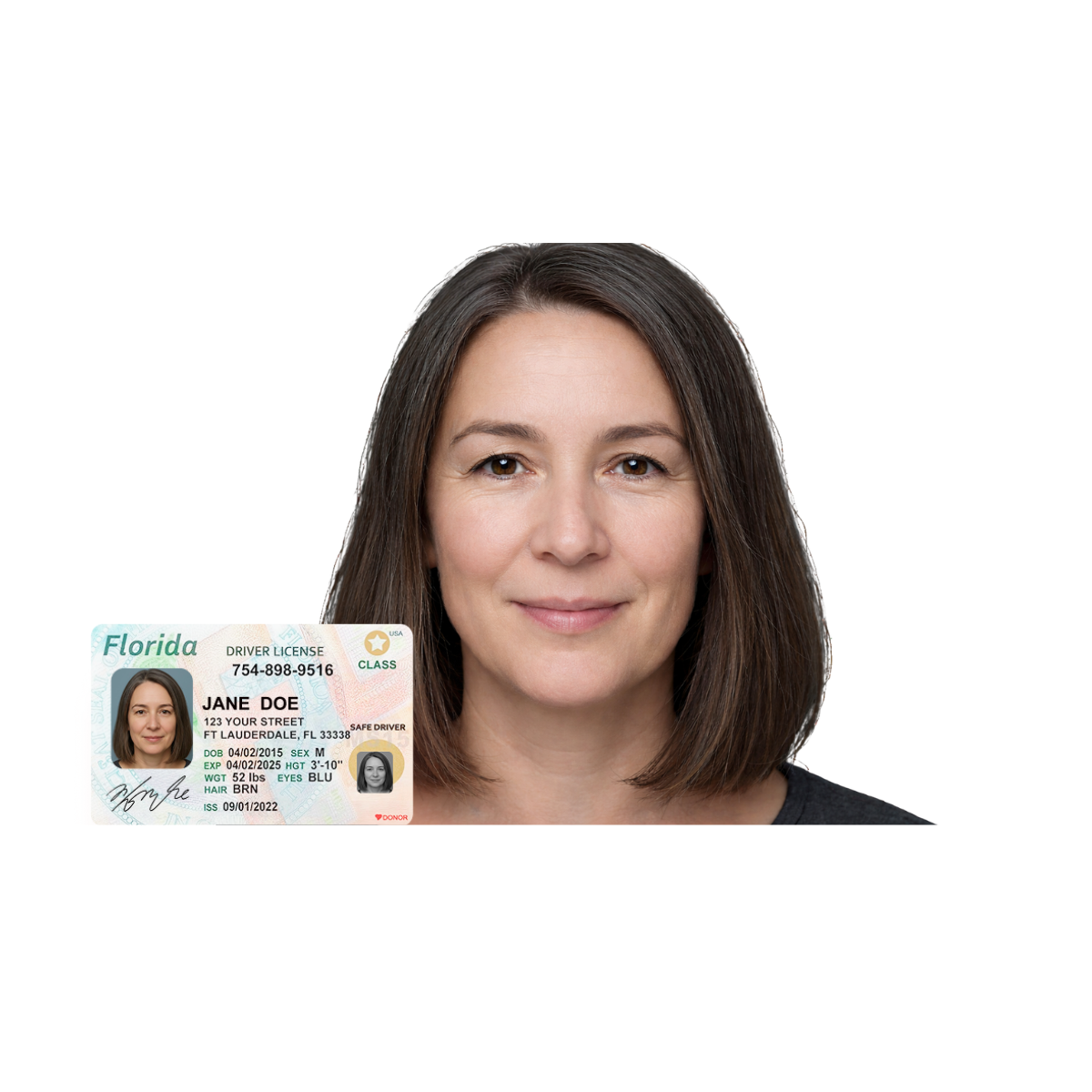
- Enable biometric identity verification at the application stage. Deploy IDVerify+ to add government ID validation, AI-powered liveness detection, and facial biometric matching before any approval decision.
- Implement a board-ready approval workflow. Replace email chains with QuickApprove so boards receive real-time application visibility, a voting dashboard, and automated communication support while retaining full oversight.
- Centralize lease documentation and occupancy tracking. Connect applications, approvals, and active leases inside TenantEvaluation’s Lease Tracking to eliminate spreadsheets, confirm occupancy status in real time, and maintain audit-ready records aligned with Florida’s seven-year retention requirements.
- Standardize age-restricted community verification. For 55+ properties, enable 55+ Communities Verification to apply consistent documentation rules across all applications.
- Verify fidelity bond coverage and financial controls. Confirm your association’s fidelity bond equals the maximum funds in custody as required by FS 720.3033(5) and FS 718.111(11)(h). This coverage requirement works in tandem with operational controls, so implement dual-approval workflows for disbursements above board-defined thresholds. A defensible dual-signature framework calibrates thresholds to 1–2% of annual budget and requires two authorized signatures at or above that threshold.
- Review audit trails against Florida recordkeeping rules. Use TenantEvaluation’s digital records to support seven-year retention requirements under HB 1021 and HB 1203 and schedule quarterly reviews with management and counsel.
People Also Ask: Condo-Specific Scenarios
What is the difference between application fraud and financial fraud in a Florida condo?
Application fraud occurs at the screening stage and involves fake identities, forged documents, or synthetic credentials used to gain occupancy. Financial fraud occurs after entry and involves misappropriation of association funds by officers, managers, or vendors. Florida HB 1293 (effective October 1, 2026) addresses application fraud, while FS 720.3033 and FS 718.111 govern financial controls. Both areas require separate technology and process controls.
Does Florida law require biometric verification for condo rental applications?
Florida HB 1293 does not mandate biometric verification. It does create felony liability for fraudulent entry through false identity statements and forged documents. Biometric liveness detection and facial matching, as provided by IDVerify+, strengthen a community’s evidentiary position when pursuing HB 1293 remedies and reduce exposure to synthetic identity fraud.
What financial controls does Florida law require for HOAs and condos?
Florida law requires fidelity bond coverage equal to maximum funds in custody (FS 720.3033(5) and FS 718.111(11)(h)), tiered annual financial reporting based on revenue and parcel count, seven-year retention of official records, and competitive bidding above statutory thresholds. HB 1203 (2024) prohibits association debit card misuse and requires audited financials for HOAs with 1,000 or more parcels regardless of revenue.
Can one platform address both application fraud and financial fraud for a Florida condo?
TenantEvaluation addresses application fraud through IDVerify+ biometric verification and FCRA-compliant background checks. It supports financial fraud readiness through audit-ready workflows, board voting dashboards, PCI Level 1 compliance, and centralized lease documentation. Financial fraud controls such as dual-signature bank policies and fidelity bonds still require separate board resolutions and banking arrangements, and TenantEvaluation’s audit trails and board-ready workflows support the operational layer of those controls.
Implementation ROI and Platform Impact for CAMs and Boards
TenantEvaluation has processed more than 100,000 applications annually across over 5,000 communities. One Florida-based management company that switched to TenantEvaluation freed up 50 hours of staff time per day, cut processing time by 50%, and achieved $240,000 in annual savings. The platform’s revenue-sharing model means application fees generate income for the association instead of functioning as a net cost.
Conclusion: Next Steps for Fraud-Ready Florida Communities
Florida condos and HOAs in 2026 face a dual fraud environment that combines synthetic identity application fraud and financial fraud enabled by weak internal controls. With synthetic identity fraud having increased eight-fold in just one year, manual document review no longer provides adequate protection. Cases like the Hammocks Community Association’s $11 million loss show that financial fraud remains a prosecuted reality in Florida.
TenantEvaluation is built specifically for community associations and management companies, with FCRA compliance as a core design principle. IDVerify+ biometric verification, QuickApprove board-ready approvals, centralized Lease Tracking, and 55+ Communities Verification work together in one connected workflow to address both fraud types without adding headcount or replacing legal guidance.
Protect your community from application fraud while strengthening financial oversight by exploring the TenantEvaluation platform with the team in a tailored demo.
Frequently Asked Questions
What makes TenantEvaluation different from generic tenant screening platforms for Florida condos?
TenantEvaluation is built exclusively for community associations and management companies, not adapted from generic rental software. It includes a dedicated board voting dashboard, Florida-specific workflow configuration, FCRA-first design as a direct TransUnion and Equifax reseller, biometric identity verification through IDVerify+, and centralized lease lifecycle tracking. Generic screening platforms typically address only background checks and lack board-facing approval tools, condo-specific document logic, or audit-ready lease management. TenantEvaluation serves more than 5,000 communities that process over 100,000 applications annually and holds a Google rating of 4.8/5.
How does IDVerify+ protect a Florida condo from synthetic identity fraud specifically?
IDVerify+ combines three verification layers inside the TenantEvaluation workflow: government-issued ID authentication, AI-powered liveness detection that confirms physical presence through randomized biometric challenges, and facial landmark matching that compares a live selfie to the ID photo. This multi-layer approach detects synthetic identities that might pass document-only review before an approval decision. All verification runs natively inside TenantEvaluation with no external portal redirects, and results appear directly in the CAM’s screening report alongside ID authenticity confirmation, liveness status, and a redacted ID copy for compliance documentation.
Does TenantEvaluation’s Lease Tracking replace the need for separate lease management software?
Lease Tracking functions as a centralized operational capability built directly into the TenantEvaluation ecosystem. It connects resident onboarding, unit data, approvals, and lease documentation into one real-time workflow. It delivers centralized lease records, real-time lease status visibility, automated lease document collection during onboarding, unit-level tracking, and searchable audit-ready digital history. It does not replace legal lease review or interpretation, but it removes the operational fragmentation that creates compliance risk and administrative blind spots for CAMs and boards.
How does QuickApprove support board oversight rather than bypass it?
QuickApprove accelerates resident approvals by giving boards a dedicated review and voting dashboard with AI-generated applicant summaries, real-time application status, and a structured voting workflow inside TenantEvaluation. It replaces informal email chains with a documented, timestamped approval process. Boards retain full decision-making authority, and QuickApprove reduces the time and manual effort required to exercise that authority. It suits high-volume seasons and communities with complex onboarding requirements and does not remove board oversight, bypass screening, or replace compliance review.
What Florida regulatory requirements does TenantEvaluation help community associations address operationally?
TenantEvaluation’s platform supports several operational requirements relevant to Florida condos and HOAs. These include FCRA-compliant background checks with built-in adverse action workflows, audit-ready digital records aligned with Florida’s seven-year retention requirements under HB 1021 and HB 1203, and biometric identity verification that strengthens evidentiary documentation under HB 1293’s fraudulent entry provisions. Board voting dashboards create timestamped approval records, and for age-restricted communities, 55+ Communities Verification standardizes documentation handling across applications. TenantEvaluation does not provide legal advice or guarantee compliance with any specific statute, and associations should consult qualified legal counsel for regulatory guidance.
