Written by: Luis Teran, Co-founder, CEO, TenantEvaluation | Last updated: August 9, 2026
The table below compares six major background check vendors on the factors that matter most to Florida community associations. You will see how each vendor handles Florida coverage and turnaround, board-level workflow and compliance, and revenue alignment with association goals. The pattern is clear: generic national tools cover the basics, while purpose-built platforms give Florida CAMs and boards the control and protection they actually need.
| Vendor | Florida Coverage & Turnaround | Board Access & Compliance Depth | Revenue Model |
|---|---|---|---|
| TenantEvaluation | Statewide, rapid full-cycle automated screening compared with multi-day manual processes | FCRA-first design, direct TransUnion & Equifax reseller, QuickApprove board voting dashboard, IDVerify+ biometric layer, built-in adverse-action workflow, full audit trails | Pay-per-application with revenue-sharing, no upfront subscription fees, $150M generated for communities |
| ApplyCheck | National, major-county searches 1–2 business days, smaller counties up to 5–7 days | TazWorks white-label platform, no dedicated board dashboard, standard FCRA workflow | Per-application fee, no revenue-sharing model |
| Verify Screening Solutions | National, county-court dependent turnaround, Panhandle counties may require clerk assistance adding days | TazWorks white-label platform, limited applicant interaction, no automated document redaction | Per-application fee, no revenue-sharing model |
| AppFolio | National, standard screening turnaround, no Florida-specific board workflow | Broader property management suite, limited HOA/condo board voting panel, monthly subscription required | Monthly per-unit subscription, higher cost at lower volume |
| RentSpree | National, standalone screening at $25–$45 per applicant, no Florida-specific configuration | Simpler screening platform, no board dashboard, standard adverse-action support | Per-applicant fee, no revenue-sharing |
| Buildium | National, screening via third-party integration, no Florida-specific county-court optimization | Property management focus, limited screening depth, manual processes often require several hours per application without automation | Monthly subscription, bundled at $30–$60 per unit per month |
Key Takeaways for Florida CAMs and Boards
- Florida community associations face unique compliance and operational pressures that generic national screening tools are not designed to address.
- FCRA compliance, Level 2 background checks, and board approval workflows are the three foundational requirements shaping screening decisions in 2026.
- Manual processes create recurring bottlenecks, including incomplete applications, missing audit trails, and lost revenue from delayed approvals.
- Emerging best practices emphasize biometric identity verification, real-time lease visibility, and automated full-cycle screening to reduce risk and speed decisions.
- TenantEvaluation delivers purpose-built solutions for Florida associations, with QuickApprove board dashboards, IDVerify+ biometric screening, and Lease Tracking that replaces spreadsheet-based workflows.
Daily Workflows and Bottlenecks for Florida CAMs
CAMs managing mid-size Florida condo or HOA portfolios juggle document collection, board coordination, lease record management, and payment handling across disconnected systems. The failure points are predictable and recurring, falling into five categories.
Common operational bottlenecks include:
- Incomplete applications that require repeated follow-up with applicants and realtors
- Email-chain approvals that leave no structured audit trail for board decisions
- Missing or outdated lease copies stored across folders, inboxes, and spreadsheets
- Payment confirmations chased manually through phone calls and email
- No centralized visibility into occupancy status or lease expiration timelines
Vacant units create direct revenue loss for associations, so compressing approval cycles becomes a financial priority, not just an administrative preference. Boards that rely on email-based voting introduce inconsistency into the record and increase liability when decisions cannot be reconstructed during audits or disputes.
Compliance Rules Shaping Florida Screening in 2026
Florida associations must navigate overlapping federal and state requirements when they screen residents. Core FCRA obligations include permissible-purpose controls, written consent before any consumer report is pulled, and a structured adverse-action process when a denial relies on report data.
The two-step adverse-action process requires a pre-adverse action notice that gives the applicant a chance to dispute findings. A final adverse-action notice follows if the denial stands.
Florida-specific record retention standards add another layer. Associations must maintain screening-related records in compliance with applicable laws. They must also apply identical screening standards to all applicants and avoid blanket criminal-history disqualifications. A 2016 HUD guidance states that blanket bans on applicants with any criminal history may violate the Fair Housing Act due to disparate impact; associations may only consider actual convictions and should focus on recent, serious offenses.
Data security obligations run alongside these procedural requirements. Florida law requires landlords to securely store applicant data and follow FCRA rules when using consumer reports. Platforms that handle sensitive PII without end-to-end encryption or automatic redaction create direct liability exposure for the association.
Emerging Screening Practices for Florida Associations
Three operational shifts define best-in-class screening programs for Florida associations in 2026.
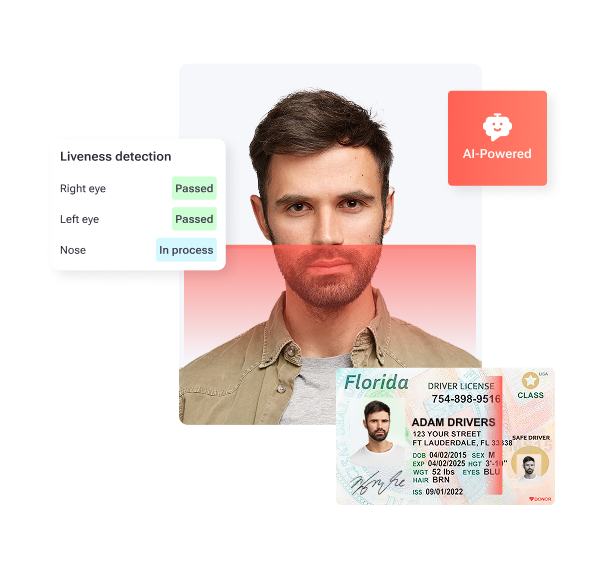
Biometric identity verification has moved from optional to expected in high-density and gated communities. Traditional document-upload screening cannot reliably prevent impersonation, synthetic identity fraud, or stolen-ID submissions. Platforms that embed AI-powered liveness detection and biometric facial matching directly into the application workflow close this gap without adding friction for legitimate applicants.
Once identity is verified and screening is complete, the next operational challenge is maintaining visibility into lease status and occupancy. Real-time lease visibility is replacing spreadsheet-based tracking as associations recognize that disconnected lease records create occupancy blind spots and compliance risk. Centralized lease lifecycle management, which connects onboarding, approvals, unit data, and lease documentation in one platform, reduces manual follow-up and strengthens audit readiness.
Automated full-cycle screening compresses decision timelines significantly. Automated workflows can complete the full cycle from intake through decision routing much faster when background-check vendors return results quickly, compared with manual screening that averages 12–23 hours per role (or seconds to a few minutes per applicant) for typical volumes of 100+ resumes. Online application platforms help landlords fill units faster than those that rely on in-person or email-based applications.
Neutral Framework for Comparing Background Check Vendors
Florida CAMs and boards should score each platform across five criteria that move from operational speed through compliance infrastructure to financial alignment.
- Turnaround time: Does the platform deliver full-cycle results in hours, not days? Speed directly affects vacancy costs and board workload.
- Florida coverage: Does it handle county-court variation, FDLE data, and Florida-specific statutory requirements natively? Generic national tools often lack the configuration that Florida associations require.
- Board access: Is there a dedicated voting and review dashboard built for boards of directors? Without this, boards fall back on email chains that create audit trail gaps.
- Compliance depth: Does it include FCRA-first design, direct credit bureau reseller status, automated adverse-action workflows, and built-in audit trails? These features determine whether the platform reduces or increases liability exposure.
- Revenue model: Does the pricing structure align vendor incentives with association success, or does it impose fixed costs regardless of volume? The pricing model reveals whether the vendor profits from your efficiency or your overhead.
Generic national tools usually score well on turnaround time for major metros but underperform on board access, Florida-specific configuration, and revenue alignment. Platforms built exclusively for community associations close all five gaps at once.
How TenantEvaluation Supports Florida Associations
TenantEvaluation is built specifically for Florida community associations and management companies, with FCRA compliance as the foundation, not an afterthought. Founded in 2007 and serving 5,000+ communities with approximately 100,000 applications processed annually, the platform addresses the gaps that generic tools leave open.
QuickApprove is TenantEvaluation’s accelerated approval workflow for CAMs, boards, and property management teams inside one connected platform. It delivers real-time application tracking, automated communication support, customized approval letters, a personalized welcome package, and a board-ready approval process. These capabilities replace email chains and spreadsheets while preserving control, compliance, and visibility. QuickApprove works especially well during high-volume seasons and in communities with complex onboarding requirements.

IDVerify+ embeds biometric identity verification directly into the screening workflow using government ID validation, AI-powered liveness detection, and biometric selfie-to-ID comparison. Unlike competitors that redirect applicants to external portals, IDVerify+ operates natively inside TenantEvaluation, which preserves workflow continuity and strengthens approval confidence before risk enters the community.
55+ Communities Verification helps Florida condos and HOAs standardize how age-restricted requirements are handled across applications. It reduces manual work, improves documentation consistency, and strengthens operational efficiency and control for CAMs and boards that manage age-restricted communities.

Lease Tracking delivers centralized, real-time lease visibility and lifecycle control. It connects resident onboarding, unit data, approvals, and lease documentation into one streamlined, audit-ready workflow. Real-time lease status, automated lease document collection, unit-level tracking, and searchable digital history replace scattered spreadsheets and email chains from application to occupancy.
TEpayments by Zinc is a connected payment workflow inside TenantEvaluation that collects application fees, deposits, and other required resident payments within the onboarding process. Payments go directly from the applicant to the association’s designated account, and TenantEvaluation never holds the funds. This structure gives boards traceable records and removes manual payment-chasing.
TenantEvaluation’s direct reseller relationships with TransUnion and Equifax mean data is accessed under strict bureau rules with no gray-market or offshore sources. This approach protects community associations from liability tied to inaccurate or impermissibly obtained consumer reports.
Frequently Asked Questions
What fails a Level 2 background check in Florida?
A Level 2 background check in Florida is a fingerprint-based screening routed through both FDLE and the FBI under Florida Statute 435.04. Disqualifying offenses under Florida’s Level 2 standards include felony convictions for crimes such as sexual battery, lewd or lascivious conduct, child abuse, aggravated assault, aggravated battery, kidnapping, arson, robbery, and certain drug trafficking offenses. The specific disqualifying offenses are defined in Florida Statute 435.04 and vary by the regulatory context in which the check is required. For community association screening purposes, Level 2 checks are not universally mandated. Associations typically conduct FCRA-governed background checks that review criminal history, eviction records, and credit data rather than the statutory Level 2 process used for regulated care providers. Associations should consult legal counsel to determine which screening standard applies to their specific community and governing documents.
How much does a Florida background check cost?
Costs vary significantly by check type. Standard pre-employment or tenant screening packages in Florida typically start at $39 for criminal records, sex offender registry, and identity verification. Level 1 name-based checks generally range from $15 to $40. Level 2 fingerprint-based checks cost $55 to $100 or more, combining fixed government fees, which include $8.00 to FDLE, $13.50 to the FBI, and $24.00 for five-year fingerprint retention, with livescan vendor service fees of $20 to $50. For community association resident screening, platforms like TenantEvaluation operate on a pay-per-application model with a revenue-sharing structure. The association collects the application fee, TenantEvaluation deducts its service cost, and the remainder is rebated to the association, which makes the platform cost-neutral or revenue-generating rather than a pure expense line.
How long does a Florida background check take for a community association application?
Turnaround time depends on the check type and the platform used. Major-county criminal searches in Miami-Dade, Broward, Hillsborough, Orange, Duval, and Pinellas typically complete in 1 to 2 business days via online Clerk of Court portals. Smaller-county searches can take 1 to 3 business days, extending to 5 to 7 days in some Panhandle counties that require clerk assistance. FDLE name-based checks are typically same-day to 24 hours. Level 2 fingerprint-based screenings through the AHCA Clearinghouse take 7 to 21 business days for initial enrollment. For community association resident screening using an automated platform, the full application cycle, from intake through background check results and decision routing, can complete in a fraction of the time required by the manual processes described earlier.
What FCRA obligations apply specifically to Florida community associations?
Florida community associations using consumer reports for resident screening are subject to the same FCRA obligations as any other user of consumer reports. These include obtaining written, signed consent from every applicant before pulling any consumer report, limiting use of the report to a permissible purpose such as tenancy decisions, providing a pre-adverse action notice if a denial is being considered, allowing the applicant an opportunity to dispute findings, and issuing a final adverse-action notice if the denial stands. Associations must also maintain screening records in accordance with applicable retention requirements. Platforms with built-in adverse-action workflows and automated audit trails reduce the manual compliance burden and lower the risk of procedural violations that carry statutory damages of $100 to $1,000 per willful violation.
Do Florida HOAs and condominiums need a board dashboard for resident approvals?
Most Florida HOA and condominium governing documents require board involvement in the approval of prospective residents, so a structured board review process becomes a practical necessity rather than a preference. Without a dedicated dashboard, boards typically receive applications through email chains, review documents in inconsistent formats, and cast votes without a centralized record, which creates audit trail gaps and decision bottlenecks. A board-ready approval workflow with a dedicated voting panel, real-time application status visibility, and timestamped decision records addresses both the operational and compliance dimensions of board-level review. TenantEvaluation’s QuickApprove includes this capability natively and is designed specifically for the board-approval workflows common in Florida community associations.
Conclusion: Selecting a Vendor for Your Florida Portfolio
The five criteria that matter most for Florida community associations, which include turnaround time, Florida coverage, board access, compliance depth, and revenue model, consistently separate purpose-built platforms from generic national tools. Associations that rely on tools designed for standard residential rentals accept structural gaps in board workflow support, Florida-specific statutory configuration, and FCRA-first design that create compounding risk over time.
TenantEvaluation addresses all five criteria within a single platform. It delivers rapid automated full-cycle screening, statewide Florida coverage, a dedicated board voting dashboard through QuickApprove, direct credit bureau reseller status with built-in adverse-action workflows, and a pay-per-application revenue-sharing model that turns onboarding into a controlled income stream. With the scale and track record described above, TenantEvaluation is the clear choice for Florida CAMs and boards that need speed, compliance depth, and operational control without administrative overhead.
Get started with TenantEvaluation by requesting a personalized demo for your Florida portfolio.
