Best Practices for Condo Tenant Identity Verification
Written by: Luis Teran, Co-founder, CEO, TenantEvaluation | Last updated: July 14, 2026
Key Takeaways for Florida Condo and HOA Boards
A five-layer FCRA-compliant verification process with biometric ID checks, income validation, synthetic identity detection, landlord references, and human review replaces unreliable document-only screening for Florida condos and HOAs.
Biometric liveness detection and bureau-direct credit data catch impersonation and synthetic identity fraud that standard document review misses, which is critical given Florida’s high fraud rates and HB 1293.
Automated audit trails, consent capture, and two-step adverse action notices inside TenantEvaluation keep boards compliant with FCRA and Florida fee rules while accelerating approvals.
55+ communities gain standardized age-verification workflows that support HOPA exemption requirements and reduce manual record-keeping for CAMs and boards.
TenantEvaluation delivers this complete, board-ready framework natively so Florida associations can replace fragmented screening with one auditable platform.
7-Step FCRA-Compliant Verification Framework for Florida Condos and HOAs
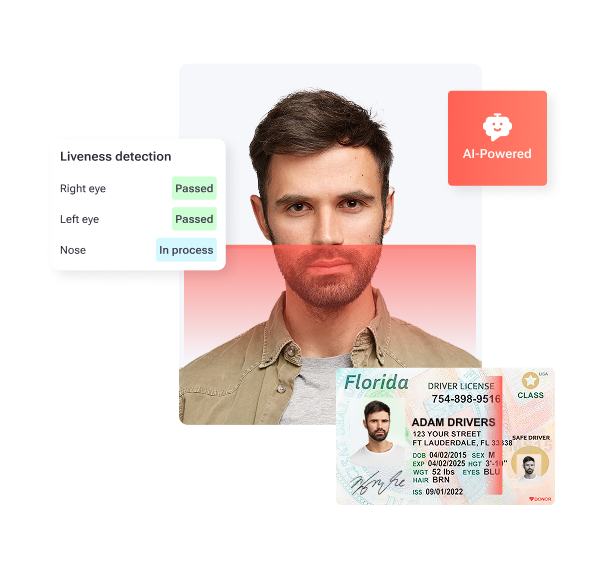
Step 1: Use Automated ID Verification with Biometric Liveness Detection
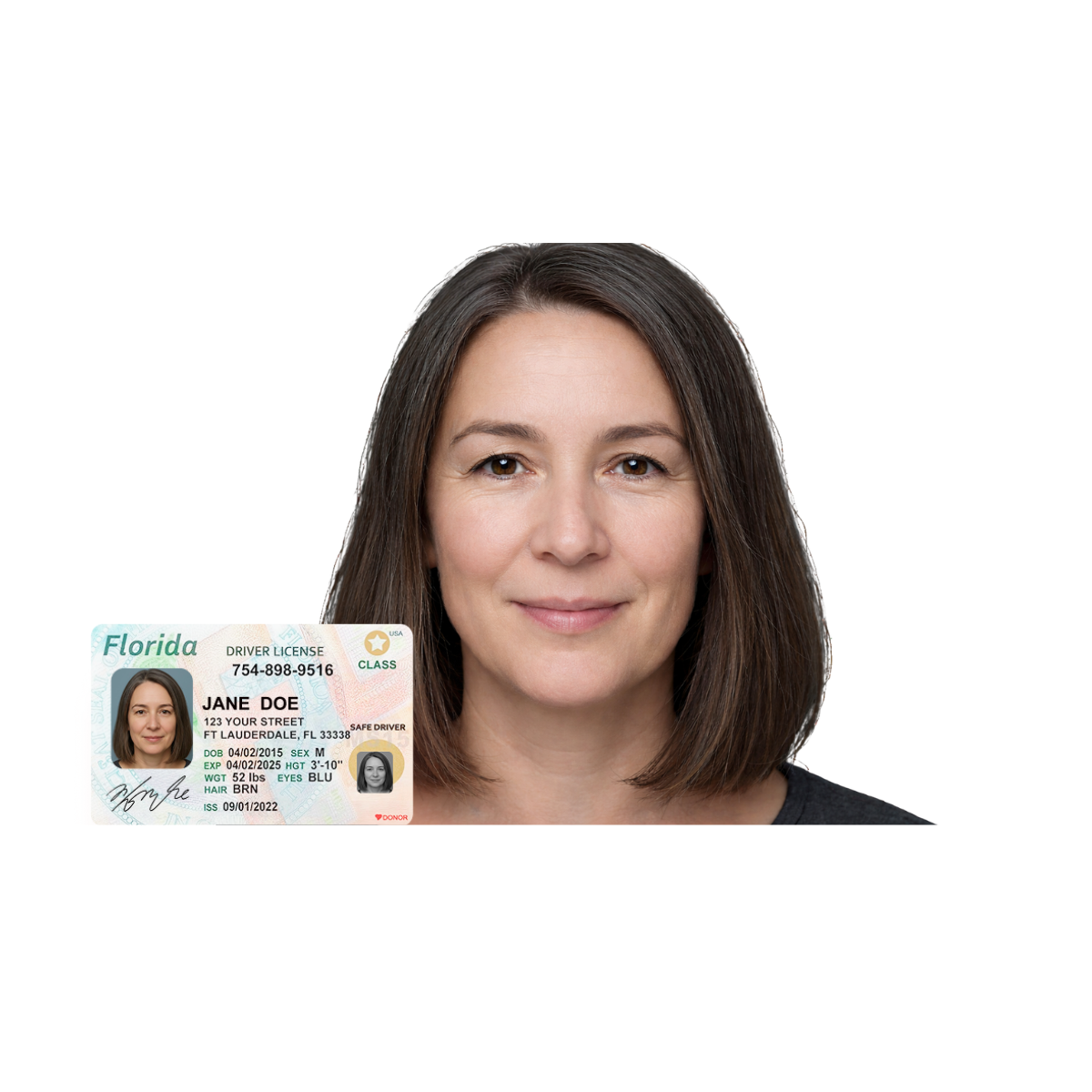
Expanding upon the Basic package, IDVerify Plus includes a critical Liveness feature, ensuring the person present matches the photo on the ID through sophisticated facial recognition technology. This advanced level of verification is ideal for high-security needs.
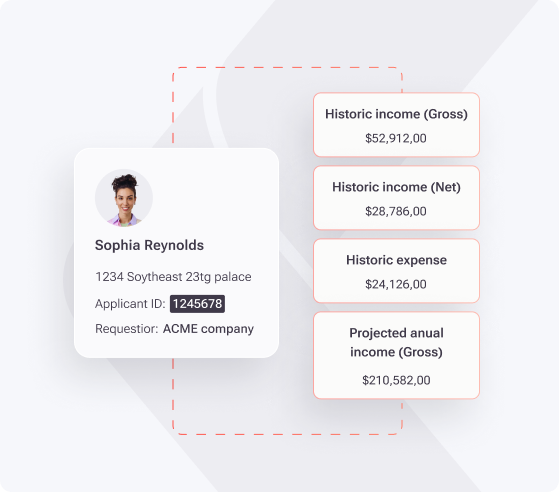
Step 2: Modernize Income and Employment Verification
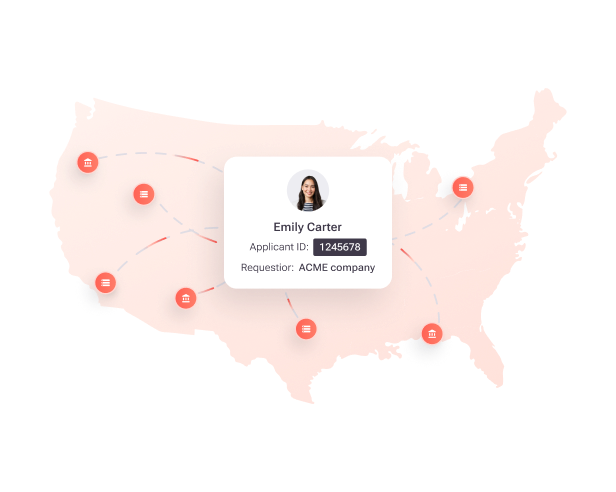
With SafeCheck+, our upgraded service provides you access to a comprehensive nationwide offender search, powered by real-time data from law enforcement agencies and trusted third-party sources. Our expanded coverage ensures that you never miss critical information, no matter where you operate.
Step 4: Verify Landlord References Independently for HOAs and Condos
Behavioral signals, such as an applicant pressuring for unusually fast approval or refusing standard steps.
Inconsistencies between application fields and uploaded documents.
Multiple applications submitted from the same device or IP address.
Biometric match score falls below threshold and requires closer review.
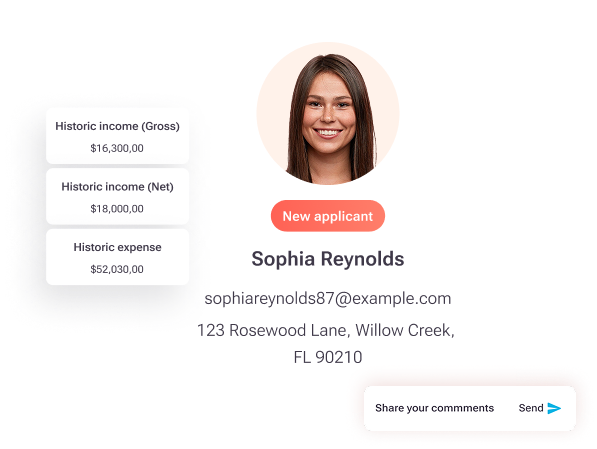
Action Item: Assign a trained CAM to review the consolidated screening report inside TenantEvaluation before any board vote. TenantEvaluation’s QuickApprove board dashboard surfaces AI-generated applicant summaries alongside biometric results, income verification outcomes, and reference notes. This structure enables human review without manual document assembly.
QuickApprove: Fast, Informed Decisions at the Click of a Button
Step 6: Maintain FCRA-Compliant Audit Trails for Community Associations
Step 7: Standardize 55+ Community Age Verification Practices
Condo/HOA Callout: Florida law under F.S. 760.29 requires that at least 80 percent of occupied units in a 55+ community be occupied by at least one person 55 years of age or older but does not prescribe any schedule or method for age verification. Failure to maintain the 80 percent threshold or verification records can result in loss of the HOPA exemption.
Red-Flag Checklist:
Age verification documents are missing, expired, or stored inconsistently across units.
Biennial occupancy survey has not been updated within the required two-year window.
Unit records do not confirm at least one resident aged 55 or older in 80 percent of occupied units.
Published policies and procedures do not demonstrate intent to operate as 55+ housing.
The seven-step framework above generates a complete screening record for each applicant. That record becomes truly useful when boards can access, review, and act on it efficiently through a dedicated dashboard.
Board Dashboard and Audit Trail Requirements for Florida Communities
Florida condo and HOA boards carry direct responsibility for approval decisions and the compliance records that support them. TenantEvaluation’s QuickApprove accelerated approval workflow gives board members a dedicated review and voting panel inside the platform, with real-time application tracking, AI-generated applicant summaries, and automated communication support. Every board vote is timestamped and stored alongside the full screening record, which creates an audit-ready trail that connects the application, biometric verification result, income check, reference notes, and final decision in one searchable location. This structure replaces email chains and spreadsheets with a connected, board-ready approval process while preserving control, compliance, and visibility.
TenantEvaluation’s Lease Tracking capability extends this visibility from approval through occupancy by connecting resident onboarding, unit data, approvals, and lease documentation into one centralized, real-time workflow with audit-ready digital lease records. See the board dashboard and lease tracking features in action and understand how they support your association’s record-keeping.
55+ Communities Verification Standardization for Florida Associations
Comparison: Document-Only Screening vs. Biometric-Backed Verification
The following comparison highlights how document-only screening and biometric-backed verification perform across key risk and compliance areas. Pay close attention to synthetic identity detection and audit trail quality, since these areas often determine whether fraud is caught early or missed entirely.
Automated, timestamped, and board-accessible inside one platform
TenantEvaluation
Industry reports document substantial costs per fraudulent tenant placement under document-only screening. Biometric-backed verification helps avoid these losses by catching impersonation and synthetic identity fraud before approval.
Frequently Asked Questions
What is biometric liveness detection and why does it matter for condo applicant screening?
Biometric liveness detection is a real-time verification step that confirms a live human being is present during identity verification, rather than a static photograph, a deepfake video, or a bot. During the process, the applicant is prompted to perform specific actions, such as blinking or turning their head, while a camera captures and analyzes the response. The system then compares the live image against the applicant’s government-issued ID using facial landmark mapping. For condo and HOA screening, liveness detection closes the impersonation gap that document-only review cannot address. A fraudster may possess a stolen or fabricated ID, but cannot replicate the biometric match of the actual identity holder. TenantEvaluation’s IDVerify+ runs this process natively inside the screening workflow, so applicants complete verification without leaving the platform and CAMs receive a consolidated result, including ID authenticity confirmation, liveness status, and biometric match score, embedded directly in the screening report.
How long does a FCRA-compliant biometric-backed screening process take compared to manual review?
A fully automated, biometric-backed screening workflow inside TenantEvaluation processes applications in 5 to 10 minutes for the applicant-facing steps, compared to 5 to 10 days under manual document review processes. The board approval phase is accelerated through QuickApprove, which replaces email chains and spreadsheets with a real-time voting panel and automated communication support. TenantEvaluation clients have reported approval time savings of up to 70 percent and staff time savings of up to 50 hours per day. FCRA compliance steps, including written consent capture, pre-adverse action notice, and final adverse action notice, are automated within the same workflow, so speed does not come at the cost of regulatory defensibility.
What are the board’s responsibilities in a FCRA-compliant condo or HOA screening process?
The board of directors in a Florida condo or HOA is the decision-making authority in the screening process, and TenantEvaluation, as the data provider, maintains a clear separation between data provision and the approval decision itself. Board responsibilities include reviewing the consolidated screening report, casting a documented vote, and ensuring that screening criteria are applied consistently to every applicant in accordance with the Fair Housing Act and the community’s governing documents. The board must not apply different standards based on any protected characteristic. When a denial is based on a consumer report, the board must ensure the FCRA’s two-step adverse action process, detailed in Step 6, is completed through the platform’s automated workflow. TenantEvaluation’s QuickApprove board dashboard automates the voting record and adverse action workflow, giving boards a structured, auditable process without requiring manual document assembly or email coordination.
How does the verification workflow differ between a standard condo application and a 55+ community application in Florida?
A standard condo application workflow in TenantEvaluation follows the five-layer framework: biometric identity verification via IDVerify+, income and employment validation via IncomeEV, synthetic identity cross-referencing via SafeCheck+, independent landlord reference checks, and human red-flag review, all culminating in a board vote through QuickApprove. A 55+ community application adds a structured age verification layer through TenantEvaluation’s 55+ Communities Verification capability. This layer standardizes how age-restricted documentation requirements are handled across applications by collecting and storing acceptable documents such as driver’s licenses, birth certificates, or passports. It also supports the biennial occupancy record update required under Florida Statute 760.29(4)(a) and 24 CFR 100.307. The 55+ layer reduces manual work for CAMs, improves documentation consistency across the portfolio, and strengthens internal operational control. It does not replace legal guidance or guarantee HOPA compliance, but it creates a more structured and scalable process for communities managing age-restricted requirements.
Florida’s rental fraud environment, shaped by a 93 percent fraud encounter rate among property managers, the documented surge in AI-generated financial documents, and the landmark criminalization of application fraud under HB 1293 effective October 1, 2026, makes document-only screening an inadequate standard for condo and HOA communities. The five-layer framework outlined in this guide, which includes biometric identity confirmation, bank and employment data validation, synthetic identity graph checks, independent landlord reference verification, and human red-flag review, delivers a defensible, FCRA-compliant process that addresses each fraud vector individually and collectively.
TenantEvaluation is the only all-in-one platform built specifically for Florida community associations that delivers all five layers natively: IDVerify for biometric-backed identity confirmation, IncomeEV and SafeCheck+ for financial and synthetic identity validation, QuickApprove for board-ready accelerated approvals with automated audit trails, and 55+ Communities Verification for standardized age-restricted application handling. With 100,000+ applications processed annually across 5,000+ communities and $150M generated for associations, TenantEvaluation brings FCRA compliance as the foundation, not an afterthought. See how TenantEvaluation replaces fragmented, manual screening with one connected, biometric-backed, board-ready workflow and request your personalized walkthrough.