Written by: Luis Teran, Co-founder, CEO, TenantEvaluation | Last updated: July 9, 2026
Key Takeaways for Florida Condo and HOA Boards
- Florida community associations face rising rental application fraud, with 93% of property managers reporting incidents and AI-generated documents making traditional checks unreliable.
- Biometric identity verification using liveness detection and facial matching adds the missing layer that confirms applicants are physically present and match their submitted documents.
- Biometric screening that follows FCRA rules can combine government ID validation, liveness detection, and facial matching directly inside association workflows without external portals.
- Platforms built for community associations provide board-ready dashboards, 55+ community documentation support, and automated audit trails that generic rental tools do not offer.
- TenantEvaluation delivers a complete biometric screening solution for Florida condos and HOAs. Schedule a demo to see how it strengthens your screening process.
Why Florida Condos and HOAs Need Stronger Identity Verification
Ninety‑three percent of property managers (nationally) report encounters with rental application fraud, a rate consistent with national multifamily data. Fraud tactics have evolved quickly. AI-powered fraud now produces convincing income documents, identification, and verification letters that appear authentic at first glance, especially in markets that expect fast approvals. Synthetic identity document fraud in North America rose by 311% year over year in Q1 2025, while deepfake fraud surged by 1,100%.
Florida law now reflects how serious this problem has become. Florida House Bill 1293, signed on June 12, 2026, creates the crime of “fraudulent entry of a residential dwelling unit” and classifies rental application fraud as a third-degree felony effective October 1, 2026. Simple document uploads no longer meet the verification standard this environment requires. Community associations need a verification layer that confirms the person submitting an application is physically present and matches the identity document provided.
What Biometric Tenant Screening Delivers for Associations
Biometric tenant screening provides that missing verification layer. It uses physiological characteristics, primarily facial geometry, to confirm that an applicant is the person named in their submitted identity documents. In a community association setting, this process fits directly into the application intake workflow and produces a verification result that becomes part of the screening record reviewed by the Community Association Manager (CAM) and the board.
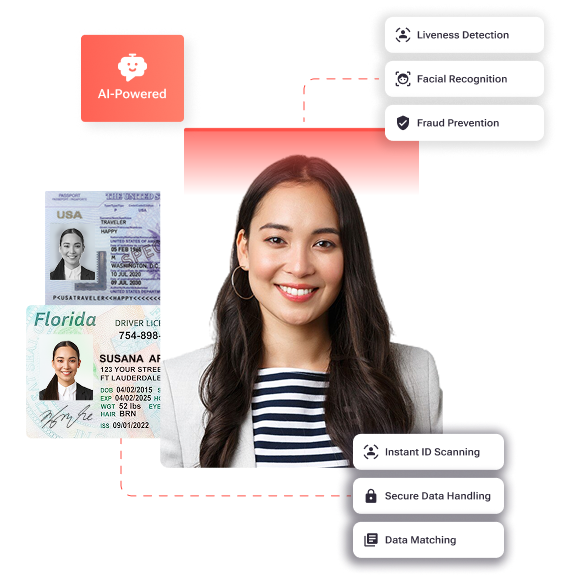
The core components are:
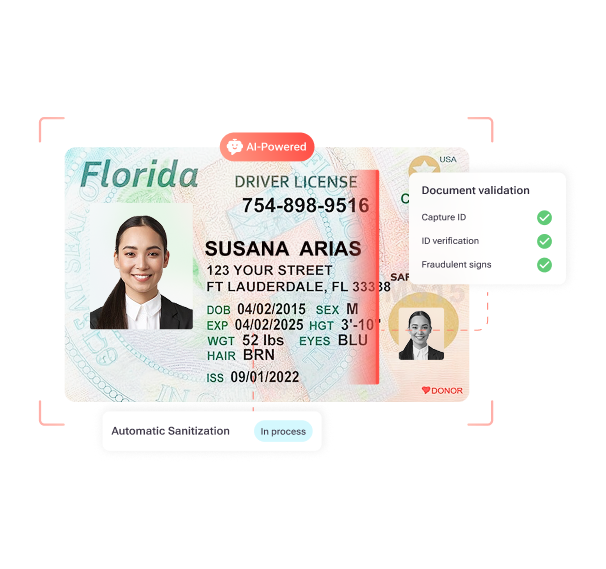
- Government ID validation: Automated checks confirm the document is authentic, unaltered, unexpired, and internally consistent.
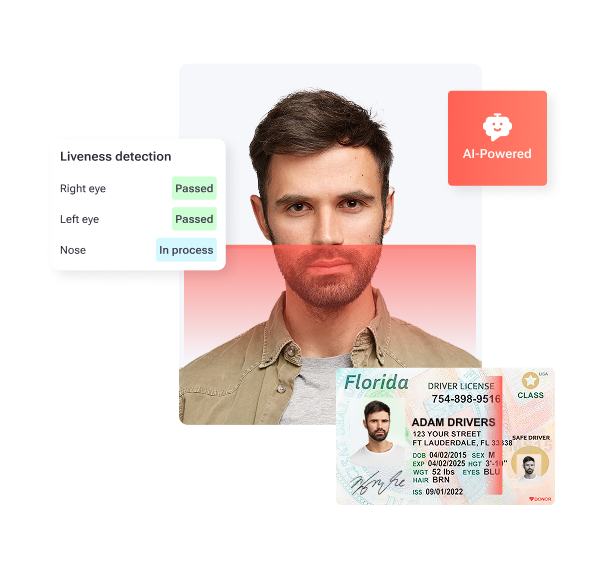
- Liveness detection: The system confirms that the biometric sample comes from a physically present, living person rather than a photograph, video replay, or deepfake.
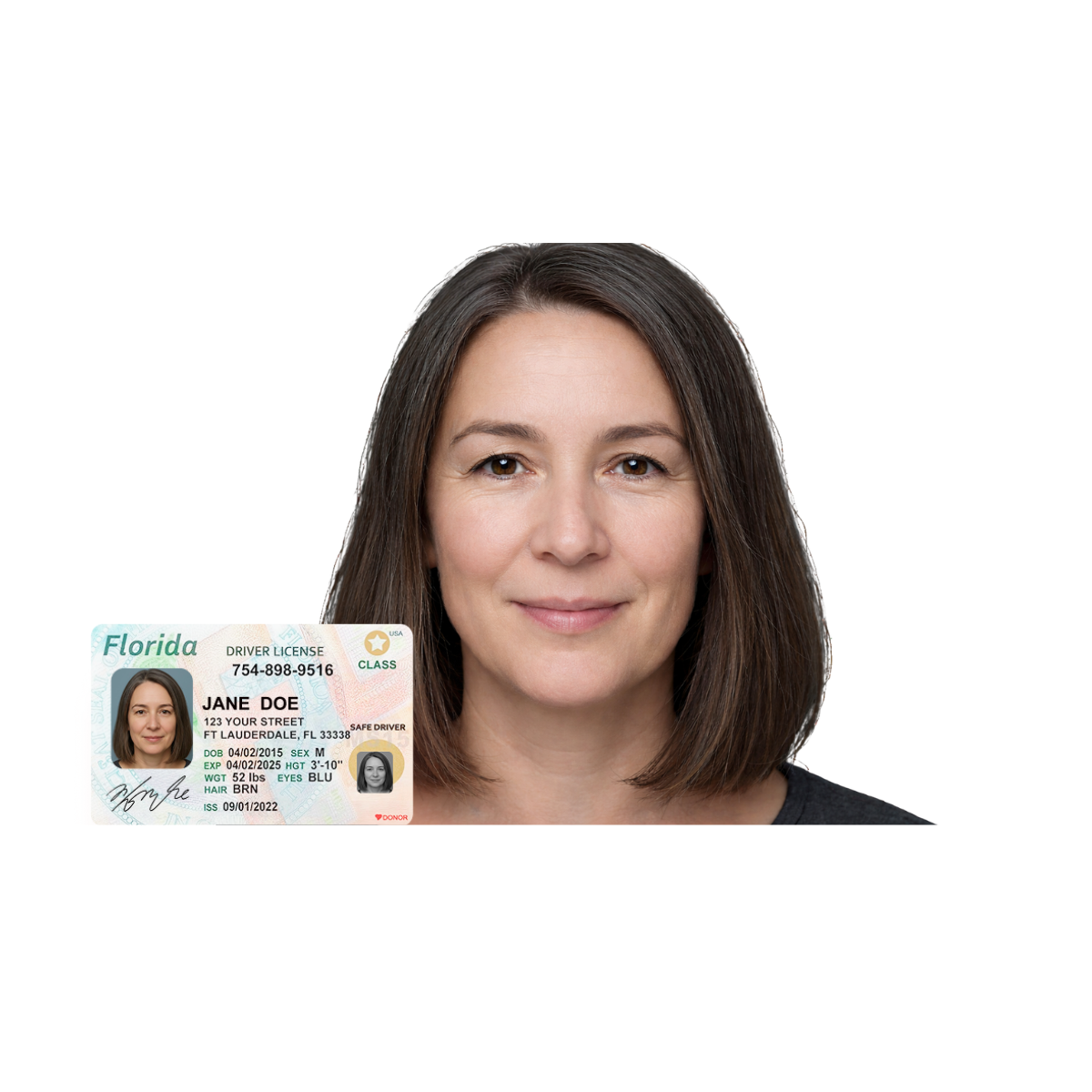
- Facial matching (1:1 biometric comparison): A real-time selfie is compared against the photo on the government-issued ID to confirm the applicant is the rightful owner of the document.
- Background check integration aligned with FCRA rules: Identity confirmation happens before the background check, which supports permissible-purpose validation and strengthens the audit trail.
TenantEvaluation’s native IDVerify solution delivers all four components inside a single platform built exclusively for community associations. Applicants stay in one environment, workflows stay intact, and boards avoid the limitations of generic rental tools.
Schedule a demo today to see how IDVerify fits inside your community’s existing screening workflow.
How Liveness Detection Stops Tenant Impersonation
Liveness detection verifies that the face shown during verification belongs to a real person who is physically present by analyzing signals such as micro-movements (eye saccades and pupil dilation), skin texture and light reflection, 3D depth, and remote photoplethysmography blood-flow patterns, rather than a photo, mask, replayed video, or deepfake.
Azure Face liveness detection achieved a 0% penetration rate in iBeta Level 1 and Level 2 Presentation Attack Detection (PAD) tests conducted by a NIST/NVLAP-accredited laboratory conformant to the ISO/IEC 30107-3 PAD international standard. These tests covered spoof types including paper printouts, 2D and 3D masks, and presentations on phones and laptops. Biometric verification can reach very high accuracy, and the National Institute of Standards and Technology (NIST) Face Recognition Vendor Test (FRVT) shows that top-performing facial recognition algorithms maintain low false non-match rates at low false match rates.
Document verification alone confirms the document is genuine but cannot confirm the person holding it is the rightful owner; facial recognition closes that gap by establishing the biometric link between the document and the individual. For Florida condo and HOA boards, this difference has real operational impact. A stolen ID can pass a document check. It will not pass a combined liveness and facial-match check.
FCRA Rules That Shape Biometric Screening in Associations
Under the FCRA, consumers must provide written consent before any consumer report is requested; this requirement applies to biometric data collection as part of identity verification in tenant screening. Community associations that add biometric verification need to address several specific points.
- Permissible purpose: Screening for residential tenancy or purchase qualifies as a permissible purpose under the FCRA. Identity confirmation before the background check helps ensure the report is run on the correct individual.
- Written consent and standalone disclosure: Key FCRA compliance requirements include obtaining written candidate consent, providing disclosure forms, following proper adverse action procedures, and allowing candidates to dispute inaccurate information.
- Adverse action: Adverse action notices must identify the reporting agency, clarify that the agency did not make the decision, and inform applicants of their right to dispute inaccuracies.
- Data handling and encryption: All PII and biometric data must be transmitted using AES-256 encryption and infrastructure must comply with SOC 2 Type II standards to prevent unauthorized access.
- Audit trails: Every verification action should be timestamped and retained to support dispute resolution and regulatory review.
TenantEvaluation is built for community associations and management companies, with FCRA compliance as a core design requirement. As a direct reseller of TransUnion and Equifax data, TenantEvaluation maintains strict permissible-purpose controls, automated adverse action workflows, and built-in audit trails for every application. IDVerify strengthens permissible-purpose validation by confirming identity before screening authorization, which supports FCRA-aligned workflows and defensible audits.
Biometric Verification Tailored to 55+ Florida Communities
Age-restricted Florida condos and HOAs operating under the Housing for Older Persons Act (HOPA) face documentation requirements that generic rental tools rarely handle well. Fragmented manual processes that rely on emails, PDFs, and repeated follow-ups create inconsistent records and increase risk during audits or disputes.
TenantEvaluation’s 55+ Communities Verification capability helps Florida condos and HOAs standardize how age-restricted requirements are handled across applications. It reduces manual work, supports consistent documentation, improves operational efficiency, and strengthens internal processes without replacing legal guidance. When combined with IDVerify, associations gain both biometric identity confirmation and structured age-verification documentation in one platform, which creates a more controlled and scalable process for CAMs managing 55+ community requirements.
Current Market Dynamics in Association Screening
Industry research indicates that losses per rental fraud incident frequently exceed $10,000, driven by unpaid rent, turnover costs, and legal expenses, with eviction processes taking six months or longer in some jurisdictions. According to Aware’s April 2026 report The State of Biometric Security in the Age of AI Fraud, 98% of organizations are interested in biometric orchestration.
Associations are moving away from generic rental tools toward platforms designed for their specific needs. Generic screening vendors were not built for condo and HOA board workflows, 55+ community documentation requirements, or the FCRA reseller relationships that protect associations from liability. Community associations benefit from a platform purpose-built for their operational and compliance environment.
Daily Screening Workflow with Biometric Verification
A biometric screening workflow for a Florida community association follows a clear sequence.
- Application intake: The applicant receives a property code, creates an account, and completes a fully online application that includes document uploads and secure payment.
- Identity confirmation: The applicant completes a guided biometric verification step by uploading a government-issued ID and completing a selfie verification. Automated liveness detection and facial matching run instantly within the same workflow.
- Screening report generation: The background check runs after identity is confirmed. The CAM receives verification results embedded directly in the screening report, including ID authenticity confirmation, liveness status, biometric match result, and a redacted ID copy for compliance documentation.
- Board review: Board members access a dedicated review panel with summarized applicant reports and a voting workflow, which replaces email chains and spreadsheets.
- Record retention: All verification actions, consent records, and screening results are stored in an audit-ready digital record connected to the unit and occupancy data.
Compliance, Risk, and Governance for Biometric Screening
Organizations should independently review third-party screening tools for FCRA compliance and customize screening policies rather than relying on default settings, per 2024 HUD guidelines on tenant screening. For community association boards, governance considerations extend beyond the FCRA.
- Apply screening criteria uniformly across all applicants to satisfy Fair Housing Act obligations.
- Maintain a clear separation between the association’s decision-making role and the platform’s data-provision role.
- Adopt biometric data retention policies that align with applicable state law, including consent documentation and secure deletion protocols.
- Ensure board-level access to audit trails that support accountability and dispute resolution.
TenantEvaluation’s PCI Level 1 compliance, end-to-end encryption, and automatic redaction of sensitive information address the data-handling side of this framework. Built-in adverse action workflows and direct credit bureau reseller relationships address the FCRA side.
Common Screening Gaps in Traditional Association Workflows
Traditional document-based screening creates four structural gaps for community associations.
- Manual document review: CAMs spend significant time reviewing uploaded IDs and documents without automated authentication, which increases both administrative burden and fraud exposure.
- Inconsistent processes: Without a standardized workflow, staff members apply different review standards, which produces inconsistent records and added liability in disputes.
- Lack of centralized visibility: Boards receive information through email chains and spreadsheets instead of a connected dashboard, which slows decisions and reduces accountability.
- Weak fraud prevention: The highest-performing fraud gate is at the application stage, where identity is verified with the full set of security signals, including biometric matching of a live selfie against the photo ID plus SSN verification, needed to detect manipulation or impersonation. Document-only checks do not provide this layer.
Best Practices for Biometric Tenant Screening in HOAs and Condos
Effective fraud mitigation uses a multi-layered approach that integrates document and identity verification, strengthened screening with direct employer and landlord verification, policy controls such as separation of duties and audit trails, and AI-assisted fraud detection tools. For community associations, several practices stand out.
- Require biometric identity confirmation at the application stage rather than as a pre-tour step.
- Combine government ID validation, liveness detection, and facial matching instead of relying on a single layer.
- Standardize the workflow across all applicant types so screening criteria are applied uniformly.
- Retain all verification records, including consent, results, and redacted ID copies, in an audit-ready format connected to unit and occupancy data.
- Select a platform with FCRA reseller status and built-in adverse action workflows to reduce downstream liability for the association.
Schedule a demo today to see TenantEvaluation’s multi-layer biometric screening workflow in action.
Decision Framework for Biometric Background Check Software
Florida CAMs and boards evaluating biometric background check software can use six criteria to compare options.
- Compliance readiness: Confirm that the platform holds FCRA reseller status with direct bureau relationships, automates adverse action workflows, and documents consent-based biometric data handling.
- Operational efficiency: Check whether biometric verification runs natively inside the platform and whether the workflow is fully digital and mobile-friendly, without external redirects.
- Board integration: Look for a dedicated board review and voting dashboard with real-time application visibility instead of email and spreadsheet-based communication.
- Fraud reduction: Verify that the solution combines government ID validation, liveness detection, and facial matching, and that liveness detection is tested against ISO/IEC 30107-3 PAD standards.
- Scalability: Ensure the solution can be configured per community and per portfolio and that it supports 55+ age-verification documentation alongside biometric screening.
- Auditability: Confirm that every verification action produces a timestamped, searchable, audit-ready record connected to the unit and occupancy lifecycle.
TenantEvaluation meets all six criteria as a platform built exclusively for community associations, serving more than 5,000 communities and processing approximately 100,000 applications annually across Florida.
Traditional vs. Biometric Screening: Side-by-Side Comparison
| Capability | TenantEvaluation (IDVerify) | Generic Rental Screening Tools | Manual / Document-Only Review |
|---|---|---|---|
| Liveness Detection | AI-powered, ISO/IEC 30107-3-aligned, native to platform | Varies, often via third-party redirect | Not present, document-only checks cannot confirm physical presence |
| Facial Matching (1:1) | Biometric selfie-to-ID comparison inside TenantEvaluation workflow | Varies, not always included or native | Not present, document authenticity check only |
| FCRA Reseller Status | Direct TransUnion and Equifax reseller with built-in adverse action workflows | Varies, many use third-party data aggregators | Not applicable, no structured compliance framework |
| Native Platform Integration | End-to-end: application, biometric verification, background check, board review, and lease tracking in one platform | Typically screening-only, board workflows and lease tracking require separate tools | Fully manual, no platform integration |
Frequently Asked Questions
How document verification differs from biometric verification in tenant screening
Document verification confirms that a submitted identity document, such as a driver’s license or passport, appears authentic. It checks formatting, security features, and data consistency. Biometric verification goes further by confirming that the person submitting the application is the same individual depicted on the document. The system performs a 1:1 facial match between a live selfie and the document photo and combines that with liveness detection to confirm physical presence. Document verification can be defeated with a high-quality counterfeit or a stolen genuine ID. Biometric verification with liveness detection blocks both tactics because it requires the actual person to be present and alive during the verification session. For Florida community associations, this difference determines whether the screening process can reliably prevent impersonation and synthetic identity fraud.
How liveness detection strengthens background checks for associations
Liveness detection strengthens background checks in two main ways. It first ensures the background check is being run on the correct individual, the person physically present during the application, rather than on a stolen identity. This supports permissible-purpose validation and improves audit defensibility. It also produces a verification record that becomes part of the application’s audit trail, documenting that identity was confirmed before the background check was authorized. TenantEvaluation’s IDVerify integrates liveness detection directly into the screening workflow, so the verification result appears alongside the background check report in the CAM’s dashboard. This creates a single, connected compliance record instead of separate systems that staff must reconcile manually.
Using biometric screening in 55+ Florida communities alongside legal guidance
Biometric screening and age-restricted documentation operate as separate but complementary layers. Biometric identity verification confirms who the applicant is. Age-restricted documentation, handled through TenantEvaluation’s 55+ Communities Verification, standardizes how age-related application requirements are collected and recorded. Neither layer replaces legal guidance on HOPA compliance or the association’s governing documents. TenantEvaluation’s 55+ Communities Verification focuses on documentation and workflow standardization to reduce manual work, improve documentation consistency, and strengthen operational control for CAMs and boards managing age-restricted communities. Legal interpretation of eligibility requirements remains the responsibility of the association and its legal counsel.
Audit trail requirements when associations adopt biometric identity verification
When biometric identity verification becomes part of tenant screening, the audit trail should capture several elements. These include the applicant’s written consent to biometric data collection, the date and time of the verification session, the outcome of the liveness detection check, the result of the facial match comparison, a redacted copy of the government-issued ID used for verification, and the connection between the verification record and the background check report. All of this must be retained in a format that supports dispute resolution under the FCRA and any applicable state biometric privacy law. TenantEvaluation’s platform generates and retains this complete audit record automatically for every application, with timestamped entries accessible to CAMs and boards through the platform’s audit tools. Staff do not need to assemble records manually.
Key Takeaways for Florida Community Associations
Identity fraud in Florida rental and community association applications is now a routine risk rather than an edge case. With the fraud rates discussed earlier, AI-generated documents defeating visual review, and new Florida legislation criminalizing rental application fraud effective October 1, 2026, associations that rely on document-only screening face significant operational and legal exposure.
Biometric identity verification with liveness detection and facial matching provides the verification layer that document checks cannot. When this capability runs natively inside a platform that follows FCRA rules, maintains direct bureau reseller relationships, supports a board-ready approval workflow, handles 55+ community documentation, and centralizes lease tracking, it functions as a full operational upgrade instead of a narrow fraud-prevention add-on.
TenantEvaluation is built specifically for community associations and management companies, with FCRA compliance as a core principle rather than an afterthought. With more than 5,000 communities served, over 100,000 applications processed annually, and a 4.8/5 Google rating, it provides the purpose-built platform Florida CAMs and boards use to move from document-based validation to biometric-confirmed identity verification.
