Written by: Luis Teran, Co-founder, CEO, TenantEvaluation | Last updated: July 23, 2026
Key Takeaways for Florida CAMs and Boards
- Florida community associations must navigate overlapping compliance frameworks including FCRA, Miya’s Law, and Florida’s Fair Housing Act when conducting resident screening.
- Generic screening tools lack the specialized features Florida HOAs and condos need, which creates compliance gaps and operational inefficiencies.
- Biometric identity verification and automated FCRA workflows now play a central role in combating identity fraud and regulatory scrutiny in 2026.
- TenantEvaluation combines FCRA-first design, biometric verification, board transparency tools, and centralized lease tracking built specifically for Florida associations.
- Explore how these capabilities work together in TenantEvaluation’s platform
Florida Screening Rules That Go Beyond Standard Rentals
Resident screening for a Florida HOA or condo differs from standard rental screening because several legal frameworks apply at the same time.
The FCRA governs how consumer reporting agencies collect and share personal information. It sets specific rules for disclosure, consent, and adverse action that this guide summarizes at a high level, with detailed steps outlined in the compliance section below.
Two FCRA concepts are particularly critical for associations. Permissible purpose refers to the legally recognized reason an association may obtain a consumer report. Adverse action describes the formal process required when a screening result contributes to a denial or conditional approval. Both concepts require documented, auditable workflows instead of informal email decisions.
Miya’s Law mandates that all Florida landlords and property managers conduct in-depth background checks on applicants that include criminal records checks and sex offender registry checks across all 50 states and the District of Columbia. This requirement applies to property management companies and landlords of apartment complexes with both transient and non-transient units.
On the fair housing side, Florida’s Fair Housing Act (Chapter 760, Florida Statutes) remains in effect following the January 2026 HUD proposal to eliminate federal disparate impact regulations, and the Florida Commission on Human Relations has not indicated any intent to abandon disparate impact liability. Blanket criminal history bans still create legal risk. Screening policies need to be narrowly tailored and individually assessed.
Data retention requirements add another layer. Florida HOA and condominium associations must maintain most official records for at least 7 years and make them available for member inspection within the state.
How Market Conditions Affect Daily Operations
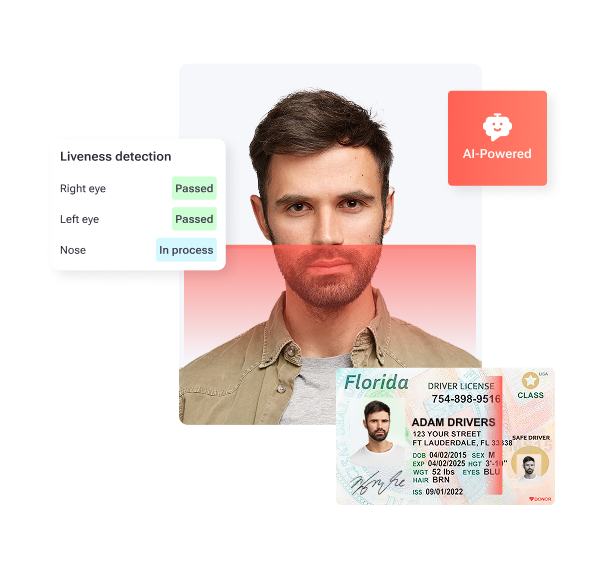
Identity fraud is accelerating across Florida’s condo and HOA communities. Traditional document-upload screening cannot reliably detect synthetic identities, stolen IDs, or impersonation attempts. Many associations now rely on biometric verification that embeds AI-powered liveness detection, government ID authentication, and facial biometric matching directly into screening workflows.

Delays between lease signing and key handoff frequently reach 7–10 days in manual workflows because background checks take approximately three days, lease signing drags, and inspections are not coordinated. For CAMs managing high-volume communities, this pattern creates cascading bottlenecks during peak seasons.
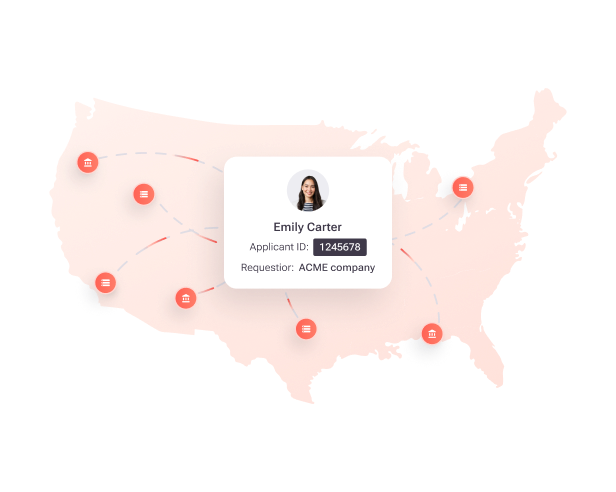
Beyond timing issues, geographic complexity adds another layer of difficulty. Florida’s 67 independent county court systems require screening workflows to adapt to different access methods, including centralized electronic systems and in-person or paper-based requests, which creates inconsistent processing timelines and data availability that complicate multi-jurisdictional screening. A vendor without Florida-specific infrastructure amplifies this problem instead of solving it.
For boards, governance risk also remains significant. Common pitfalls in Central Florida HOA and condo rental screening include applying overly broad or inconsistent criminal-history screening that risks fair-housing disparate-impact claims and failing to issue FCRA adverse-action notices when consumer reports drive denials.
Core Compliance Duties for Florida Associations
Florida associations must satisfy requirements across multiple frameworks at the same time. The following obligations apply to any screening program in 2026.
- FCRA disclosure and consent: A standalone written disclosure and signed authorization must precede any consumer report pull.
- Adverse action workflow: Pre-adverse and final adverse action notices are mandatory when a report contributes to a denial.
- Permissible purpose documentation: The association must be able to demonstrate a legitimate, documented reason for each report pulled.
- Data redaction: Florida law requires associations to redact certain sensitive personal information before producing records for member inspection under Sections 720.303(5) and 718.111(12)(b), Florida Statutes.
- Criminal history individualization: HUD guidance requires associations to use narrowly tailored, individualized assessments tied to legitimate safety interests when evaluating criminal history in tenant reports.
- Fee caps: Under Florida Statutes § 718.112(2)(k), condominium associations may charge lease approval fees only if authorized in governing documents and capped at $150 per applicant, subject to CPI adjustments.
- Record retention: Official records, including screening documentation, must be maintained for at least 7 years.
- Miya’s Law: Criminal and sex offender registry checks across all 50 states are mandatory for applicable Florida properties.
Operational Pain Points in Florida Resident Screening
CAMs and boards across Florida report the same operational failures when they rely on manual or generic screening processes.
- Fragmented lease records: Missing or outdated lease copies, manual expiration tracking, and disconnected spreadsheets create operational blind spots and compliance risk tied to incomplete records.
- Manual follow-ups: Verification of identity and income in manual screening processes often occurs through multiple disconnected vendors, which creates integration gaps and compliance risks.
- Inconsistent 55+ documentation: Age-restricted communities that rely on email, PDFs, and manual follow-ups accumulate inconsistent records that create exposure during audits or disputes.
- Approval bottlenecks: Applications stuck in email chains waiting for board review delay move-ins, reduce revenue, and frustrate applicants and realtors.
- Identity fraud exposure: Document-only screening cannot confirm physical presence or detect synthetic identities.
- County-level complexity: Florida background screening processes face operational complexity from county-level variations across all 67 counties in record access protocols, processing timelines, data completeness, fee structures, and verification methods.
Emerging Best Practices in 2026 Screening Programs
The most operationally advanced Florida associations in 2026 rely on three converging practices.
Workflow automation replaces paper applications, manual document review, and email-based approvals with end-to-end digital platforms. One Florida-based management company that switched to TenantEvaluation freed up 50 hours per day for their team, cut processing time by 50%, and achieved $240,000 in annual savings.

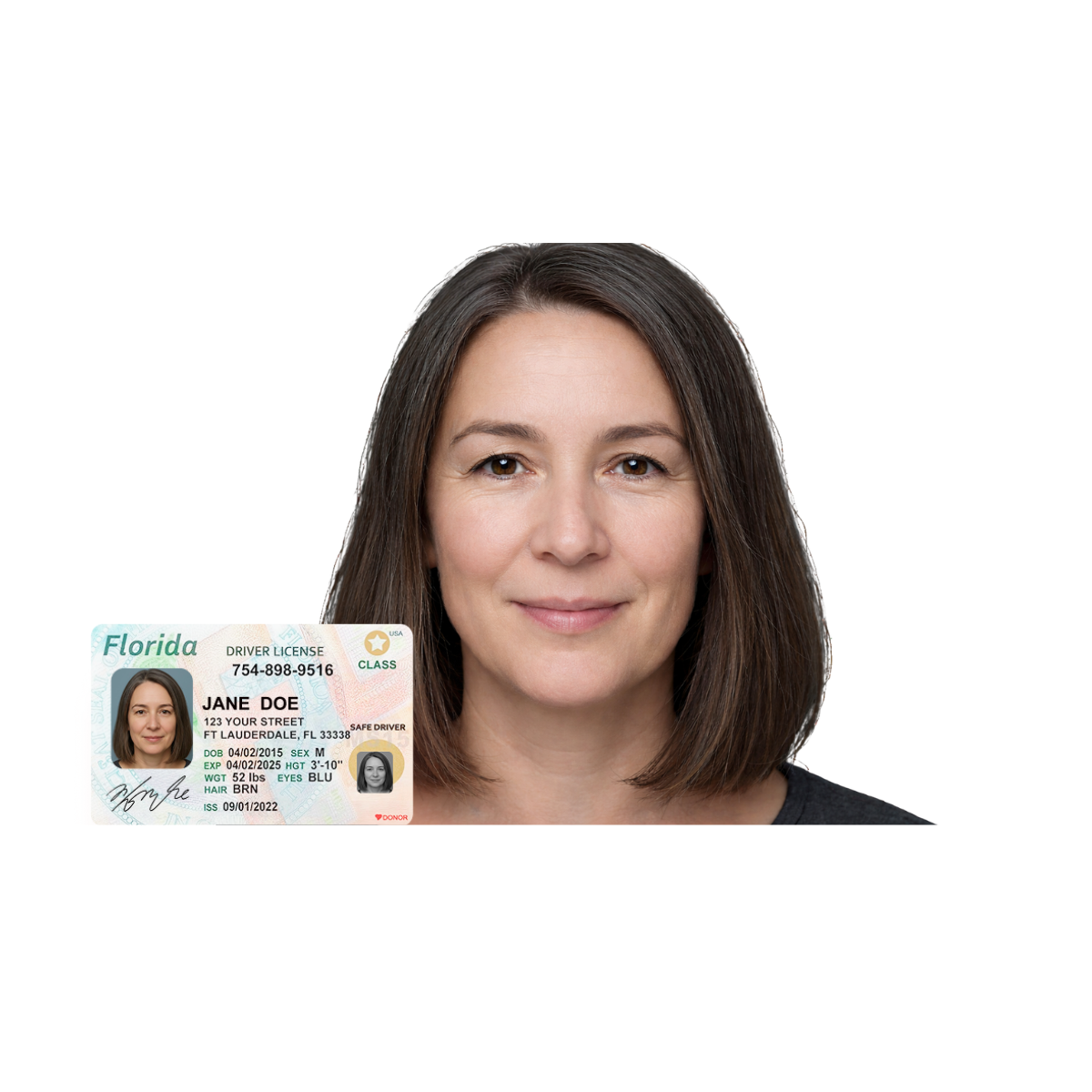
Biometric identity verification moves communities from document-based review to confirmed physical identity. AI-powered liveness detection, government ID authentication, and facial biometric matching now represent the standard for high-density and gated communities that manage fraud risk.
Revenue-sharing screening models convert application processing from a cost center into a compliant income stream. Renter-pay models shift the entire screening cost to the applicant, resulting in $0 landlord cost per report while still delivering professional-tier coverage and maintaining FCRA compliance. TenantEvaluation’s revenue-sharing model deducts its service fee from the collected application fee and rebates the remainder to the association, which has generated $150M for communities to date.
Six-Point Framework for Evaluating Vendors
Florida CAMs and boards can use six criteria when they evaluate background check vendors.
- Compliance readiness: The platform should automate FCRA disclosure, consent, adverse action, and audit trails natively instead of relying on manual staff steps.
- Board transparency: The vendor should provide a dedicated board review and voting dashboard rather than routing approvals through email.
- Time savings: The vendor should document reductions in processing time and staff hours per application cycle.
- Scalability: The platform should handle high-volume seasons and multi-community portfolios without additional headcount.
- Integration depth: The platform should connect application intake, identity verification, background screening, board approval, and lease tracking in one ecosystem instead of requiring multiple third-party tools.
- Total cost of ownership: The pricing model should clarify whether it relies on upfront subscription fees or a revenue-sharing structure that keeps the platform cost-neutral or revenue-positive.
Vendor Comparison for Florida Community Associations
The table below compares TenantEvaluation against ScreeningLink, Verify Screening Solutions, and generic screening platforms across the six evaluation criteria. All data points come from publicly available vendor information and company-reported figures.
| Criterion | TenantEvaluation | ScreeningLink / Verify Screening Solutions | Generic Platforms (AppFolio, RentSpree, etc.) |
|---|---|---|---|
| FCRA compliance design | FCRA-first foundation, automated adverse action, permissible purpose controls, built-in audit trails, direct TransUnion and Equifax reseller | ScreeningLink offers HOA-focused screening, while Verify Screening Solutions uses the TazWorks platform, which is not primarily designed for tenant screening | FCRA compliance varies, often requires manual adverse action steps by staff, and is not designed for community association permissible purpose workflows |
| Board transparency | Dedicated board voting dashboard with real-time application status, AI-generated summaries, and timestamped audit trail via QuickApprove | No dedicated board dashboard reported, with approvals typically managed outside the platform | No board-specific voting workflow, with approvals managed via email or external tools |
| Processing time | 5–10 minutes with up to 70% reduction in approval cycle time | Processing timelines not publicly specified for HOA workflows | Multi-day delays from lease signing to key handoff are common in manual workflows |
| Identity verification | Native biometric verification via IDVerify with government ID validation, AI liveness detection, and facial biometric matching, without an external portal | Identity verification not reported as a native biometric feature | Typically document-upload only, with no biometric liveness detection |
| Lease tracking | Centralized, real-time lease visibility and lifecycle control from application to occupancy, audit-ready digital records, and automated document collection | Lease tracking not reported as a platform feature | Lease management varies and typically remains separate from the screening workflow |
| Pricing model | Revenue-sharing model (see best practices section), usually $0 net cost or revenue-positive for associations | Pricing model not publicly detailed | Background check costs range from $25 for basic credit-only to $100+ for comprehensive screening, and platforms like AppFolio and RealPage charge monthly subscriptions |
TenantEvaluation is the only platform in this comparison that combines FCRA-first design, a native board voting dashboard, biometric identity verification, 55+ Communities Verification for age-restricted HOAs and condos, and centralized lease tracking inside one connected ecosystem built exclusively for Florida community associations.
TenantEvaluation also differentiates on data sourcing. As a direct reseller of TransUnion and Equifax data accessed under strict bureau rules with regular compliance audits, TenantEvaluation eliminates the gray-market data risk that generic platforms introduce. Community associations stay protected from the liability exposure that comes with offshore or third-party-scraped data sources.
Compare these features side-by-side with your current process in a live demo
Frequently Asked Questions
Can an HOA require a background check in Florida?
Florida HOAs and condominium associations may require background checks as a condition of rental or purchase approval when the requirement appears in the association’s governing documents. The screening process must comply with the FCRA, which requires a standalone written disclosure, signed applicant authorization, and a formal adverse action process if the report contributes to a denial. Criminal history screening policies must also be narrowly tailored to avoid disparate impact liability under Florida’s Fair Housing Act. Blanket exclusions based on criminal history carry legal risk regardless of the 2026 federal regulatory changes at the HUD level.
How much does HOA background screening cost in Florida?
Costs vary significantly by model and vendor. Basic credit-only reports often start around $25, while comprehensive screening packages that include criminal history, eviction records, income verification, and identity checks can reach $100 or more per applicant. Some Florida HOAs have implemented fees as high as $200 per person plus separate administrative fees, though, as noted in the compliance section above, Florida caps condo lease approval fees at $150 per applicant when authorized by governing documents. TenantEvaluation operates on a pay-per-application, revenue-sharing model in which the service fee is deducted from the collected application fee and the remainder is rebated to the association, which keeps the platform cost-neutral or revenue-positive for most communities.
What is the difference between FCRA compliance and general data privacy compliance for Florida associations?
The FCRA specifically governs the use of consumer reports such as credit, criminal, eviction, and similar data in screening decisions. It requires permissible purpose documentation, written consent, and adverse action notices. Florida’s data privacy obligations under FIPA and the Florida Digital Bill of Rights apply more broadly to how personal information is collected, stored, and protected. For community associations, both frameworks apply at the same time. FCRA compliance governs the screening decision workflow, while FIPA-aligned data security practices govern how applicant data, including Social Security numbers, banking information, and medical records, is stored, redacted, and protected. Florida law also requires associations to redact sensitive personal information before producing records for member inspection under Sections 720.303(5) and 718.111(12)(b), Florida Statutes.
What is Miya’s Law and how does it affect Florida community associations?
Miya’s Law, passed in response to the 2021 murder of a college student by an apartment maintenance worker, mandates that Florida landlords and property managers conduct in-depth background checks on applicants that include criminal records checks and sex offender registry checks across all 50 states and the District of Columbia. The law applies to property management companies and landlords of apartment complexes with both transient and non-transient units. For community associations using manual or basic screening tools, Miya’s Law creates a compliance gap if the vendor’s criminal search does not cover all 50 states and the D.C. registry. TenantEvaluation’s SafeCheck+ solution includes nationwide and global criminal records checks, FBI Most Wanted, and sex offender registry searches as part of its comprehensive screening suite.
How does TenantEvaluation handle 55+ community screening requirements?
TenantEvaluation includes a built-in 55+ Communities Verification capability designed specifically for Florida condos and HOAs that manage age-restricted communities. It standardizes how age-restricted application requirements are handled across applications, reduces manual work, improves documentation consistency, and strengthens internal operational controls. This capability replaces fragmented manual processes that rely heavily on emails, PDFs, and follow-ups with a more structured and scalable workflow for CAMs and boards. The feature supports documentation and consistency for internal operational control and does not replace legal guidance on Housing for Older Persons Act (HOPA) requirements.
Learn more about TenantEvaluation’s 55+ Communities Verification.
Conclusion and Next Steps for Your Community
Florida community associations in 2026 operate in a screening environment defined by layered compliance obligations, rising identity fraud, and operational complexity that generic platforms were not built to address. The right vendor delivers FCRA-first design, automated adverse action, biometric identity verification, board-level transparency, and centralized lease lifecycle control inside one platform built specifically for community associations.
TenantEvaluation meets every criterion in this evaluation framework. With 5,000+ communities served, 100,000+ applications processed annually, a 4.8/5 Google rating, and $150M generated for communities, it is the only platform that combines QuickApprove accelerated board approvals, IDVerify+ biometric screening, 55+ Communities Verification, and centralized Lease Tracking in a single FCRA-compliant ecosystem built exclusively for Florida HOAs and condos.
