Written by: Luis Teran, Co-founder, CEO, TenantEvaluation | Last updated: August 6, 2026
Key Takeaways
- Identity verification in 2026 focuses on biometric liveness detection and FCRA-aligned workflows to counter synthetic identity fraud and satisfy stricter regulations.
- Enterprise generalists like Persona, Jumio, and 1Kosmos often rely on external redirects or manual FCRA layers, which raises friction and compliance risk for regulated verticals.
- Specialized platforms such as TenantEvaluation IDVerify+ provide native integration, direct credit bureau access, and automated adverse action workflows inside the screening ecosystem.
- Community associations, HOAs, and property managers gain the most value from purpose-built tools that pair identity verification with board-ready approvals, lease tracking, and Florida-specific compliance.
- Ready to upgrade your screening workflow? Explore how TenantEvaluation improves identity verification for community associations.
Comparison Table: 1Kosmos Alternatives in 2026
The table below compares ten leading identity verification vendors across biometric capabilities, FCRA readiness, integration model, and ideal vertical fit. Pay attention to how only TenantEvaluation IDVerify+ combines native FCRA workflows with in-platform screening for community associations.
| Vendor | Biometric / Liveness | FCRA Support | Native Integration | Best Vertical Fit |
|---|---|---|---|---|
| TenantEvaluation IDVerify+ | AI liveness detection, facial landmark mapping, selfie-to-ID biometric comparison | FCRA-first design, direct TransUnion & Equifax reseller, built-in adverse action workflows | Fully native inside TenantEvaluation screening, no external portals | Florida community associations, HOAs, condos, 55+ communities |
| Persona | Liveness detection, document OCR, database checks | Configurable, not FCRA-native | API-first, requires developer integration | Fintech, marketplace, consumer apps |
| Jumio | 3D liveness, NFC chip reading, biometric matching | Partial, compliance layer requires custom build | SDK and API, external redirect common | Enterprise financial services, banking |
| Veriff | Video-based liveness, AI document analysis | Not FCRA-native, EU-focused compliance | API and widget, external session flow | Global fintech, gig economy, gaming |
| Onfido | Motion-based liveness, biometric facial comparison | Configurable, not purpose-built for FCRA | SDK, external portal redirect | Financial services, HR onboarding |
| Socure | Predictive AI identity scoring, passive liveness signals | Partial FCRA alignment, requires configuration | API, enterprise integration required | Banking, insurance, government |
| Mitek | Passive and active liveness, document forensics | Partial, compliance configuration required | SDK and API | Financial services, mortgage |
| Stripe Identity | Selfie liveness, government ID capture | Not FCRA-aligned | Native inside Stripe ecosystem only | E-commerce, SaaS, marketplace |
| Acuant (HID Global) | Active liveness, document authentication | Partial, requires custom compliance layer | SDK and API, external flow | Government, border control, healthcare |
| 1Kosmos | Distributed identity, biometric binding, liveness | Not FCRA-native, enterprise IAM focus | Enterprise SSO and IAM integration | Enterprise workforce, cybersecurity |
Compare IDVerify+ side-by-side with your current verification process in a live demo.
Best 1Kosmos Alternative for Fintech KYC
Fintech platforms running KYC workflows in 2026 focus on liveness accuracy, document speed, API flexibility, and configurable compliance rules. Persona has become the most frequently cited generalist alternative in this space and offers a no-code workflow builder that lets compliance teams configure identity checks, watchlist screening, and document verification without deep engineering support.
Persona’s strength lies in its configurability. Product and compliance leaders can build branching verification flows that adapt based on user risk signals, jurisdiction, or product tier. For fintechs operating across multiple states or product lines, this flexibility shortens time-to-compliance for new markets. However, Persona is not FCRA-native. Teams building consumer-facing credit or housing products must layer FCRA controls manually, which introduces implementation friction and audit risk.
Beyond Persona, two other enterprise generalists, Jumio and Veriff, occupy similar territory for fintech KYC and share the same FCRA gap. Jumio’s 3D liveness and NFC chip reading capabilities rank among the most technically advanced in the generalist category. Veriff’s video-based liveness sessions create strong audit trails for high-risk onboarding. Both rely on external redirect flows, so the verification session leaves the host platform, which increases drop-off rates in mobile-first fintech applications.
Fintechs that also operate in regulated housing or community association verticals still lack FCRA-aligned adverse action workflows out of the box with these tools. This gap creates a clear opening for specialized platforms.
- Integration friction: Persona and Jumio require developer resources for initial setup, and ongoing compliance configuration remains manual and version-dependent.
- Pricing model: Persona and Jumio use volume-based pricing with enterprise contracts, so costs scale with verification volume and feature tier.
Alternatives with Strong Liveness Detection
Liveness detection now serves as the primary technical differentiator among identity verification vendors in 2026. Presentation attack fraud using printed photos, video replays, 3D masks, and deepfake faces drives this focus. Vendors respond with two broad approaches: active liveness, which prompts users to perform gestures or movements, and passive liveness, which analyzes a single selfie or short video clip with AI models trained on attack patterns.
Jumio’s 3D liveness engine uses depth-sensing signals and motion analysis to detect spoofing without explicit user gestures, which reduces friction while preserving accuracy. Veriff’s video-based sessions capture multiple frames across a short recording window, giving its AI model more signal to distinguish live presence from replay attacks. Onfido’s motion-based liveness sits between active and passive approaches and requests a brief head movement that is difficult to replicate with static media.
TenantEvaluation’s IDVerify+ uses AI-powered liveness detection combined with facial landmark recognition and selfie-to-ID biometric comparison. The key difference from enterprise generalists is operational context. IDVerify+ runs natively inside the TenantEvaluation screening workflow, so liveness confirmation occurs in the same session as document collection, background check authorization, and FCRA consent. For community associations where applicant trust and workflow continuity matter, this integration pattern reduces abandonment and preserves the audit chain.
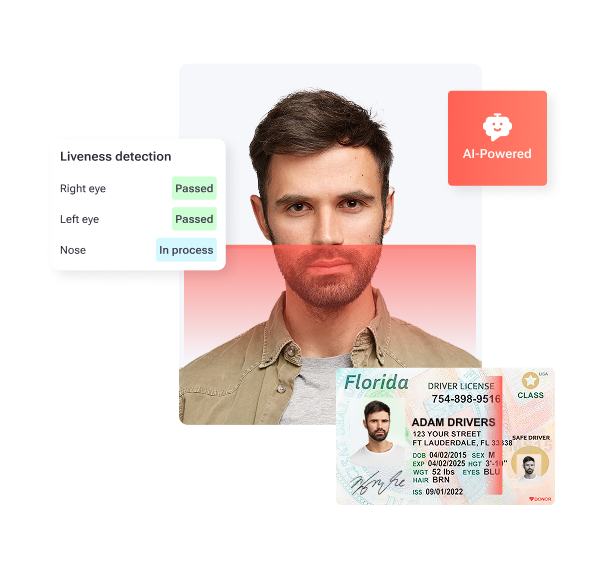
Socure takes a different path and uses passive liveness signals derived from device behavior, network context, and behavioral biometrics instead of camera-based analysis. This approach works well for high-volume digital onboarding when camera access is inconsistent. It provides less direct physical presence confirmation than camera-based liveness, which matters for property access decisions.
- Integration friction: Enterprise liveness vendors such as Jumio, Veriff, and Onfido require SDK embedding or external redirects, while passive liveness tools like Socure require API integration and model tuning for vertical-specific risk thresholds.
- Pricing model: Most vendors charge per verification with volume discounts and SLAs, while specialized tools like IDVerify+ are priced within the broader screening platform.
1Kosmos vs. Persona for Compliance Workflows
1Kosmos is an enterprise identity platform built primarily for workforce authentication and decentralized identity binding. Its core architecture uses blockchain-anchored credential storage and biometric binding to create portable, user-controlled identity records. This design fits enterprise IAM, zero-trust security environments, and workforce onboarding where the identity subject is an employee and the relying party is an internal IT system. It does not target consumer-facing KYC, FCRA-regulated screening, or community association onboarding.
Persona, by contrast, is designed for consumer identity verification at scale. Its workflow builder supports document verification, database checks, selfie liveness, and watchlist screening in configurable sequences. Compliance teams can define risk thresholds, fallback flows, and manual review queues without writing code. For fintech and marketplace platforms, Persona’s flexibility offers a clear advantage over 1Kosmos’s enterprise IAM architecture.
The compliance workflow gap between both platforms becomes clear in regulated consumer verticals. Neither 1Kosmos nor Persona provides native FCRA adverse action workflows, permissible purpose controls, or direct credit bureau data access. Organizations in property management, community associations, or consumer lending must build these controls separately, which adds engineering cost, compliance risk, and audit complexity. TenantEvaluation’s IDVerify+ addresses this directly by embedding identity verification inside a platform with FCRA-first design, direct TransUnion and Equifax reseller relationships, automated adverse action workflows, and built-in audit trails.
Compliance and risk leaders evaluating 1Kosmos replacements in 2026 should align the decision with their primary use case. Enterprise workforce authentication favors 1Kosmos, consumer KYC at scale favors Persona, and regulated-vertical screening with FCRA obligations benefits most from a purpose-built compliance platform.
- Integration friction: 1Kosmos requires enterprise SSO and IAM infrastructure, Persona requires API integration and manual FCRA layer construction, and TenantEvaluation IDVerify+ runs natively inside an existing FCRA-compliant screening workflow.
- Pricing model: 1Kosmos uses enterprise licensing, Persona uses volume-based verification pricing, and TenantEvaluation uses a pay-per-application model with no upfront fees.
Best for Regulated Verticals: Property Management and Community Associations
No enterprise generalist in the 2026 identity verification market, including Persona, Jumio, Veriff, and 1Kosmos, is built for the specific compliance requirements of Florida community associations, HOAs, and condominiums. These organizations operate under FCRA obligations, Florida-specific governing documents, and age-restricted community requirements under federal housing law. Generic verification tools demand significant custom development to meet these requirements and still do not provide the operational infrastructure such as board voting dashboards, adverse action workflows, lease tracking, or payment collection that community association managers need alongside identity verification.
TenantEvaluation is built specifically for this vertical, so IDVerify+ operates natively inside the TenantEvaluation screening workflow rather than as a separate tool. Because verification runs in the same session as background check authorization, document collection, and FCRA consent, biometric identity confirmation, including government ID validation, AI-powered liveness detection, and facial landmark biometric matching, happens without external portal redirects or separate logins. This structure removes workflow disruption for both the applicant and the Community Association Manager.
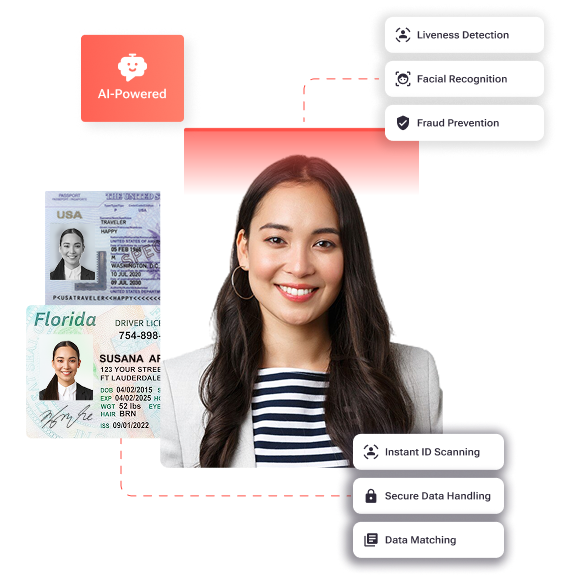
As a direct bureau reseller, TenantEvaluation accesses TransUnion and Equifax data under strict bureau rules with regular compliance reviews, not through third-party aggregators. This direct relationship improves data quality and removes the vendor-chain risk common in multi-layer integrations. For Florida condos and HOAs managing age-restricted communities, 55+ Communities Verification standardizes how age-restricted application requirements are handled across applications, which reduces manual work and improves documentation consistency. QuickApprove accelerates resident approvals with a board-ready approval process, real-time application tracking, and automated communication support while preserving control, compliance, and visibility.

Community operations teams managing lease activity can use Lease Tracking to connect resident onboarding, unit data, approvals, and lease documentation in one centralized, real-time, audit-ready workflow. TEpayments by Zinc collects application fees and deposits within the onboarding process, sending payments directly from the applicant to the Association’s designated account so TenantEvaluation never holds the funds.
See native FCRA compliance in action and watch IDVerify+ run inside a live screening workflow.
How to Choose the Right 1Kosmos Alternative in 2026
- Define your primary use case. Enterprise workforce authentication and zero-trust IAM favor 1Kosmos or similar distributed identity platforms. Consumer KYC at scale for fintech or marketplace products favors Persona, Jumio, or Veriff. FCRA-regulated screening for community associations, HOAs, or condominiums requires a purpose-built compliance platform.
- Assess your FCRA obligations. If your platform touches consumer credit data, background checks, or housing decisions, FCRA compliance remains mandatory. Confirm whether the vendor provides native adverse action workflows, permissible purpose controls, and direct bureau data access or whether you must build these layers yourself.
- Evaluate liveness detection architecture. Decide whether active liveness, passive liveness, or video-based liveness best fits your applicant population and fraud risk profile. For in-person community access decisions, camera-based liveness with biometric matching delivers stronger physical presence confirmation than passive behavioral signals.
- Audit integration friction. External portal redirects increase applicant drop-off and break audit chains. Prioritize vendors whose verification runs natively inside your existing workflow, especially if your platform already handles document collection, background checks, and payment collection.
- Match vertical specialization to risk profile. Enterprise generalists serve broad markets but require significant custom development for regulated verticals. Specialized platforms like TenantEvaluation include vertical-specific compliance infrastructure, board-ready approval workflows, and Florida-specific configuration out of the box, which shortens time-to-compliance and reduces legal exposure for community associations and property management companies.
- Evaluate pricing model alignment. Volume-based enterprise contracts favor high-throughput fintech platforms. Pay-per-application models with no upfront fees, such as TenantEvaluation’s, align cost directly with community association activity and remove subscription overhead for smaller portfolios.
Frequently Asked Questions
What makes TenantEvaluation IDVerify+ different from enterprise identity verification tools like Jumio or Persona?
IDVerify+ is built natively inside the TenantEvaluation screening platform, so biometric identity verification, including government ID validation, AI-powered liveness detection, and facial landmark biometric matching, runs in the same workflow as background check authorization, document collection, and FCRA consent. Enterprise tools like Jumio and Persona rely on external portal redirects or separate API integrations, which break the audit chain and increase applicant drop-off. IDVerify+ also operates within a platform that carries FCRA-first design, direct TransUnion and Equifax reseller relationships, and automated adverse action workflows, which enterprise generalists do not provide out of the box for community association use cases.
Is TenantEvaluation suitable for fintech KYC workflows, or is it exclusively for property management?
TenantEvaluation is purpose-built for community associations, HOAs, condominiums, and property management companies in Florida. Its compliance infrastructure, including FCRA-first design, direct credit bureau reseller status, adverse action workflows, and board voting dashboards, is tailored to regulated residential screening rather than generic fintech KYC. Fintech platforms evaluating 1Kosmos alternatives for consumer KYC at scale will find more flexibility in configurable generalist tools like Persona or Jumio. TenantEvaluation is the strongest choice when the use case involves community association screening, Florida-specific governing document compliance, age-restricted community requirements, or HOA and condo onboarding workflows.
How does IDVerify+ handle liveness detection, and what fraud types does it address?
IDVerify+ confirms physical presence by analyzing the applicant’s live selfie for spoofing indicators, then matching facial landmarks from that selfie against the government ID photo. This multi-layer approach addresses impersonation, stolen IDs, and synthetic identity fraud, which represent the primary fraud vectors in community association screening. The verification runs natively inside TenantEvaluation, so results, including ID authenticity confirmation, liveness status, and biometric match outcome, appear directly within the screening report visible to the Community Association Manager.
What does FCRA-first design mean in practice for community associations using TenantEvaluation?
FCRA-first design means Fair Credit Reporting Act compliance sits at the core of the platform’s architecture rather than as a configuration layer. In practice, this includes strict permissible purpose controls that govern when and how consumer data is accessed, automated adverse action workflows that generate required notices when an application is declined based on screening data, direct reseller relationships with TransUnion and Equifax that ensure data is accessed under bureau rules instead of through third-party aggregators, and built-in audit trails for every application. For community associations, this structure reduces legal exposure, simplifies compliance documentation, and removes the need to build FCRA controls separately from the screening workflow.
Can TenantEvaluation support large property management companies with multiple communities, or is it designed for smaller associations?
TenantEvaluation supports community associations ranging from small self-managed communities to large enterprise-level property management companies with extensive portfolios. The platform processes approximately 100,000 applications per year across more than 5,000 communities, and its client base includes large management companies such as FirstService Residential, RealManage, Castle Group, and Associa. Features like IDVerify+, QuickApprove, 55+ Communities Verification, Lease Tracking, and TEpayments by Zinc are configurable per community or per property portfolio, which lets enterprise management companies standardize workflows across diverse community types while adapting to each association’s governing documents and risk profile.
