Written by: Luis Teran, Co-founder, CEO, TenantEvaluation | Last updated: August 12, 2026
Key Takeaways for Florida Associations
- Florida community associations must follow FCRA rules and board governance, so generic landlord tools create compliance and operational gaps.
- Identity fraud is rising sharply, with 93%+ of rental applications showing some form of falsified documentation in recent surveys.
- Automated platforms cut intake time to 5–10 minutes and deliver background checks in 24–72 hours, versus 5–10 day manual cycles.
- Board-ready workflows, biometric verification, 55+ handling, and centralized lease records are essential for defensible, efficient association screening.
- TenantEvaluation delivers these capabilities in one platform. Schedule a demo today to see how it streamlines tenant screening for Florida HOAs and CAMs.
The 2026 Landscape: Fraud Pressure and Biometric Screening for Florida Communities
Identity fraud is accelerating across residential communities. A 2024 NMHC/NAA survey found that 93.3% of owners, managers, and developers had experienced rental application fraud in the prior 12 months. That included 84.3% who encountered income documentation fraud and 70% who faced fraudulent identity information. Tenant referencing providers report that up to 94% of detected tenancy fraud cases involve falsified documents, most commonly bank statements and payslips. These numbers explain why biometric verification now matters for associations, not just large multifamily operators.
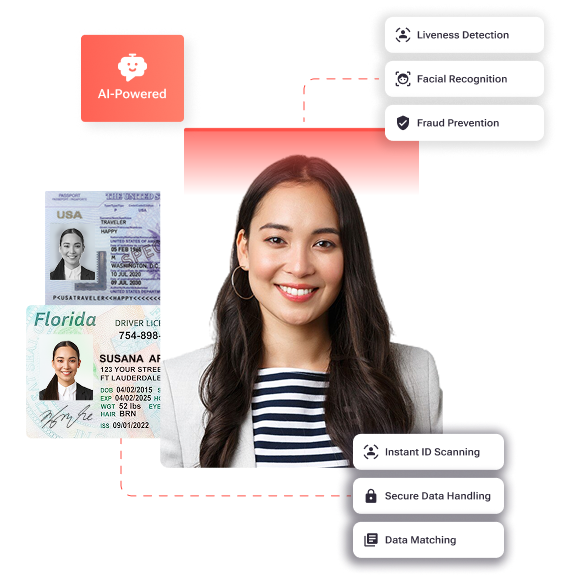
Regulation remains strict and stable. Florida’s state preemption under the Florida Residential Landlord and Tenant Act (Chapter 83) continues to bar local municipalities from enacting tenant-protection ordinances that exceed state law, which keeps screening policy uniform statewide. The FCRA’s individualized-assessment requirement for criminal history remains fully enforceable. Blanket bans on applicants with any criminal record can violate the federal Fair Housing Act if they disproportionately affect protected classes without demonstrating a clear business necessity.
Turnaround benchmarks in 2026 highlight the gap between automated and manual workflows. Most apartment background checks that include identity verification, criminal history, credit checks, and eviction records conclude within 24 to 72 hours when automated screening platforms are used. Some U.S. counties still require in-person courthouse runners for criminal searches, which can extend turnaround beyond 72 hours in FCRA-compliant workflows. TenantEvaluation’s application processing time of 5–10 minutes for the intake workflow, compared to the 5–10 day cycles common in manual processes, shows the operational advantage of a purpose-built automated platform.
How Tenant Screening Fits Daily CAM and Board Workflows
For a Community Association Manager (CAM), the screening process starts at intake. The CAM collects the application, checks document completeness, triggers background and credit checks, and routes the file to the board. Each handoff creates a potential bottleneck. Incomplete applications require follow-up. Missing documents delay the background check order. Board members waiting on emailed PDFs slow the voting cycle. Record retention after approval often becomes an afterthought.
These bottlenecks disappear when a platform built for associations connects each stage. Intelligent form logic rejects incomplete submissions before they reach the CAM’s queue. Automated document collection gathers executed leases, government IDs, and required community-specific forms during the application itself. The board receives a structured review panel with summarized applicant data and a voting workflow, not an email chain. After approval, lease documentation sits in a centralized, searchable record connected to the unit and occupancy data.

Compliance, Risk, and Governance Requirements for Florida Associations
Permissible purpose is the threshold requirement. A community association must have a legitimate reason to pull a consumer report, and the applicant must provide written consent before any report is ordered. Associations must apply objective, consistently written screening criteria to every applicant because inconsistent application can trigger Fair Housing exposure even when criteria appear neutral.
Adverse-action compliance is the most commonly violated FCRA requirement. Willful failure to send a compliant Adverse Action Notice exposes associations to FCRA liability, including statutory damages of $100–$1,000 per incident plus attorney fees. Audit trails, meaning timestamped records of every application action, board vote, and document exchange, form the primary defense in a dispute or regulatory review. Data handling must include auto-redaction of sensitive personal information and encryption at rest and in transit.
Common Screening Challenges for Florida HOAs and Condos
Manual screening processes create compounding operational problems for Florida associations:
- Incomplete applications require repeated follow-up with applicants, realtors, and owners, which consumes staff hours without advancing the file.
- Document review relies on manual inspection of IDs and leases, with no automated validation of authenticity or completeness.
- Fragmented lease records stored across folders, inboxes, and spreadsheets create occupancy blind spots and compliance risk tied to missing documentation.
- Payment collection separated from onboarding forces managers to chase confirmations by email and phone, with fees tracked in disconnected systems.
- Board voting conducted by email lacks a structured audit trail and creates delays during high-volume application seasons.
Best Practices for Association Tenant Screening in 2026
Associations that reduce approval cycles and liability exposure follow a consistent set of practices that work together to control risk and speed decisions.
- Use standardized, written screening criteria applied uniformly to every applicant before applications open.
- Embed biometric identity verification in the application workflow to move from document-upload review to confirmed physical presence and ID authenticity, which directly addresses the high fraud rates noted earlier.
- Run board review and voting inside a structured dashboard with timestamped actions and summarized applicant reports.
- Maintain centralized lease records connected to the onboarding workflow, with real-time status visibility from application through occupancy.
- Trigger automated adverse-action notice generation from denial decisions, using built-in templates that satisfy FCRA requirements.
- Integrate payment collection into the application process, with funds flowing directly to the association’s designated account.
Evaluation Framework for Comparing Screening Services
CAMs and boards can use a simple framework to decide whether a screening platform fits association needs from both an operational and legal standpoint.
- Compliance readiness: Confirm that the provider is a licensed CRA and direct credit bureau reseller and that it includes automated adverse-action workflows and built-in audit trails.
- Operational efficiency: Check whether the platform automates document collection, form logic, and communication, or whether it requires manual intervention at each stage.
- Board governance support: Look for a dedicated board review and voting dashboard instead of board involvement that happens outside the platform.
- Biometric verification: Verify that the platform includes government ID validation, liveness detection, and biometric facial matching natively, without redirecting to an external portal.
- 55+ community handling: Confirm that the platform standardizes age-restricted application requirements and documentation rather than leaving that process manual.
- Lease lifecycle tracking: Ensure that the platform connects approvals to centralized, real-time lease records with unit-level occupancy visibility.
- Revenue model: Review whether the platform generates revenue for the association through a compliant fee structure or simply adds cost.
2026 Comparison of Fast Background Check Services for Community Associations
The table below compares services on criteria specific to community association operations. Each cell describes whether the platform includes the capability and, when relevant, how it works in practice. Look for “Yes” entries that include specific feature names or workflow details, because these indicate native, integrated capabilities. “No” entries indicate that the capability is absent or not documented. Generic landlord platforms appear for reference, and capabilities reflect publicly documented features as of August 2026. TenantEvaluation capabilities are based on platform features described in this guide.
| Evaluation Criterion | TenantEvaluation | TransUnion SmartMove / TurboTenant | ApplyCheck / Verify Screening Solutions |
|---|---|---|---|
| FCRA-compliant CRA & direct bureau reseller | Yes, direct TransUnion and Equifax reseller with strict permissible-purpose controls and automated adverse-action workflows | Yes, FCRA-compliant reports, designed for individual landlords, not association governance structures | Yes, background checks via TazWorks platform. Applicant-supplied or non-CRA reports cannot lawfully support HOA approval or denial decisions |
| Board voting dashboard | Yes, dedicated board review panel with AI-generated applicant summaries, voting workflow, and timestamped audit trail via QuickApprove | No, no board governance workflow, designed for individual landlord decisions | No, background check delivery only, no board workflow documented |
| Biometric identity verification | Yes, IDVerify includes government ID validation, AI liveness detection, and biometric selfie-to-ID comparison natively inside the platform | No, identity verification is document-based, with no biometric liveness detection documented | No, document-based review, with no biometric verification layer documented |
| 55+ community age-verification workflow | Yes, 55+ Communities Verification standardizes application handling, reduces manual work, and supports documentation consistency for Florida Condos and HOAs | No, no 55+ or HOPA-specific workflow documented | No, no 55+ workflow documented |
| Centralized lease tracking | Yes, real-time lease status (active, pending, expired, or missing), automated document collection, unit-level tracking, and audit-ready digital records connected to onboarding | No, lease management is separate from screening workflow | No, screening-only platform, with no lease lifecycle tracking documented |
| Revenue-sharing model | Yes, pay-per-application with revenue rebated to the association, no upfront subscription fees, and $150M generated for communities to date | No, fee paid by applicant or landlord, with no association revenue-sharing model | No, fixed pricing, with no revenue-sharing model documented |
Request a live demo to see TenantEvaluation’s board voting dashboard, biometric verification, and lease tracking in a single connected workflow built for Florida community associations.
What Is the Best Background Check for Tenants in Florida Community Associations?
The best background check service for Florida community associations operates as a licensed FCRA-compliant Consumer Reporting Agency, sources data directly from TransUnion and Equifax rather than third-party aggregators, and includes automated adverse-action notice generation. Florida associations also need a platform that supports board governance workflows, because the decision-making authority rests with the board, not an individual landlord. Only reports obtained from an FCRA-compliant CRA give the user permissible purpose, trigger applicant dispute rights, and support the two-step adverse-action process required when denying an applicant based on the report. TenantEvaluation meets all of these criteria and adds biometric identity verification, 55+ community handling, and lease lifecycle tracking, capabilities that generic landlord platforms do not provide.
What Kind of Background Checks Do HOAs Do on Tenants?
Florida HOAs and condominium associations typically conduct a multi-component screening review that includes:
- Credit report from a major bureau (TransUnion or Equifax), reviewed against the association’s minimum credit score criteria
- Nationwide and county-level criminal history search, with individualized assessment of offense type, recency, and rehabilitation as required under the Fair Housing Act
- Eviction history search through specialized databases
- Identity verification, increasingly through biometric methods that confirm physical presence and ID authenticity
- Income and employment verification against the association’s income-to-rent ratio requirements
- Reference verification from prior landlords
- Age documentation for 55+ communities, including government-issued photo ID, birth certificate, or passport, retained as part of HOPA compliance records
What Is the Fastest Way to Get a Background Check Done for Community Association Applications?
As noted earlier, automated platforms return most background check components within 24–72 hours for clean files in electronic-access jurisdictions. The fastest path for community association applications combines three elements. First, an automated platform removes manual document collection bottlenecks. Second, electronic court access for criminal searches avoids the courthouse-runner delays that can extend turnaround beyond 72 hours in some U.S. counties. Third, a board review workflow routes completed reports directly to a voting dashboard rather than an email chain.
TenantEvaluation’s application intake completes in 5–10 minutes, with background check components returning within that 24–72 hour window for clean files in electronic-access jurisdictions. The board voting dashboard inside QuickApprove removes the post-screening delay that most associations experience while waiting for board decisions.
Summary: Choosing the Right Screening Approach for Your Association
Generic landlord screening tools are designed for individual rental decisions, not for the governance, compliance, and operational complexity of Florida community associations. The structural gaps, including absent board voting workflows, no biometric verification, no 55+ documentation standardization, no lease lifecycle tracking, and no association revenue model, create liability and operational risk that accumulates over time.
The evaluation framework in this guide gives CAMs and boards a repeatable process for assessing any screening service against the criteria that matter for association operations. Those criteria include FCRA compliance architecture, board governance support, fraud prevention depth, 55+ handling, lease visibility, and financial alignment with the association’s interests.
TenantEvaluation is built specifically for community associations and management companies, with FCRA compliance as the foundation, not an afterthought. With 5,000+ communities served, 100,000+ applications processed annually, $150M generated for communities, and a 4.8/5 Google rating, the platform delivers fast background check services for community association tenant screening without trading speed for defensibility.
Schedule a demo today to evaluate TenantEvaluation’s end-to-end platform, including board voting, biometric verification, lease tracking, and integrated payments, built specifically for Florida community associations.
Frequently Asked Questions
Is TenantEvaluation FCRA-compliant for use by Florida HOAs and condominium associations?
TenantEvaluation offers FCRA-compliant tenant screening services. The platform includes automated adverse-action workflows, built-in audit trails for every application, strict permissible-purpose controls, and a clear separation between decision-making authority, which rests with the association, and data provision, which TenantEvaluation handles. This architecture gives community associations using TenantEvaluation the compliance footing required to lawfully support approval and denial decisions, a standard that generic landlord tools and non-CRA screening services cannot meet.
How does TenantEvaluation handle 55+ community age-verification requirements for Florida condos and HOAs?
TenantEvaluation’s 55+ Communities Verification is a built-in capability that standardizes how age-restricted application requirements are handled across applications. It reduces manual work, supports documentation consistency, and improves operational efficiency for Florida Condos and HOAs managing HOPA-related documentation obligations. Federal HOPA rules require 55+ communities to maintain at least 80% occupancy by units with one resident aged 55 or older, publish written policies, and conduct reliable age-verification surveys. TenantEvaluation’s capability supports the documentation and workflow standardization that these obligations require, without replacing legal guidance from the association’s counsel.
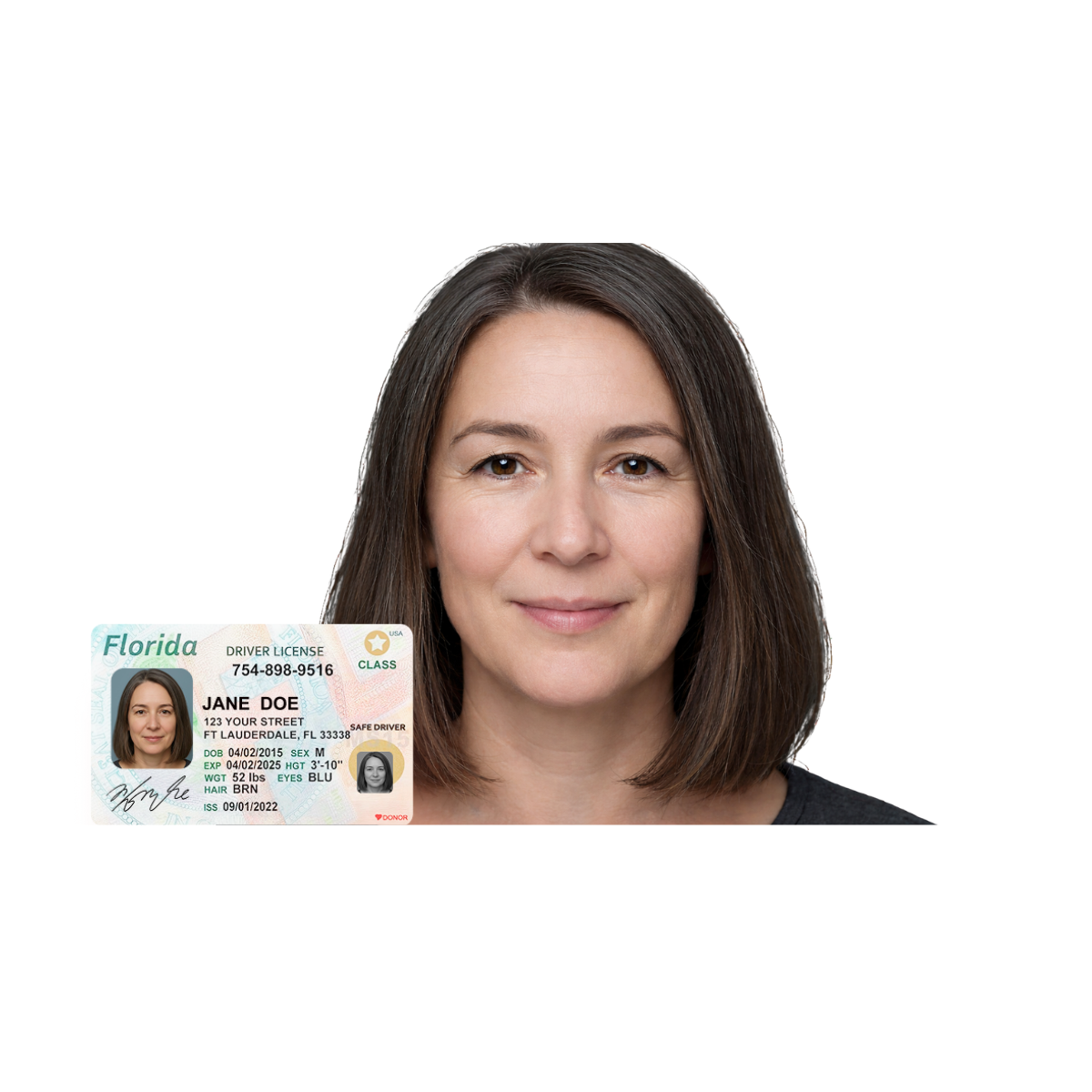
What makes TenantEvaluation’s biometric identity verification different from standard document review?
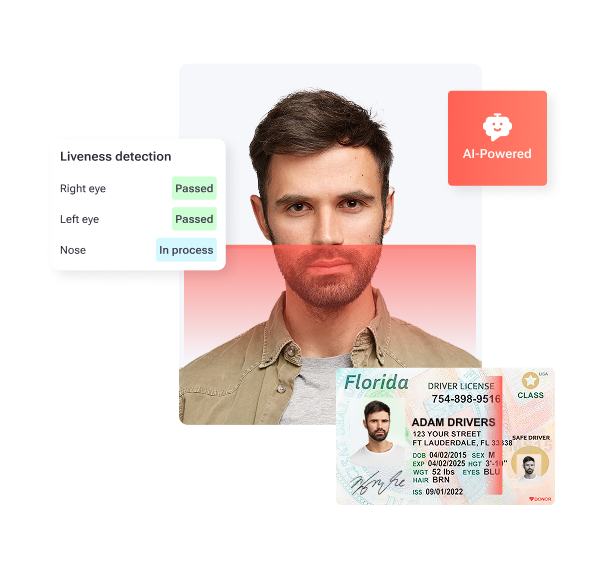
Traditional screening relies on applicants uploading copies of government-issued IDs, which cannot confirm physical presence or detect synthetic identities and impersonation attempts. TenantEvaluation’s IDVerify embeds automated KYC verification directly into the application workflow. It combines government ID authenticity validation, AI-powered liveness detection that confirms physical presence, facial landmark recognition, and biometric selfie-to-ID comparison. All verification runs natively inside TenantEvaluation, with no external portals or workflow disruption. CAMs see verification results embedded in the screening report, including ID authenticity confirmation, liveness status, and biometric match result. IDVerify can be enabled per community and configured per portfolio, which supports different risk profiles without a one-size-fits-all approach.
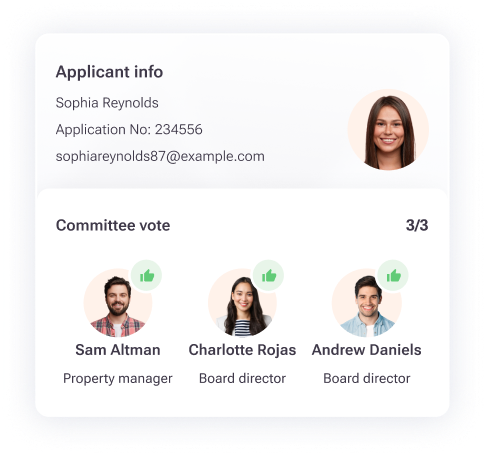
How does QuickApprove reduce approval delays for community association boards?
Many associations experience post-screening delays because board review happens outside the screening platform through email chains, PDF attachments, and manual follow-ups. QuickApprove is TenantEvaluation’s accelerated approval workflow that moves applications from submission to decision inside one connected platform. Board members access a dedicated review panel with AI-generated applicant summaries and a structured voting workflow. CAMs track application progress in real time, trigger automated communication support, and generate customized approval letters and personalized welcome packages without additional manual work. QuickApprove is designed for high-volume application seasons and communities with complex onboarding requirements, so it accelerates resident approvals while preserving board oversight, compliance, and visibility.
How does Lease Tracking inside TenantEvaluation improve operational control for property managers and boards?
Lease management in many community associations is fragmented across folders, inboxes, and spreadsheets, which creates occupancy blind spots and compliance risk tied to missing or outdated records. TenantEvaluation’s Lease Tracking connects resident onboarding, unit data, approvals, and lease documentation into one centralized, real-time workflow. CAMs and boards see real-time lease status, including active, pending, expired, or missing, for every unit. Automated lease document collection during onboarding, unit-level tracking tied to occupancy records, and a searchable digital history of leases and resident activity replace scattered email chains and manual expiration tracking. Audit-ready digital records give both managers and boards a clearer operational picture from application through occupancy.
