Written by: Luis Teran, Co-founder, CEO, TenantEvaluation
Key Takeaways
- FCRA compliance requires five distinct disclosures, including standalone consent, CFPB Summary of Rights, pre-adverse notice, final adverse action letter, and five-year audit-trail retention. Most Florida associations still manage these steps through fragmented email and spreadsheet processes.
- Manual workflows expose associations to willful-violation penalties of $100–$1,000 per applicant plus attorney fees, as illustrated by the July 2026 FTC enforcement action against RentGrow.
- The FCRA mandates a “reasonable” waiting period, commonly 5–7 business days, between pre-adverse and final adverse notices. The clock starts at confirmed applicant receipt and pauses automatically when a dispute is filed.
- A defensible audit trail must capture consent text version, timestamps, IP addresses, board votes, and immutable records that cannot be edited or deleted after creation.
- TenantEvaluation automates the entire 7-step FCRA workflow inside a single platform while keeping all approval authority with the association. Learn more.
FCRA-Mandated Disclosures for Community Associations
The Fair Credit Reporting Act imposes five distinct disclosure obligations on any community association or property manager that uses a consumer report to evaluate a resident applicant.
- Standalone written consent. Embedding consent language inside the rental application violates federal law. The disclosure must stand alone, use plain language, and identify the specific types of consumer reports that may be requested, including credit, criminal, and eviction.
- Electronic signature authorization. Electronic signatures are legally valid for FCRA consent when the required disclosure is clearly presented before the signature is obtained.
- Pre-adverse action notice with CFPB Summary of Rights. Before any denial or adverse condition is imposed, the applicant must receive a copy of the consumer report and the CFPB Summary of Your Rights Under the Fair Credit Reporting Act published in March 2023 (mandatory compliance by March 20, 2024).
- Final adverse action letter. After the waiting period, a separate notice must identify the consumer reporting agency, state that the CRA did not make the decision, and inform the applicant of the right to a free copy of the report within 60 days.
- Audit trail and record retention. FCRA compliance records must include explicit consent capture, the adverse action notice, the CFPB Summary of Consumer Rights, and retention of all screening records for five years.
Landlords and associations should retain FCRA compliance records for all applicants, not only for those who are denied.
Manual FCRA Disclosure Gaps in Florida Condo and HOA Screening
Florida CAMs managing multi-community portfolios encounter the same failure points repeatedly. Consent forms arrive embedded in lease packets rather than as standalone documents. The CFPB Summary of Rights is attached to a general welcome email instead of a documented pre-adverse package.
Board members often vote by reply-all email, which creates no reliable, timestamped record of who reviewed what and when. When a dispute arises, the association frequently cannot produce a single file showing the disclosure text version, the consent timestamp, the IP address of the applicant, or the exact date the pre-adverse notice was received.
The July 2026 FTC enforcement action against RentGrow, which resulted in a proposed $2.25 million civil penalty, illustrates the regulatory direction. Agencies are scrutinizing duplicate record reporting, incomplete file disclosures, and mishandled disputes. Community associations that rely on manual processes carry similar exposure without the institutional legal resources to defend it.
FCRA Pre-Adverse Action Timing Standards
The FCRA does not specify an exact number of days between the pre-adverse notice and the final adverse action letter. The statute requires only a “reasonable” period, measured from the consumer’s receipt of the pre-adverse notice, not the sender’s send date. The following table reflects operational standards recognized by regulators and industry practice for Florida community association screening.
| Scenario | Minimum Wait | Conservative Practice | Clock Starts |
|---|---|---|---|
| Electronic delivery (email/portal) | 5 business days from receipt | 7 business days | Confirmed electronic receipt |
| Mail delivery | 5 business days from presumed receipt | 7 business days (or 10 calendar days) | Reasonable delivery estimate |
| Applicant dispute filed during wait | Clock pauses | Clock pauses | Resumes after CRA resolves dispute |
Employers and housing providers must document the date the pre-adverse action notice was sent and the date the final adverse action notice was issued, because memory alone is not a defense. Sending a final adverse action letter while an applicant dispute remains open creates a direct statutory violation.
FCRA Audit Trail Requirements for Tenant Screening
A defensible FCRA audit trail for community association screening must capture more than a signed PDF. At minimum, the record must include the consumer identifier, timestamp of the report pull, statutory basis under 15 U.S.C. § 1681b(a), triggering consumer action, requestor identity, and CRA response reference.
A complete audit trail must also capture four additional layers of documentation, and each layer serves a distinct evidentiary purpose. First, the record needs the exact FCRA disclosure text shown to the applicant, the applicant’s affirmative consent, the timestamp of consent, and the IP address. These elements prove that the applicant was properly informed and consented.
Second, the file must include a versioned qualification ruleset, including income multiple, credit score floor, and criminal history rules, so audit reviewers can reproduce the exact decision path used for any application. This structure demonstrates consistent application of criteria.
Third, the system must store immutable records that cannot be edited or deleted after creation. This protection ensures examiners can see that documentation was not fabricated retroactively.
Finally, records must be retained for a minimum of five years, matching the maximum statute of limitations for FCRA civil actions under 15 U.S.C. § 1681p. Record retention systems require tamper-evident storage with audit logging on every read so that the complete screening file can be produced via single-button export within the typical 30-day litigation hold response window.
7-Step Automation Workflow Inside TenantEvaluation
Meeting these audit trail requirements manually is operationally impractical for most Florida associations. TenantEvaluation addresses this challenge by executing every FCRA disclosure obligation and building the required audit trail inside a single connected platform. No external portals, no email attachments, no spreadsheet tracking.

- Standalone consent via IDVerify. The applicant receives a standalone FCRA disclosure form, separate from all other application documents, before any consumer report is ordered. IDVerify simultaneously validates the applicant’s government-issued ID through AI-powered liveness detection and biometric facial matching. The system confirms that the consenting individual is physically present and matches their identification. The consent timestamp and IP address are captured automatically.
- CFPB Summary of Rights delivery. Upon consent submission, the platform automatically delivers the current CFPB “Summary of Your Rights Under the Fair Credit Reporting Act” to the applicant’s verified contact method. A delivery timestamp is stored in the application record.
- Consumer report pull under permissible purpose. TenantEvaluation, as a direct reseller of TransUnion and Equifax data, pulls the credit, criminal, and eviction reports under strict bureau rules. The CRA response reference, pull timestamp, and statutory basis are logged to the immutable audit trail.
- Pre-adverse action notice with 5–7 business day wait. When screening results indicate a potential adverse outcome, the platform auto-generates the pre-adverse package, including a cover letter, full unredacted consumer report, and CFPB Summary of Rights. The package is delivered electronically with confirmed receipt logging. The waiting-period clock starts from confirmed receipt. If the applicant files a dispute, the clock pauses automatically until the CRA resolves the investigation.
- Human review gate via QuickApprove. Board members and CAMs access a dedicated review dashboard inside QuickApprove with AI-generated application summaries and a structured voting workflow. Decision-making authority remains entirely with the association. TenantEvaluation provides data, and the board makes the determination. Every vote and review action is timestamped.
- Automated adverse action letter. After the waiting period concludes with no dispute, or after a dispute is resolved, the platform generates the final adverse action letter. The letter identifies the CRA, states that the CRA did not make the decision and cannot explain it, and informs the applicant of the right to a free report copy within 60 days, satisfying Section 615(a) of the FCRA (15 U.S.C. § 1681m). Delivery confirmation is logged.
- Timestamped audit trail and secure record retention. Every step, including consent text version, IP, delivery timestamps, board votes, dispute pauses, notice delivery confirmations, and decision rationale, is stored in an immutable, tamper-evident record. Files are retained for a minimum of five years and are exportable in a single action for litigation hold response.
Manual vs. Automated Disclosure Workflows
In a manual workflow, a CAM typically emails a consent form as a PDF attachment alongside the rental application packet. The applicant signs and returns it, sometimes days later and sometimes never, and the CAM manually logs the return date in a spreadsheet. The CFPB Summary of Rights is often attached to the same email, with no delivery confirmation.
When a background check returns adverse results, the CAM drafts a pre-adverse notice in a word processor, attaches the report, and sends it by email. The waiting period is tracked in a calendar reminder. If the applicant calls to dispute, the CAM must manually pause the calendar, contact the CRA, and restart the clock, often without a documented record of when each action occurred. The final adverse action letter is drafted manually, and the file is stored in a shared drive folder that may not be accessible five years later.
Inside TenantEvaluation, each of those steps executes automatically in sequence. The standalone consent form is presented before any other document. IDVerify confirms identity at the moment of consent. The CFPB Summary is delivered with a logged timestamp.
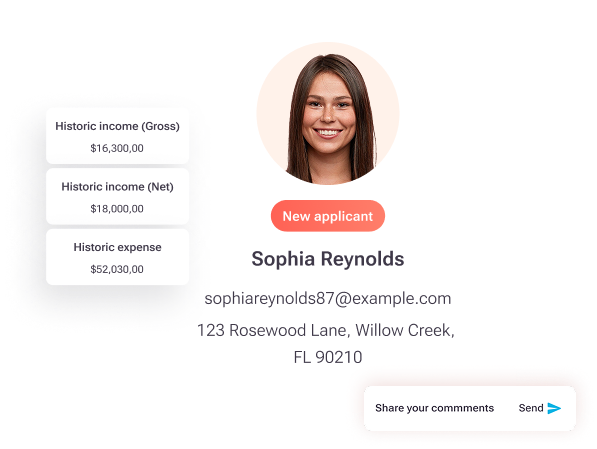
The pre-adverse package is generated and sent without manual drafting. The waiting-period clock runs inside the platform, pauses on dispute, and resumes on resolution. The final adverse action letter is auto-generated with all required statutory elements. Every approved and denied applicant file uses identical fields, so comparator data is available to demonstrate consistent, non-discriminatory application of criteria. The audit trail requires no assembly because it exists as a complete, exportable record from the moment the application begins.
Checklist: FCRA Automation Readiness for Your Association
Use this checklist to evaluate whether your current screening process meets FCRA automation standards.
- Standalone FCRA consent form is presented separately from all other application documents before any consumer report is ordered.
- Electronic consent captures the disclosure text version, applicant timestamp, and IP address.
- Biometric identity verification confirms the consenting individual matches their government-issued ID before screening proceeds.
- CFPB Summary of Rights is delivered automatically with documented delivery confirmation at the pre-adverse stage.
- Pre-adverse action package includes the full unredacted consumer report, CFPB Summary, and a cover letter stating adverse action is under consideration.
- Waiting-period clock starts from confirmed applicant receipt, not the send date, and pauses automatically on dispute.
- Board review occurs inside a structured, timestamped dashboard with decision authority remaining with the association.
- Final adverse action letter identifies the CRA, states the CRA did not make the decision, and informs the applicant of the 60-day free report right.
- All screening records, including consent, reports, notices, board votes, and dispute records, are stored in an immutable, tamper-evident system.
- Records are retained for a minimum of five years and are exportable within a 30-day litigation hold window.
- Qualification ruleset is versioned so the exact criteria in effect at the time of any application can be reproduced.
- Screening records are retained for every applicant.
Frequently Asked Questions
How many days must a Florida HOA or condo association wait between the pre-adverse action notice and the final adverse action letter?
As explained in the timing section above, the FCRA requires a “reasonable” period measured from confirmed receipt of the pre-adverse package. The widely accepted operational floor is five business days, and many associations use seven business days as a conservative buffer. If the applicant disputes the report during the waiting period, the clock must pause until the consumer reporting agency resolves the investigation. Final adverse action taken while a dispute is open creates a direct statutory violation.
What records must a community association retain to demonstrate FCRA compliance, and for how long?
A complete FCRA-compliant screening file must include the standalone consent form with the disclosure text version, applicant timestamp, and IP address. The file must also contain the consumer reports ordered, the pre-adverse action package with delivery confirmation, the final adverse action letter with delivery confirmation, and any applicant dispute correspondence.
The record should include the qualification ruleset in effect at the time of the application and the board’s decision rationale. Records must be retained for every applicant, both approved and denied. The FCRA civil action statute of limitations supports a minimum five-year retention period. Some compliance frameworks recommend seven years to align with the most common class-action theories. All records should be stored in a tamper-evident system that can produce a complete file for litigation hold response within 30 days.
Does the board or the screening platform make the adverse action decision under FCRA?
The association, not the screening platform, makes every adverse action decision. This separation is a core structural requirement of the FCRA. The consumer reporting agency’s role is limited to furnishing reports under permissible purpose, maintaining accuracy procedures, and handling consumer disputes.
The user of the report, which is the community association or its CAM, bears sole responsibility for providing required notices, making the final eligibility determination, and explaining that determination to the applicant. Every adverse action notice must state that the CRA did not make the decision and cannot explain it. TenantEvaluation provides data and automates the disclosure workflow, while the board retains full decision-making authority inside the QuickApprove review dashboard.
Does FCRA automation apply differently to condo associations versus HOAs in Florida?
The FCRA obligations, including standalone consent, CFPB Summary delivery, pre-adverse notice, waiting period, final adverse action letter, and audit trail, apply equally to condo associations and HOAs when a consumer report is used in the screening decision. The structural workflow inside TenantEvaluation is the same for both entity types.
Differences arise in the governing documents, screening criteria, and community-specific rules that each association configures into the platform. For age-restricted communities, TenantEvaluation’s 55+ Communities Verification adds a documentation and workflow standardization layer for age-eligibility requirements. This feature operates alongside, not instead of, the FCRA disclosure sequence. Both condo and HOA boards retain full approval authority through the QuickApprove dashboard regardless of community type.

What happens if an applicant disputes the consumer report during the FCRA waiting period?
When an applicant disputes the accuracy of a consumer report during the pre-adverse waiting period, the association cannot proceed to final adverse action until the dispute is resolved. The consumer reporting agency has 30 days to complete its reinvestigation, with a possible 15-day extension. During that period, the waiting-period clock pauses.
If the CRA corrects the report, the association must evaluate the updated report before making a final decision. TenantEvaluation’s workflow tracks dispute status automatically, pausing the adverse action sequence and resuming it only after the CRA’s reinvestigation is complete. The dispute pause, reinvestigation outcome, and clock resumption are all logged to the immutable audit trail.
Conclusion
Manual FCRA disclosure management creates a documented liability gap that Florida CAMs and boards carry on every application cycle. Recent enforcement actions, including the RentGrow settlement discussed earlier and the 2023 TransUnion settlement for $15 million, along with the CFPB’s ongoing supervisory focus on accuracy and disclosure procedures, confirm that regulators are actively examining the workflows that community associations depend on.
TenantEvaluation is an end-to-end resident screening and onboarding platform built specifically for Florida community associations, with FCRA compliance as the foundation rather than an afterthought. The 7-step automation workflow embeds standalone consent via IDVerify, CFPB Summary delivery, pre-adverse timing, board review via QuickApprove, automated adverse action, and five-year immutable audit trail retention into a single connected platform that replaces spreadsheets, email chains, and manual follow-ups while preserving board oversight and decision-making authority.
