
Last updated: January 27, 2026
Key Takeaways
- Automated background checks remove manual HOA screening delays, saving up to 50 hours daily while maintaining FCRA and Florida compliance.
- TenantEvaluation outperforms competitors like RealPage and Buildium with 5-10 minute processing, HOA-specific board dashboards, and revenue-sharing models.
- Key benefits include PCI-compliant PII redaction, real-time board transparency, and application fees that have generated over $150 million for communities.
- Comprehensive screening covers 7-10 years of credit, criminal, and eviction history while avoiding Fair Housing violations through individualized assessments.
- HOA managers gain up to 70% efficiency and clearer strategic insights. Get started with TenantEvaluation today for seamless automation.
Step-by-Step HOA Background Check Automation
Automated background checks for community associations follow a structured workflow that removes manual bottlenecks. The process starts when applicants receive a Property Code from the association and complete their application through a digital platform. Intelligent forms adapt based on applicant type, whether tenant, purchaser, or additional resident, so the system collects only relevant information.
The screening phase runs comprehensive verification across multiple data sources. Credit reports show financial responsibility, and background checks review criminal history and eviction records. FCRA requires written consent before credit or background checks and mandates adverse action notices when boards deny applications based on screening results.
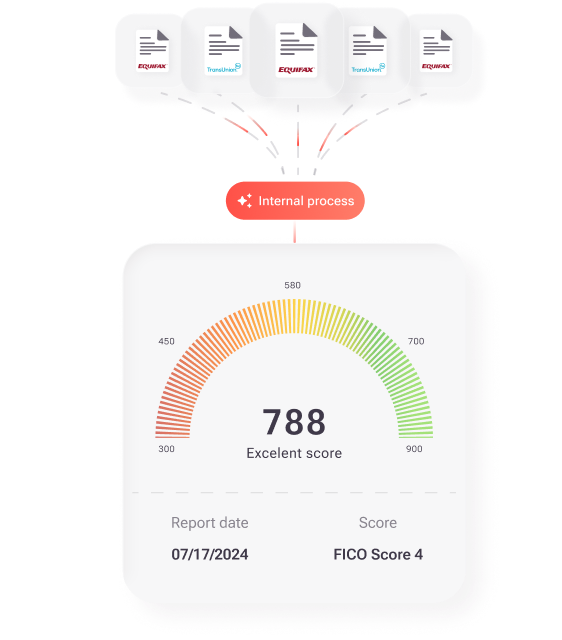
Advanced systems automatically redact personally identifiable information (PII) from uploaded documents and maintain PCI Level 1 compliance with full audit trails. Screening typically covers 7-10 years of history under FCRA guidelines, including criminal convictions, eviction records, and credit payment patterns.
Specific red flags trigger additional review. Examples include recent evictions, criminal convictions tied to property management concerns, credit scores below community thresholds, and income-to-rent ratios that fail association standards. However, associations must avoid blanket denial policies for criminal convictions to comply with the Fair Housing Act and reduce disparate impact risk.
How Automation Helps CAMs and HOA Boards Work Faster
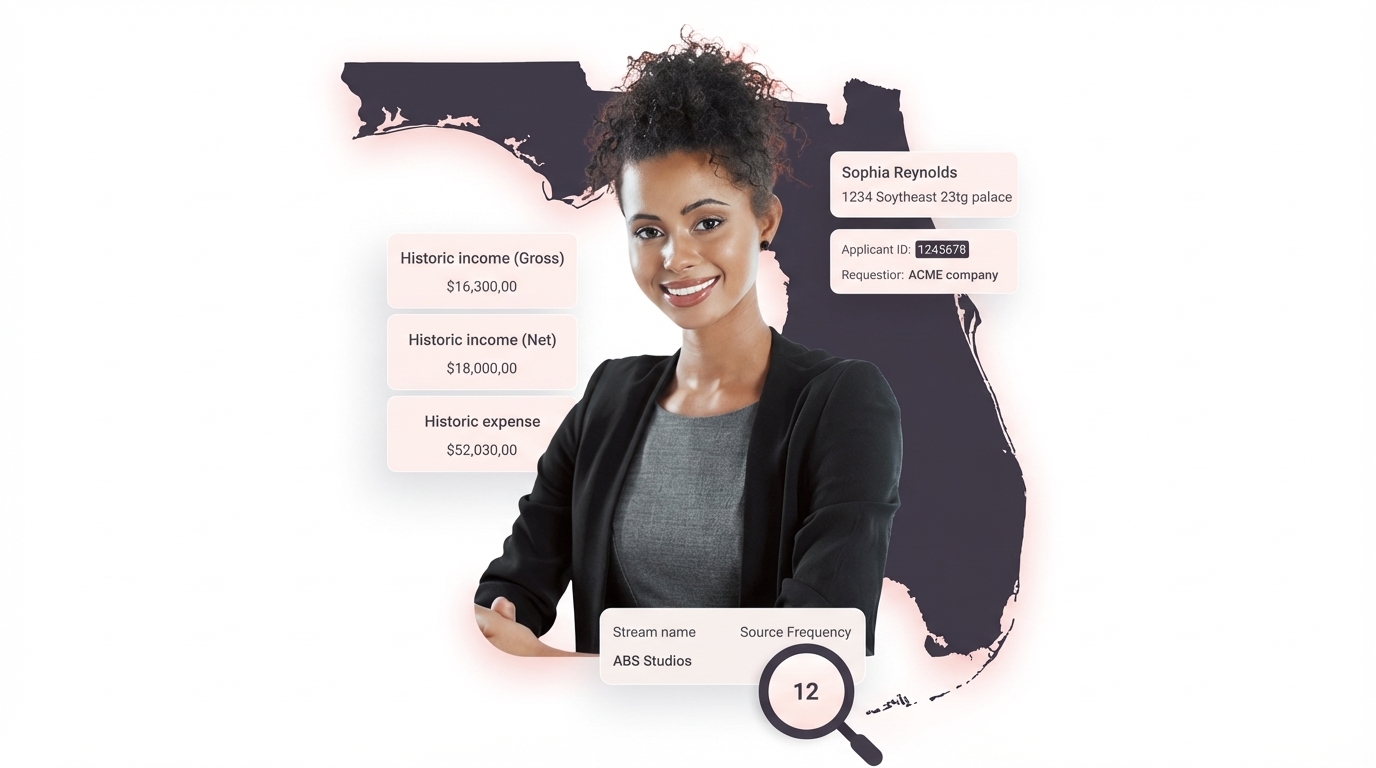
Property management automation delivers clear, measurable improvements across daily operations. CAMs see major reductions in administrative work, with leading solutions freeing as much as 50 hours of staff time every day. Teams can then shift attention to community engagement and strategic planning instead of chasing paperwork and email threads.
Security and compliance improve at the same time. PCI Level 1 compliance, end-to-end encryption, and automatic PII redaction reduce data breach risk while supporting FCRA requirements. Automated adverse action workflows and built-in audit trails give boards documented proof of consistent, compliant decisions.
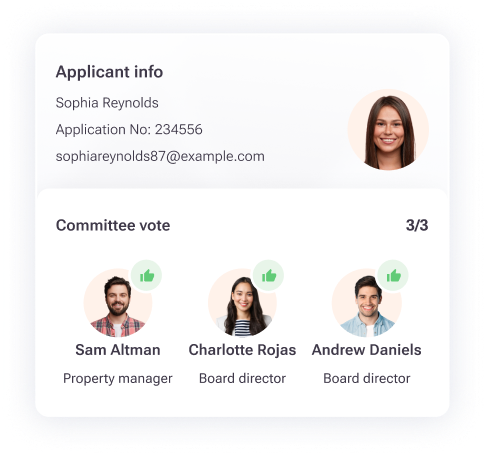
Board transparency increases through dedicated dashboards that show real-time application status, AI-generated applicant summaries, and simple voting tools. These features replace scattered email chains and help boards follow the same process for every applicant.
Automation also creates new revenue opportunities through online fee collection and revenue-sharing models. TenantEvaluation has generated more than $150 million for communities with its pay-per-application structure, so resident onboarding becomes a profit center instead of a cost line. AI adoption grew from 20% in 2024 to 58% in 2025, cutting costs and improving workflows.
Advanced analytics reveal trends in community demographics, rental patterns, and resident profiles. Boards use this data to guide decisions about amenities, policies, and services. Schedule a demo to see how a 70% efficiency gain can reshape your operations.
TenantEvaluation vs. RealPage and Buildium for HOA Screening
The automated background check market includes several large vendors, yet HOA-focused capabilities vary widely. TenantEvaluation stands out with its community association specialization, deep Florida compliance, and board-centric tools that match HOA governance needs.
| Feature | TenantEvaluation | RealPage | Buildium/ApplyCheck |
|---|---|---|---|
| Processing Time | 5-10 minutes | Days (48+ hours reported) | Typically 24 hours |
| HOA Board Dashboard | QuickApprove (voting/insights) | Limited/none | Basic, no automation |
| Florida/FCRA Compliance | Built-in, direct bureau reseller | Generic, integration delays | Add-on, state gaps |
| Pricing/ROI | Pay-per-app, revenue share | Enterprise subs ($2-5/screen) | $25-40/report, high volume cost |
RealPage offers AI-powered lease underwriting and automated screening but focuses on multifamily rentals more than HOA governance. RealPage Lease Automation provides criminal, eviction, and credit checks with income verification. However, it lacks deep Florida compliance tools and usually requires costly enterprise contracts that start around $2-5 per screening.
Buildium connects screening to its property management platform but treats screening as a separate paid module that costs about $30-40 per report. Buildium Resident Screening includes credit, criminal, eviction, and identity verification. User reviews, however, mention limited customization for states with complex compliance rules.
ApplyCheck offers instant screening with customizable forms but does not provide specialized HOA workflows. ApplyCheck supports bulk screening and mobile portals, yet 2026 feedback notes data inaccuracies in employment verification and a lack of advanced risk analytics.
TenantEvaluation delivers several competitive advantages for HOAs. These include direct TransUnion and Equifax reseller relationships, the QuickApprove dashboard for board voting, full automation from application through approval, and Florida-specific compliance built into the platform. A Florida management company case study reports $240,000 in annual savings after switching to TenantEvaluation and reclaiming 50 staff hours per day for higher-value work. See why Florida industry leaders choose TenantEvaluation and schedule a demo.
Real-World Results from HOA Application Automation
HOA application automation reshapes the resident journey from first inquiry through final approval. The process starts when prospective residents receive a Property Code and log into the digital application portal. Guided workflows walk applicants through document upload, identity verification, consent collection, and secure payment of application fees.

Small HOAs use automation to scale without adding staff. A 50-unit community can process several applications at once while keeping screening standards and documentation consistent. Board members log into dashboards to see real-time status updates and AI-generated summaries for each applicant.
Larger management companies use advanced analytics to guide long-term planning. Demographic data supports decisions about EV charging stations, pet policies, and amenity investments. Revenue-sharing models convert application processing into a predictable income stream, and TenantEvaluation has already generated more than $150 million for partner communities.
Risk reduction forms another core benefit. Automated PII redaction, encrypted document storage, and FCRA-compliant adverse action workflows lower legal exposure. AI-driven automation manages reminders, workflows, and compliance tracking, embedding background checks into resident onboarding in a way that fits regulated HOA environments.
HOA Screening Decision Guide, Checklist, and FAQs
Choosing an automated background check platform starts with a clear review of HOA requirements. Boards should weigh FCRA compliance depth, Florida-specific regulatory support, board access features, processing speed, and total cost of ownership, including any revenue-sharing options.
Do HOAs require background checks?
Most HOAs require background checks for risk management and community safety. State law rarely mandates screening, yet HOA governing documents usually authorize boards to set criteria for prospective residents. Background checks help associations review financial responsibility, criminal history, and rental track record so boards can make informed approval decisions that protect community interests and property values.
What causes red flags in HOA background checks?
Common red flags include recent evictions within 3-5 years and criminal convictions tied to property concerns such as theft, property damage, or drug offenses. Other warning signs include credit scores below community thresholds, often 650 or higher, income-to-housing ratios above 30-40%, and patterns of late payments or defaults. Associations still need individualized assessments and should avoid blanket denials to comply with Fair Housing Act guidance.
What is the best RealPage alternative for Florida HOAs?
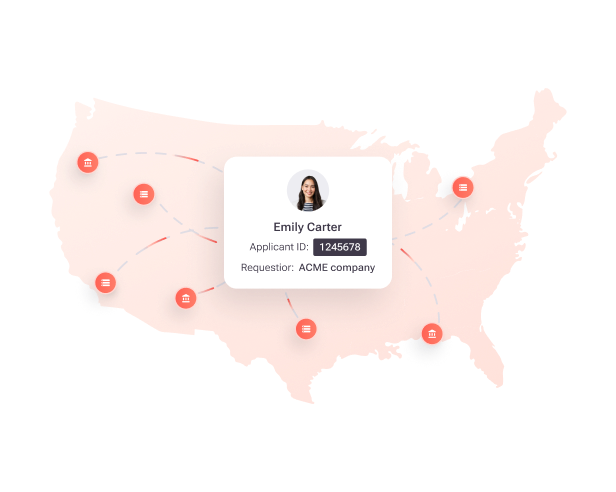
TenantEvaluation functions as a leading RealPage alternative for Florida community associations and focuses on HOA workflows. RealPage centers on multifamily rentals, while TenantEvaluation offers QuickApprove board dashboards, Florida-specific compliance tools, and 5-10 minute processing instead of 48-hour waits. Revenue-sharing models replace expensive enterprise subscriptions, and direct credit bureau relationships support an FCRA-first design tailored to HOA governance.
How does automated document redaction work?
Automated document redaction uses AI to locate and mask personally identifiable information such as Social Security numbers, bank account details, and driver’s license numbers in uploaded files. The system maintains PCI Level 1 compliance with end-to-end encryption while keeping documents readable for reviewers. This approach protects applicants and associations from data breach risk and still preserves complete audit trails.
How far back do HOA background checks go?
HOA background checks usually cover 7-10 years of history under FCRA guidelines. Credit reports show about 7 years of payment history, and criminal background checks often extend 7-10 years depending on state rules and conviction severity. Eviction records generally span 7 years, although some jurisdictions allow longer periods. Florida associations can adjust screening timeframes within legal limits to match risk tolerance and governing documents.
Transform your HOA onboarding process and schedule a demo to see how TenantEvaluation’s automated background check system delivers faster approvals, stronger compliance, and measurable ROI for Florida community associations.