Written by: Luis Teran, Co-founder, CEO, TenantEvaluation | Last updated: July 11, 2026
Key Takeaways
- AppFolio fits mixed rental and HOA portfolios with strong mobile inspection tools, while CINC fits pure association portfolios with deeper banking integrations and automated board reporting.
- Florida’s 2026 regulatory mandates, including mandatory websites, reserve tracking, and audit requirements, make platform choice central to compliance and board liability protection.
- Neither AppFolio nor CINC provides native FCRA-compliant screening, biometric identity verification, or automated board-approval workflows for resident onboarding.
- AppFolio’s 50-unit minimum and tiered pricing favor larger portfolios, while CINC offers custom pricing aimed at mid-to-large association management companies.
- TenantEvaluation complements either platform by adding screening, verification, and lease tracking, so you can schedule a demo today.
Executive Summary for Florida CAMs and Boards
Florida community associations operate under a strict regulatory environment that demands precise accounting, structured violation enforcement, architectural review workflows, and board-ready reporting. AppFolio and CINC are the two most frequently evaluated platforms for this work. Each handles core HOA operations differently, and neither covers the full spectrum of resident screening, biometric identity verification, or board-approval automation that Florida CAMs increasingly require in 2026.
This comparison reviews accounting, violations, board reporting, mobile capabilities, and 2026 pricing for pure association portfolios. It then highlights where a specialized complementary platform closes the remaining gaps.
The Compliance Stakes for Florida Associations
Florida’s HB 1203, effective July 1, 2024, introduced criminal liability for board members who tamper with ballots, destroy records, or misuse association funds. Effective January 1, 2026, condominium associations with 25 or more units must operate an official website or secure member portal that provides owner access to governing documents, budgets, financial reports, meeting notices, and Structural Integrity Reserve Studies. Florida has eliminated the option for condo owners to waive reserves on key structural items, so platforms must support mandatory reserve funding tracking.
Some Florida condominium communities now face special assessments of $40,000 to $60,000 per unit because of post-Surfside structural inspection and reserve funding mandates. In this environment, the platform a management company selects directly affects audit readiness, board liability exposure, and day-to-day operational efficiency.
How Florida HOA Operations Map to Software Features
HOA accounting for Florida associations requires accrual-basis financials for any audited statement, tiered reporting thresholds tied to annual revenue, and monthly bank reconciliations. Violation workflows require written notice, a mandatory hearing window, and documented findings. Architectural review needs a structured submission, committee review, and timestamped decision record. Board packets consolidate financials, meeting agendas, violation summaries, and reserve status into a single document distributed before each meeting. Each of these functions maps differently across AppFolio and CINC, so a side-by-side view helps clarify tradeoffs.
Quick Comparison: AppFolio vs CINC for Florida HOA Portfolios
| Feature Area | AppFolio | CINC |
|---|---|---|
| HOA Accounting | General ledger, assessment billing, bank sync | Integrated banking with financial institution partners |
| Violation Tracking | Violation workflow module included | Compliance Tracking with transparent manager-board communication |
| Board Packet Generation | Report builder, manual assembly common | Automated Meeting Agendas and Board Packs with real-time financial access |
| Mobile / Field Tools | Strong mobile app for inspections and work orders | Manager and homeowner app, field tools less emphasized |
| 2026 Starting Price (per unit/month) | $1.40 (Core), $3 (Plus), $5 (Max) | Custom pricing, contact CINC for quote |
| Minimum Monthly Fee | $280 (Core), $900 (Plus), $1,500 (Max) | Not publicly disclosed |
| FCRA-Compliant Screening | Basic screening add-on | Not a core offering |
| Biometric Identity Verification | Not available | Not available |
HOA Accounting Depth and Bank Integrations
CINC was founded in 2005 as the first cloud-based platform in the community association management industry, built around integrated banking, accounting, and operations. Its partnerships with financial institutions create direct reconciliation pathways that reduce manual bank matching for Florida associations managing multiple operating and reserve accounts.
HOAs using CINC maintain invoice documentation attached to every payment, enabling electronic reports to be shared directly with CPAs and creating a complete audit trail that reduces audit time and cost. For Florida associations subject to tiered financial reporting under FL Statute §720.303(7), ranging from a cash receipts report below $150K to a full audit at $500K or more, this audit-trail depth carries real operational weight.
AppFolio provides general ledger accounting, assessment billing, and bank synchronization. Its accounting module works well for mixed portfolios but does not match the depth of native banking integration that CINC delivers for pure association portfolios.
Violation Handling and Architectural Review Workflows
Florida HOAs levying fines must provide 14 days’ written notice of the right to a hearing, hold the hearing within 90 days, allow the violation to be cured before the hearing without penalty, and issue written findings within seven days after the hearing. Both platforms include violation tracking, but the depth and focus differ.
CINC’s Compliance Tracking feature centers on association-specific workflows, with transparent communication between managers and boards built into the violation lifecycle. AppFolio’s violation module covers the core workflow and connects tightly with its mobile inspection tools, which helps CAMs conducting field inspections across large or geographically dispersed portfolios.
Neither platform provides a native architectural review submission portal with applicant-facing document upload, committee voting, and timestamped decision records as a standard out-of-the-box feature. Both require configuration or workarounds to fully automate architectural review.
Board Reporting, Packets, and AI Support
CINC’s Cephai AI delivers AI-driven reporting, forecasting, and automation for community managers handling financial oversight, compliance, and board engagement. Its Meeting Agendas and Board Packs feature automates packet creation with real-time financial data. This aligns with the 2026 industry shift toward integrated platforms that unify financial reporting with reserve visibility and centralized document access.
AppFolio’s report builder generates financial statements and owner reports but often requires more manual assembly for complete board packets. Its AI suite, Realm-X, is available only on Plus and Max plans starting at a $900 per month minimum and does not come with the Core plan.
Mobile and Field Management Strengths
AppFolio’s mobile application stands out for CAMs conducting property inspections, logging work orders, and communicating with vendors in the field. For management companies overseeing mixed portfolios that include rental units alongside HOA properties, this mobile capability provides operational continuity across property types.
CINC offers a manager application and a homeowner-facing app, and Cephai AI launched in May 2024 as the CAM industry’s first generative AI tool available to HOAs and COAs. CINC’s mobile tools focus more on homeowner communication and financial access than on detailed field inspection workflows.
2026 Pricing Ranges and Minimums
AppFolio publishes three tiers for 2026. The Core plan costs $1.40 per unit per month with a $280 per month minimum, the Plus plan costs $3 per unit per month with a $900 per month minimum, and the Max plan costs $5 per unit per month with a $1,500 per month minimum. A 50-unit HOA on the Core plan pays an effective rate of $5.60 per unit per month because of the minimum floor. AppFolio requires a 50-unit minimum for all portfolios and does not serve smaller communities.
CINC does not publish per-unit pricing publicly. Prospective clients receive custom quotes based on portfolio size and feature requirements. This structure prevents direct per-unit comparison without a sales engagement, but CINC’s model generally targets mid-to-large association management companies.
AppFolio offers no free trial, only a demo. CINC also requires a sales conversation before pricing is disclosed.
Choosing for Mixed vs Pure HOA Portfolios
AppFolio’s architecture supports mixed portfolios, so management companies running both rental units and HOA communities on a single platform gain from its unified accounting, leasing, and maintenance modules. For pure association portfolios, the per-unit pricing model and minimum unit threshold can make AppFolio less cost-efficient at smaller scale.
CINC focuses exclusively on community association management, and this association-exclusive focus is reflected in its scale: the platform serves over 51,000 homeowners associations and 6 million doors while processing more than $11 billion in payments annually. Its feature set, including banking integrations, compliance tracking, and board packet automation, reflects this singular focus. Management companies with no rental inventory and a pure HOA or condo book of business will find CINC’s association-native design closely aligned with their operational requirements.
How TenantEvaluation Complements AppFolio and CINC
Neither AppFolio nor CINC functions as a primary resident screening and onboarding platform for community associations. Both platforms leave measurable gaps in FCRA-compliant screening depth, biometric identity verification, board-approval automation, and lease lifecycle visibility.
TenantEvaluation is built specifically for community associations and management companies, with FCRA compliance as the foundation rather than an afterthought. It operates as a complementary layer alongside either AppFolio or CINC and handles the resident-facing onboarding workflow that neither platform fully addresses.
Key capabilities TenantEvaluation adds to either platform include:

- QuickApprove: An accelerated approval workflow built for CAMs, boards, and property management teams inside one connected platform. It delivers real-time application tracking, automated communication support, customized approval letters, a personalized welcome package, and a board-ready approval process, while preserving control, compliance, and visibility.
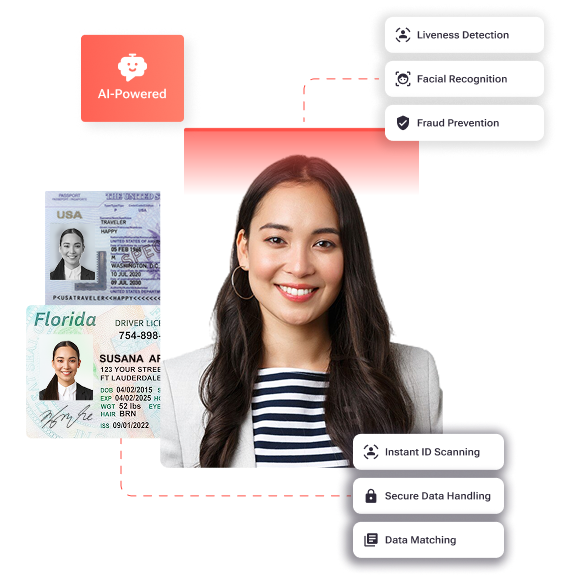
- IDVerify+: Biometric identity verification embedded directly into the screening workflow, using government ID validation, AI-powered liveness detection, and biometric facial matching to move communities from document-based review to verified physical identity confirmation.
- 55+ Communities Verification: A built-in capability that helps Florida condos and HOAs standardize how age-restricted requirements are handled across applications, which reduces manual work, improves documentation consistency, and strengthens operational control.
- Lease Tracking: Centralized, real-time lease visibility and lifecycle control that connects resident onboarding, unit data, approvals, and lease documentation into one streamlined, audit-ready workflow. This replaces spreadsheets and scattered email chains from application to occupancy.
TenantEvaluation has processed 100,000+ applications annually across 5,000+ communities and has generated $150 million for communities through its revenue-sharing model, which charges no upfront fees to associations.
Compliance, Risk, and Governance Safeguards
TenantEvaluation is a legitimate reseller of TransUnion and Equifax data and accesses credit information under strict bureau rules with regular compliance reviews and no gray-market data sources. Its built-in adverse action workflows, automatic redaction of sensitive personal information, PCI Level 1 compliance, and end-to-end encryption address the data security and FCRA obligations that neither AppFolio nor CINC fully covers for resident screening workflows.
Common Operational Gaps for Florida CAMs
Florida CAMs and boards frequently encounter the following gaps regardless of which core platform they select:

- Resident applications processed outside the core platform via email and paper, which creates disconnected records
- No biometric verification layer, leaving communities exposed to impersonation and synthetic identity fraud
- Board approval workflows that rely on email chains and spreadsheets, which slows decisions during peak seasons
- Lease records stored across folders and inboxes with no centralized visibility or expiration tracking
- Age-restricted community documentation handled inconsistently across applications and managers
- Institutional knowledge loss when board members resign, which reduces transparency for homeowners accessing financials and increases compliance risks from untracked state-mandated requirements
- Audit preparation delayed by disorganized reserve fund records and incomplete vendor documentation
Neutral Decision Framework for Platform Selection
The following criteria support a defensible platform selection for Florida HOA and condo portfolios:
- Portfolio composition: Pure association portfolios with no rental inventory align more directly with CINC’s association-native architecture. Mixed portfolios benefit from AppFolio’s unified rental and HOA modules.
- Banking integration depth: Associations managing multiple reserve and operating accounts with complex reconciliation requirements gain more from CINC’s 40+ financial institution partnerships.
- Mobile field requirements: CAMs conducting frequent on-site inspections across large or dispersed portfolios gain from AppFolio’s stronger mobile inspection and work order tools.
- Budget and scale: AppFolio’s 50-unit minimum and tiered pricing structure favor portfolios of 200 or more units for cost efficiency. Smaller pure-association portfolios should evaluate CINC’s custom pricing against operational fit.
- Screening and onboarding completeness: Both platforms require a complementary screening solution. TenantEvaluation fills this role with FCRA-compliant background checks, biometric verification, board-approval automation, and centralized lease tracking, none of which are available natively in AppFolio or CINC.
Frequently Asked Questions
What is the minimum cost to use AppFolio for a Florida HOA in 2026?
AppFolio requires a minimum of 50 units to access the platform. The Core plan carries a $280 per month minimum, which translates to an effective rate of $5.60 per unit per month for a 50-unit association. The Plus plan minimum is $900 per month and the Max plan minimum is $1,500 per month. AI features and phone support are not available on the Core plan. Associations with fewer than 50 units cannot use AppFolio regardless of budget.
Does CINC meet Florida’s 2026 financial reporting and website requirements?
CINC’s integrated banking, automated board packet generation, and audit-trail documentation are designed to support the financial reporting workflows Florida associations require under tiered revenue thresholds. Florida now requires condominium associations with 25 or more units and HOAs with 100 or more parcels to maintain an official website or secure member portal that provides access to governing documents, budgets, financial reports, and meeting records. Whether a specific CINC implementation satisfies these requirements depends on configuration and the association’s legal counsel review. No software platform guarantees statutory compliance without proper setup and ongoing governance.
Can TenantEvaluation work alongside AppFolio or CINC without replacing them?
TenantEvaluation functions as a complementary platform, not a replacement for core property management software. It handles the resident-facing onboarding workflow, including application intake, document collection, FCRA-compliant background checks, biometric identity verification through IDVerify+, board-approval automation through QuickApprove, age-restricted community documentation through 55+ Communities Verification, and centralized lease lifecycle management through Lease Tracking. These functions operate independently of AppFolio or CINC’s accounting, violation, and maintenance modules, so management companies can retain their existing core platform while closing the screening and onboarding gaps those platforms leave open.
How does Florida’s HB 1203 affect the platform features a CAM should prioritize?
As noted earlier, HB 1203 introduced criminal liability for specific board violations and capped HOA fines at $100 per violation with a $1,000 maximum for ongoing issues. These changes increase the importance of audit trails, timestamped violation records, and documented board decisions. CAMs should prioritize platforms that maintain complete, searchable records of all board actions, violation notices, hearing outcomes, and financial transactions. TenantEvaluation’s built-in audit trails for every application and approval decision support this documentation standard for the resident onboarding and approval portion of association operations.
Conclusion and Next Steps for Florida Portfolios
For Florida CAMs and HOA or condo boards evaluating AppFolio versus CINC in 2026, the decision centers on portfolio composition and operational priorities. CINC’s association-native banking integrations, automated board packet generation, and compliance tracking make it the stronger fit for pure association portfolios. AppFolio’s mobile field tools and mixed-portfolio architecture serve management companies running both rental and HOA inventory on a single platform.
Both platforms leave the same gaps: no FCRA-compliant resident screening built for community associations, no biometric identity verification, no board-approval automation, and no centralized lease lifecycle visibility. TenantEvaluation fills each of these gaps as a purpose-built complementary platform, with the scale and compliance infrastructure described earlier.
See TenantEvaluation in action alongside your AppFolio or CINC workflow, and schedule a demo today.
