Written by: Luis Teran, Co-founder, CEO, TenantEvaluation
Key Takeaways for Florida HOAs and Condos
- AppFolio’s multifamily design leaves Florida HOAs and condos with scattered lease records, manual expiration tracking, and no portfolio-level visibility.
- Generic platforms require unit-by-unit lookups and lack automated, real-time lease status classification across the portfolio.
- Florida’s statutory requirements, including notice periods, record retention, and board reporting, require dedicated lease lifecycle management built for associations.
- Centralized, audit-ready digital records tied directly to onboarding and occupancy replace spreadsheets, email chains, and compliance blind spots.
- TenantEvaluation delivers specialized lease tracking for Florida associations. See how TenantEvaluation gives you real-time lease visibility across your community.
The Problem: AppFolio Lease Tracking for Florida Associations
AppFolio is a capable property management platform for multifamily operators. Florida community associations operate under different governance structures, statutory rules, and board reporting needs that generic multifamily software does not fully address.
Florida HOA and condo managers report resident and lease information scattered across inboxes, spreadsheets, paper forms, folders, and filing cabinets. They lack a central system for lease status, move-in dates, or occupancy records. Many CAMs describe managing a multi-phase association as juggling several spreadsheets and a constant flow of emails.
AppFolio does not close this gap for community associations. Its lease tools focus on multifamily leasing pipelines, not unit-level occupancy tracking, board approval workflows, and audit-ready records for HOAs and condominiums. Managers end up with missing documents, manual expiration tracking, and no direct link between resident applications and active occupancy records.
Florida law adds more moving parts. Lease renewals may require advance notice, and notice periods cannot exceed 60 days before expiration under Florida Statutes Section 83.575. Month-to-month tenancies require at least 30 days’ notice before the end of the next monthly period. Service members may terminate leases early under Section 83.682, Florida Statutes, creating additional occupancy-change events that must be tracked. None of these deadline-sensitive obligations surface automatically in a generic platform.
See how TenantEvaluation automatically surfaces Florida’s deadline-sensitive lease obligations, replacing scattered records with real-time visibility built specifically for associations.
How Lease Lookups Work in AppFolio
In AppFolio, users access lease records through individual unit or tenant profiles in the property management interface. They navigate to a property, locate a unit, and open the related lease record to view terms, dates, and attached documents.
This design forces community associations into unit-by-unit lookups. It does not provide a portfolio-level view of lease status across all units at once. There is no consolidated dashboard showing which leases are active, pending approval, expired, or missing entirely. Lease data in general-purpose platforms often sits in PDFs, email threads, and spreadsheets, which creates blind spots, missed renewals, and operational risk. For a CAM managing dozens or hundreds of units, this architecture produces the very blind spots that increase compliance exposure.
Lease Expiration Visibility Limits in AppFolio
AppFolio stores lease end dates at the unit level, and users can filter or report on expiring leases through its reporting tools. For standard multifamily operators, that capability often feels sufficient.
Florida community associations need more than date fields. They need automated, real-time status classification that converts dates into clear categories for directors. A lease that passes its expiration date does not automatically appear as expired in a board-ready format. A lease document never collected during onboarding does not appear as missing. Scattered lease data in general-purpose platforms leads to missed critical events, inconsistent reporting, and decisions based on incomplete information. Boards reviewing occupancy at monthly meetings cannot rely on manually assembled reports pulled from a generic system. These limitations highlight a gap between what generic platforms offer and what Florida associations actually need.
The Solution Category: Centralized, Real-Time Lease Lifecycle Management
Purpose-built lease lifecycle management for community associations addresses this gap directly. It forms a distinct operational category separate from generic property management software.
This type of system connects resident onboarding, unit data, board approvals, and lease documentation into one workflow. It delivers real-time lease status visibility, from application submission through occupancy, using a clear four-status classification introduced earlier.
Generic multifamily platforms store lease documents. Specialized association solutions track the entire lifecycle: when a lease was submitted, whether it was collected during onboarding, when it expires, and the current occupancy status at the unit level. Manual investor and board reporting in general-purpose systems is fragile and time-consuming, often taking days of hand-built reports from multiple sources. Association-focused tools remove that manual assembly and keep directors in a live system instead of static spreadsheets.
Why Lease Data Becomes Disconnected in Florida HOAs and Condos
Florida HOA managers report spending significant time juggling multiple spreadsheets and emails to track lease expirations, renewals, and occupancy across multi-phase communities. The same root causes appear across associations of every size.
- Lease documents arrive by email and sit in unstructured folders with no version control.
- Expiration dates live in spreadsheets that do not update in real time.
- Resident applications and active lease records are not connected in a single workflow.
- Board members receive occupancy reports that CAMs assemble manually instead of pulling from a live dashboard.
- Occupancy status cannot be assumed from ownership transfers, so managers must track lease continuity through property sales.
- Sections 718.116(11) and 720.3085(8), Florida Statutes, authorize associations to collect rent directly from tenants of delinquent owners after lien and foreclosure procedures, which adds more occupancy and payment-status tracking work.
Key Benefits of Dedicated Lease Tracking for Associations
Real-time lease status visibility. Every lease in the portfolio receives the four-status classification mentioned earlier, visible at the unit level and across the community without manual lookup.
Automated lease document collection. Lease documents are collected during the resident onboarding workflow, not as a separate manual task after approval. This closes the gap between application approval and lease record creation.
Unit-level tracking tied to occupancy. Each unit’s lease status connects directly to its occupancy record. CAMs and boards see who occupies each unit and under which lease terms.
Searchable, audit-ready digital records. Every lease document, status change, and document trail sits in a searchable digital history that supports compliance readiness without manual file assembly.
Stakeholder Impact: CAMs, Boards, and Residents
For CAMs and property managers: Workflows move faster, time spent searching folders and inboxes drops, and follow-ups decrease. One platform connects applications, approvals, and lease documentation.
For boards of directors: Directors gain a clear picture of occupancy and resident activity across communities. Audit-ready digital lease records support compliance and reduce risk tied to disconnected records. Owner-operators and boards evaluating platforms prioritize governance features such as audit trails that log changes to leases, charges, approvals, and communications, plus defensible reporting for boards, auditors, and regulators.
For residents: Onboarding involves fewer delays and less back-and-forth. Lease documentation becomes part of a connected digital workflow instead of a separate manual process.
Get board-ready lease visibility across your entire portfolio, and see how TenantEvaluation removes manual reporting for directors.
Risk Reduction and Florida Compliance Advantages
Florida’s statutory framework for community associations creates specific recordkeeping obligations that generic platforms do not address by design.
Under §718.111(12)(g), Florida Statutes, condominium associations with 25 or more units must maintain a password-protected website or mobile app to post certain official records, effective January 1, 2026. Official records must be posted under Section 718.111(12)(g), Florida Statutes.
Section 468.4334, Florida Statutes, requires a community association manager or management firm to return all association records within 20 business days after termination of the management relationship. Associations with disorganized lease records face significant operational risk during management transitions.
Florida community associations may impose rental caps. Associations may implement registration or approval requirements alongside minimum lease term restrictions, because rental violations can be difficult to detect or confirm without such processes. Centralized, audit-ready lease records directly support this level of operational control.
Workflow: From Application to Occupancy
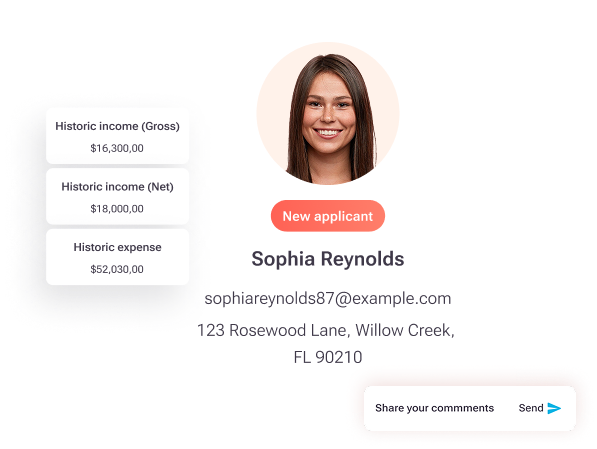
- Application submission. The prospective resident submits a fully digital application inside TenantEvaluation, including required documents and identity verification through IDVerify.
- Document collection during onboarding. Lease documentation is collected automatically as part of onboarding, not as a separate manual step after approval.
- Board review and approval. The application moves through the QuickApprove workflow, which gives boards a dedicated review and voting dashboard with real-time application tracking.
- Lease record creation. After approval, the platform creates the lease record, connects it to the unit and occupancy record, and assigns a real-time status using the four-status classification.
- Ongoing lifecycle tracking. Lease status updates in real time, expirations surface automatically, and the searchable digital history retains every document trail and status change for audit readiness.
Before this workflow, leases sit in folders, inboxes, and spreadsheets, with manual expiration tracking and no connection between applications and active leases. After implementation, one connected platform replaces spreadsheets and scattered email chains.
Evaluation Criteria for Comparing Lease Tools
- Compliance posture: The platform should support Florida-specific recordkeeping obligations, including audit trails and document retention timelines.
- Board access: Board members should view real-time lease status and occupancy data without requesting manual reports from CAMs.
- Integration with onboarding: Lease document collection should connect directly to the application and approval workflow.
- Audit trails: The platform should log every status change, document submission, and approval action with timestamps.
- Configurability for 55+ communities: The platform should support 55+ Communities Verification requirements with standardized documentation handling.
- Florida-specific design: The platform should be built for Florida HOAs and condominiums, not retrofitted from a generic multifamily tool.
AppFolio vs. Specialized HOA Lease Tracking
| Feature | AppFolio | Specialized HOA Solution (TenantEvaluation) | Outcome for Florida Associations |
|---|---|---|---|
| Real-time lease status classification | Not available, unit-by-unit lookup required | Real-time, portfolio-level status for every lease | CAMs and boards see the full occupancy picture without manual assembly |
| Lease document collection during onboarding | Manual, separate from application workflow | Automated during resident onboarding inside one platform | Closes the gap between approval and lease record creation |
| Board-ready lease visibility dashboard | Not designed for HOA and condo board reporting | Dedicated board dashboard with real-time occupancy and lease data | Boards access accurate data directly, without manual report requests |
| Audit-ready digital lease records | Document storage available, audit trail depth varies | Searchable digital history with timestamped document trails and status changes | Supports Florida recordkeeping obligations and management transition requirements |
| Florida HOA and condo compliance design | Generic multifamily platform, not Florida-association-specific | Built specifically for Florida community associations and management companies | Reduces operational risk tied to Florida statutory requirements |
| Connection between application and active lease | Disconnected, separate workflows | Fully connected from application submission through occupancy | Removes blind spots between onboarding and active occupancy |
Why TenantEvaluation Lease Tracking Stands Out
TenantEvaluation Lease Tracking operates as a centralized capability inside the broader TenantEvaluation ecosystem. The same platform handles resident screening, IDVerify biometric identity verification, QuickApprove accelerated approvals, and 55+ Communities Verification.
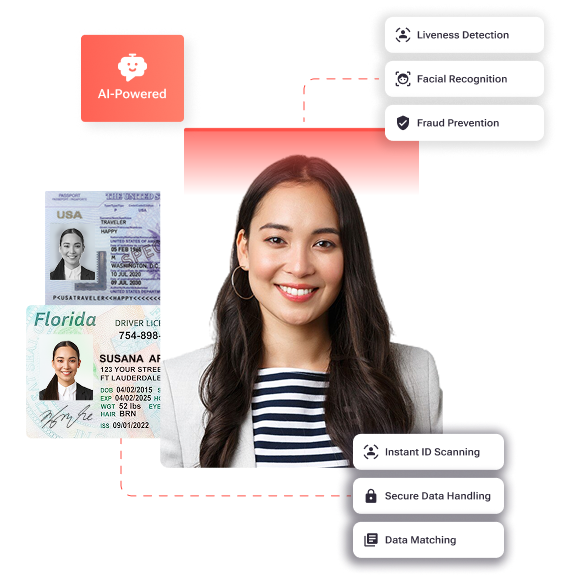
TenantEvaluation delivers centralized lease records, real-time status tracking, automated lease document collection during onboarding, unit-level tracking, and searchable audit-ready digital records. The entire process stays connected from application to occupancy.
No spreadsheets, no scattered email chains, and no guesswork. TenantEvaluation has processed more than 100,000 applications annually across 5,000+ communities, generating $150M for those communities, with a 4.8/5 Google rating. The platform is built specifically for community associations and management companies, with FCRA compliance as a core design principle.
As portfolios grow, general-purpose platforms create scaling challenges because workflows that function for a few properties do not scale without proportional headcount and added risk. TenantEvaluation Lease Tracking absorbs higher onboarding volume without extra complexity, which makes it a strong recommendation for Florida CAMs, property managers, and boards replacing disconnected lease management with a Florida-focused solution.
Frequently Asked Questions
What is the difference between AppFolio lease tracking and HOA-focused lease tracking?
AppFolio is a general-purpose multifamily property management platform. Its lease tracking features serve standard rental operators and require unit-by-unit lookups without a real-time, portfolio-level view of lease status. HOA-focused lease tracking, such as TenantEvaluation Lease Tracking, connects resident onboarding, unit data, board approvals, and lease documentation into one workflow. It applies the four-status classification in real time, collects lease documents automatically during onboarding, and gives boards direct visibility without manual report assembly. For Florida associations operating under Chapter 718 or Chapter 720, Florida Statutes, this difference affects daily operations and recordkeeping.
How does TenantEvaluation Lease Tracking support Florida compliance requirements?
TenantEvaluation Lease Tracking supports Florida compliance readiness by maintaining searchable, audit-ready digital lease records with timestamped document trails and status changes. This helps associations meet Florida recordkeeping obligations, including the website posting requirements discussed earlier and the 20-business-day record-return requirement during management transitions. It also supports consistent documentation of rental cap enforcement, lease approval workflows, and occupancy status tracking, all areas where disconnected manual records increase operational and compliance risk. TenantEvaluation does not provide legal advice and does not replace guidance from a licensed Florida attorney.
Can TenantEvaluation Lease Tracking replace spreadsheets for lease expiration tracking?
Yes. TenantEvaluation Lease Tracking is designed to replace spreadsheet-based lease expiration tracking with real-time, automated status visibility. Every lease in the portfolio receives a current status using the four-status framework, updated in real time inside the platform. CAMs no longer maintain separate spreadsheets or cross-reference email chains to confirm which leases approach expiration. Unit-level tracking connects lease expiration data directly to occupancy records, so the operational picture stays current without manual updates.
Is TenantEvaluation built specifically for Florida community associations?
Yes. TenantEvaluation was founded in 2007 by property managers, board members, and software engineers with more than 50 years of combined experience in Florida community association management. The platform serves community associations and management companies exclusively, not as an adaptation of a generic multifamily tool. It includes Florida-specific capabilities such as 55+ Communities Verification for age-restricted HOAs and condominiums, FCRA-compliant screening as a direct reseller of TransUnion and Equifax data, and Lease Tracking designed for Florida governance structures, board reporting needs, and statutory obligations.

Conclusion: Centralizing Lease Management for Florida Associations
AppFolio’s generic architecture leaves Florida community associations with disconnected lease records, manual expiration tracking, missing documents, and no real-time link between resident applications and active occupancy. For CAMs, boards, and management companies operating under Florida’s statutory framework, this fragmentation creates operational blind spots, compliance exposure, and administrative overhead that grow with portfolio size.
Dedicated lease lifecycle management addresses these issues directly. TenantEvaluation Lease Tracking delivers centralized lease records, real-time status tracking, automated document collection, unit-level visibility, and searchable audit-ready records, all inside one platform built specifically for Florida community associations.
Replace fragmented lease management with centralized, real-time control, built specifically for Florida associations.
