
Key Takeaways for Florida Community Associations
- Anonybit uses tokenization and zero-knowledge proofs to verify identities without storing raw biometric data, which strengthens privacy in resident screening.
- The seven-step process includes biometric capture, tokenization, decentralized storage, and detailed audit trails that support FCRA compliance.
- Florida HOAs gain reduced liability from Anonybit but face workflow disruptions because of external redirects and integration challenges.
- TenantEvaluation’s IDVerify offers native integration, liveness detection, and processing that is up to 70% faster for community associations.
- Choose TenantEvaluation for seamless, fraud-proof screening that saves time and generates revenue for your HOA.
How Anonybit Biometric Privacy Works
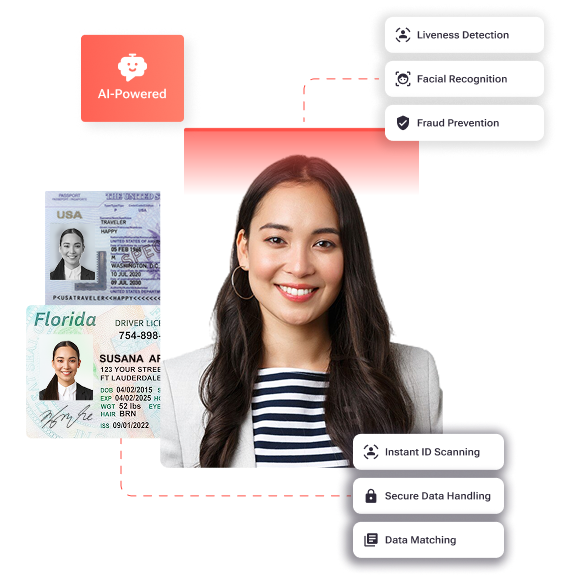
Anonybit tokenization uses a decentralized biometric verification system that converts facial recognition data into irreversible mathematical tokens. The platform does not store actual biometric templates. Instead, it breaks identity data into encrypted pieces and distributes them across multiple cloud providers. This structure addresses privacy concerns in resident screening because no single entity can reconstruct an applicant’s biometric profile. The technology relies on zero-knowledge proofs to verify identity matches without revealing underlying biometric information. This approach fits community associations that want strong privacy protection and reduced data liability.
Seven Steps in the Anonybit Resident Screening Flow
Anonybit resident screening follows a seven-step verification process that protects applicant privacy while confirming identity authenticity.
Step 1: Application Portal Access – Prospective residents access the community’s screening portal and upload government-issued identification along with a live selfie photograph.
Step 2: Biometric Capture – The system performs facial landmark detection and captures geometric measurements and unique facial characteristics from the uploaded selfie.
Step 3: Tokenization Process – Raw biometric data goes through a mathematical conversion into irreversible tokens. These tokens represent the applicant’s identity without containing actual biometric information. They function like a digital fingerprint that attackers cannot reverse-engineer.
Step 4: Zero-Knowledge Proof Generation – Anonybit zero-knowledge proofs screening creates cryptographic evidence that the selfie matches the ID photo. Screening personnel do not see the biometric details from either image.
Step 5: Decentralized Storage Distribution – Encrypted token fragments spread across multiple cloud environments. This distribution avoids a single point of failure or data concentration.
Step 6: Identity Verification Query – The system queries distributed tokens to confirm identity matches. It returns a simple “verified” or “unverified” result to community association managers.
Step 7: Audit Trail Creation – All verification steps generate timestamped records for FCRA compliance documentation. Boards gain defensible approval processes and clear records.
Consider a Miami condo application. An applicant uploads a Florida driver’s license and a selfie. Anonybit converts the facial data into mathematical tokens, proves the match using cryptographic methods, and confirms identity without storing actual biometric images. The condo board receives verification confirmation within minutes. Schedule a demo today to see how native integration improves this workflow.
Florida HOA Use Cases, Benefits, and Compliance with Anonybit
Biometric privacy in HOA screening supports Florida’s evolving privacy expectations and FCRA permissible purpose requirements. Anonybit’s zero-knowledge approach helps community associations verify applicant identities without building biometric databases that could trigger additional compliance obligations. The tokenization process supports audit requirements by providing cryptographic proof of verification without retaining sensitive biometric information.
Implementation challenges appear in real HOA workflows. Anonybit usually requires external portal redirects, which interrupt the seamless application experience that residents expect. Community association managers must move between multiple systems, which increases administrative complexity. Integration with existing property management platforms often needs custom development. That work extends implementation timelines and raises costs.
Florida-specific benefits include alignment with state privacy expectations and support for diverse applicant populations in communities such as Tampa and Orlando. The decentralized approach reduces liability exposure for associations that worry about biometric data breaches. Schedule a demo today to explore how integrated solutions remove these workflow disruptions.
Why Anonybit Falls Short for HOAs and How IDVerify Solves It
Anonybit delivers strong privacy protection, yet several limitations affect its value for community association workflows. External redirects interrupt application continuity and force applicants to navigate multiple platforms. Some applicants abandon the process when they encounter these extra steps. The system also lacks native integration with HOA-specific needs such as board approval workflows and community-specific documentation.
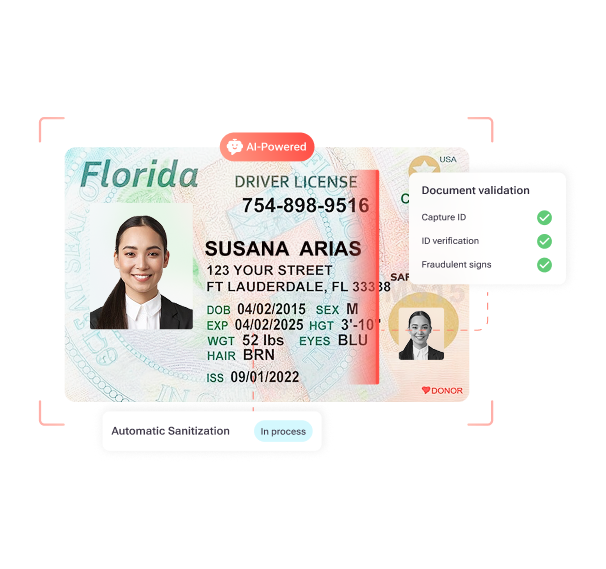
Privacy-preserving biometrics tenant screening reaches its full potential through purpose-built platforms. TenantEvaluation’s IDVerify delivers stronger resident screening by embedding multi-layer biometric verification directly into community association workflows. This native integration includes government ID validation, AI-powered liveness detection, and facial biometric matching. Applicants stay inside one platform without external redirects or workflow disruption.
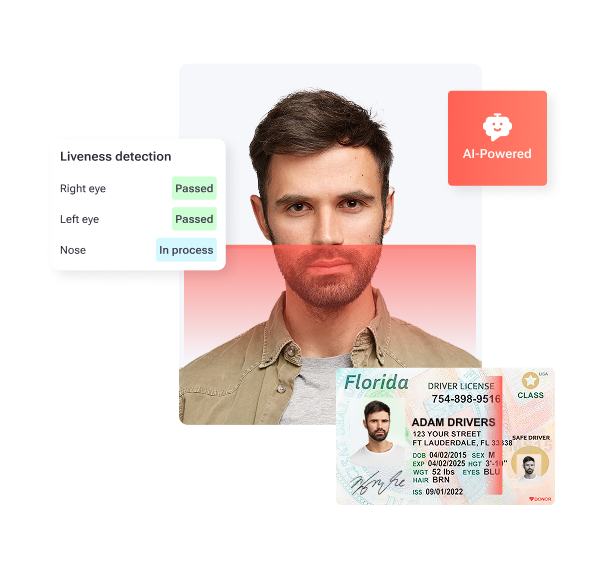
IDVerify addresses Florida community association needs through FCRA-compliant processes, direct credit bureau reseller relationships, and seamless integration with QuickApprove board dashboards. The platform has generated $150M for communities and processes more than 100k applications each year. Unlike Anonybit’s generic approach, IDVerify offers Florida-tailored compliance, community-specific customization, and up to 70% time savings for property managers.
Side-by-Side Comparison: IDVerify+ vs Anonybit for Florida CAMs
|
Feature |
Anonybit |
IDVerify+ (TenantEvaluation) |
|
Integration |
External redirects |
Native, no redirects |
|
Privacy Method |
Token/ZKP |
Biometric match + zero retention |
|
Compliance |
General ZKP framework |
FCRA-built, bureau reseller |
|
HOA Customization |
Generic implementation |
Florida-specific, QuickApprove integration |
|
Time Efficiency |
Manual coordination steps |
70% faster processing |
Anonybit decentralized biometric for property management offers meaningful privacy benefits but needs significant customization for community association workflows. TenantEvaluation’s integrated approach delivers stronger outcomes through purpose-built functionality.
Next Steps for Florida HOAs Choosing a Screening Platform
Anonybit’s tokenization and zero-knowledge proof process provides privacy-preserving biometric verification through mathematical conversion and decentralized storage. Community associations, however, gain more value from native integration that removes workflow disruption while maintaining privacy protection. IDVerify+ delivers fraud-proof, privacy-safe screening that aligns with Florida HOA and condo requirements.
Schedule a demo today to see how integrated biometric verification can save more than 50 hours each week while generating revenue for your community.
Frequently Asked Questions
How Anonybit Tokenization Protects Privacy in Screening
Anonybit converts biometric data into irreversible mathematical tokens that function like digital safe deposit boxes. These tokens represent identity characteristics without storing actual facial images or biometric templates. The system distributes encrypted token fragments across multiple cloud providers. No single entity can reconstruct an applicant’s biometric profile. This structure protects resident privacy while still enabling identity verification for community association screening processes.
Key Differences Between Anonybit and IDVerify+ for HOAs
Anonybit uses external portal redirects that interrupt application workflows. IDVerify+ runs natively within community association platforms. IDVerify+ offers Florida-specific compliance features, direct integration with board approval systems, and FCRA-aligned processes through established credit bureau relationships. The native integration removes coordination complexity and reduces applicant abandonment that often occurs with multi-platform verification systems.
FCRA Considerations for Anonybit in Florida Communities
Anonybit’s zero-knowledge proofs support permissible purpose verification by providing cryptographic identity confirmation without exposing biometric data. The system, however, does not include the full FCRA infrastructure that community associations often require. Missing elements include direct credit bureau reseller relationships, automated adverse action workflows, and built-in audit trails. Purpose-built platforms such as IDVerify+ deliver more complete FCRA compliance through established industry relationships and community association-specific processes.
Core Steps in Biometric Verification for Resident Applications
Biometric verification usually includes ID upload, selfie capture, facial landmark detection, identity matching, and result reporting. Anonybit adds tokenization and zero-knowledge proof steps that increase privacy protection. IDVerify+ streamlines the same flow through automated government ID validation, AI-powered liveness detection, and instant biometric comparison within existing application workflows. This approach removes manual coordination and cuts verification time from hours to minutes.
Best-Fit Biometric Privacy Solution for Condos in 2026
IDVerify+ delivers strong biometric privacy for condo associations through liveness detection that blocks synthetic identity fraud, native platform integration that keeps workflows intact, and Florida-specific compliance features. The solution addresses 2026 fraud trends such as deepfake attempts and sophisticated identity theft. Applicants experience a seamless process that feels modern and straightforward. Community associations gain reduced liability exposure and higher approval confidence without workflow disruption.