Written by: Luis Teran, Co-founder, CEO, TenantEvaluation | Last updated: August 23, 2026
Key Takeaways for Florida 55+ Communities
- The 80/20 rule under 24 CFR § 100.305 requires at least 80% of occupied units in a 55+ community to have at least one resident aged 55 or older to maintain HOPA exemption from familial-status protections.
- Manual processes such as email chains, spreadsheets, and scattered document storage create compliance gaps, missed re-verification cycles, and audit exposure for Florida CAMs and HOA boards.
- Accepted age-verification documents include government-issued photo IDs or birth certificates, and communities must collect proof of age, occupancy declarations, and signed policy acknowledgments for every new application.
- Regular re-verification surveys and centralized digital recordkeeping are required under 24 CFR § 100.307 to demonstrate ongoing compliance and respond to complaints or disputes.
- TenantEvaluation standardizes age verification workflows for Florida 55+ communities, and you can explore the automated workflow solution.
How the 80/20 Rule Works in a 55+ Community
The 80/20 rule is the federal occupancy standard that allows a housing community to legally restrict residency based on age. Under 24 CFR § 100.305, at least 80% of a community’s occupied units must be occupied by at least one person aged 55 or older. The threshold applies to occupied units only, and vacant units are excluded from the calculation.
Several operational details work together for Florida associations:
- Only one occupant per unit needs to be 55 or older for that unit to count toward the 80% threshold.
- The qualifying occupant does not need to be the owner, buyer, or leaseholder, only an occupant of the unit.
- Up to 20% of occupied units may have no resident aged 55 or older without automatically voiding the exemption.
- A community may operate stricter internal rules than the federal 80/20 standard, but it cannot lawfully claim the exemption if more than 20% of occupied units lack a 55-or-older resident.
- If a community falls below the 80% threshold for too long, it risks losing its legal exemption from the Fair Housing Act’s familial-status protections.
The 80/20 rule also appears in a different context. It limits commercial revenue to 20% of total income in cooperative housing under IRS Section 216. A separate and stricter exemption under 24 CFR § 100.303 covers communities intended solely for persons aged 62 or older, where every resident must meet the age requirement with no 20% buffer.
Florida associations must also satisfy the intent and verification prongs of HOPA, not just the occupancy ratio. A community that meets the 80% threshold but does not publish age-restriction policies or conduct regular verification does not qualify for the exemption under 24 CFR Part 100, Subpart E.

Adult Children and the 80/20 Rule in 55+ Communities
Boards and CAMs frequently receive questions about adult children living with 55+ residents. The answer depends on the community’s governing documents and its current occupancy ratio. Federal law allows a younger family member to reside in a unit if the community remains above the 80% threshold and the unit has at least one occupant aged 55 or older.
Under-55 occupants create specific documentation and tracking obligations. HUD states that exempt senior housing communities can lawfully refuse to sell or rent dwellings to families with minor children. This exemption applies to permanent occupancy rather than temporary guest visits. Adult children who become permanent occupants must appear in the community’s occupancy records.
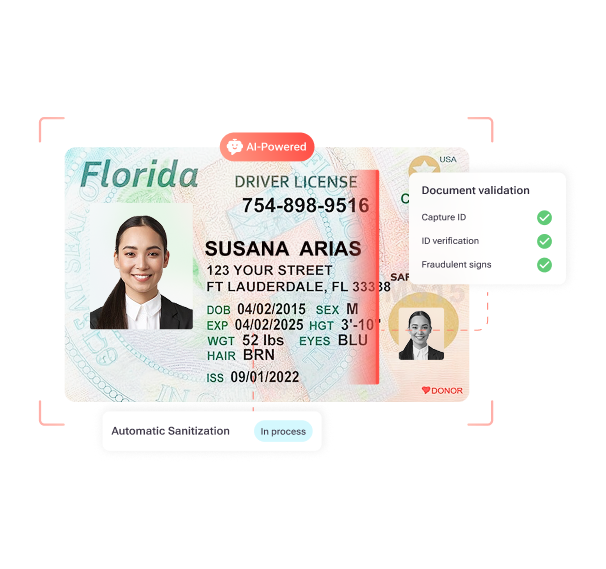
Each application involving age verification should include the following items:
- Proof of age for the qualifying 55+ occupant (from the accepted document list above)
- Completed occupancy declaration identifying all household members and their ages
- Signed acknowledgment of community age-restriction policies
- Documentation of any under-55 occupants and their relationship to the qualifying resident
- Re-verification of the above regularly per 24 CFR § 100.307
Regular re-verification is required under HOPA. HOPA-qualified communities must maintain procedures for routinely determining occupancy via surveys or other means and be able to produce age-verification records in response to complaints. They are not required to keep or file any public-inspection summary per 24 CFR § 100.307. Communities that allow this cycle to lapse, or that rely on informal email confirmations instead of documented surveys, accumulate risk that often appears only during audits or disputes.
Guest stays by under-55 family members follow a different standard. Most 55+ communities cap overnight guest stays at 14 to 30 consecutive days per visit and 30 to 60 total days per calendar year. A guest becomes an occupant, and counts toward 80/20 compliance, when stays exceed posted day limits, occur with high frequency that resembles continuous residency, or involve receiving mail, registering a vehicle, or listing the address on official documents.
How Strict 55-and-Older Communities Are in Practice
Strictness varies by community, but the federal floor remains clear: publish policies, verify ages, and regularly update age-verification records. Communities that operate below this floor, regardless of intent, are not protected by the HOPA exemption.
Manual-process failures in Florida 55+ communities often interact and compound risk. Common issues include:
- Inconsistent document collection across applications, with some files complete and others missing key proof-of-age records
- Re-verification cycles tracked in spreadsheets and missed when staff turns over
- No centralized record of which units have been verified and which are overdue
- Age-verification documents stored across email inboxes, shared drives, and physical folders with no searchable audit trail
- Inconsistent enforcement of guest-stay limits, creating occupancy ambiguity that affects the 80% calculation
- Reliance on verbal confirmations or informal email exchanges instead of signed certifications
Recommended operational controls under HOPA include staff training on permissible inquiries and anti-discrimination practices, plus periodic audits of occupancy statistics to confirm the 80% threshold remains met. Best practices also include publishing a resident handbook that outlines eligibility criteria, occupancy rules, and the process for exceptions or disputes.
Consistency across applications and residents gives boards the strongest position. Property managers in 55+ communities commonly struggle with repeated or extended guest use that begins to resemble occupancy rather than a temporary visit, leading to enforcement inconsistencies and board adjudication of the same disputes. A documented, repeatable process that applies uniformly across all applications is the most defensible position for any Florida association.
Standardized Age-Verification Workflow Checklist for Florida CAMs and Boards
TenantEvaluation’s 55+ Communities Verification is a built-in capability that helps Florida condos and HOAs standardize how age-restricted requirements are handled across applications. It reduces manual work, improves documentation consistency, and strengthens operational efficiency and control. The platform is designed for Community Association Managers and boards that need a more structured and scalable process, while still relying on legal guidance for interpretation.
The checklist below outlines workflow steps Florida CAMs and boards should apply to every 55+ application:
| Step | Action | Document Required | Cadence |
|---|---|---|---|
| 1 | Collect proof of age for qualifying 55+ occupant | Driver’s license, passport, birth certificate, or equivalent | Every new application |
| 2 | Collect occupancy declaration for all household members | Signed declaration listing all occupants and ages | Every new application |
| 3 | Confirm 80% threshold is maintained after approval | Current occupancy ratio calculation per 24 CFR § 100.305 | Every new application |
| 4 | File and retain all age-verification documents | Centralized digital record with audit trail | Ongoing |
| 5 | Conduct regular re-verification survey | Updated proof of age or signed certification per 24 CFR § 100.307 | Regularly |
| 6 | Maintain record of occupancy survey | Survey records on file per 24 CFR § 100.307 | Regularly |
The next table compares the operational outcomes of a spreadsheet-based workflow with a digital platform workflow for 55+ age verification:
| Workflow Factor | Spreadsheet-Based | Digital Platform (TenantEvaluation) | Impact |
|---|---|---|---|
| Document collection | Manual email requests and PDF attachments | Structured digital collection during application | Reduces follow-up volume and incomplete submissions |
| Regular re-verification tracking | Manual calendar reminders, prone to staff turnover gaps | Centralized tracking with unit-level visibility | Reduces missed re-verification cycles |
| Audit readiness | Records scattered across inboxes and shared drives | Searchable digital history and audit-ready records | Faster response to audits or disputes |
| Consistency across applications | Varies by staff member handling the file | Standardized across all applications and communities | Reduces documentation gaps and enforcement inconsistencies |
Frequently Asked Questions
What is the 80/20 rule in a 55+ community?
The 80/20 rule is the federal occupancy standard under the Housing for Older Persons Act of 1995. As explained above, the 80/20 rule requires at least 80% of occupied units to have a resident aged 55 or older, with the remaining 20% allowed to house younger residents. The threshold applies only to occupied units, and vacant units are excluded. Communities must also publish age-restriction policies and conduct regular age verification to maintain the exemption.
What documents are accepted for age verification in a Florida 55+ community?
Accepted documents for age verification typically include reliable government-issued photo identification or birth certificates. Communities retain these documents in their records and update them regularly as part of the verification cycle.
How often must a 55+ community conduct age verification?
Federal rules under HOPA require 55+ communities to develop procedures for regular updates of age-verification records through surveys or other means, without mandating any specific frequency such as every two years. Communities must maintain procedures for routinely determining occupancy and be able to produce age-verification records in response to complaints, but they are not required to keep or file any public-inspection summary per 24 CFR § 100.307. Age verification should also occur as part of new lease or move-in screening, with documents filed and retained for the verification cycle.
Who is responsible for conducting age verification in a Florida HOA or condo?
The community association, typically administered by the board of directors and managed by a Community Association Manager, is responsible for establishing, publishing, and following age-verification policies. The CAM usually handles day-to-day document collection and recordkeeping, while the board ensures policies are in place and that the community operates in accordance with its governing documents. Neither role replaces legal counsel, and associations with questions about their specific obligations should consult a licensed Florida attorney.
What happens if a 55+ community falls below the 80% threshold?
If a community’s occupied units drop below the 80% threshold, meaning fewer than 80% of occupied units have at least one resident aged 55 or older, the community risks losing its federal exemption from the Fair Housing Act’s familial-status protections. Once the exemption is lost, the community may be required to accept residents of any age going forward. Maintaining accurate, current occupancy records and conducting regular re-verification are the primary operational controls that help associations monitor and protect their age-restricted status.
Conclusion: Building a Defensible Age-Verification Process
The 80/20 rule is a federal standard with three enforceable components: occupancy ratio, published intent, and documented age verification with regular updates. Florida CAMs and boards that rely on manual processes such as email chains, spreadsheets, and inconsistent document collection carry operational risk that often surfaces during audits, disputes, or ownership transitions.
A repeatable, standardized workflow applied consistently across every application gives Florida 55+ communities a stronger and more defensible posture. TenantEvaluation’s 55+ Communities Verification is built specifically for Florida condos and HOAs, standardizing application handling, reducing manual work, supporting documentation consistency, improving operational efficiency, and strengthening internal processes at scale.
