Written by: Luis Teran, Co-founder, CEO, TenantEvaluation | Last updated: August 24, 2026
Key Takeaways for Florida Condo Boards
- Start budget planning with a unit-size pricing matrix that compares flat-rate and per-unit plans over 24 months of projected growth.
- Require software to enforce Florida-specific accounting rules, including payment application order, simple-interest caps, and 15-business-day owner-request deadlines.
- Confirm that every platform feature maps to a Chapter 718 or 720 requirement, including the 2026 password-protected owner-portal mandate for associations with 25 or more units.
- Treat FCRA-compliant resident screening, biometric ID verification, and audit-ready workflows as required layers that protect the association from liability.
- Pairing TenantEvaluation’s screening, onboarding, and lease-tracking tools with an accounting platform creates a complete, audit-ready stack — learn more at TenantEvaluation.
7 Insights for Selecting the Right Platform
-
Anchor Your Budget to a Unit-Size Pricing Matrix Before Comparing Features
Start by comparing pricing models at a consistent unit count so you see how each platform scales as your community grows. Software pricing for small Florida condo associations varies widely by billing model. Per-unit plans penalize growth, while flat-rate plans reward it. The table below maps 2026 published pricing to a 25-unit benchmark so costs share a common scale.
Platform Plan / Tier Monthly Cost (25 units, annual billing) Annual Cost PayHOA All-inclusive, 0–25 units $49 $588 Easy HOA All-inclusive, 1–25 units $49 $588 RunHOA Flat annual, unlimited units $33.25 $399 Neigbrs by Vinteum Basic, $0.79/unit/mo $19.75 $237 HOA Express Engage, 25-household tier $21 $252 Condo Control Self-managed, 0–99 units Custom Request demo Buildium Essential $62 $744 Implementation steps: Pull your current unit count, project growth over 24 months, and calculate cost at both counts for each shortlisted platform. This comparison shows how different billing models respond to growth. Flat-rate plans like RunHOA’s $399 per year become proportionally cheaper as units increase. Per-unit plans like Vinteum’s $0.79 per unit per month stay predictable but scale in a straight line. Before finalizing your comparison, confirm whether the published price includes accounting, payments, and document storage, or whether those are add-ons that raise your real cost.
A Florida condo board president managing an 8–12-unit community reported that self-managed software, accounting, records, and payment processing cost $600–$1,200 per year. Professional management for the same property cost $9,600–$14,400 per year. That difference can fund several software subscriptions at once.
Separate Florida Accounting Compliance from General Feature Lists
Confirm that any platform you consider follows Florida’s required payment rules instead of relying on generic accounting logic. Florida HOA software must enforce the statutory payment application order under F.S. 720.3085(3)(b): interest first, then administrative late fees, then collection costs and attorney’s fees, and finally principal. Owners cannot redirect payments to principal. Software that applies payments in a different order creates collection-action exposure.
Following HB 1203 (effective July 1, 2024), Florida HOA software must calculate simple interest only on delinquent assessments. Compound interest is prohibited regardless of governing documents. This same legislation also caps late fees at the greater of $25 or 5% of the past-due installment. Because both restrictions override conflicting language in your governing documents, verify that any platform under evaluation enforces these caps automatically rather than relying on manual entry.
Implementation steps: Request a demo of the payment ledger specifically and watch how it handles a partial payment. Ask the vendor to demonstrate how a partial payment is allocated and whether the system blocks compound interest. Confirm that the platform tracks the 15-business-day response deadline for owner accounting requests under Florida statute. Missing that deadline waives fines more than 30 days past due that lacked prior written notice.
Associations that enroll owners in recurring ACH auto-pay typically reduce 30-day delinquency rates by 30–50% because automatic debits remove forgotten due dates. Prioritize platforms with self-serve owner portals that support scheduled ACH payment plans.
Map Each Platform Feature to a Specific Chapter 718 or 720 Requirement
Use Florida statute as your checklist so every feature you buy serves a clear compliance purpose. Generic software marketing language does not map cleanly to Florida law. Board members and CAMs need a feature-to-statute crosswalk before signing any contract.
Effective January 1, 2026, Florida condominium associations managing condominiums with 25 or more units that do not contain timeshare units must maintain a password-protected website or portal containing digital copies of specified official records, restricted to owners. Any platform that cannot host a password-protected owner portal fails this requirement immediately.
Official records must be available for inspection within 5 working days of a written request under §718.111(12). Milestone inspection records must be retained by the authority having jurisdiction for the life of the building, while general official records require 7-year retention.
Implementation steps: Build a checklist with three columns: Florida statute requirement, software feature that satisfies it, and evidence from the vendor demo. Require the vendor to confirm in writing which features address which statutory obligations. Do not accept general compliance claims without feature-level specifics.
See how audit-ready workflows complement your Chapter 718/720 compliance with TenantEvaluation’s screening and lease tracking platform.
Treat Resident Screening and Onboarding as a Required Compliance Layer
Close the compliance gap between accounting tasks and resident approvals by adding a dedicated screening platform. Generic HOA accounting platforms such as PayHOA, ManageCasa, and HOA Express handle dues, communications, and document storage. None of them include FCRA-compliant resident screening, biometric identity verification, or built-in adverse action workflows. That gap creates direct liability exposure for Florida condo associations that approve residents without a documented, compliant screening process.
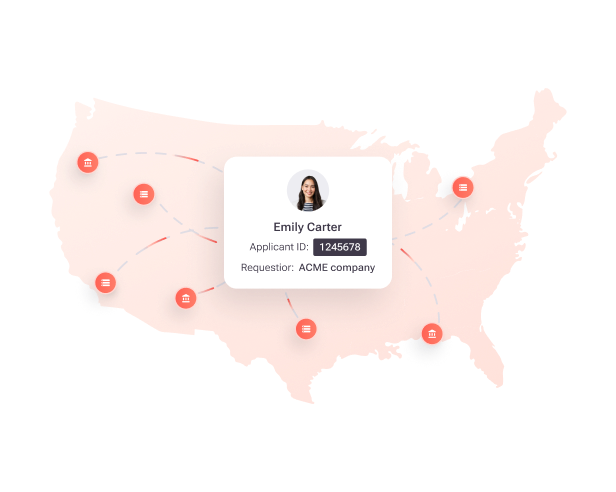
With SafeCheck+, our upgraded service provides you access to a comprehensive nationwide offender search, powered by real-time data from law enforcement agencies and trusted third-party sources. Our expanded coverage ensures that you never miss critical information, no matter where you operate. TenantEvaluation is built specifically for community associations and management companies, with FCRA compliance as the foundation rather than an afterthought. As a direct reseller of TransUnion and Equifax data, TenantEvaluation accesses credit data under strict bureau rules with regular compliance reviews and no gray-market sources. The platform’s IDVerify layer adds biometric identity verification, including government ID validation, AI-powered liveness detection, and selfie-to-ID biometric comparison, directly inside the screening workflow. Communities move from document-based review to verified physical identity confirmation before approval decisions.
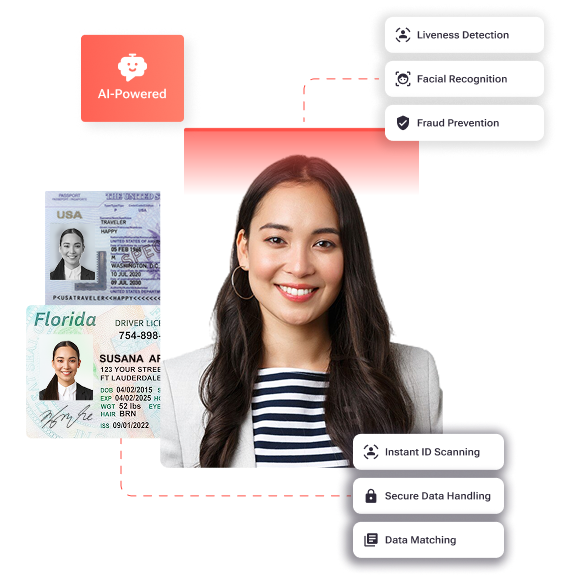
ID Verify Built-in audit trails timestamp every application action. Automated adverse action workflows ensure associations meet FCRA notification requirements without manual tracking. The clear separation between data provision by TenantEvaluation and decision-making by the association preserves the association’s legal standing.
Implementation steps: Identify which accounting platform handles your dues and records, then layer TenantEvaluation on top as the screening and onboarding intake system. The two platforms serve distinct functions and do not overlap. One manages money and records, and the other manages who enters the community. TenantEvaluation has processed more than 100,000 applications annually across over 5,000 communities, with a Google rating of 4.8 out of 5.
Turn Application Processing into a Revenue Source with TEpayments
Use application fees to offset or even exceed your software costs. Most small condo boards treat application processing as a cost center. TenantEvaluation’s revenue-sharing model converts it into an income stream. Application fees are collected through TEpayments by Zinc, a connected payment workflow integrated into the TenantEvaluation platform, and payments go directly from the applicant to the association’s designated account. TenantEvaluation organizes the workflow but never holds the funds.
Each association defines what is collected and at which stage. The capability adapts to the property’s process rather than forcing a universal sequence. This flexibility eliminates the manual payment-chasing that burdens most small CAMs. Staff no longer track confirmations through email, record fees in disconnected spreadsheets, or answer repeated questions about what to pay or where to pay it.
TenantEvaluation deducts its service fee from the collected application fee and rebates the remainder to the association or management company. For communities processing consistent application volume, this model produces a cost-neutral or revenue-generating onboarding operation. TenantEvaluation has already generated $150 million for communities through this model.
Implementation steps: Calculate your association’s average annual application volume and multiply by your current application fee. Compare that gross figure against TenantEvaluation’s per-application service fee to project net revenue. For a 40-unit community with moderate turnover, the math often offsets the cost of the accounting platform subscription entirely.
See how TEpayments turns application fees into association revenue with a demo of the integrated payment workflow.
Confirm Your Stack Meets the 2026 Digital Record Portal and Reporting Rules
Check that your combined platforms satisfy both the portal mandate and the financial reporting standards that accompany it. Effective January 1, 2026, Florida condominium associations managing condominiums with 25 or more units that do not contain timeshare units must maintain a password-protected owner portal containing digital copies of specified official records, restricted to owners. A public website does not satisfy this requirement.
Milestone inspection records must be retained by the authority having jurisdiction for the life of the building. Beyond the 7-year retention for general records, this lifetime requirement makes searchable digital storage essential rather than optional. The annual financial report must be prepared within 90 days of fiscal year-end, with the required detail level scaled to association revenue, from a cash receipts report for the smallest associations up to audited statements at $500,000 or more in annual revenue. Software that cannot produce these reports in the required format forces associations to maintain parallel manual systems, which defeats the purpose of digitization.
TenantEvaluation’s Lease Tracking capability connects resident onboarding, unit data, approvals, and lease documentation into one centralized, real-time workflow. It provides real-time lease status visibility, automated lease document collection during onboarding, unit-level tracking, and searchable digital history. Associations replace spreadsheets and scattered email chains with audit-ready digital records from application to occupancy.
Implementation steps: Confirm that your accounting platform generates the correct financial report format for your revenue tier. Confirm that your document portal is password-protected and owner-restricted. Then confirm that lease records and screening documentation are stored in a searchable, audit-ready system rather than in email folders or local drives. If any of those three confirmations fail, identify which platform in your stack closes the gap.
Measure Risk Reduction and Audit Readiness with Concrete Evidence
Treat risk reduction as a measurable outcome instead of a vague promise. A Community Associations Institute study found that the real annual cost of professional management, including add-on charges, meeting fees, and vendor markups, is typically 20–40% higher than the base contract. Florida HOA management fees run 20–40% above the national average because of post-Surfside compliance requirements, the insurance crisis, CAM licensing mandates, and legislative complexity. Self-management with the right software stack reduces that exposure without removing oversight.
Audit readiness means every application action is timestamped, every document is stored with version history, every payment is traceable to a specific applicant and unit, and every screening decision has a documented FCRA-compliant record. TenantEvaluation’s QuickApprove accelerated approval workflow gives boards a dedicated review and voting dashboard with real-time application tracking, automated communication support, customized approval letters, and a personalized welcome package inside one connected platform. For 55+ age-restricted communities, 55+ Communities Verification standardizes how age-restricted requirements are handled across applications, reducing manual work and improving documentation consistency.
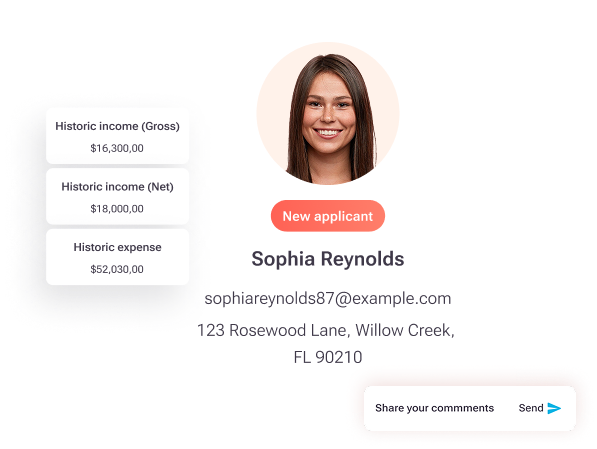
QuickApprove: Fast, Informed Decisions at the Click of a Button Implementation steps: Define your association’s three highest-risk operational areas. Common examples include identity fraud at onboarding, incomplete lease records, and undocumented screening decisions. Map each risk to a specific software feature that reduces it and require vendors to demonstrate the audit trail for each scenario during the demo. Platforms that cannot produce a timestamped, searchable record for a specific application within 60 seconds of the request are not audit-ready.
A Florida-based management company that switched to TenantEvaluation freed up 50 hours per day of staff time, cut processing time by 50%, and saved $240,000 annually while eliminating the liability exposure of handling sensitive resident information on paper.
Frequently Asked Questions
How much does HOA management software cost?
HOA management software for small Florida condo associations under 50 units varies by platform and billing model in 2026. Flat-rate platforms like RunHOA charge $399 per year regardless of unit count. Per-unit platforms like Neigbrs by Vinteum charge $0.79–$1.99 per unit per month. Mid-range all-inclusive platforms like PayHOA and Easy HOA charge $49 per month for 0–25 units on annual billing. These figures cover accounting, communications, document storage, and owner portals, but none include FCRA-compliant resident screening, which requires a separate specialized platform like TenantEvaluation. Professional management for the same community size typically costs $20–$45 per unit per month, or $6,000–$27,000 annually for a 25-unit association, which aligns with the 10–12 times cost difference noted earlier for smaller communities and makes self-managed software a significant cost reduction even when a screening layer is added.
What is the best free accounting software for a homeowners association?
HOA Express offers a Free tier at $0 per month for communities up to 50 households, providing unlimited pages and storage with a subdomain. It does not include online payments, multiple admin accounts, or a custom domain, which makes it suitable only for communities that need a basic digital bulletin board and have no dues-collection or accounting requirements. For associations that need invoicing, bank-connected accounting, and online payments, the lowest-cost paid options in 2026 are Neigbrs by Vinteum Basic at $0.79 per unit per month and HOA Express Engage at $21 per month for 25 households on annual billing. Neither platform includes resident screening. Associations that rely solely on free or entry-level accounting tools without a compliant screening layer remain exposed to identity fraud, incomplete audit trails, and FCRA liability, risks that a platform like TenantEvaluation is specifically designed to address.
What is the 5-year rule for HOA in Florida?
Florida does not have a single statute called the “5-year rule” for HOAs, but the term commonly refers to two related provisions. First, under Chapter 718, Florida condominium associations must fund structural integrity reserves (SIRS) for components with a deferred maintenance or replacement cost exceeding $25,000 (raised from $10,000 by HB 913 in 2025, indexed for inflation), and boards may no longer waive or underfund these items. Second, the term sometimes refers to the requirement that milestone inspections must be conducted for condominium and cooperative buildings three stories or taller at 30 years of age and every 10 years thereafter, or at 25 years for buildings within three miles of the coastline. Milestone inspection records must be retained by the authority having jurisdiction for the life of the building. Software platforms used by Florida condo associations should support SIRS reserve tracking and long-term document retention to reduce the operational burden of meeting these requirements.
Conclusion
Florida condo associations choosing affordable HOA management software in 2026 benefit from a layered, statute-driven approach. The seven insights above create a clear sequence: anchor costs to a unit-size pricing matrix, verify statutory accounting compliance, map every feature to a Chapter 718 or 720 requirement, add a FCRA-first screening layer, capture application fee revenue, confirm digital record portal readiness, and measure risk reduction as a concrete operational outcome rather than a marketing claim.
Generic accounting platforms handle dues and documents. TenantEvaluation supplies the screening, onboarding, identity verification, lease tracking, and payment workflow layer that those platforms lack. Together, the two form a complete, audit-ready operational stack for self-managed Florida condo associations under 50 units without adding headcount or accepting the cost of full-service professional management.
Complete your Florida condo association’s software stack with TenantEvaluation’s screening, onboarding, and lease tracking platform.
