Written by: Luis Teran, Co-founder, CEO, TenantEvaluation | Last updated: June 26, 2026
Key Takeaways for Florida CAMs and Boards
- The FCRA requires a two-step adverse action process for tenant screening. Applicants first receive a pre-adverse notice with the consumer report and summary of rights, then a final adverse action notice after a waiting period.
- Florida community associations face growing compliance pressure in 2026 due to higher application volumes, increased identity fraud risk, and heightened FTC scrutiny of tenant screening practices.
- Manual adverse action processes often create compliance gaps such as inconsistent notice delivery, missing consent records, fragmented audit trails, and weak board oversight.
- Automated workflows with built-in notice delivery, biometric identity verification, and centralized record retention create defensible audit trails and improve daily efficiency for CAMs and boards.
- TenantEvaluation streamlines adverse action compliance for Florida HOAs and condos with purpose-built automation and lease tracking — learn more.
Shifting Tenant Screening Pressures for Florida HOAs and Condos
Florida community associations face a convergence of pressures in 2026. Identity fraud targeting residential communities has increased, with synthetic identities and impersonation attempts entering screening pipelines through traditional document-based review. The FTC has signaled heightened scrutiny of tenant screening practices, particularly around permissible purpose controls, notice delivery, and data accuracy obligations.
Application volumes have also climbed across Miami, Fort Lauderdale, Tampa, and Orlando. Many HOAs and condos now process more applications than in prior years, which exposes the limits of spreadsheet-based workflows. The operational gap between what manual processes can handle and what FCRA compliance requires continues to widen. Purpose-built platforms that embed adverse action automation, biometric identity verification, and centralized lease tracking directly into the screening workflow now replace fragmented, multi-vendor approaches.
TenantEvaluation, built specifically for community associations and management companies with FCRA compliance at its core, processes over 100,000 applications annually across more than 5,000 communities as a direct reseller of TransUnion and Equifax data under strict bureau rules. This operational foundation supports automated workflows that close the manual gaps described throughout this guide.
Four Core Steps in a Florida Adverse Action Workflow
A defensible adverse action workflow in a Florida community association follows four clear operational steps.
- Consent capture: The association obtains written authorization from the applicant for a consumer report pull. The system timestamps and stores this consent before any screening data is accessed.
- Pre-adverse action delivery: The pre-adverse notice, consumer report copy, and FCRA summary of rights go to the applicant before a final decision is communicated. The platform records proof-of-transmission for this delivery.
- Waiting period management: The association observes a defined review window, typically five business days, during which the applicant may dispute inaccuracies with the consumer reporting agency.
- Final adverse action notice: The association sends a written notice that identifies the adverse decision, the CRA used, and the applicant’s dispute rights. Delivery confirmation remains stored in the application record.
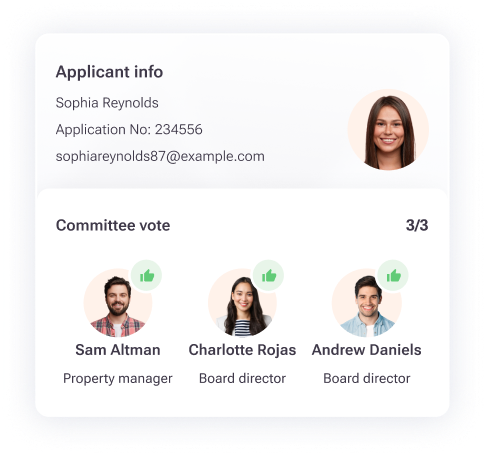
Board involvement adds a governance layer to these steps. In many Florida HOAs and condos, the board of directors holds final approval authority. The adverse action workflow therefore must accommodate board review timelines, voting records, and decision documentation. All of these records need to stay connected to the underlying screening file for audit purposes.
Risk, Governance, and Retention Rules for Adverse Action Records
Adverse action documentation both fulfills the applicant’s statutory rights under the FCRA and protects the association in disputes or regulatory inquiries. The FCRA does not specify a single universal retention period for adverse action records. Federal regulations under ECOA and FCRA require retention of most adverse action records for 25 months, though Fair Housing records may require 5+ years.
Governance considerations for Florida community associations include clear separation between the entity making the adverse decision, such as the association or board, and the entity providing the consumer data, such as the CRA or reseller. Associations also need role-based access controls that limit who can view screening reports. A complete, immutable audit trail that captures every action taken on an application from submission through final decision further strengthens defensibility.
TenantEvaluation maintains a clear separation between decision-making authority, which remains with the association, and data provision, which flows through its direct reseller relationships with TransUnion and Equifax. Built-in audit trails log every application action with timestamps, which supports board oversight and regulatory defensibility.
Manual Adverse Action Pitfalls for Florida Associations
Manual adverse action processes in Florida community associations often produce four recurring failure points.
- Inconsistent notice delivery: Pre-adverse and final adverse notices sent by email or physical mail without systematic proof-of-transmission records create gaps that cannot be reconstructed later.
- Missing or incomplete consent records: Consent captured verbally or on paper forms that are never digitized and timestamped leaves the association without a defensible authorization record.
- Fragmented audit trails: When screening reports, board votes, notice delivery records, and lease documentation live across email inboxes, shared drives, and spreadsheets, reconstructing a complete application history for a dispute or audit becomes time-intensive and unreliable.
- Weak board oversight: Without a connected approval workflow, board members review applications through email chains with no visibility into notice status, waiting periods, or prior decisions. These gaps increase governance and compliance risk.
Modern Best Practices for Automated Adverse Action Workflows
Automated adverse action workflows in 2026 follow three operational standards that Florida CAMs can apply immediately.
- Embedded notice automation: The system generates and delivers pre-adverse and final adverse notices automatically at the correct workflow stage. It stores proof-of-transmission records in the application file without manual steps.
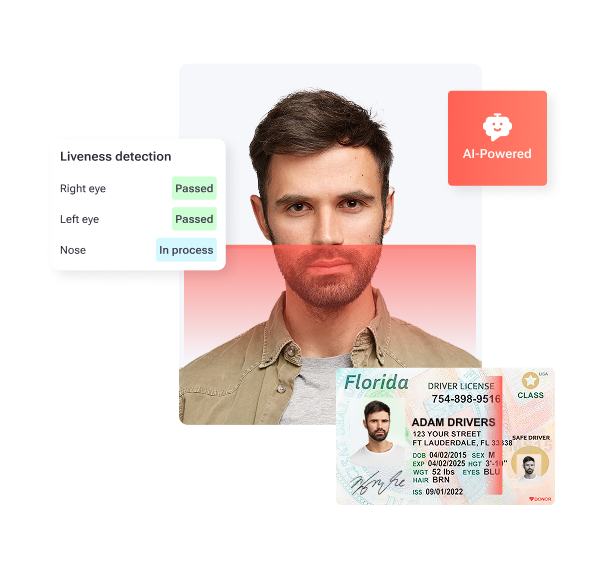
- Biometric identity verification at consent: IDVerify from TenantEvaluation integrates government ID validation, AI-powered liveness detection, and biometric selfie-to-ID comparison directly into the screening workflow. The platform confirms applicant identity before screening authorization, which reinforces permissible-purpose controls and audit defensibility.
- Centralized, searchable record retention: The platform stores all application documents, consent records, screening reports, notice delivery confirmations, board votes, and lease agreements in one connected system. Unit-level tracking and a searchable digital history support fast responses to questions from boards, applicants, or regulators.

TenantEvaluation’s QuickApprove accelerated approval workflow connects these elements into a board-ready process. CAMs gain real-time application tracking, automated communication support, customized approval letters, and fewer manual follow-ups while retaining control, compliance, and visibility.

Schedule a demo today and see TenantEvaluation’s automated adverse action workflow in action.
Evaluating Compliance-Focused Document Management Platforms
CAMs can use a structured framework to evaluate adverse action compliance document management tools across six core criteria.
- Compliance readiness: The platform should automate pre-adverse and final adverse notice delivery with proof-of-transmission records. It should also rely on direct CRA reseller relationships instead of opaque third-party data aggregators.
- Operational efficiency: The system should reduce manual follow-up, eliminate spreadsheets, and connect application intake through final decision in a single workflow.
- Transparency: CAMs and board members should have real-time visibility into application status, notice delivery, and waiting period timelines.
- Scalability: The platform should handle high-volume application seasons without additional headcount or inconsistent processes.
- Auditability: The system should produce a complete, immutable, timestamped audit trail for every application action.
- Risk controls: The platform should include biometric identity verification, automatic redaction of PII, role-based access, and PCI Level 1 data security.
TenantEvaluation’s Lease Tracking capability adds a seventh dimension. CAMs gain centralized, real-time lease visibility and lifecycle control from application to occupancy. The platform connects resident onboarding, unit data, approvals, and lease documentation into one audit-ready workflow, which replaces scattered email chains and disconnected spreadsheets.
Comparing Adverse Action Compliance Tool Capabilities
| Capability | TenantEvaluation | Generic Screening Platforms (e.g., ApplyCheck, Verify Screening Solutions) | Broad Property Management Software (e.g., AppFolio, Buildium) |
|---|---|---|---|
| Pre-adverse action automation with proof-of-transmission | Built-in, automated, timestamped | Not natively available, manual process required | Limited, not purpose-built for adverse action workflows |
| Complete application audit log | Immutable, timestamped, every action captured | Partial, focused on background check results only | General activity logs, not adverse-action-specific |
| Consent tracking with timestamped records | Digital, embedded in onboarding workflow | Manual or external, not integrated | Varies, not consistently tied to screening authorization |
| Biometric identity verification (IDVerify) | Native, AI liveness detection + biometric match | Not available | Not available |
| Board oversight dashboard with voting workflow | Dedicated board panel with real-time visibility | Not available | Limited, not designed for HOA/condo board governance |
| Direct CRA reseller (TransUnion, Equifax) | Yes, no third-party data aggregation | Varies, some use third-party platforms (e.g., TazWorks) | Third-party integrations, not direct reseller relationships |
Capability descriptions reflect platform design positioning based on publicly available product information and company context. Individual platform configurations may vary.
Frequently Asked Questions
What documents are required in an FCRA-compliant adverse action notice for tenant screening?
A complete adverse action package for tenant screening under the FCRA includes several components across the two-step process. The pre-adverse action stage requires a notice informing the applicant that information in their consumer report may result in an adverse decision, along with a copy of the consumer report and the FTC’s Summary of Consumer Rights Under the FCRA. After the waiting period, the final adverse action notice must identify the adverse decision, name the consumer reporting agency that provided the report, state that the CRA did not make the decision, and explain the applicant’s right to obtain a free copy of the report and dispute its accuracy. Florida community associations should also retain proof-of-delivery records for each document as part of the application file.
How long should Florida community associations retain adverse action records?
The FCRA does not prescribe a single universal retention period for adverse action records. Federal regulations under ECOA and FCRA require retention of most adverse action records for 25 months, though Fair Housing records may require 5+ years. Florida community associations should consult legal counsel to confirm retention schedules that align with their governing documents and applicable state law. Platforms like TenantEvaluation store application records, screening reports, notice delivery confirmations, and audit logs in a centralized, searchable digital archive, which reduces the operational burden of manual retention management.
What role should the board of directors play in adverse action decisions?
In Florida HOAs and condos, the board of directors typically holds final approval authority over resident applications under the community’s governing documents. The adverse action workflow therefore must support board review, voting, and decision documentation while keeping these records tied to the screening file. The board’s role focuses on making the adverse decision, while the CAM manages the process, ensures timely notice delivery, and maintains the audit trail. TenantEvaluation’s QuickApprove workflow includes a dedicated board panel with real-time application visibility, a voting workflow, and summarized applicant reports, which preserves board oversight without creating bottlenecks in the notice timeline.
What is proof-of-transmission and why does it matter for adverse action compliance?
Proof-of-transmission is a documented record confirming that an adverse action notice reached the applicant. This record includes the method of delivery, the date and time, and the intended recipient. Without proof-of-transmission, a community association cannot easily demonstrate that it fulfilled its FCRA notice obligations if an applicant disputes the process. Manual delivery methods such as email without read receipts or physical mail without certified tracking create gaps that are difficult to reconstruct later. Automated platforms that generate and store proof-of-transmission records at the moment of delivery provide the evidentiary foundation needed for audit defensibility.
How does biometric identity verification connect to adverse action compliance?
Biometric identity verification strengthens the permissible-purpose foundation of the entire screening workflow. Under the FCRA, a consumer report may only be pulled with a permissible purpose, which in tenant screening requires a legitimate application from a verified individual. When identity cannot be confirmed before screening authorization, the permissible-purpose basis for the report becomes harder to defend. TenantEvaluation’s IDVerify confirms applicant identity through government ID validation, AI-powered liveness detection, and biometric facial matching before the application proceeds to screening. This process creates a documented identity confirmation record that supports the adverse action audit trail from the first step of the workflow.
Conclusion: Next Steps for Adverse Action Compliance Readiness
Florida community associations managing tenant screening in 2026 operate in a compliance environment where manual adverse action processes create structural risk. Missing proof-of-transmission records, incomplete consent documentation, fragmented audit trails, and disconnected board oversight now appear as predictable outcomes of workflows that cannot match current volume or complexity.
A purpose-built platform addresses these gaps at the process level. Automated pre-adverse and final adverse notice delivery, timestamped consent records, biometric identity verification through IDVerify, board-ready approval workflows through QuickApprove, and centralized lease lifecycle visibility through Lease Tracking all operate inside one connected, audit-ready system.
TenantEvaluation’s purpose-built approach to community association screening delivers the operational infrastructure Florida CAMs need to manage adverse action compliance at scale. The platform’s direct CRA relationships, automated workflows, and proven performance across thousands of communities give associations a practical path to stronger compliance and smoother daily operations.
