Written by: Luis Teran, Co-founder, CEO, TenantEvaluation
Key Takeaways
- Manual email chains and incomplete submissions slow resident approvals and increase fraud risk for Florida HOAs and condos.
- Accelerated resident application review connects each step from submission to board decision while preserving FCRA compliance and full audit trails.
- Smart form logic, automated document checks, and biometric identity verification cut processing time from days to minutes without reducing oversight.
- Real-time board dashboards and automated communications can deliver up to 70% time savings and free as much as 50 staff hours per day.
- Ready to accelerate your association’s approval process, reduce risk, and improve resident experience? Schedule a demo today with TenantEvaluation.
The Problem: Manual Resident Review Slows Florida Communities
Manual resident application review creates heavy administrative work for Florida community associations. Most organizations still rely on email, paper forms, and spreadsheets during their busiest approval periods.
Document delivery delays make these challenges worse. Florida condominium sellers have no statutory deadline to deliver required association documents to buyers, which directly extends approval timelines and can delay closing processes. This lack of deadline creates a timing mismatch, because estoppel certificates must be delivered within 10 business days under Florida law, so associations must coordinate several moving parts on unpredictable schedules.
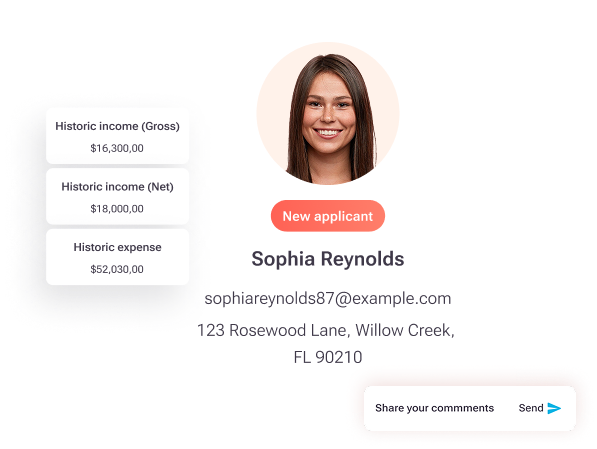
Identity fraud risk adds another layer of complexity for boards and CAMs. According to the NMHC Pulse Survey of apartment owners and managers, 80% of respondents have seen applicants misrepresent information on applications, and seven in ten observed rising fraudulent activity over the previous 12 months. Manual document review alone cannot reliably detect sophisticated fraud attempts, which leaves associations exposed.
How Accelerated Review Supports Florida HOAs and Condos
Accelerated resident application review creates a connected workflow that moves applications from submission to board decision faster while keeping compliance and oversight intact. This approach focuses on Florida housing association approvals, not immigration or unrelated expedite processes.
FCRA compliance forms the foundation of any legitimate acceleration strategy. Fair housing rules require community associations to apply identical screening criteria across all applicants and maintain time-stamped records of applications, communications, and outcomes. Accelerated workflows must preserve these documentation requirements while reducing repetitive manual tasks.
TenantEvaluation’s QuickApprove aligns with these requirements by keeping every approval step inside one platform. Instead of juggling email threads and spreadsheets, CAMs and boards use real-time application tracking, automated communication tools, and board-ready approval dashboards that maintain complete audit trails.
Seven Practical Steps to Speed Up Resident Application Review
This seven-step framework helps you implement faster approval workflows while keeping compliance and board control in place.
1. Deploy Smart Form Logic
Use application forms that adjust based on applicant responses and community rules. Smart logic removes irrelevant questions and ensures that applicants provide all required information at the start.
2. Implement Automated Document Verification
Adopt systems that automatically check for executed leases, valid government IDs, and required community-specific documents. These checks reject incomplete submissions before staff or board members spend time on review.
3. Integrate Biometric Identity Verification
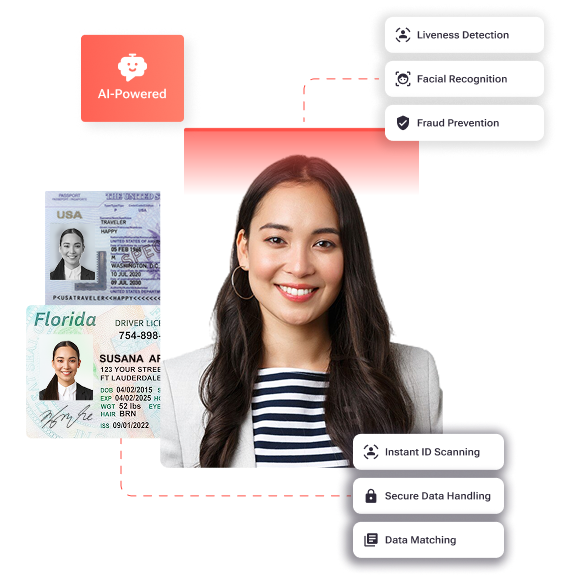
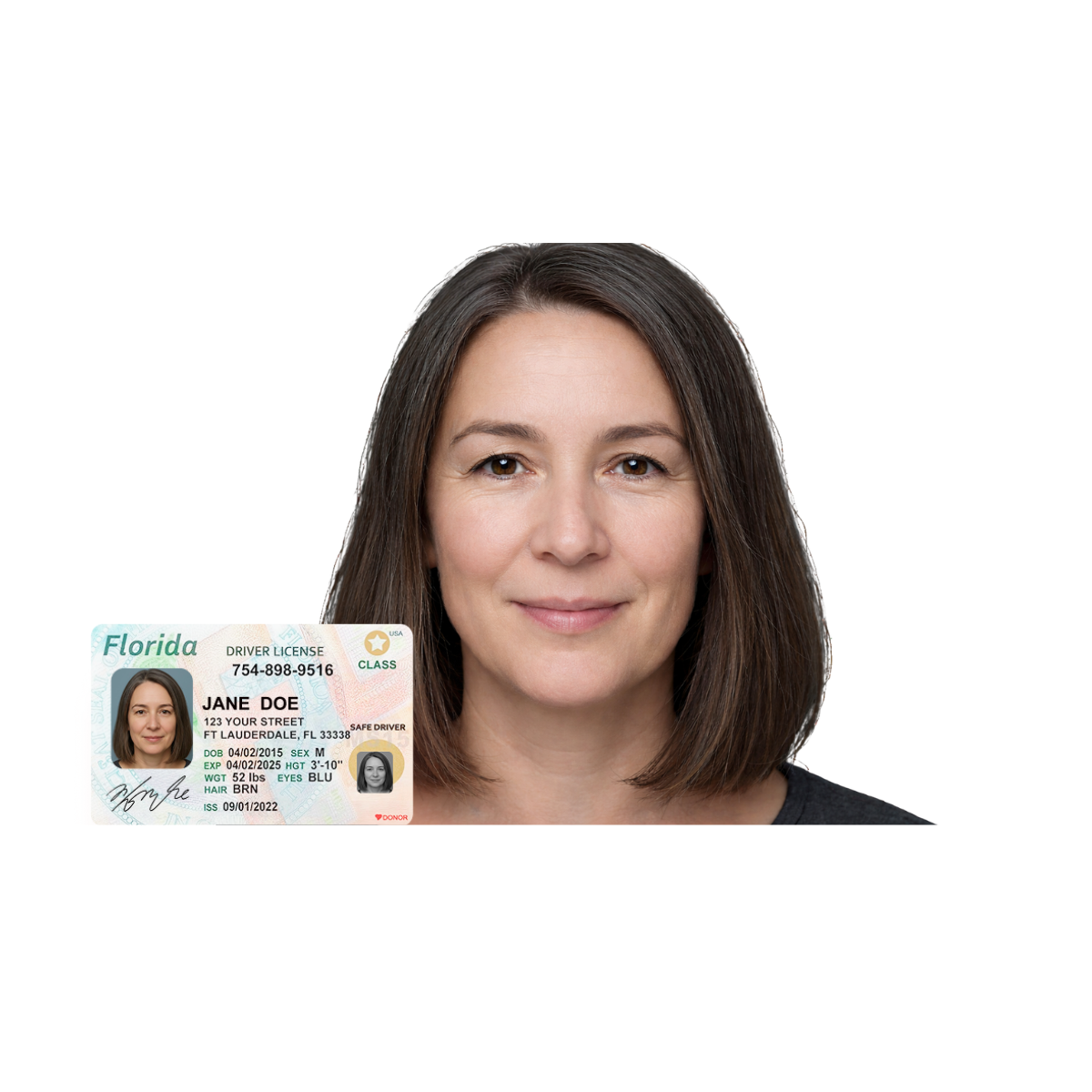
Use IDVerify capabilities that combine government ID validation, AI-powered liveness detection, and biometric facial matching. These tools confirm applicant identity before any approval decision.
4. Establish Real-Time Board Dashboard Access
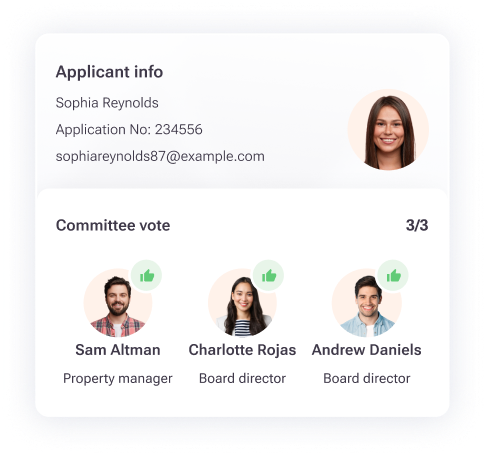
Give board members dedicated dashboards that show application summaries, voting tools, and timestamped approval histories. These dashboards replace scattered email-based decision processes with a clear, centralized view.
5. Activate Automated Communication Workflows
Set up automated notifications for status changes, missing documents, and next steps. These messages reduce manual follow-up work for staff and keep applicants informed throughout the process.
6. Standardize Age-Restricted Community Processing
For 55+ communities, use 55+ Communities Verification to standardize age-restricted documentation requirements. This structure reduces manual verification work and supports consistent treatment across properties.
7. Generate Automated Approval Letters and Welcome Packages
Create customized approval communications and personalized welcome materials that send automatically after board approval. This automation removes manual document preparation and improves the move-in experience.
Manual vs. QuickApprove: What Changes in Daily Workflows
Manual workflows create friction at every step, which slows approvals and drains staff capacity. Applications move through disconnected email chains, board members lack real-time visibility, and staff must prepare approval communications one by one.
TenantEvaluation’s QuickApprove replaces these fragmented steps with a connected workflow inside one platform. AI adoption among property management professionals surged from 20% to 58% in one year, and many teams now use automation to streamline screening and approval processes.
QuickApprove users see measurable results, including up to 70% time savings and as much as 50 hours of freed staff time per day. Associations can handle peak application volumes without adding headcount and still maintain the documentation standards boards expect for oversight and compliance.
Schedule a demo today to compare your current workflow with an accelerated approval process.
Protecting Board Control and Audit Trails During Acceleration
Accelerated workflows must keep board oversight strong while reducing administrative friction. HOA boards maintain oversight during operational acceleration by adopting documented, standardized workflows with timestamped records applied identically to all homeowners.
TenantEvaluation’s board dashboard gives board members real-time application visibility without ad hoc email chains. They see summarized applicant reports, voting panels for approvals, and complete audit histories that show consistent decision-making. Incomplete documentation and decisions made outside formal meetings increase exposure for condo associations, so controlled workflows play a key role in risk management.
The platform supports full FCRA compliance through automated adverse action workflows and a clear separation between decision-making authority, which remains with the association, and data provision, which TenantEvaluation supplies. Built-in audit trails for every application satisfy regulatory requirements while still allowing faster approvals.
Biometric Identity Verification That Reduces Fraud Risk
Traditional document-based screening alone cannot reliably prevent identity fraud in the current threat environment. IDVerify closes this gap with multi-layer verification that combines government ID validation, AI-powered liveness detection, and biometric facial matching.
This verification runs inside the application workflow without external portals or extra steps for staff. Applicants complete guided identity checks during application submission, and CAMs see verification results directly within screening reports. The system provides ID authenticity confirmation, liveness status, biometric match results, and redacted ID copies for compliance records.
Biometric verification increases confidence in approval decisions before residents enter the community. It also supports FCRA-aligned workflows through stronger permissible-purpose validation and a shift from document-only review to biometric-confirmed identity.
Standardizing 55+ Community Applications and Documentation
Age-restricted communities face documentation requirements that manual processes handle poorly. 55+ Communities Verification standardizes how Florida condos and HOAs manage age-restricted application requirements across properties.
This capability replaces fragmented email-based steps with structured workflows that guide each application. CAMs gain consistent documentation standards, better operational efficiency, and stronger internal controls across their portfolios.
Standardized age verification workflows reduce administrative burden during peak seasons and support consistent application of community rules. Associations strengthen internal processes while preserving the oversight boards expect for age-restricted community management.
Measurable Outcomes: Time Savings and Capacity Gains
Florida associations using accelerated approval workflows report significant operational improvements. TenantEvaluation clients see up to 70% time savings and free as much as 50 hours of staff time per day through automated processes that replace repetitive manual work.
Morgan Stanley projects that AI adoption could unlock $34 billion in efficiency gains for real estate by 2030, and this projection reflects the same opportunity driving rapid adoption across property management. Automation allows teams to shift from low-value tasks to higher-impact work that supports residents and boards.
These time savings translate into better resident experiences and stronger association revenue. Faster approvals shorten vacancy periods, prevent delayed move-ins, and create a professional onboarding process that builds positive community relationships from day one.
| Metric | TenantEvaluation | Manual Processes |
|---|---|---|
| Application Processing Time | 5-10 minutes | 5-10 days |
| Board Visibility | Real-time dashboard | Email chains and spreadsheets |
| FCRA Audit Trail | Automated compliance workflows | Manual documentation |
| 55+ Standardization | Built-in verification workflows | Fragmented manual processes |
Conclusion: Modernize Your Association’s Approval Process
Manual email-and-spreadsheet workflows cost Florida associations time, revenue, and compliance risk during critical approval periods. TenantEvaluation’s QuickApprove delivers accelerated resident application review inside one connected platform while preserving the control, compliance, and visibility boards expect.
The platform combines smart form logic, automated document verification, biometric identity confirmation, real-time board dashboards, and standardized age-restricted community processing into one cohesive workflow. Associations can handle peak application volumes and still maintain FCRA compliance and complete audit trails.
Ready to cut approval times by up to 70 percent and free staff capacity for higher-value work? Schedule a demo today to see how accelerated workflows can transform your community’s resident onboarding process.
Frequently Asked Questions
How long does a typical resident application review take with QuickApprove?
QuickApprove reduces application processing time to 5-10 minutes, compared to 5-10 days with manual processes. The connected workflow moves applications from submission to board decision through integrated steps that remove email chains and most manual follow-ups. Real-time tracking, automated communication, and board-ready approval dashboards support faster decisions while preserving full audit trails and compliance documentation.
Can boards still review and vote on every application?
Boards keep full oversight of every application through dedicated approval dashboards with real-time visibility. Board members see summarized applicant reports, voting panels for approvals, and timestamped decision histories without relying on email or spreadsheets. The system maintains the control and transparency boards expect while speeding up review through automated communication and document checks.
Does accelerated review maintain FCRA compliance?
Accelerated workflows maintain full FCRA compliance through automated adverse action workflows, strict permissible purpose controls, and built-in audit trails for every application. TenantEvaluation operates as a direct credit bureau reseller with a clear separation between association decision-making and data provision. The platform preserves required documentation standards while removing manual steps that slow approvals.
How does the process differ for 55+ versus standard communities?
Age-restricted communities use specialized 55+ Communities Verification workflows that standardize age-related documentation requirements. This structure replaces fragmented email-based processes with guided steps designed for Florida condos and HOAs. The system improves documentation consistency and operational efficiency while supporting internal processes and leaving legal guidance to association counsel.
What measurable outcomes can associations expect from accelerated approval workflows?
Associations often see up to 70 percent time savings and as much as 50 hours of staff time freed per day through automated workflows that replace repetitive manual tasks. These gains help communities manage peak application volumes without adding staff and still meet board documentation standards. Faster approvals reduce vacancy periods, prevent delayed move-ins, and create a professional onboarding experience that supports strong community relationships from the start of residency.
