Written by: Luis Teran, Co-founder, CEO, TenantEvaluation | Last updated: July 13, 2026
Key Takeaways for Florida Condo and HOA Managers
- Florida condo and HOA managers face FCRA compliance gaps, fragmented lease records, identity fraud risks, and slow board approvals that generic screening tools rarely solve.
- This evaluation framework focuses on FCRA compliance, board workflow integration, biometric identity checks, 55+ handling, real-time lease visibility, and Florida-specific fit.
- TenantEvaluation ranks first because it is the only end-to-end solution built exclusively for community associations, with automated processing, board dashboards, and centralized lease tracking.
- Standardized intake, biometric verification, and dedicated board review interfaces directly address incomplete applications, weak identity checks, and delayed decisions.
- Community associations that want faster approvals and stronger compliance can explore TenantEvaluation’s integrated platform at TenantEvaluation.
The Resident Screening and Onboarding Journey in Community Associations
The resident onboarding journey in a community association spans multiple stakeholders, including the applicant, their realtor, the CAM, and the Board of Directors. Each group has its own documentation requirements and timing expectations. A typical cycle moves from application submission and document collection to identity verification, background and credit screening, board review, and approval. The process ends with lease execution and occupancy confirmation.
Florida-specific dynamics add another layer of complexity. Miya’s Law requires Florida landlords of nontransient or transient apartments to require their employees to undergo background screenings conducted by a consumer reporting agency in accordance with the FCRA as a condition of employment. Identity fraud continues to rise across condo and HOA communities, and traditional document-upload screening no longer blocks impersonation or synthetic identities. Community adoption of HOA software remains uneven, and many associations still rely on manual processes that create operational blind spots. Given these realities, associations need to understand the compliance landscape that governs every step of this journey.
Compliance, Risk, and Governance Requirements for Florida Associations
Florida associations using any third-party service to pull credit, criminal, eviction, or background reports must follow federal FCRA rules, including written consent, clear disclosure, and adverse action notices. Specific requirements include:
- Obtaining written consent and providing clear disclosure that consumer reports will be obtained
- Sending an adverse action notice if denying applicants based on report information, including a free copy of the report and the FTC Summary of Rights
- Allowing applicants to review and dispute errors before a final decision, with typically 5+ business days provided for dispute resolution
- Retaining files for approved applicants for 3+ years and for denied applicants for 5+ years
Willful FCRA violations can trigger lawsuits with statutory damages of $100–$1,000, plus punitive damages, attorney fees, and court costs in successful actions. Platforms that treat compliance as an afterthought expose associations to this liability directly.
Common Failure Points and Practical Fixes in Screening Workflows
The most frequent operational failures in community association screening fall into four categories:
- Incomplete applications: Missing documents, unsigned leases, and invalid IDs that require manual follow-up and delay the entire cycle
- Fragmented lease records: Lease copies stored across folders, inboxes, and spreadsheets with no centralized visibility or occupancy confirmation
- Weak identity verification: Reliance on document uploads alone, which cannot prevent impersonation or synthetic identity fraud
- Delayed board decisions: Approval workflows stuck in email chains with no real-time tracking or board-ready dashboard
Best-practice principles for addressing these failures start with standardizing application intake using intelligent form logic, which reduces incomplete applications by catching missing information before submission. Centralizing lease documentation in a single audit-ready system then removes fragmentation by creating one source of truth. To counter weak identity verification, associations can layer biometric verification on top of document checks and move beyond upload-only review. Providing boards with a dedicated review and voting interface finally eliminates email chains and gives members real-time visibility and streamlined approval workflows.
Evaluation Framework for Integrated Screening Platforms
This evaluation framework guides the platform comparison that follows. Each criterion reflects a documented pain point for Florida CAMs and Boards:
- Compliance readiness: FCRA architecture, direct credit bureau relationships, adverse action automation, and audit trail completeness
- Operational efficiency: Application processing speed, automated document collection, and reduction in manual follow-up
- Board transparency: Real-time application visibility, board-ready dashboards, and voting workflows
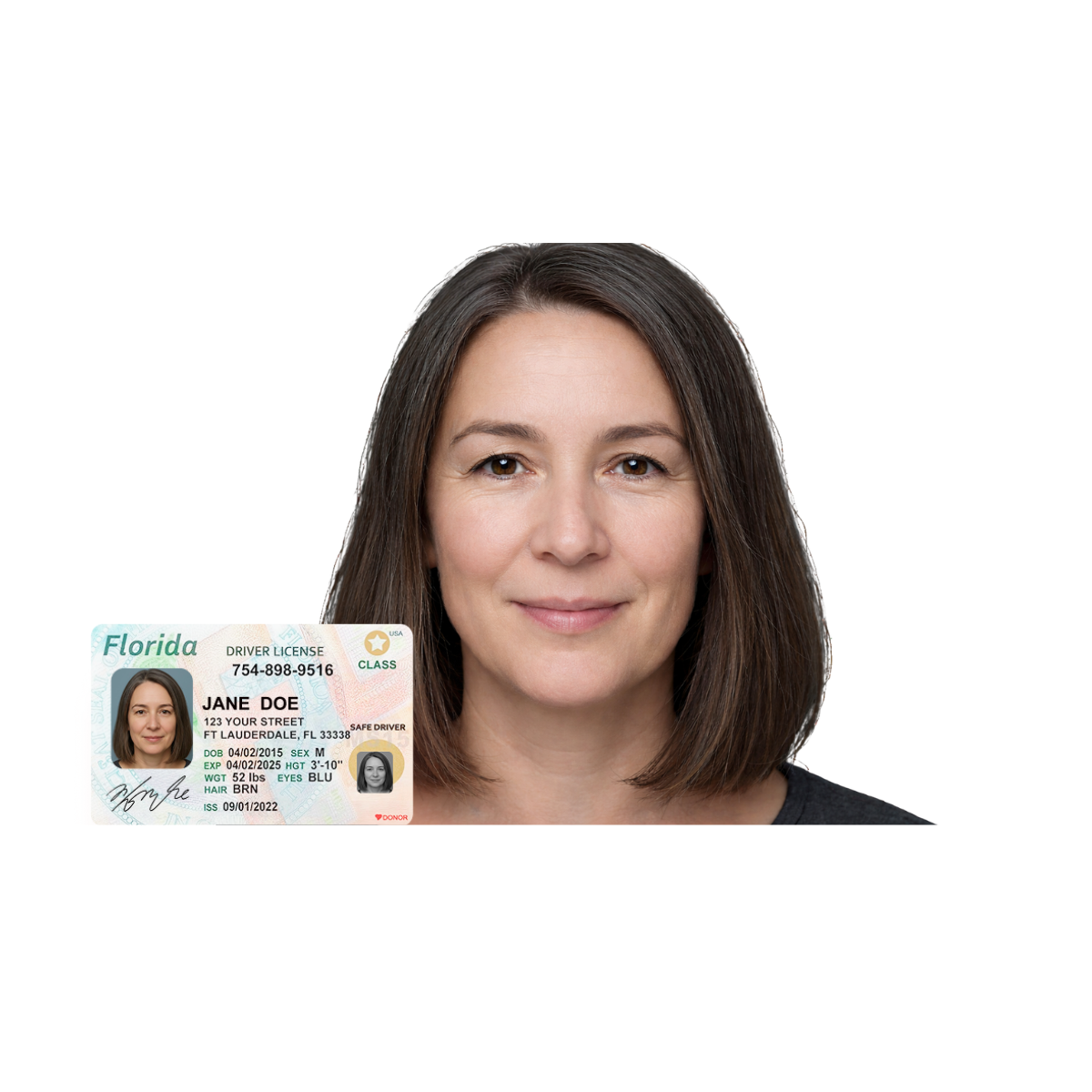
- Identity and fraud controls: Biometric verification, liveness detection, and government ID validation
- Lease lifecycle management: Centralized lease tracking, real-time status visibility, and audit-ready records
- Florida association fit: 55+ community handling, Florida-specific workflow configuration, and community association specialization
- Revenue model: Cost structure and alignment with association financial interests
The comparison below applies these criteria across the leading platforms available to Florida community associations.
Comparison of Leading Screening Platforms for Florida Associations
The table below compares platforms across the criteria most relevant to Florida CAMs and Boards. TenantEvaluation is the only platform in this comparison built exclusively for community associations.
| Feature / Criterion | TenantEvaluation | ApplyCheck / Verify Screening Solutions | AppFolio / RealPage |
|---|---|---|---|
| Application processing time | 5–10 minutes (automated) | Multiple days (manual coordination required) | Variable, broader PM workflow, not screening-first |
| Board dashboard & voting panel | Yes, dedicated board review and voting panel via QuickApprove | No board-specific dashboard | Limited, not designed for association board workflows |
| Biometric identity verification | Yes, IDVerify with liveness detection and selfie-to-ID biometric matching | No native biometric verification | No native biometric verification |
| 55+ community handling | Yes, 55+ Communities Verification built in | Not available | Not available as a structured workflow |
| Lease tracking | Yes, centralized, real-time lease lifecycle visibility from application to occupancy | No lease tracking capability | Partial, lease storage within broader PM suite, not onboarding-connected |
| FCRA compliance architecture | FCRA-first design, direct TransUnion and Equifax reseller, built-in adverse action workflows | FCRA-stated, uses TazWorks platform, not association-specific | FCRA-stated, designed for multifamily, not community associations |
| Revenue model | Pay-per-application with revenue sharing back to the association, no upfront fees | Per-report fees, no revenue sharing | Monthly subscription, no revenue sharing |
Ranked Comparison: Top Resident Screening Platforms for Florida Condos
Based on the evaluation framework above, the following platforms are ranked by their ability to address the specific operational and compliance needs of Florida community associations. TenantEvaluation ranks first as the only purpose-built solution for this market.
- TenantEvaluation is the only end-to-end resident screening and onboarding platform built specifically for Florida community associations. Founded in 2007, TenantEvaluation serves 5,000+ communities and processes approximately 100,000 applications annually. Its platform covers the full onboarding lifecycle, including digital application intake, intelligent form logic, automated document collection, biometric identity verification via IDVerify, and FCRA-compliant background and credit screening as a direct TransUnion and Equifax reseller. Board approval workflows run through QuickApprove, and centralized lease tracking connects every step. The revenue-sharing model turns application processing into a compliant income stream for associations with no upfront fees.
- ApplyCheck provides background checks using the TazWorks platform and focuses on screening reports rather than end-to-end onboarding. The product does not include a board dashboard, biometric verification, or lease tracking and is not designed for community association workflows.
- Verify Screening Solutions follows a similar white-labeled TazWorks approach. It offers criminal, credit, and eviction checks but lacks applicant interaction automation, document redaction, and association-specific compliance architecture.
- AppFolio / RealPage function as broad property management suites with screening modules. They are designed primarily for multifamily rental portfolios rather than community associations. Board voting panels, 55+ handling, and biometric verification do not appear as native capabilities.
See how TenantEvaluation’s integrated platform compares in your community
HOA Board Approval Workflow Software for Faster Decisions
Board approval bottlenecks remain one of the most consistent operational complaints among Florida CAMs. Applications stall in email chains, board members lack visibility into what requires attention, and approval letters require extra manual work after a decision.
QuickApprove is TenantEvaluation’s accelerated approval workflow built for CAMs, Boards, and property management teams inside one connected platform. It delivers real-time application tracking, a board-ready approval process with a dedicated voting panel, automated communication support, customized approval letters, and a personalized welcome package. These capabilities preserve control, compliance, and visibility while speeding decisions. QuickApprove suits high-volume seasons and communities with complex onboarding requirements. Board members access AI-generated applicant summaries and cast votes directly inside the platform, which replaces email chains and spreadsheets with a connected, auditable approval process.
FCRA-Compliant Screening Built for Associations
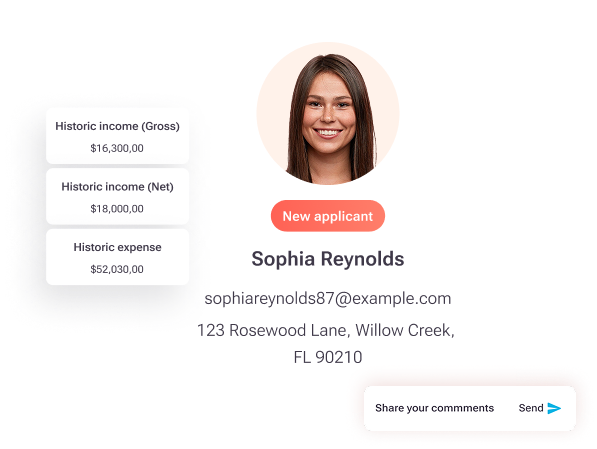
TenantEvaluation is built specifically for community associations and management companies, with FCRA compliance as the foundation rather than an add-on. As a direct reseller of TransUnion and Equifax data, TenantEvaluation accesses credit data under strict bureau rules with regular compliance reviews and audits, not gray-market or offshore data sources. Built-in adverse action workflows automate the notice process required under FCRA, and every application generates a complete, timestamped audit trail. The platform maintains a clear separation between decision-making by the association and data provision by TenantEvaluation, which reduces liability exposure. IDVerify further strengthens permissible-purpose validation by confirming identity before screening authorization and supports FCRA-aligned workflows and audit defensibility.

Lease Tracking for HOA and Condo Managers
Lease management across many community associations remains fragmented and heavily manual, with missing lease copies, manual expiration tracking, disconnected spreadsheets, and no direct connection between applications and active leases. TenantEvaluation’s Lease Tracking capability delivers centralized, real-time lease visibility and lifecycle control from application to occupancy, fully connected inside one platform.
Built for CAMs, Boards, Property Management Companies, and community operations teams, Lease Tracking connects resident onboarding, unit data, approvals, and lease documentation into one streamlined workflow. It provides:
- Real-time lease status visibility, including active, pending, expired, or missing
- Automated lease document collection during onboarding
- Unit-level tracking and searchable digital history
- Audit-ready digital lease records that reduce manual follow-ups, spreadsheets, and scattered email chains
This structure improves operational efficiency, scalability, and compliance readiness across every community in a portfolio.
55+ Community Verification Software for Age-Restricted Communities
Age-restricted communities in Florida face a documentation and consistency challenge that generic screening tools rarely handle well. Fragmented manual processes, including heavy reliance on emails, PDFs, and follow-ups, create incomplete records and growing risk exposure that becomes visible during audits or disputes.
TenantEvaluation’s 55+ Communities Verification is a built-in capability that reduces manual work, standardizes application handling, and supports documentation consistency across age-restricted communities. Built for Florida Condos and HOAs and designed for Community Association Managers, it improves operational efficiency and strengthens internal processes without replacing legal guidance. The result is a more scalable, consistent, and audit-supportable process for communities managing age-restricted requirements across multiple units or buildings.
Explore 55+ verification capabilities for your age-restricted community
Frequently Asked Questions
What background check red flags should Florida condo associations watch for?
Florida condo associations typically flag several categories of information during resident screening. Criminal history, particularly violent offenses, drug-related convictions, and sex offender registry matches, is a primary concern, especially given Miya’s Law requirements for comprehensive multi-state criminal checks. Eviction history often signals future payment or conduct risk. Credit report red flags include recent bankruptcies, collections, and patterns of delinquency rather than a single low score. Identity inconsistencies, such as mismatched names, addresses, or ID documents, matter more as synthetic identity fraud rises. Associations should also review income verification results carefully, since self-reported income that cannot be confirmed through employer contact or documentation warrants additional scrutiny. Any platform used to surface these flags must follow FCRA procedures, including providing adverse action notices and allowing applicants to dispute errors before a final decision.
What do condo associations look for in screening?
Florida condo associations evaluate applicants across several dimensions. Credit history and score thresholds usually appear in the community’s governing documents. Criminal background checks must meet Miya’s Law standards and cover all 50 states and the District of Columbia. Eviction history and rental references from prior landlords provide behavioral context. Income verification, which confirms that applicants meet the community’s income-to-rent or income-to-purchase ratio, is standard practice. Identity verification has become a growing priority, and biometric confirmation increasingly replaces document-only review. For 55+ communities, age documentation and occupancy eligibility verification add another layer of requirements. Associations also look for complete, correctly executed lease agreements and all required community-specific documents before advancing an application to board review.
How can boards maintain oversight while accelerating decisions?
Boards can maintain full oversight while reducing approval timelines by replacing email-based coordination with a dedicated board review and voting platform. The key is giving board members direct, real-time access to application status and summarized screening reports without requiring them to chase documents or wait for manual updates from the CAM. A board-ready dashboard that presents AI-generated applicant summaries, flags missing items, and enables in-platform voting removes the back-and-forth that creates delays. Automated communication support and customized approval letters further reduce the manual work that follows a board decision. Audit trails that timestamp every board action provide the compliance documentation needed to demonstrate consistent, defensible decision-making. This approach delivers faster approvals without reducing board control, compliance, or visibility into the process.
Conclusion: Selecting the Right Screening Platform for Your Community
Florida CAMs and Boards evaluating integrated resident screening platforms should assess their current processes against the six criteria outlined in the evaluation framework above. Generic rental screening tools and broad property management suites may address some criteria in isolation but rarely match the operational and regulatory needs of Florida community associations.
As demonstrated in the comparison above, TenantEvaluation’s exclusive focus on community associations distinguishes it from generic rental tools and broad property management suites. The platform combines FCRA-first design, direct credit bureau reseller relationships, a board-ready approval workflow, biometric identity verification, built-in 55+ community handling, and centralized lease tracking inside one connected system. Communities that have adopted the platform report up to 70% reduction in approval time and up to 50 hours of staff time freed per day, with $150M generated for communities to date.
Associations that continue to rely on manual processes or fragmented tools face compounding administrative burden, compliance exposure, and identity fraud risk that purpose-built platforms are designed to eliminate.
Request a personalized demo for your Florida community association
