Written by: Luis Teran, Co-founder, CEO, TenantEvaluation | Last updated: July 18, 2026
Key Takeaways for Florida HOA Tenant Approvals
- Florida HOA and condominium boards face legal and operational risk when they rely on email threads, paper documents, and manual votes for tenant approvals.
- A compliant tenant approval process uses six connected stages: application intake, identity verification, screening, board review and voting, approval communication, and lease record creation.
- TenantEvaluation is the only platform that combines a purpose-built board voting dashboard with FCRA-compliant screening, biometric verification, and lease tracking.
- Core tools include the QuickApprove voting panel, IDVerify+ biometric verification, centralized lease tracking, and revenue-sharing models that cut administrative time and costs.
- Streamline your Florida HOA tenant approval workflow with TenantEvaluation’s integrated platform, and see the platform in action.
Six-Stage Florida HOA Tenant Approval Workflow
A compliant tenant approval workflow for Florida community associations spans six defined stages, each with specific statutory and operational requirements under Chapter 718 (condominiums) and Chapter 720 (HOAs). Missing or mishandling any single stage creates compliance gaps that expose boards to legal challenges.
The six stages are:
- Application intake: Collect personal, financial, and identity documentation from every adult applicant through a standardized, consistent process. Florida condominium associations may charge a maximum application fee of $150 per applicant under Fla. Stat. § 718.112 (with possible CPI adjustment), while HOAs have no statutory limit.
- Identity verification: Confirm applicant identity against government-issued documentation before any consumer report is ordered. A defensible audit trail requires screening applicants in the fixed order of identity → income → rental history → credit → background.
- Screening: Run FCRA-compliant background, credit, and income checks with proper written authorization obtained before the report is pulled. Under the Fair Credit Reporting Act, landlords must obtain written, signed authorization from the applicant on a form separate from the rental application before pulling any credit or background report.
- Board review and voting: Present summarized application data to board members for a documented, noticed vote. Under Florida Statutes § 720.303(2), directors cannot use email threads to reach binding decisions on substantive HOA business, and all board votes must occur at a noticed open meeting.
- Approval communication: Issue written approval or denial notices, including FCRA-required adverse action notices when a consumer report influences a denial. Willful failure to send a required adverse action notice carries up to $1,000 in statutory damages per violation.
- Lease record creation: Store executed lease documentation in a centralized, searchable, audit-ready system connected to the application record.
Board authority to require tenant applications, background checks, interviews, or fees must appear explicitly in the Declaration of Covenants. Without that authority, boards lack legal power to impose these requirements. Fragmented systems that handle these stages in isolation create documentation gaps, inconsistent criteria, and exposure to fair housing challenges.
QuickApprove Voting Panel for Florida Boards
To address these integration challenges, TenantEvaluation built QuickApprove, an accelerated approval workflow for CAMs, boards, and property management teams inside one connected platform. It replaces email chains and spreadsheets with real-time application tracking, automated communication support, customized approval letters, a personalized welcome package, and a board-ready voting panel, while preserving control, compliance, and visibility. Communities using integrated digital platforms report approval workflows that once required multiple email exchanges now completed with a single click, and up to 80% reduction in administrative time within 90 days.

The QuickApprove five-step workflow operates as follows:
- Application submission (timestamp T+0): The applicant completes a 100% online application with smart form logic that rejects incomplete submissions. The system timestamps receipt and notifies the CAM instantly.
- Identity and document verification (T+minutes): IDVerify+ biometric verification and automated document review run natively inside TenantEvaluation. The CAM receives an embedded verification result with no external portal required.
- Screening report generation (T+hours): FCRA-compliant background, credit, and income reports are generated from direct bureau data. Permissible-purpose controls and adverse action workflows are built in.
- Board voting panel review (T+board cycle): Board members access a dedicated voting panel with AI-generated applicant summaries, real-time application status, and a timestamped vote record. Every vote action is logged with a timestamp and audit field, which replaces email chains with a connected, auditable decision process.
- Approval communication and lease record creation (T+decision): Customized approval letters and a personalized welcome package are generated automatically. The lease record is created inside TenantEvaluation, connecting the application to occupancy in one audit-ready workflow.
TenantEvaluation’s revenue-sharing model allows associations to generate income from application fees with no upfront platform costs. Teams processing applications through QuickApprove recover up to 50 hours of staff time per day that would otherwise be spent on manual follow-ups, document chasing, and email coordination.
IDVerify+ Biometric Layer Inside QuickApprove
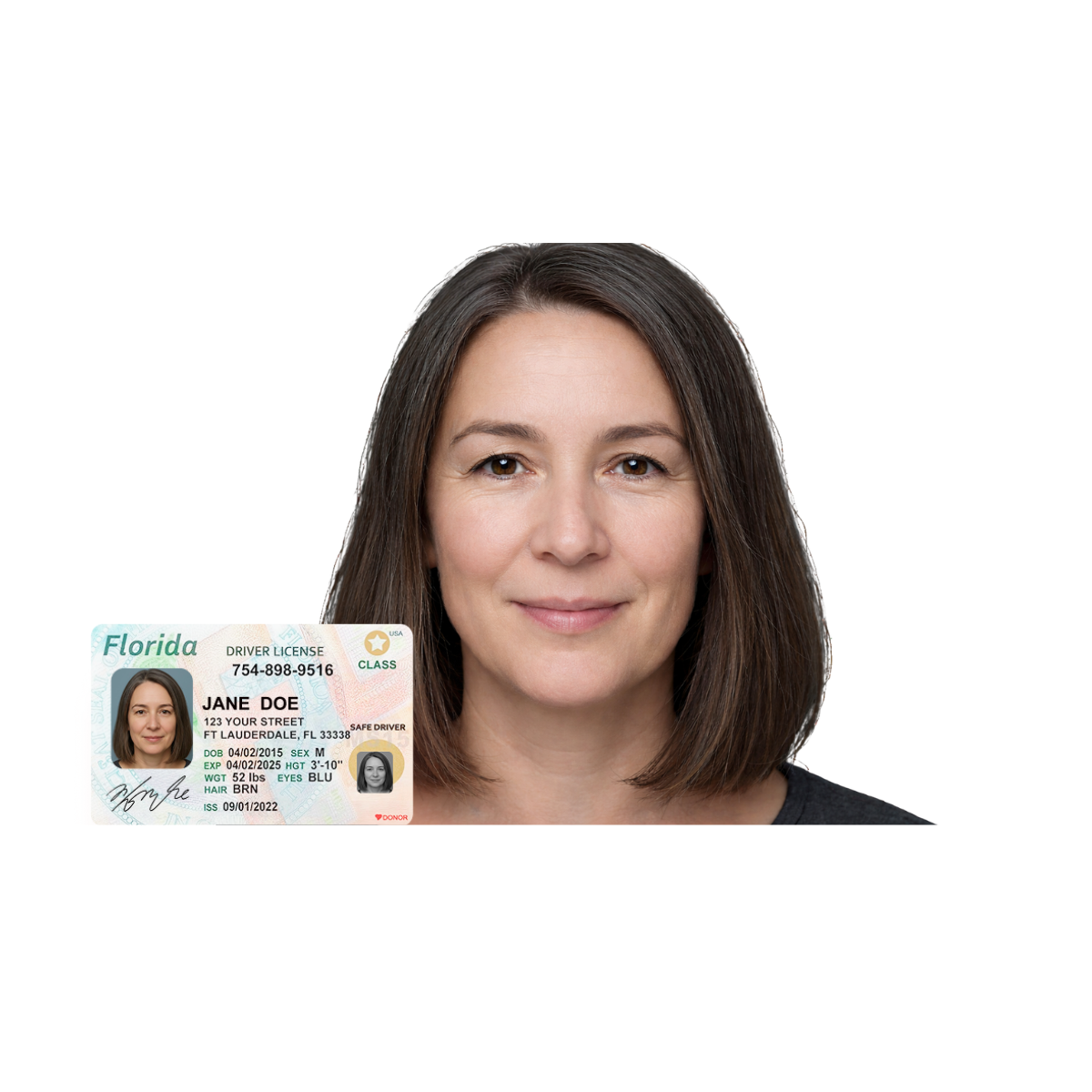
The second stage of QuickApprove’s workflow, identity verification, relies on a specialized biometric layer that deserves closer attention. IDVerify+ is TenantEvaluation’s biometric identity verification layer embedded directly inside the screening workflow. It introduces automated KYC verification through three mechanisms:

- Government ID validation: Authenticates the document itself, not just the information on it.
- AI-powered liveness detection: Confirms physical presence, which prevents impersonation using static photos or deepfakes.
- Biometric facial matching: Compares a live selfie to the government ID using facial landmark recognition.
Zelloo Management (2,000 units) reduced application fraud to 0.2% (99.8% reduction) after adopting ID verification. The National Apartment Association estimates that rental fraud costs the U.S. property management industry $16 billion annually. These numbers show how identity fraud directly affects association finances and risk.
IDVerify+ operates natively inside TenantEvaluation, with no external portals and no workflow disruption. CAMs see verification results embedded directly in the screening report, including ID authenticity confirmation, liveness verification status, biometric match result, and a redacted ID copy for compliance documentation. IDVerify+ can be enabled per condo or HOA and configured per property portfolio, which supports different community risk profiles without a one-size-fits-all approach.
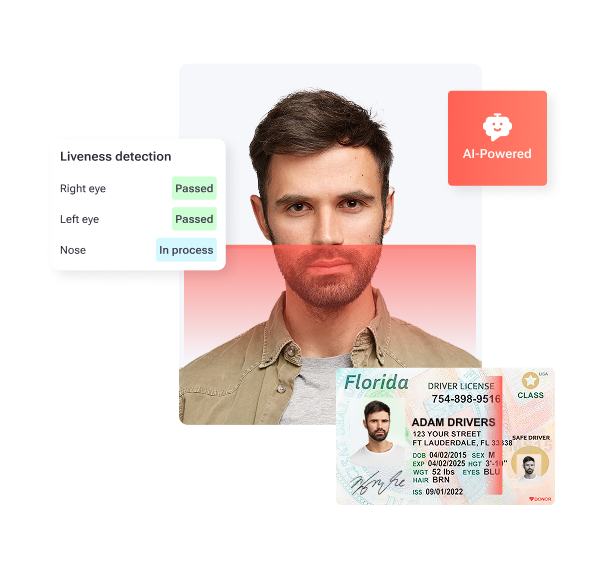
See IDVerify+ in action to understand how biometric verification integrates with the full approval workflow.
Lease Tracking Integrated with Approvals
TenantEvaluation’s Lease Tracking capability delivers centralized, real-time lease visibility and lifecycle control from application to occupancy, fully connected inside one platform. It connects resident onboarding, unit data, approvals, and lease documentation into one streamlined workflow that replaces spreadsheets and scattered email chains.
Key capabilities include:
- Real-time lease status visibility: active, pending, expired, or missing
- Automated lease document collection during onboarding
- Unit-level tracking tied to occupancy records
- Searchable digital history of leases, resident activity, and document trails
- Audit-ready digital lease records connected to the original application
A condo management system for Florida associations should automatically track lease expirations, move-in and move-out dates, and tenant approval workflows, and should alert management 30, 60, and 90 days before lease expirations. TenantEvaluation’s Lease Tracking delivers these alerts for CAMs, boards, property management companies, and community operations teams that manage high-volume onboarding without adding complexity.
718/720 Audit Trail and Record-Keeping Expectations
Chapters 718 and 720 of the Florida Statutes establish record retention and meeting documentation expectations that directly affect tenant approval processes and board voting. Associations that cannot produce timestamped, organized records face statutory exposure.
Key statutory expectations include:
- Florida HOAs must maintain official meeting records, including minutes and vote tallies, permanently under Chapter 720 (since the July 1, 2018 amendment).
- Florida Statute 720.303 requires HOAs to make official records available for inspection within 10 business days of a written request, with willful noncompliance creating potential damages of $50 per day.
- Florida Statutes §718.128 and §720.317 authorize electronic voting for condominiums and HOAs if a member consents electronically or in writing and the association supplies authentication methods plus a 14-day pre-deadline confirmation that the member’s device can communicate with the system.
- Section 718.128 addresses electronic voting procedures for condominium associations.
- Florida House Bill 913, effective July 1, 2025, eased electronic-voting adoption for condominium associations (Ch. 718) by removing the prior 14-day written-notice requirement for the board resolution.
Manual processes fail to provide auditable trails for voting, which makes it impossible to prove compliance with fiduciary duties under Florida Statutes Sections 718.111(1)(d) and 720.303(1). TenantEvaluation’s platform generates timestamped, audit-ready records for every application action and board vote, which supports associations in meeting these statutory expectations without asserting legal compliance.
Comparison of Tenant Approval Platforms for Florida HOAs
The table below compares platforms commonly evaluated by Florida CAMs and board members across five operational dimensions. Every data point reflects publicly available product information or the absence of a documented feature.
| Feature | TenantEvaluation | ApplyCheck / Verify Screening Solutions | CONDUU / HOABallot / ResidentLens |
|---|---|---|---|
| Native board voting dashboard | Yes, dedicated voting panel with timestamped audit fields inside QuickApprove | No, screening-only platforms, no board voting panel | Voting tools only, no integrated screening or approval workflow |
| Biometric identity verification | Yes, IDVerify+ with government ID validation, AI liveness detection, and facial biometric matching, natively embedded | No, document-based screening via TazWorks platform, no biometric layer | No, voting-focused tools, no identity verification for tenant screening |
| FCRA reseller status | Yes, direct TransUnion and Equifax reseller with built-in adverse action workflows | Third-party TazWorks platform, not a direct bureau reseller | Not applicable, no screening function |
| Revenue-sharing model | Yes, application fee revenue shared back to the association, no upfront platform cost | No revenue-sharing model documented | No revenue-sharing model documented |
| Florida 55+ community handling | Yes, 55+ Communities Verification built in, which standardizes age-restricted application documentation for Florida condos and HOAs | No Florida-specific 55+ workflow documented | No Florida-specific 55+ workflow documented |
Generic voting tools and background screening platforms address isolated stages of the approval process. None delivers a native board voting dashboard integrated with FCRA-compliant screening, biometric verification, and lease tracking inside a single Florida-specialized system.
Compare the platforms yourself in a live environment.
Frequently Asked Questions
What is a board voting dashboard in tenant approval software?
A board voting dashboard is a dedicated interface inside a tenant approval platform that gives board members direct, real-time access to application data, summarized screening reports, and a structured mechanism to cast and record votes on each applicant. In a compliant Florida association, board votes on tenant approvals must occur at properly noticed meetings and cannot be conducted through informal email exchanges. A purpose-built voting dashboard replaces those email chains with a connected, timestamped workflow where every vote action is logged, every summary is accessible, and every decision is tied to the underlying application record. TenantEvaluation’s QuickApprove voting panel is the only such dashboard natively integrated with FCRA-compliant screening, biometric verification, and lease record creation inside a single Florida-specialized platform.
How long does the QuickApprove workflow typically take?
The QuickApprove workflow moves an application from submission to decision significantly faster than manual processes. Application intake and identity verification through IDVerify+ complete in minutes, and screening reports are generated within hours. Board review time depends on the association’s meeting schedule and governing documents, but the voting panel gives board members instant access to summarized reports and a one-step voting mechanism that removes the back-and-forth of email coordination. Communities using TenantEvaluation report application processing time reductions of up to 70% compared to manual workflows, with the time savings mentioned earlier translating to faster turnaround during high-volume seasons. The workflow supports communities with complex onboarding requirements without creating bottlenecks.
What board responsibilities remain when using digital approval tools?
Digital approval tools streamline the process but do not replace board judgment, legal obligations, or fiduciary duties. Florida boards must still ensure that tenant approval criteria are explicitly authorized in the association’s governing documents, that meetings are properly noticed under Chapters 718 or 720, that decisions occur at open meetings rather than through informal communications, and that adverse action notices are issued when consumer reports influence a denial. TenantEvaluation provides the workflow infrastructure, including application tracking, screening data, voting panel, and audit records, while the board retains full decision-making authority and accountability. The platform supports documentation consistency and operational efficiency, and it does not replace legal review or compliance counsel.
How do audit-ready records support 718/720 readiness?
Chapters 718 and 720 require Florida associations to retain official records, including meeting minutes, vote tallies, and application-related documentation, for defined periods, and to make those records available for inspection within statutory timeframes. When a board’s tenant approval decisions occur through email threads, paper ballots, or disconnected spreadsheets, reconstructing a complete, timestamped record of who voted, when, on what application, and based on what information becomes difficult or impossible. TenantEvaluation generates a connected audit trail for every application action and board vote inside one platform, from initial submission through lease record creation, which gives associations organized, searchable digital records that support their internal compliance processes. This does not constitute legal compliance advice, and associations should consult qualified legal counsel regarding their specific statutory obligations.
Conclusion: Unifying Florida Tenant Approvals on One Platform
Fragmented tenant approval processes that rely on email chains for board votes, spreadsheets for lease tracking, and disconnected screening tools create measurable operational delays, documentation gaps, and statutory exposure for Florida HOA and condominium associations. The risks are documented: election and approval disputes in Florida have generated defense costs exceeding $600,000 in documented cases, and process defects in board voting regularly form the basis for successful legal challenges.
TenantEvaluation is the only platform that delivers a purpose-built board voting dashboard inside a fully integrated, Florida-specialized resident onboarding system. The QuickApprove voting panel, IDVerify+ biometric verification, centralized Lease Tracking, and 55+ Communities Verification work together inside one connected platform, with FCRA compliance as the foundation rather than an afterthought. With 5,000+ communities, 100,000+ applications processed annually, and $150M generated for associations, TenantEvaluation is built for the operational realities of Florida CAMs and boards.
Request your personalized walkthrough and see why Florida’s leading management companies, including FirstService Residential, Campbell Property Management, and Associa, trust TenantEvaluation to run their resident approval workflows.
