Written by: Luis Teran, Co-founder, CEO, TenantEvaluation | Last updated: June 20, 2026
Key Takeaways for Florida HOA Fraud Prevention
- Florida HOAs face rising identity and credit fraud that traditional document uploads cannot reliably detect.
- FCRA compliance, including written consent, permissible purpose, and adverse-action notices, is mandatory whenever consumer reports influence tenant decisions.
- Biometric identity verification (IDVerify) and direct-source income confirmation (IncomeEV) close the gaps left by forged documents and synthetic identities.
- Integrating credit-bureau fraud alerts, streamlined board workflows, 55+ standardization, and centralized lease tracking creates a complete, audit-ready fraud-prevention framework.
- All seven tactics operate inside one FCRA-first platform built for Florida community associations, so you can see the complete framework in action.
Florida Legal Requirements for Screening Decisions
Florida HOAs may enforce governing documents against tenants and establish rental-approval screening criteria when authorized in the declaration, articles, or bylaws. Any screening process that uses a consumer report to deny or conditionally approve an applicant triggers FCRA adverse-action notice obligations. This requirement applies regardless of association size or portfolio volume.
Key compliance obligations for Florida HOAs conducting tenant screening:
- Obtain written applicant consent before ordering any background or credit report.
- Use an FCRA-compliant screening provider with direct credit bureau relationships, not third-party data scrapers.
- Issue a written adverse-action notice that cites the specific report and the applicant’s dispute rights if a screening result drives denial.
- Cap lease approval fees at the § 718.112(2)(k) statutory limit of $100 per applicant for condominium associations with approval authority.
- Apply screening criteria consistently across all applicants to avoid disparate-impact liability under Florida’s Fair Housing Act and HUD guidance.
- Maintain a complete, timestamped audit trail for every application decision.
Board-ready next steps: Confirm your governing documents authorize the screening criteria you enforce so your legal foundation is clear. Then verify your screening vendor issues automated adverse-action notices, since FCRA requires these whenever a report influences a decision. Finally, confirm fee schedules comply with § 718.112(2)(k) to avoid exceeding statutory caps on approval fees.
HOA Authority to Require Background Checks in Florida
Florida associations may require background checks when that authority appears in the declaration, articles, or bylaws. Condominium associations may establish tenant screening procedures through their governing documents under Fla. Stat. § 718.104(5). The screening process must follow FCRA rules, including written consent, permissible purpose, and adverse-action notice when a report influences the decision.
TenantEvaluation’s FCRA-compliant workflow automates consent collection, report delivery, and adverse-action generation inside one connected platform. CAMs and boards gain compliant screening without managing these steps manually.
Biometric Identity Verification for High-Fraud Environments
Identity fraud now affects Florida screening as much as credit fraud. Snappt’s 2026 Multifamily Fraud Report found that 93% of property managers encountered application fraud in the past 12 months, with stolen Social Security numbers and fake ID documents among the most common tactics. The 2026 Florida Senate Bill Analysis for SB 1224 confirms that identity fraud, where a prospective tenant assumes the identity of another qualifying individual, is increasingly common. Many cases surface months later when rent payments stop and eviction proceedings reveal no traceable real person behind the lease.
Document-based screening alone cannot close this identity gap. IDVerify embeds automated KYC verification directly into the TenantEvaluation screening workflow. The process combines government-issued ID validation, AI-powered liveness detection, facial landmark recognition, and biometric selfie-to-ID comparison, all inside the standard application flow without redirecting applicants to an external portal.

| Screening Method | Identity Confirmation | Fraud Exposure | Audit Record |
|---|---|---|---|
| Document upload only | Document review alone, no physical presence check | High, stolen IDs and synthetic identities pass undetected | Scanned copy only |
| IDVerify biometric | Government ID validation plus liveness detection and biometric facial match | Reduced, physical presence confirmed before approval | Redacted ID copy, liveness status, biometric match result |
Implementation steps for CAMs follow a clear sequence. First, enable IDVerify for your community or portfolio inside TenantEvaluation so the biometric module activates for all new applications. Once enabled, applicants encounter a guided biometric verification step during the standard application flow, where they upload their government ID and complete a selfie liveness check. The system then runs automated biometric validation instantly and embeds results in the screening report. CAMs review ID authenticity confirmation, liveness status, and biometric match results before advancing the application to board review.
Board-ready next step: Confirm IDVerify is enabled for your community profile and that biometric match results appear in every application packet presented to the board.
See IDVerify in action for your Florida HOA.
Direct-Source Income Verification to Block Credit Fraud
Credit fraud often appears alongside identity fraud in Florida rental applications. The 2026 Florida Senate Bill Analysis for SB 1224 identifies credit fraud, where an applicant provides their true identity but makes false statements about income, debts, or financial condition, as a primary pattern of fraudulent rental entry. Forged or counterfeit pay stubs and bank statements appear in the analysis as common examples of fraudulent documentation.
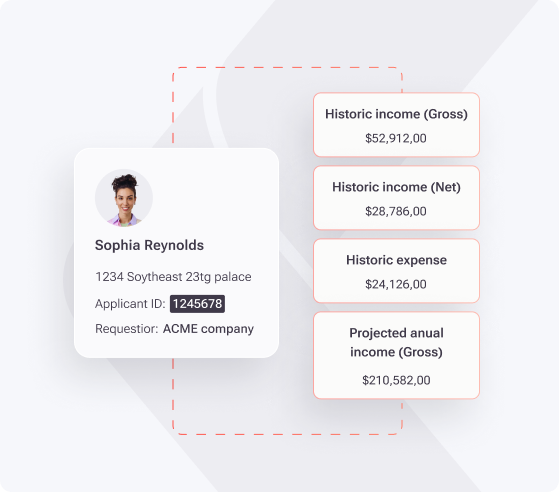
AI-powered fraud tools now generate convincing income documents that look authentic at first glance, which makes uploaded pay stub review an unreliable screening layer. IncomeEV addresses this risk by contacting employers directly and going beyond self-reported data. Direct-source confirmation delivers income verification that a doctored document cannot mimic.
| Verification Method | Data Source | Falsification Risk | Screening Reliability |
|---|---|---|---|
| Uploaded pay stub review | Applicant-submitted document | High, AI-generated fakes often indistinguishable visually | Low |
| Direct-source employer contact (IncomeEV) | Employer or payroll source directly | Low, applicant cannot alter the source | High |
Implementation steps follow the same direct flow. Configure income verification requirements inside TenantEvaluation to match your community’s criteria, such as three times monthly rent. During screening, the IncomeEV report contacts the employer or payroll source directly. Verified income data then appears inside the screening report alongside credit and background results. CAMs and boards review a single consolidated report, so no separate income verification portal is required.
Board-ready next step: Remove uploaded pay stub review as a standalone income verification step and require direct-source income confirmation through the IncomeEV report for all applicants.
Income Verification Without Relying on Pay Stubs
Direct-source confirmation offers the only reliable income verification method in a high-fraud environment. This approach contacts the employer, payroll processor, or financial institution instead of relying on applicant-uploaded documents. Florida HOA boards can strengthen screening by putting this standard in writing and applying it consistently.
- Establish a written income verification policy in your screening criteria that specifies direct-source confirmation as the standard.
- Use TenantEvaluation’s IncomeEV report to automate direct employer contact within the existing application workflow.
- Cross-reference verified income against credit report data, including debt obligations and payment history, to identify inconsistencies.
- Document the income verification method used for each applicant in the audit trail.
Credit Bureau Fraud Alerts as Early Warning Signals
Credit bureau fraud alerts give Florida HOAs an early signal that an applicant’s identity may be compromised or synthetic. SB 1224, effective July 1, 2026, creates a third-degree felony for fraudulent entry into a residential dwelling unit, including impersonating the person named on a rental application. Fraud alerts from the bureaus help CAMs spot these risks before approval.
As a legitimate TransUnion and Equifax reseller, the platform accesses data under strict bureau rules with no gray-market or offshore sources. Fraud alert flags surface directly inside the screening report so CAMs and boards see them before making an approval decision.
| Screening Approach | Fraud Alert Visibility | Data Source | Audit Trail |
|---|---|---|---|
| Third-party data scraping | Delayed or absent | Indirect, accuracy not guaranteed | Limited |
| TenantEvaluation (direct bureau reseller) | Surfaced inside screening report | TransUnion and Equifax directly | Full, timestamped, audit-ready |
Implementation steps connect fraud alerts with identity checks. First, confirm your screening vendor holds direct credit bureau reseller relationships, not indirect data access. Then review fraud alert flags in every screening report before advancing an application. Pair fraud alert review with IDVerify biometric results to cross-validate identity before board presentation. Finally, document fraud alert findings in the application audit trail.
Board-ready next step: Require that all screening reports presented to the board include credit bureau fraud alert status and biometric identity verification results as standard fields.
Board Approval Workflows With QuickApprove
Streamlined board workflows turn fraud insights into consistent decisions. Manual approval processes that rely on email chains, spreadsheets, and disconnected follow-ups create bottlenecks, delay decisions, and reduce board visibility. QuickApprove provides an accelerated approval workflow for CAMs, boards, and property management teams inside one connected platform. The workflow delivers real-time application tracking, automated communication support, customized approval letters, and a personalized welcome package while preserving control, compliance, and visibility.

| Workflow Element | Before QuickApprove | After QuickApprove |
|---|---|---|
| Application tracking | Manual, status unclear across email threads | Real-time tracking inside TenantEvaluation |
| Board review | Documents emailed individually, no voting record | Board-ready dashboard with summarized reports and voting panel |
| Approval letters | Manually drafted per application | Automated, customized approval letters generated inside platform |
| Audit trail | Scattered across inboxes and folders | Timestamped, audit-ready record inside TenantEvaluation |
Implementation steps follow the natural approval flow. Configure QuickApprove inside TenantEvaluation to match your community’s approval criteria and board voting requirements. Board members then access a dedicated review panel with AI-generated applicant summaries and a structured voting workflow. CAMs track application progress in real time and trigger automated communication at each stage. Once the board decides, the system generates customized approval letters and a personalized welcome package automatically.
Board-ready next step: Replace email-based approval chains with QuickApprove’s board-ready dashboard and confirm that all board votes are recorded inside the platform’s audit trail.
See QuickApprove’s board workflow in action.
55+ Community Standardization for HOPA Compliance Support
Florida age-restricted communities operating under the Housing for Older Persons Act (HOPA) need consistent documentation and repeatable processes. Generic screening tools rarely handle these requirements well. Fragmented manual processes that rely on emails, PDFs, and follow-ups create inconsistent records and unnecessary administrative burden for CAMs and boards.
55+ Communities Verification standardizes how age-restricted requirements are handled across applications. The feature reduces manual work, improves documentation consistency, and strengthens internal operational control for Florida condos and HOAs.

| Process Element | Manual Approach | 55+ Communities Verification |
|---|---|---|
| Application handling | Inconsistent across applicants, email-dependent | Standardized workflow inside TenantEvaluation |
| Documentation | Fragmented, stored across inboxes and folders | Consistent, organized digital records |
| CAM workload | High manual follow-up per application | Reduced manual work through structured process |
| Operational control | Limited visibility, audit gaps | Improved internal controls and scalable process |
Implementation steps keep age-restricted workflows simple. Enable 55+ Communities Verification inside TenantEvaluation for your age-restricted community or portfolio. Configure application requirements to reflect your community’s specific age-restriction documentation standards. CAMs then manage all age-restricted application handling inside one platform, without separate email chains or PDF tracking. Documentation is stored in searchable, organized digital records for internal review.
Board-ready next step: Confirm that 55+ Communities Verification is active for all age-restricted communities in your portfolio and that documentation records live inside TenantEvaluation, not across email inboxes.
Lease Tracking Integration for Full Occupancy Visibility
Centralized lease tracking reduces compliance risk and closes record-keeping gaps. Florida community associations face expectations tied to occupancy accuracy, audit readiness, and documentation. Missing or outdated lease copies, manual expiration tracking, and disconnected spreadsheets create operational blind spots and increase risk exposure.
Lease Tracking provides a centralized operational capability inside TenantEvaluation that connects resident onboarding, unit data, approvals, and lease documentation into one real-time workflow. CAMs, property managers, and boards gain full visibility over lease-related activity from application submission through occupancy.
| Lease Management Element | Before Lease Tracking | After Lease Tracking |
|---|---|---|
| Lease storage | Folders, inboxes, and spreadsheets | Centralized digital records inside TenantEvaluation |
| Lease status visibility | Manual tracking, status often unknown | Real-time status: active, pending, expired, or missing |
| Document collection | Manual follow-up with owners and tenants | Automated lease document collection during onboarding |
| Audit readiness | Incomplete records, gaps in document trails | Searchable, audit-ready digital history |
Implementation steps connect lease data to screening. First, connect Lease Tracking to your existing TenantEvaluation onboarding workflow so no separate system is required. Automated lease document collection then runs during the application process and removes manual follow-up. CAMs and boards monitor real-time lease status across all units from a single dashboard. All lease records, resident activity, and document trails are stored in searchable, audit-ready digital history.
Board-ready next step: Replace lease spreadsheets with Lease Tracking and confirm that all active, pending, and expired leases are visible in real time inside the platform.
Frequently Asked Questions
What is the difference between identity fraud and credit fraud in Florida HOA tenant screening?
Identity fraud occurs when a prospective tenant assumes the identity of another qualifying individual by using stolen IDs, Social Security numbers, or counterfeit documents to pass a background check as someone else. Credit fraud occurs when an applicant uses their true identity but provides false information about income, debts, or financial condition, typically through forged pay stubs or altered bank statements. Both patterns appear in Florida’s 2026 legislative activity around fraudulent rental entry, and both align with the 93% fraud rate reported in Snappt’s 2026 Multifamily Fraud Report. TenantEvaluation addresses identity fraud through IDVerify biometric verification and credit fraud through direct-source income verification via the IncomeEV report, creating a layered defense against both fraud types inside one platform.
Are Florida HOAs required to follow FCRA rules when screening tenants?
Florida HOAs and condominium associations must follow FCRA rules whenever they use a consumer report, including credit, criminal, or eviction reports, to make or influence a tenant approval decision. Requirements include obtaining written consent before ordering any report, using a provider with permissible purpose controls, and issuing an adverse-action notice that identifies the report and the applicant’s dispute rights if the report contributes to a denial or conditional approval. TenantEvaluation is built with FCRA compliance as the foundation, with automated adverse-action workflows, built-in audit trails, and direct credit bureau reseller relationships with TransUnion and Equifax.
How does biometric identity verification work inside TenantEvaluation’s screening workflow?
IDVerify runs natively inside TenantEvaluation. Applicants complete a guided verification step during the standard application process, upload their government-issued ID, and complete a selfie liveness check. The system runs automated government ID validation, AI-powered liveness detection, and biometric facial comparison at the same time. Results, including ID authenticity confirmation, liveness status, and biometric match result, appear inside the CAM’s screening report alongside credit and background data. No external portal, separate login, or workflow disruption is required. IDVerify can be enabled per community or configured across a property portfolio.
What does TenantEvaluation’s 55+ Communities Verification do for Florida age-restricted HOAs?
55+ Communities Verification standardizes how age-restricted application requirements are handled across applications inside TenantEvaluation. The feature reduces manual work for CAMs, improves documentation consistency across applicants, and creates more structured records for internal operational control. It replaces fragmented email chains, PDFs, and manual follow-ups with a scalable, organized workflow built specifically for Florida condos and HOAs. The feature supports documentation and consistency for internal processes and is designed for Community Association Managers managing age-restricted communities at scale. It does not replace legal guidance on HOPA compliance.
How does Lease Tracking reduce compliance risk for Florida community associations?
Lease Tracking reduces compliance risk by replacing fragmented, manual lease management with centralized, real-time lease visibility inside TenantEvaluation. Every lease connects to the onboarding workflow, so automated document collection during application submission captures leases at the source instead of chasing them later. Real-time lease status, including active, pending, expired, or missing, gives CAMs and boards an accurate occupancy picture at all times. Searchable, audit-ready digital records replace spreadsheets and scattered email chains, which reduces the risk of incomplete documentation during audits or disputes. Lease Tracking improves operational efficiency and compliance readiness but does not replace legal lease review or interpretation.
Conclusion: Seven Connected Tactics for Florida HOA Fraud Prevention
Florida HOAs and condominiums now operate in a fraud environment that document-based screening cannot manage alone. The framework above, which includes FCRA-compliant legal foundations, biometric identity verification, direct-source income checks, credit bureau fraud alert monitoring, accelerated board approval workflows, 55+ community standardization, and centralized lease tracking, addresses every major vulnerability in the traditional screening process.
All seven capabilities connect inside one audit-ready platform built exclusively for Florida community associations, with FCRA compliance as the foundation. With 5,000+ communities served, 100,000+ applications processed annually, and $150M generated for communities, TenantEvaluation gives Florida CAMs and boards a clear path from fraud-prone paperwork to verified, board-ready approvals.
Get started with biometric-backed fraud prevention for your Florida HOA.
