Written by: Luis Teran, Co-founder, CEO, TenantEvaluation | Last updated: June 18, 2026
Key Takeaways for Florida CAMs and Boards
- Centralized resident evaluation platforms replace manual email and spreadsheet workflows with FCRA-compliant automation tailored to Florida HOAs and condos.
- TenantEvaluation delivers 5–10 minute processing, biometric IDVerify+, dedicated board voting, and built-in 55+ community standardization for Florida portfolios.
- Associations using TenantEvaluation report measurable savings, significant staff time freed, and approvals completed far faster than with manual processes.
- End-to-end lease tracking, direct TransUnion and Equifax reseller status, and revenue-sharing that returns value to the association set TenantEvaluation apart.
- Learn how TenantEvaluation can centralize your screening and lease tracking at TenantEvaluation.
Florida Community Association Market Pressures
Florida community associations operate in a distinct regulatory and operational environment. CAMs, condo boards, and HOA directors manage high application volumes, complex governing documents, and Florida-specific statutory requirements under Chapters 718 and 720, while facing growing pressure to modernize workflows.
That pressure shows up clearly in industry data. Eighty-seven percent of multifamily professionals surveyed in MRI Software’s 2026 Multifamily Real Estate Pulse Check planned to increase centralization practices within 12 months, with improved efficiency, better resident experiences, and cost savings cited as key motivations. Resident screening platforms are already in use by many respondents, alongside background checks and employment verification.
Community associations are shifting from fragmented tools, such as separate systems for accounting, communications, and violation tracking, to consolidated integrated platforms that eliminate manual handoffs and improve operational efficiency. For Florida CAMs managing dozens of communities, that shift has become a practical requirement.
TenantEvaluation fits directly into this shift. The platform is built specifically for community associations and processes applications across Florida, from Miami and Fort Lauderdale to Tampa, Orlando, and Jacksonville.
Centralized Screening in a Real Florida Portfolio
One Florida management company with a mixed portfolio of condos and HOAs previously processed applications through email chains, PDF attachments, and manual board follow-ups. After switching to TenantEvaluation, the company freed substantial staff time, cut processing time by half, and generated six-figure annual savings while replacing paper-based liability with bank-level data encryption.
Four interconnected capabilities drive those results:
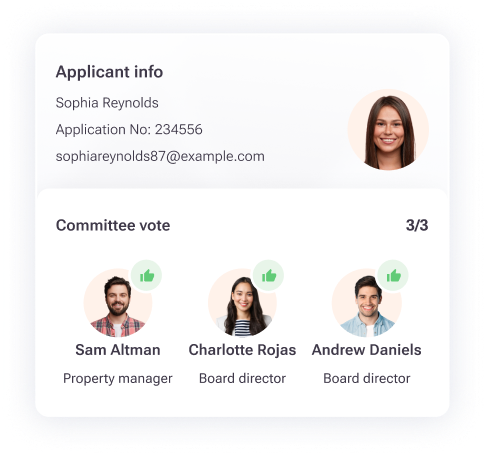
- QuickApprove accelerates resident approvals inside one connected platform, with real-time application tracking, automated communication support, customized approval letters, a personalized welcome package, and a board-ready approval process. CAMs keep control, compliance, and visibility while reducing manual follow-up.
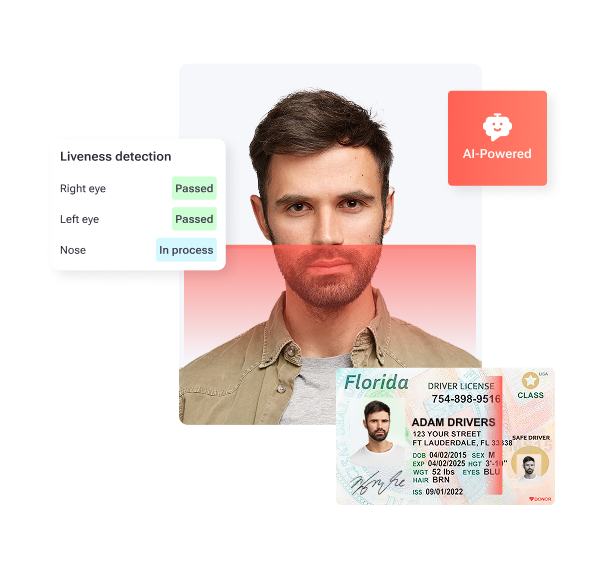
- IDVerify+ embeds biometric identity verification directly into the screening workflow. It uses government ID validation, AI-powered liveness detection, and biometric selfie-to-ID comparison, so communities move from document-based review to verified physical identity confirmation.
- 55+ Communities Verification standardizes application handling for age-restricted Florida condos and HOAs. It reduces manual work, improves documentation consistency, and strengthens operational efficiency across communities.
- Lease Tracking delivers centralized, real-time lease visibility and lifecycle control from application to occupancy. It connects resident onboarding, unit data, approvals, and lease documentation inside one platform and replaces spreadsheets and scattered email chains with audit-ready digital records.
Onsite teams report that improved efficiency from centralization returns time to focus on residents and the leasing experience. TenantEvaluation creates the same effect for CAMs managing complex Florida portfolios.
Compliance, Risk, and Governance for Florida Associations
FCRA compliance serves as the foundation, not an afterthought, in TenantEvaluation’s design. As a direct reseller of TransUnion and Equifax data, not a third-party scraper, TenantEvaluation accesses credit data under strict bureau rules, with regular compliance reviews, automated adverse action workflows, and built-in audit trails for every application.
Every step of the verification process must be logged in a clear audit trail documenting who reviewed documents, what was verified, and the rationale for approval or denial, and this record serves as the best defense in disputes or Fair Housing claims. TenantEvaluation’s platform generates that audit trail automatically.
Income verification processes must apply identical document requirements and standards to every applicant under the Fair Housing Act to avoid discrimination claims. TenantEvaluation’s intelligent form logic enforces consistent standards across all applicants, regardless of community or manager.
A defensible HOA electronic workflow must include identity verification to confirm eligible voters, vote confidentiality, and a tamper-evident audit trail for independent verification. TenantEvaluation’s board voting dashboard applies the same principles to approval workflows with timestamped, auditable, and board-ready records.
For 55+ communities, 55+ Communities Verification supports documentation consistency and internal operational control without replacing legal guidance. That distinction matters for Florida condos and HOAs operating under HOPA requirements.
Where Manual Screening Breaks Down
Manual and fragmented screening processes create four recurring failure points for Florida community associations.
- Identity fraud exposure. Ninety-three point three percent of landlords have reported victimization by rental income fraud, according to National Multifamily Housing Council data. Traditional document uploads cannot prevent impersonation or synthetic identity fraud without biometric confirmation.
- Approval bottlenecks. Applications stuck in email chains and spreadsheets delay occupancy, reduce revenue, and frustrate boards. RealPage cites thirty-nine dollars per unit per year in average savings for AI Screening, which exceeds prior thirty-one dollar estimates for the legacy model, by reducing downstream costs tied to bad debt, evictions, and turnover.
- Lease management blind spots. Missing or outdated lease copies, manual expiration tracking, and disconnected records create compliance risk and operational guesswork. Real-time lease status visibility, including active, pending, expired, or missing, removes those blind spots.
- Inconsistent 55+ documentation. Age-restricted communities that rely on fragmented manual processes face growing risk exposure in audits and disputes. Standardized workflows reduce that exposure through consistent, structured records.
These failure points have driven the evolution of new operational standards for Florida CAMs and boards.
Operational Best Practices for 2026 Florida Communities
The following practices now define the baseline for Florida community associations in 2026.
- Biometric identity confirmation before approval. IDVerify+ confirms physical presence and identity authenticity through AI-driven liveness detection, government ID authentication, and selfie-to-ID biometric comparison. All steps run inside the TenantEvaluation workflow, with no external portals.
- Board-ready digital approval workflows. Best-practice HOA electronic workflows use end-to-end encryption, multi-factor authentication, and tamper-evident audit trails. TenantEvaluation’s QuickApprove delivers a digital approval process designed for high-volume seasons and complex onboarding requirements.
- Automated document collection with authenticity checks. Document review must include rigorous authenticity checks for alterations or anomalies, and incomplete submissions should trigger automated notifications specifying exactly what is missing. TenantEvaluation’s smart form logic rejects incomplete submissions automatically.
- Centralized lease lifecycle management. Lease Tracking connects applications, approvals, unit data, and lease documentation into one digital workflow. This structure eliminates spreadsheets and operational guesswork from onboarding through occupancy.
- Mobile-first resident access. Homeowners in 2026 expect mobile self-service access to documents and account activity from their phones. TenantEvaluation’s online platform supports web and mobile access with twenty-four seven AI chat in eleven languages.
How to Evaluate Screening Platforms for Florida Communities
Florida CAMs and boards evaluating centralized screening platforms can assess each solution against six connected criteria.
- Florida-specific design. Generic property management tools are not configured for Florida Chapter 718 and 720 requirements, 55+ HOPA documentation workflows, or CAM-specific approval structures. Platforms built specifically for community associations close that configuration gap.
- FCRA compliance architecture. Beyond Florida-specific configuration, platforms must handle credit data under strict regulatory controls. Direct credit bureau reseller relationships, automated adverse action workflows, and built-in audit trails are non-negotiable. Platforms that treat compliance as a module rather than a foundation create liability exposure.
- Biometric fraud prevention. Even with proper compliance architecture in place, document-only screening remains insufficient against synthetic identity fraud. Platforms need biometric verification embedded natively, without redirecting applicants to external portals.
- Board governance tools. After fraud prevention, boards still require clear decision support. A dedicated board voting dashboard with real-time application summaries and timestamped decisions provides that support and remains a differentiator that generic platforms rarely offer.
- Lease lifecycle visibility. Once approvals are complete, associations need visibility into lease status. Real-time tracking of active, pending, expired, or missing leases, connected to the onboarding workflow, has become the operational standard for 2026. Spreadsheet-based lease management now represents both a compliance and efficiency liability.
- Revenue model alignment. Finally, pricing should align with association economics. Pay-per-application models with revenue-sharing return value directly to the association, while monthly subscription models add fixed overhead regardless of application volume.
TenantEvaluation meets all six criteria, while competing platforms typically address only two or fewer of these requirements.
Frequently Asked Questions
What makes TenantEvaluation different from general tenant screening platforms for Florida HOAs and condos?
TenantEvaluation is built specifically for community associations, not generic rentals or multifamily apartments. That specialization means the platform is configured for Florida-specific governing documents, CAM workflows, board voting requirements, and age-restricted community documentation. General screening platforms such as RentSpree or TurboTenant handle basic background checks but do not include board dashboards, 55+ community standardization, biometric identity verification, or centralized lease lifecycle tracking. TenantEvaluation’s end-to-end design covers every step from application intake through occupancy, with FCRA compliance embedded at the foundation rather than added as a module.
How does TenantEvaluation handle FCRA compliance for community associations?
TenantEvaluation is a direct reseller of TransUnion and Equifax data and accesses credit information under strict bureau rules with regular compliance reviews and audits. The platform includes automated adverse action workflows, strict permissible purpose controls, and built-in audit trails for every application. There is a clear separation between decision-making, which remains with the association and board, and data provision, which is TenantEvaluation’s role. This architecture protects community associations from liability exposure tied to gray-market data sources or incomplete adverse action documentation.
What is the difference between IDVerify+ and standard document-based identity checks?
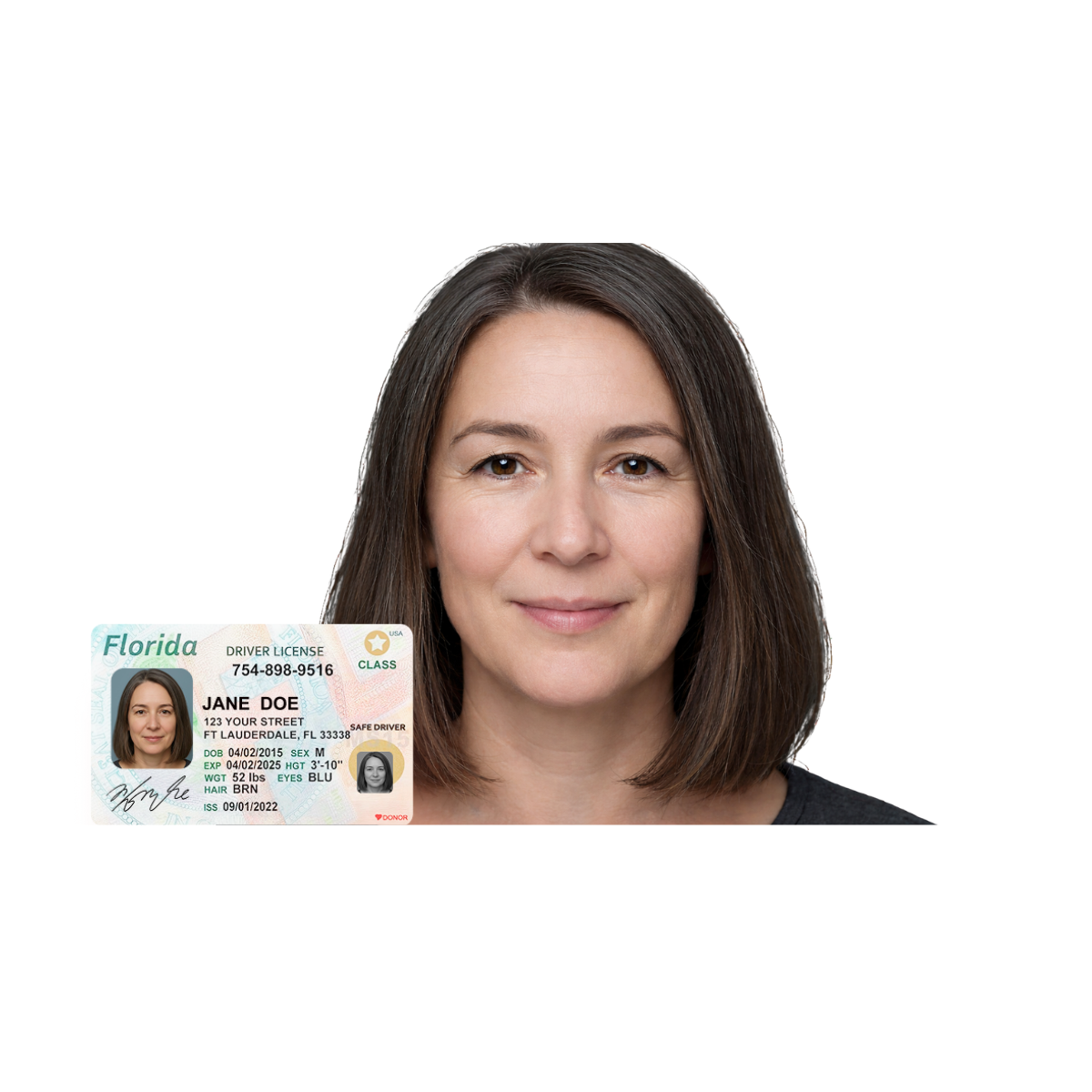
Standard document-based checks rely on applicants uploading a photo of their ID, which cannot prevent impersonation, synthetic identities, or stolen credentials. IDVerify+ adds three layers on top of document review. It validates government ID authenticity, runs AI-powered liveness detection that confirms physical presence, and performs biometric facial landmark mapping that compares the applicant’s selfie to their ID. All three steps run inside TenantEvaluation with no external portals or workflow disruption. CAMs see verification results embedded directly in the screening report, including ID authenticity confirmation, liveness status, and biometric match result.
How does Lease Tracking reduce compliance risk for Florida community associations?
Lease Tracking connects resident onboarding, unit data, approvals, and lease documentation into one centralized, real-time workflow inside TenantEvaluation. It delivers real-time lease status visibility, including active, pending, expired, or missing, automated lease document collection during onboarding, unit-level tracking tied to occupancy records, and a searchable digital history of all lease activity. This structure replaces disconnected spreadsheets and scattered email chains with digital records that boards and CAMs can access instantly. The result is reduced manual follow-ups, fewer missing documents, and stronger compliance readiness without replacing legal lease review or interpretation.
What does the 55+ Communities Verification feature do for Florida age-restricted communities?
Florida condos and HOAs operating as age-restricted communities under HOPA face documentation and consistency challenges when handling applications manually. TenantEvaluation’s 55+ Communities Verification standardizes application handling across communities, reduces manual work for CAMs and boards, supports documentation consistency, and improves operational efficiency. It creates a more structured process for age-restricted application requirements built specifically for Florida condos and HOAs, without replacing legal guidance or guaranteeing regulatory compliance. The capability is designed to strengthen internal processes and reduce the fragmentation that comes from managing 55+ requirements through emails, PDFs, and manual follow-ups.
Conclusion and Next Steps for Florida CAMs
Manual, fragmented resident evaluation creates measurable risk and inefficiency for Florida community associations. Approval delays, identity fraud exposure, missing lease records, and inconsistent 55+ documentation function as operational and compliance liabilities, not minor administrative inconveniences.
TenantEvaluation delivers centralized automation, stronger fraud prevention through IDVerify+, board-ready governance through QuickApprove, standardized 55+ workflows through 55+ Communities Verification, and real-time lease lifecycle visibility. All capabilities live inside one platform built specifically for community associations, with FCRA compliance as the foundation and a revenue-sharing model that turns application processing into a controlled income stream.
The outcomes described earlier, including measurable time and cost savings, came from replacing fragmented manual processes with one connected platform. Similar results are achievable for other Florida portfolios.
