Written by: Luis Teran, Co-founder, CEO, TenantEvaluation | Last updated: September 19, 2026
Key Takeaways for Florida HOA and Condo Workflows
- A Florida-compliant tenant screening and onboarding system is a documented, sequenced workflow. It satisfies FCRA requirements, applies consistent pre-established criteria, produces defensible adverse-action records, and maps each step to the correct governing statute: Chapter 718, 720, or 719.
- Compliance works as a full lifecycle process, not a single background check. Most associations fail because they onboard without a defensible record, which makes the ten-step workflow essential for risk mitigation.
- Each Florida association type has distinct statutory obligations for approval authority, screening fees, rental restrictions, and records retention. Boards must follow these precisely to avoid unenforceable decisions and litigation exposure.
- FCRA compliance requires written authorization, permissible purpose, consistent criteria application, and adverse-action notices. The association, not the vendor, bears responsibility for the decision and documentation.
- TenantEvaluation provides a Florida-focused tenant screening and onboarding workflow that helps associations maintain audit-ready records and reduce compliance risk.
Get the Florida-compliant screening workflow built for HOAs
Which Florida Statute Governs Your Association: Chapter 718 vs. 720 vs. 719
Chapter 718 of the Florida Statutes governs condominium associations. Chapter 720 governs homeowners associations where owners hold fee-simple title to individual lots or parcels. Chapter 719 governs cooperatives. Applying the wrong chapter’s rules, such as using Chapter 720 HOA rules for a Chapter 718 condominium, is one of the most common compliance mistakes Florida association boards make. The most frequent failures overall stem from missed notice, thin minutes, or fines issued without the required hearing. These mix-ups produce unenforceable decisions that expose boards to litigation.
The table below shows how the three chapters diverge on the obligations that most often trip up boards: who holds approval authority, whether screening fees are capped, how rental restrictions apply, and how long records must be kept. The pattern to notice is that Chapter 718 is the most prescriptive, Chapter 720 relies heavily on the declaration, and Chapter 719 leaves more to the cooperative documents.
| Obligation | Chapter 718 (Condominiums) | Chapter 720 (HOAs) | Chapter 719 (Cooperatives) |
|---|---|---|---|
| Approval authority source | Recorded Declaration of Condominium; §718.303 | Recorded Declaration (CC&Rs); board rules may add procedural detail only; §720.305 | Any approval by unit owners called for by Chapter 719 or the cooperative documents must be made at a duly noticed meeting of unit owners and is subject to the chapter or the applicable cooperative documents relating to unit owner decisionmaking. Unit owners may take action by written agreement without meetings only where the cooperative documents or law expressly allow it; §719.106(2) |
| Screening fee cap | $150 per applicant; spouses or parent and dependent child count as one applicant; §718.112(2)(i) | No specific statewide dollar cap; fee must be reasonable and authorized by governing documents; Chapter 720 sets no specific limit | Screening fees for cooperatives are governed by the cooperative documents. Chapter 719 sets no separate statutory cap on screening fees distinct from §719.303, though §719.303(4)(d) caps certain information-response fees at $150 plus the reasonable cost of photocopying and attorney’s fees |
| Rental restriction grandfathering | Amendments prohibiting or limiting rentals apply only to owners who consent or acquire title after the amendment; §718.110(13) | Post-July 1, 2021 rental restriction amendments apply only to post-amendment purchasers or consenting owners. Two retroactive exceptions apply to all owners; §720.306(1)(h) | Rental restrictions are governed by cooperative documents and §719.303. Chapter 719 does not appear to contain a grandfathering provision equivalent to Chapter 720’s. |
| Official records retention floor | 7 years general; 15 years for milestone inspection reports and SIRS; §718.111(12) | 7 years general; governing documents may require longer; §720.303(4) and (5) | §719.104(2)(b) requires the association’s official records to be maintained within the state for at least 7 years |
The Full HOA Tenant Onboarding Lifecycle in Florida
A Florida-compliant onboarding workflow is a sequence of documented steps, each with a distinct compliance purpose. Screening is step four of a ten-step system.
- Application Intake and Document Collection. Every adult occupant submits a complete application. Incomplete submissions are rejected before review begins. This prevents the response window from starting on a deficient file.
- Written Authorization and Permissible Purpose. A standalone FCRA-compliant disclosure is provided and written authorization is obtained before any consumer report is ordered. This is a federal requirement under the Fair Credit Reporting Act.
- Biometric Identity Verification Before Screening Authorization. Identity is confirmed before screening proceeds. This closes the gap that document-only review leaves open for impersonation and synthetic identity fraud.
- FCRA-Compliant Background, Credit, and Income Screening. Credit, criminal, eviction, income, and reference checks are run through a legitimate consumer reporting agency under strict bureau rules.
- Consistent Pre-Established Criteria Applied to Every Applicant. The same written criteria are applied uniformly. Those criteria include credit thresholds, income ratios, and criminal history standards. Deviation from written criteria is the primary source of fair housing liability.
- Board Review and Vote. The board reviews a complete, summarized application file and votes. The decision is documented in meeting minutes, which are official records under §718.111(12) and §720.303(5).
- Adverse-Action Notice Where Applicable. When a denial or less favorable decision is based in whole or in part on a consumer report, an FCRA-compliant adverse-action notice is issued. The notice identifies the reporting agency and the applicant’s dispute rights.
- Lease Execution and Tracking. The executed lease is collected, linked to the unit record, and stored in a centralized, searchable system with real-time status visibility.
- Fee and Deposit Collection. Application fees and deposits are collected within the onboarding workflow. Payments go directly to the association’s designated account.
- Move-In, Occupancy Confirmation, and Renewal. Occupancy is confirmed, the unit record is updated, and lease expiration is tracked for proactive renewal management.
See the ten-step onboarding workflow in action
FCRA Workflow Inside an Association Context
The federal Fair Credit Reporting Act governs every step at which a consumer report touches an association’s decision-making process. Florida has no state-specific mini-FCRA overlay, so the federal baseline applies directly, as confirmed by a review of Florida Statutes Chapters 83, 760, and 501. The four FCRA obligations that matter most in an association context are permissible purpose, written authorization, consistent pre-established criteria, and adverse-action notice.
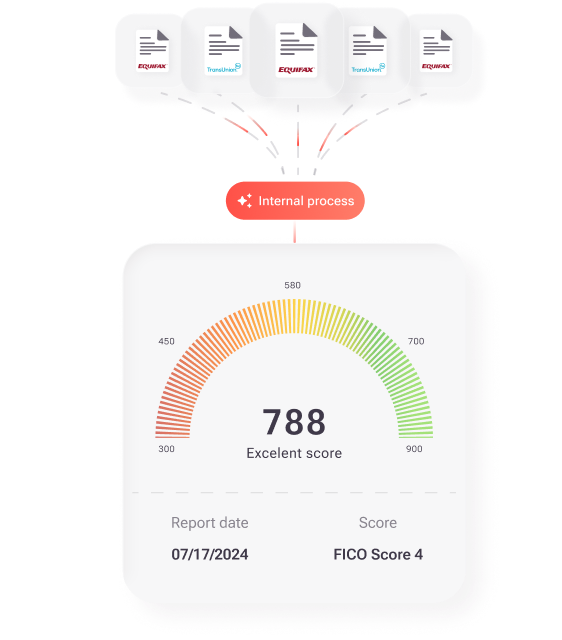
The separation between decision-making and data provision is critical. The association makes the approval or denial decision. The screening vendor provides the data. Conflating those roles or using a vendor that obscures them creates liability for both parties. TenantEvaluation is built specifically for community associations and management companies, with FCRA compliance as the foundation. Because it is a legitimate reseller of TransUnion and Equifax data accessed under strict bureau rules with regular compliance reviews and audits, it maintains no gray-market or offshore data sources, and every application carries a built-in audit trail. That trail supports automated adverse-action workflows so no denial based on a consumer report goes undocumented.
Biometric Identity Verification as a Fraud-Prevention Layer
FCRA compliance assumes the person applying is who they claim to be. Traditional screening undermines that assumption because it relies on uploaded documents, which cannot reliably prevent impersonation or synthetic identity fraud. A scanned ID confirms a document exists. It does not confirm that the person submitting the application is the person named on it.
IDVerify+ is TenantEvaluation’s biometric identity verification layer embedded directly in the screening workflow. It combines government ID validation, AI-powered liveness detection, and biometric selfie-to-ID comparison into a single step that runs natively inside TenantEvaluation, with no external portals, separate logins, or workflow disruption. IDVerify+ strengthens permissible-purpose validation by confirming identity before screening authorization, reinforcing FCRA-aligned workflows and audit defensibility. It can be enabled per condo or HOA and configured per portfolio, adapting to each community’s risk profile.

Board Approval, Personal Liability, and the Questions Boards Actually Ask
Can a Florida HOA Require a Tenant Background Check?
A Florida HOA may require a tenant background check only when the recorded Declaration of Covenants, Conditions, and Restrictions expressly grants that approval authority. Board-adopted rules can add procedural requirements, such as a specific application form, but cannot create substantive screening rights the declaration does not authorize. Where the declaration is silent on transfer approval, no lawful basis for requiring a background check exists, per §720.305 and Florida condo approval practice.
What Is Rule 720 in Florida and How Does It Affect Tenant Screening?
“Rule 720” is shorthand for Florida’s Homeowners’ Association Act, Chapter 720 of the Florida Statutes. It does not operate as a separate rulebook. Chapter 720 is the statutory floor for HOA governance. Where it requires a procedure, governing documents cannot waive it. Where it is silent, governing documents control. For tenant screening, Chapter 720 sets no specific fee cap but requires that any screening authority trace to the recorded declaration, per §720.302.
What Is the 5-Year Rule for HOAs in Florida?
The grandfathering protection under §720.306(1)(h), effective July 1, 2021, provides that HOA rental restriction amendments apply only to owners who purchase after the amendment is recorded or who individually consent. Owners who held title before a new rental restriction was adopted are generally not bound by it. Two statutory exceptions apply to all owners: prohibitions on rentals shorter than six months and limits of no more than three rentals per calendar year.
Are HOA Board Members Personally Liable for Screening Decisions?
Florida board members are protected by the business judgment rule, codified at §617.0830, when decisions are made in good faith, on an informed basis, and in the association’s best interest. That protection disappears for fraud, self-dealing, gross negligence, or willful statutory violation. Florida courts have consistently held that the rule rewards directors who created a documented record and offers limited shelter to those who did not.
QuickApprove is TenantEvaluation’s accelerated approval workflow that gives boards a dedicated review and voting dashboard with real-time application tracking, automated communication support, customized approval letters, and a personalized welcome package. It delivers faster, clearer, more consistent approvals while preserving control, compliance, and visibility. It also produces the documented record that business judgment rule protection depends on.

See how QuickApprove documents board decisions
Lease Tracking and Fee Collection as Core Onboarding Steps
Lease management across many Florida community associations is fragmented. Associations often face missing or outdated lease copies, manual expiration tracking, disconnected spreadsheets, and no direct connection between applications and active leases. TenantEvaluation’s Lease Tracking capability addresses this by providing centralized, real-time lease visibility and lifecycle control inside the platform.
It connects resident onboarding, unit data, approvals, and lease documentation from application to occupancy. Real-time lease status, automated lease document collection, unit-level tracking, and a searchable digital history keep every record audit-ready. Every lease stays connected, searchable, trackable, and audit-ready, replacing the spreadsheets and scattered email chains that create compliance risk under §718.111(12) and §720.303(5).
TEpayments by Zinc is a connected payment workflow inside TenantEvaluation that collects application fees and deposits during resident onboarding. Each association defines what is collected and at which stage. Payments go directly from the applicant to the association’s designated account. TenantEvaluation never holds the funds.
55+ Communities and Vendor Contract Considerations Under §720.3055
TenantEvaluation’s 55+ Communities Verification helps Florida condos and HOAs standardize how age-restricted application requirements are handled across applications. This reduces manual work, improves documentation consistency, and strengthens internal processes. It is a documentation-first workflow standardization capability designed for Community Association Managers and does not operate as a legal verification system or a guarantee of any compliance outcome.

Boards evaluating a Florida-compliant tenant screening and onboarding system for HOAs should also account for a key procurement consideration: the competitive-bid threshold under Fla. Stat. §720.3055. That section requires competitive bids for vendor contracts exceeding 10% of the association’s annual budget, with related-party disclosure and two-thirds membership approval for contracts above that threshold. Boards entering a platform contract should confirm whether the contract value triggers this requirement and document the procurement process accordingly.
TenantEvaluation and Other Screening Vendors for Florida Associations
ApplyCheck and Verify Screening Solutions are both built on the TazWorks platform. TazWorks is not primarily designed for tenant screening and lacks applicant interaction and truly automated document review and redaction. Both platforms focus on background checks as a discrete service and do not address the full onboarding lifecycle that Florida association compliance requires.
Generic screening vendors and broader property management software, such as AppFolio, RealPage, and RentSpree, lack association-specific compliance workflows, board dashboards, and the statute-anchored configuration that Chapter 718, 720, and 719 communities require. They are built for generic rentals and do not reflect the governance structure of a Florida community association.
TenantEvaluation was founded in 2007 and built specifically for community associations and management companies. It serves more than 5,000 communities and processes approximately 100,000 applications annually, generating $150M for those communities. The platform holds a 4.8/5 Google rating and PCI Level 1 compliance, with end-to-end encryption and automatic redaction of sensitive PII. It operates as a direct TransUnion and Equifax reseller under strict bureau rules, provides 24/7 AI chat support in 11 languages, and runs on a revenue-sharing model with no upfront fees. Partners include FirstService Residential, Campbell Property Management, Castle Group, Associa, RealManage, and Vesta.
Matching Your Association Type to the Right Configuration
The right TenantEvaluation configuration depends on association type, management structure, and community profile. The following framework maps those variables to platform setup.
- Chapter 718 Condominium Associations require configuration that enforces the statutory fee cap described above, maps approval authority to the recorded Declaration of Condominium, and maintains records under the §718.111(12) retention schedule. IDVerify+ and QuickApprove are particularly relevant for high-density buildings with complex board approval workflows.
- Chapter 720 HOA Communities require configuration that traces all screening authority to the recorded CC&Rs, applies reasonable fee structures authorized by governing documents, and documents the §720.306 grandfathering status of any rental restriction. The §720.3055 competitive-bid threshold should be reviewed before contract execution.
- Chapter 719 Cooperative Associations require configuration aligned to cooperative documents and §719.303, with the same FCRA baseline and audit-trail requirements as Chapter 718 and 720 associations.
- Self-Managed Communities benefit from the full end-to-end workflow, from application intake through lease tracking, to replace the manual processes that create the greatest compliance exposure.
- Enterprise Portfolio Management Companies benefit from multi-community configuration, portfolio-level reporting, and the revenue-sharing model that turns application processing into a controlled income stream across the portfolio.
- Age-Restricted 55+ Communities benefit from 55+ Communities Verification to standardize age-restricted application handling, improve documentation consistency, and reduce manual work across communities.
Find the configuration for your association type
Frequently Asked Questions
What Is the Difference Between a Florida-Compliant Screening Workflow and a Standard Background Check?
A standard background check is a single data product, such as a report from a consumer reporting agency. A Florida-compliant screening workflow is a documented sequence of steps that begins with application intake and written FCRA authorization, proceeds through identity verification and screening, continues through board review and adverse-action notice where applicable, and concludes with lease execution, fee collection, and occupancy confirmation. The background check is step four of a ten-step process. Associations that treat the background check as the whole system lack the audit trail needed to defend a denial, respond to a records request under §718.111(12) or §720.303(5), or demonstrate consistent application of pre-established criteria under the Fair Housing Act.
How Does FCRA Compliance Apply to a Florida HOA or Condominium Association?
The federal Fair Credit Reporting Act applies to any Florida association that uses a consumer reporting agency to obtain credit, criminal, or background reports on applicants. As noted earlier, Florida has no mini-FCRA overlay, so the federal baseline governs directly. The association must provide a standalone written disclosure, obtain written authorization before ordering any consumer report, apply consistent pre-established criteria to every applicant, and issue an adverse-action notice when a denial or less favorable decision is based in whole or in part on a consumer report. The association, not the screening vendor, bears responsibility for issuing that notice. The vendor provides data and the association makes the decision.
What Records Must a Florida HOA or Condominium Association Retain for Tenant Screening and Onboarding?
Under §718.111(12) for condominiums and §720.303(4) and (5) for HOAs, Florida associations must retain official records for a minimum of seven years. For tenant screening and onboarding, this includes applications, authorization forms, screening reports, board meeting minutes documenting approval or denial votes, adverse-action notices, executed leases, and any correspondence related to the application. Condominium associations must also retain a records-request checklist with every response identifying what was provided and what was withheld. Associations must respond to written records requests within 10 business days. Failure to comply can result in statutory damages of $50 per calendar day under §718.111(12)(c). A centralized, audit-ready digital record system is the most defensible approach to meeting these obligations.
Can a Florida HOA Board Member Be Personally Liable for a Tenant Screening Decision?
Florida board members are protected by the business judgment rule, codified at §617.0830, when screening decisions are made in good faith, on an informed basis, and in the association’s best interest. That protection is defeated by fraud, self-dealing, gross negligence, willful statutory violation, or failure to maintain a documented record of the decision-making process. Personal liability exposure rises when a denial is arbitrary, pretextual, or touches a protected class under the federal Fair Housing Act or Florida’s Fair Housing Act (§760.23). Directors and Officers liability insurance covers good-faith decisions but does not protect against intentional wrongdoing. The most reliable protection is a documented workflow with written criteria applied consistently, board minutes capturing the deliberation, and an audit trail for every application.
