Written by: Luis Teran, Co-founder, CEO, TenantEvaluation | Last updated: June 30, 2026
Key Takeaways for Florida Condo Boards and CAMs
- Florida condo associations face rising identity fraud, HB 1203 compliance demands, and manual onboarding workflows that drain staff time and increase liability.
- TenantEvaluation replaces paper processes with a fully digital, FCRA-compliant platform that delivers up to 70% faster approvals and recovers up to 50 staff hours per day.
- Key 2026 practices include biometric identity verification, automated document logic, centralized lease tracking, and standardized 55+ community verification, all built into TenantEvaluation.
- Unlike generic screening tools or HOA management platforms, TenantEvaluation offers zero-upfront-cost revenue-share pricing, a dedicated board dashboard, and end-to-end onboarding built exclusively for Florida associations.
- Learn how TenantEvaluation can streamline your condo association’s onboarding at our platform overview page.
Resident Onboarding Basics for Florida Condo Associations
Resident onboarding in a Florida condo association covers the full workflow from application intake through board approval and lease documentation. The process involves four interconnected components.
- Application workflow: Collection of personal, financial, and occupancy data from prospective residents, buyers, or tenants.
- FCRA screening: Background checks, credit reports, and identity verification conducted under the Fair Credit Reporting Act, which governs permissible purpose, adverse action notices, and data handling.
- Board approval: Review and voting by the Board of Directors, often requiring summarized applicant reports and a documented decision trail.
- Lease tracking: Collection, storage, and lifecycle management of lease agreements tied to each approved occupant.
CAMs manage daily operations across all four stages, coordinating with applicants, realtors, owners, and board members while maintaining audit-ready records. Boards need transparency and compliance confidence without getting pulled into manual document review.
Market Dynamics Pushing Digital Onboarding in 2026
Three forces are accelerating the shift away from paper-based onboarding in Florida communities.
Rising identity fraud. Stolen IDs, synthetic identities, and impersonation attempts are increasing across condo and HOA communities. Traditional document-upload screening cannot reliably detect these threats without biometric confirmation.
HB 1203 requirements. Florida HB 1203 introduced structural changes to homeowners’ association governance, including requirements around record maintenance timelines, website postings, board education, and financial procedures. These changes raise the operational stakes of slow or incomplete onboarding workflows.
Scale of the problem. TenantEvaluation processes 100,000+ applications per year across 5,000+ Florida communities, delivering up to 70% faster approvals and freeing up to 50 hours of staff time per day. One Florida-based management company documented $240,000 in annual savings after switching from manual processes to TenantEvaluation. To understand where these savings come from, boards and CAMs need a clear view of how the typical onboarding process works today and where it breaks down.
How Resident Onboarding Typically Works Today
In most Florida condo associations, onboarding involves multiple stakeholders with distinct documentation needs and timing dependencies.
- Applicants and realtors submit forms, IDs, lease agreements, and payment, often through email or in-person drop-off.
- CAMs review submissions for completeness, chase missing documents, order background checks, and coordinate board scheduling.
- Boards receive packaged application summaries, vote on approvals, and issue decision letters, frequently through email chains with no centralized record.
- Operations teams file lease copies and track expiration dates, typically in spreadsheets disconnected from the original application.
Without a unified platform, each handoff introduces delay, error risk, and compliance exposure.
Compliance, Risk, and Governance in Florida Screening
FCRA compliance is mandatory for Florida condo associations that conduct background screening. Key obligations include the following requirements.
- Permissible purpose: Screening data may only be accessed for a defined, lawful purpose with applicant consent.
- Adverse action: Associations must issue compliant adverse action notices when denying applications based on screening results.
- Audit trails: Every application decision must be documented with a timestamped record of actions taken.
- Data security: Sensitive PII such as Social Security numbers and financial data must be handled with encryption and access controls.
TenantEvaluation is built with FCRA compliance as the foundation, not as an add-on. As a direct reseller of TransUnion and Equifax data, TenantEvaluation accesses credit bureau data under strict bureau rules, with no gray-market or offshore sources. Automated adverse action workflows and built-in audit trails come standard across every community configuration.
Where Manual Onboarding Usually Fails
Manual onboarding consistently breaks down at four points.
- Incomplete applications: Applicants submit forms with missing documents or unsigned leases, which triggers manual follow-up cycles that delay the entire workflow.
- Email-chain bottlenecks: Board approvals routed through email lack version control, create response delays, and produce no reliable audit record.
- Missing lease records: Lease copies stored across inboxes and folders become difficult to locate during audits or disputes, which creates compliance risk and operational blind spots.
- No board visibility: Boards receive application summaries inconsistently, which makes informed voting difficult and slows final decisions.
2026 Best Practices for Florida Condo Onboarding
Leading Florida condo associations now standardize four capabilities in their onboarding workflows.
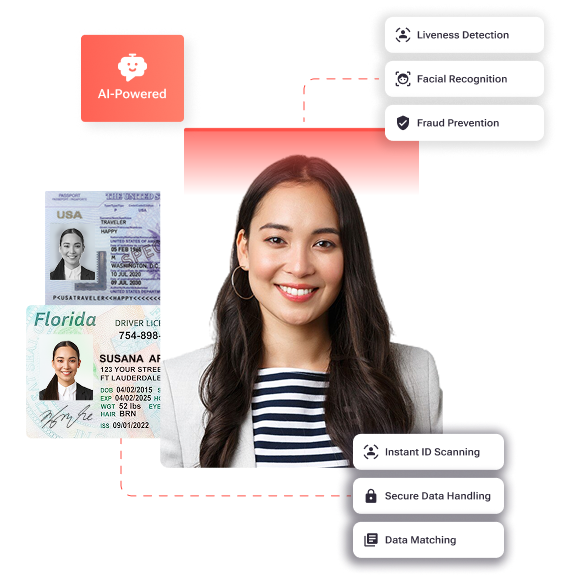
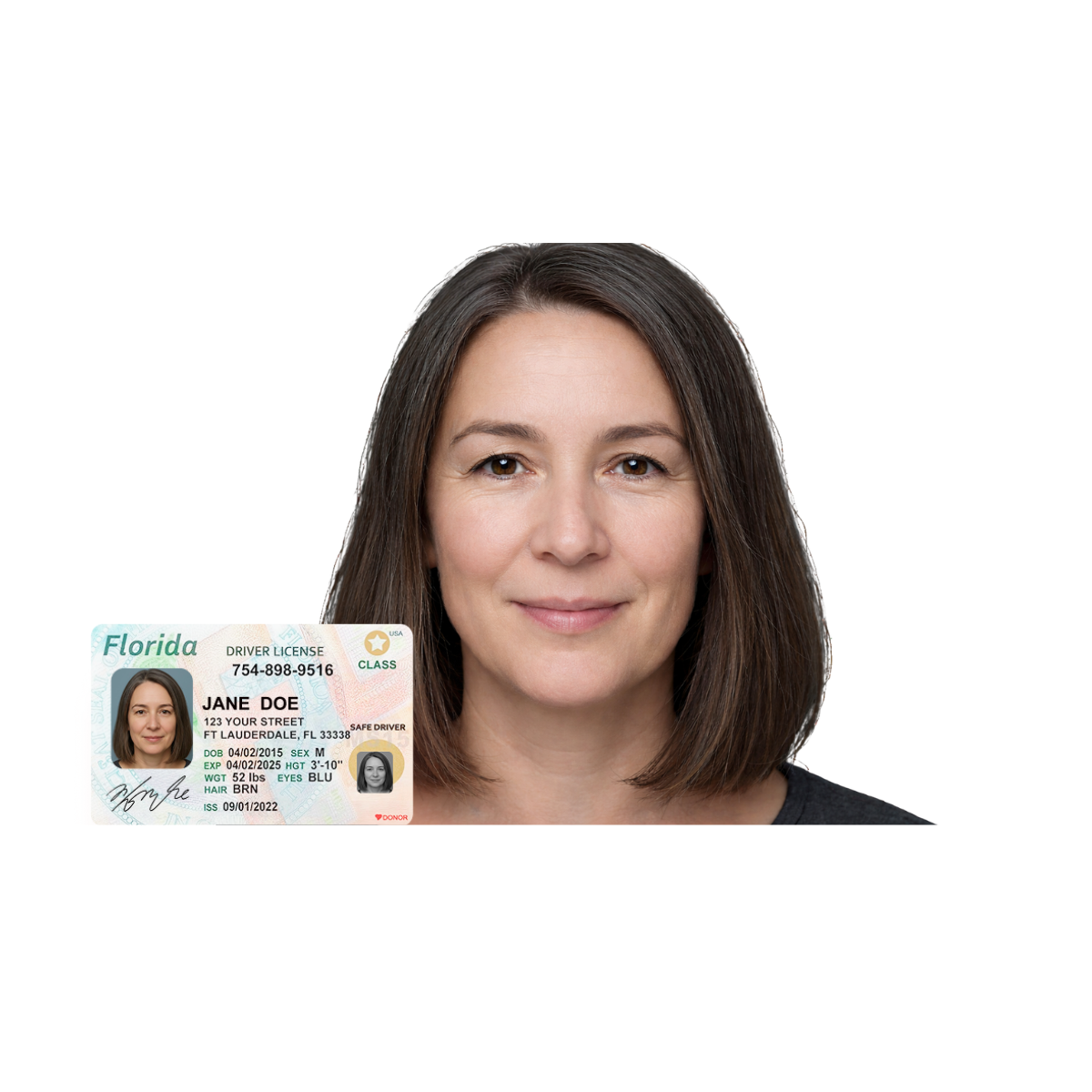
Biometric identity verification. IDVerify moves communities from document-based review to biometric-confirmed identity. It combines government ID validation, AI-powered liveness detection, and facial biometric matching, all inside the TenantEvaluation platform with no external portals or workflow disruption.
Automated document logic. Smart form logic rejects incomplete submissions at intake. The system automatically checks for executed leases, valid IDs, and required documents before an application reaches the CAM queue.
Centralized lease records. Lease Tracking connects resident onboarding, unit data, approvals, and lease documentation into one centralized, real-time workflow. This integration gives CAMs real-time lease status, whether active, pending, expired, or missing, without digging through email or folders. Automated document collection during onboarding keeps unit-level tracking current from application through occupancy and creates audit-ready digital records that replace manual reconciliation work.
55+ Communities Verification standardization. 55+ Communities Verification reduces manual work, standardizes application handling, and supports documentation consistency for age-restricted Florida condos and HOAs. CAMs and boards gain more predictable operations and stronger internal controls.
See these workflows in action to view IDVerify, Lease Tracking, and QuickApprove inside a live Florida condo association environment.

Evaluation Framework for Affordable Onboarding Software
When evaluating Florida condo resident screening and onboarding platforms, CAMs and boards can use six criteria.
- Cost structure: Zero upfront cost versus monthly subscription, and revenue-share alignment versus fixed fees.
- Compliance depth: FCRA-first design, direct bureau reseller status, automated adverse action, and built-in audit trails.
- Board dashboard access: Dedicated review panel, real-time application status, and a clear voting workflow.
- Fraud-prevention layers: Biometric verification, liveness detection, and ID authentication, not just document uploads.
- Time savings: Reduction in manual follow-ups, faster processing speed, and staff hours recovered.
- Scalability: Ability to handle high-volume seasons and complex onboarding requirements without adding headcount.
| Criteria | TenantEvaluation | ApplyCheck / Verify Screening Solutions | PayHOA / Condo Control / HOA Companion |
|---|---|---|---|
| Cost model | Zero upfront cost, revenue-share per application | Per-application fees, no revenue-share model | Monthly subscription, no revenue-share model |
| Florida-specific build | Built exclusively for Florida community associations | Generic tenant screening platforms (TazWorks-based) | General HOA management tools, not screening-focused |
| FCRA compliance foundation | FCRA-first design, direct TransUnion and Equifax reseller, automated adverse action | Background checks offered, FCRA handling varies by configuration | Not primary screening platforms, compliance depth limited |
| Biometric ID verification | IDVerify+: liveness detection, government ID validation, biometric facial matching, native to platform | Not available natively | Not available |
| Board approval dashboard | Dedicated board voting panel with real-time application tracking and AI-generated summaries | Not available | Limited or general board communication tools, not approval-workflow specific |
| Lease tracking | Centralized, real-time lease lifecycle control from application to occupancy | Not available | Basic document storage in some tools, not connected to onboarding workflow |
| 55+ Communities Verification | Built-in, standardizes age-restricted application handling for Florida condos and HOAs | Not available | Not available |
| End-to-end onboarding | Application intake through final decision and record retention in one platform | Screening-only, no full onboarding workflow | HOA management features, screening not core capability |
ApplyCheck and Verify Screening Solutions use the TazWorks platform, which is not designed for community association onboarding and lacks applicant interaction, automated document review, or board dashboards. PayHOA, Condo Control, and HOA Companion are HOA management tools that do not position resident screening or FCRA compliance as core capabilities.
Frequently Asked Questions
What makes TenantEvaluation different from other Florida HOA resident onboarding software?
TenantEvaluation is the only platform built exclusively for Florida community associations that combines FCRA-compliant screening, biometric identity verification, a board-ready approval dashboard, centralized lease tracking, and a zero-upfront-cost revenue-share model in one integrated system. Competitors either focus on background checks alone, operate as generic HOA management tools, or require monthly subscriptions without revenue return to the association. With a 4.8/5 Google rating and the scale described earlier in this guide, TenantEvaluation has become a leading platform for Florida community associations.
How does the revenue-share pricing model work for Florida condo associations?
TenantEvaluation deducts its service fee from the application fee collected from each applicant. The remainder is rebated directly to the association or management company. There are no upfront costs, no monthly subscriptions, and no implementation fees. This model turns the onboarding process into a compliant, controlled income stream rather than an operational expense, a structure not offered by competing platforms in the Florida condo association market.
What is HB 1203 and how does it affect Florida condo association resident applications?
Florida HB 1203 introduced structural changes to homeowners’ association governance, including requirements around record maintenance timelines, website postings, board education, and financial procedures. Associations that rely on manual, paper-based workflows face greater difficulty meeting these standards consistently. A digital platform with built-in audit trails, automated workflows, and board dashboards supports the operational structure needed to maintain compliant records and documented procedures.
What is biometric identity verification and why does it matter for Florida condo screening?
Biometric identity verification confirms that an applicant is a real, physically present person who matches the government-issued ID they submitted. TenantEvaluation's IDVerify uses AI-powered liveness detection, government ID authentication, and facial biometric matching, all inside the platform. This approach moves communities from document-based review, which cannot detect stolen IDs or synthetic identities, to verified physical identity confirmation before any approval decision. It is configurable per community and per portfolio, so each association can match its risk profile.
How does Lease Tracking work inside TenantEvaluation and who benefits from it?
Lease Tracking is a centralized operational capability built directly into TenantEvaluation that connects resident onboarding, unit data, approvals, and lease documentation into one real-time workflow. CAMs and property managers gain real-time lease status visibility, including active, pending, expired, or missing leases, along with automated lease document collection during onboarding. Unit-level tracking ties directly to occupancy records and creates a searchable digital history of all lease activity. Boards gain a clearer operational picture of occupancy across communities, which supports faster workflows, fewer manual errors, and stronger compliance readiness while removing spreadsheets and scattered email chains.
Conclusion: Compare Your Current Onboarding Process
The evaluation framework in this guide gives Florida CAMs and boards a practical baseline to measure their current onboarding process against six criteria: cost structure, compliance depth, board dashboard access, fraud-prevention layers, time savings, and scalability.
Manual processes consistently fail on all six. They generate administrative burden, create FCRA exposure, leave identity fraud undetected, exclude boards from real-time visibility, slow approvals, and produce no revenue offset for the association.
TenantEvaluation addresses every failure point with a single, connected platform. QuickApprove supports accelerated board-ready approvals, IDVerify provides biometric fraud prevention, 55+ Communities Verification standardizes age-restricted documentation, and Lease Tracking centralizes lease lifecycle control. All of these capabilities sit on an FCRA-first foundation with zero upfront cost and a revenue-share model that generates income for the association.
Florida condo associations managing 50 units or 5,000 share the same compliance obligations and the same fraud exposure. The real difference is whether the platform handling their onboarding was built specifically for them.
Schedule a demo to compare your current workflow against the only affordable, FCRA-compliant, revenue-share platform built specifically for Florida condo associations.
