Written by: Luis Teran, Co-founder, CEO, TenantEvaluation | Last updated: June 20, 2026
Key Takeaways for Florida Condo & HOA Boards
- Florida condo and HOA boards in 2026 expect clear ROI metrics such as time-to-decision, application cycle cost, compliance exposure, and revenue impact before approving technology spend.
- Manual screening creates major inefficiencies. One Florida management company documented $240,000 in annual savings after switching to TenantEvaluation and freeing 50 staff hours per day.
- TenantEvaluation’s pay-per-application, revenue-sharing model removes upfront costs and creates net-positive cash flow through application fee rebates to associations.
- QuickApprove (up to 70% faster approvals), IDVerify+ biometric fraud prevention, and centralized lease tracking directly address the 80/20 rule that wastes most CAM time on repetitive tasks.
- Boards comparing screening platforms should focus on compliance readiness, scalability, transparency, and measurable time savings. TenantEvaluation leads on these criteria in its documented Florida case study; explore the full platform at TenantEvaluation.
Typical HOA Software Costs vs Screening Needs
Generic HOA communication and management platforms carry combined monthly stack costs of $200–$800. These tools cover email broadcast, SMS, portal access, and AI assistants, yet they do not include resident screening or onboarding automation. Dedicated portals range from $49 to $400+ per month. Implementation timelines often span 60–120 days (roughly 9–17 weeks) for larger management-suite systems. Broader property management platforms such as AppFolio and RealPage charge monthly per-unit subscriptions that accrue regardless of application volume.
Hidden manual costs stack on top of those subscription fees. Forty-six percent of property managers conduct tenant verifications manually, which increases fraud exposure and bad debt write-offs. TenantEvaluation operates on a pay-per-application, revenue-sharing model. The platform deducts its service fee from the collected application fee and rebates the remainder to the association. This structure creates net-positive cash flow with zero upfront fees, which generic subscription platforms do not match.
TenantEvaluation Pricing and Documented Savings
TenantEvaluation uses a pay-per-application model, so associations pay nothing until an application is submitted. The documented savings case anchors the value calculation. A Florida management company freed 50 staff hours per day, cut processing time by 50 percent, and saved $10 per hour per property. Across 240 annual workdays, 50 hours × $10/hour × 240 days = $120,000 in direct labor savings, which scaled across the portfolio to reach $240,000 annually. That figure sits on top of fraud prevention value, avoided legal costs, and revenue generated through the fee-sharing model.
RealPage data shows AI Screening produces $39 per unit per year in savings through reductions in bad debt, skips, and evictions. For a 500-unit community, that equals $19,500 annually from AI screening alone, before staff time or fraud losses enter the calculation. These savings reflect a broader operational pattern that boards can quantify.
How the 80/20 Rule Drains CAM Time
In property management, the 80/20 rule describes a consistent operational pattern. Eighty percent of administrative time goes to 20 percent of tasks such as manual screening, document chasing, follow-up calls, and lease tracking. For a CAM managing a 150-unit community, that pattern means most of each workday goes to application intake, ID verification, board communication, and lease status checks instead of strategic community management.
TenantEvaluation reverses that ratio by automating the repetitive 80 percent. Automated workflows remove manual document chasing. Smart form logic captures complete data on first submission and reduces follow-up calls. IDVerify biometric verification replaces manual ID review. Centralized lease tracking eliminates daily status-check emails. Automated direct-source verifications then improve completion rates and shorten verification timelines. CAMs regain time for the 20 percent of high-value decisions that truly require human judgment.
Manual vs. Software ROI Comparison for Florida Associations
The core ROI formula for Florida associations is clear. (Annual Staff Hours on Screening × Hourly Labor Rate) + (Fraud Loss Exposure × Incident Probability) + (Legal/Compliance Cost Risk) − (Software Fee Net of Revenue Share) = Net Annual ROI. Applying the documented case above, ($120,000 labor) plus eviction costs avoided and $5,000–$10,000 in avoided legal costs, minus a net-zero software fee, produces a measurable six-figure annual return.
The table below shows how labor and AI screening savings scale across different community sizes. Even a 50-unit association can see thousands of dollars in combined annual savings before factoring in fraud prevention or compliance cost avoidance.
| Metric | 50-Unit Association (Manual) | 150-Unit Association (Manual) | 500-Unit Association (Manual) |
|---|---|---|---|
| Est. annual staff hours on screening | ~500 hrs | ~1,500 hrs | ~5,000 hrs |
| Labor cost at $10/hr | $5,000 | $15,000 | $50,000 |
| AI Screening savings at $39/unit/yr (RealPage benchmark) | $1,950 | $5,850 | $19,500 |
| Avg. eviction cost avoided per incident | Varies | Varies | Varies |
| TenantEvaluation upfront fee | $0 | $0 | $0 |
Staff hour estimates are illustrative projections based on the documented 50-hours-per-day client case, scaled proportionally by unit count. Actual results vary by community workflow and application volume. Beyond these labor savings, specific platform features deliver additional measurable ROI, starting with approval cycle acceleration.
QuickApprove Time-Savings ROI for Boards
Formula: (Pre-Software Approval Days − Post-Software Approval Days) × Daily Revenue at Risk × Annual Application Volume = Approval Cycle Value Recovered
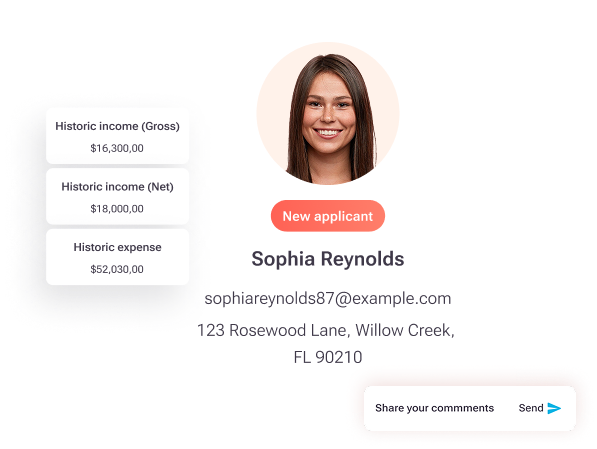
QuickApprove accelerates resident approvals inside one connected platform built for CAMs, boards, and property management teams. Real-time application tracking, automated communication support, customized approval letters, and a board-ready approval process replace scattered tools. Before QuickApprove, approval workflows lived in email chains, spreadsheets, and manual follow-ups, with applications waiting for board review. After QuickApprove, a single connected workflow replaces that fragmentation and delivers up to 70 percent faster approvals while preserving control, compliance, and visibility. For communities processing 200 applications annually, a 10-day reduction in cycle time removes 2,000 days of approval lag, which reduces vacancy exposure and realtor friction during peak seasons.
IDVerify+ Fraud-Prevention ROI for Associations
Formula: (Annual Fraud Incident Probability × Avg. Loss Per Incident) + (Manual Verification Hours × Hourly Rate) = Annual Fraud Exposure Eliminated
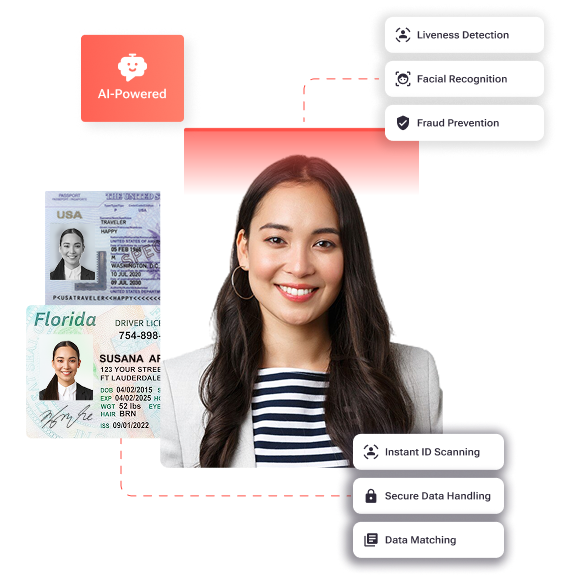
IDVerify adds biometric identity verification directly inside the TenantEvaluation workflow. Government ID validation, AI-powered liveness detection, and facial biometric matching work together to confirm identity. Many rental housing owners and managers report recent fraud incidents that created substantial bad debt write-offs. Each eviction tied to a fraudulent applicant carries legal fees, lost rent, property damage, and turnover costs. IDVerify shifts communities from document-based review to biometric-confirmed identity verification and reduces that exposure before a fraudulent applicant reaches the board.
Lease Tracking Visibility and Time Savings
Formula: (Hours/Month Searching Lease Records × 12 × Hourly Rate) + (Audit Preparation Hours × Hourly Rate) + (Spreadsheet Tool Costs) = Annual Lease Management Cost Eliminated
TenantEvaluation’s Lease Tracking feature delivers centralized, real-time lease visibility and lifecycle control from application to occupancy. It connects resident onboarding, unit data, approvals, and lease documentation into one audit-ready platform that replaces spreadsheets and scattered email chains. Real-time lease status, automated lease document collection during onboarding, unit-level tracking, and searchable digital history reduce the hours CAMs spend locating records before audits or board meetings. For a 150-unit community where managers spend 10 hours per month on lease record searches, centralization recovers 120 hours annually. At $10 per hour, that equals $1,200, plus eliminated spreadsheet licensing costs and reduced audit preparation time.
Board Justification: Avoided Legal Costs and Compliance
Florida’s 2026 statutory environment raises compliance stakes across association operations, including resident screening. Under Florida Statute 718.111(12)(g), effective January 1, 2026, condominium associations with 25 or more units must operate an official website or secure member portal. Willful failure to deliver records within 10 business days creates a rebuttable presumption of non-compliance with statutory damages of $50 per day up to a $500 cap plus attorney fees. That records-access requirement extends to screening documentation.
Each screening-related compliance incident, such as an improperly handled adverse action, a missing audit trail, or an FCRA violation, carries estimated legal exposure of $5,000–$10,000 per incident in attorney fees and remediation costs. TenantEvaluation’s built-in audit trails, permissible-purpose controls, automated adverse action workflows, and direct TransUnion and Equifax reseller relationships provide the documentation layer boards need to defend decisions without hiring outside counsel for routine screening disputes.
Customizable ROI Calculator for Your Community
Boards and managers can use the worksheet below to calculate community-specific ROI by inserting actual operational data. Each input variable connects to the formulas in the right column and rolls into a total annual value figure that supports board presentations and budget discussions.
| Input Variable | Your Community Value | Formula |
|---|---|---|
| Annual applications processed | ___ | Base volume driver |
| Avg. staff hours per application (manual) | ___ | × Hourly labor rate = labor cost |
| Hourly labor rate ($) | ___ | × Hours = annual labor cost |
| Unit count | ___ | × $39 = AI screening savings benchmark |
| Estimated fraud incidents per year | ___ | × avg. cost per incident = fraud exposure |
| Compliance incidents per year (est.) | ___ | × $5,000–$10,000 = legal cost risk |
| TenantEvaluation upfront fee | $0 | Net-zero entry cost |
| Estimated Annual ROI | Sum of above rows | = Total value delivered |
Compliance, Risk, and Governance Alignment
Florida’s 2026 legislative environment places new documentation obligations on associations. State statutes require HOAs to provide access to governing documents and maintain records for electronic voting and related operations. TenantEvaluation’s audit-ready digital records, permissible-purpose controls, and FCRA-first design address these requirements at the screening and onboarding layer. The platform keeps a clear separation between decision-making by the association and data provision by TenantEvaluation, which reduces board liability tied to screening data handling. Associations still rely on legal counsel for governing document interpretation.
Common Failure Points That Erode ROI
Three recurring operational patterns often destroy projected ROI in manual environments, and they frequently compound each other. First, fragmented spreadsheets keep lease expiration dates in disconnected files, which creates occupancy blind spots and missed renewal windows that increase vacancy loss. Second, missing lease copies stored across email inboxes and shared drives turn audit preparation into a multi-day effort instead of a one-click report. Third, inconsistent 55+ documentation in Florida age-restricted communities creates eligibility gaps that surface during disputes or audits.
TenantEvaluation’s 55+ Communities Verification standardizes application handling for age-restricted communities. It supports documentation consistency, reduces manual work, and improves operational efficiency for Florida condos and HOAs that manage 55+ eligibility.

Best-Practice Criteria for Evaluating Screening Platforms
Boards evaluating screening and onboarding platforms can apply four practical criteria. Compliance readiness asks whether the platform operates as a direct credit bureau reseller with built-in adverse action workflows and FCRA-aligned permissible-purpose controls. Scalability focuses on whether the platform can handle 100,000+ applications annually without new headcount. Transparency looks for a dedicated real-time dashboard for application review and voting. Measurable time savings requires documented case evidence of staff hour reduction, not projections.
TenantEvaluation scores strongly on all four criteria. It is a direct TransUnion and Equifax reseller, processes 100,000+ annual applications across 5,000+ communities, and offers a proprietary board voting dashboard that generic alternatives lack. The documented $240,000 annual savings case from a Florida management company provides concrete proof of time savings. Generic platforms, including broader property management suites and background-check-only vendors, usually address one or two of these criteria rather than all four together.
Conclusion and Next Steps for Your Board
The ROI of tenant evaluation software for condo and HOA managers is quantifiable and Florida-specific. Labor savings from automation, fraud losses avoided through biometric verification, legal costs reduced through audit-ready compliance infrastructure, and revenue generated through fee sharing combine into a net-positive financial case with no upfront investment. The $240,000 annual savings figure reflects a documented outcome from a Florida management company that adopted TenantEvaluation. Boards that require defensible math before approving technology spend now have formulas, benchmarks, and a case study to support internal justification.
Use the customizable calculator table above with your community’s application volume, labor rate, and unit count. The result will show your community-specific ROI figure that you can bring to your next board meeting.
Frequently Asked Questions
What is the ROI of tenant evaluation software for condo and HOA managers in Florida?
ROI varies by community size, application volume, and current labor costs. The documented baseline from a Florida management company is $240,000 in annual savings, derived from freeing 50 staff hours per day at $10 per hour across 240 workdays. Additional ROI components include avoided eviction costs, which often reach several thousand dollars per incident, and avoided legal and compliance costs in the $5,000–$10,000 range per incident. Screening-related bad debt reduction, benchmarked at $39 per unit per year by RealPage AI Screening data, and revenue from TenantEvaluation’s fee-sharing model add further value. Because TenantEvaluation charges on a pay-per-application basis with no upfront fees, the net ROI calculation starts at zero cost and builds entirely from savings and revenue.
How does TenantEvaluation’s pricing model differ from subscription-based HOA software?
TenantEvaluation uses a pay-per-application, revenue-sharing model rather than a monthly subscription. The platform deducts its service fee from the application fee collected from the applicant and rebates the remainder to the association or management company. Associations therefore avoid upfront cost and recurring monthly fees that apply regardless of application volume. Generic HOA management platforms and broader property management suites typically charge monthly per-unit or per-community subscription fees that accrue whether or not applications are processed. As noted above, TenantEvaluation’s pay-per-application approach aligns cost directly with activity instead of imposing fixed overhead.
What Florida-specific compliance requirements does TenantEvaluation address in 2026?
Florida’s 2026 statutory environment adds documentation and records-access obligations for associations. Condominium associations with 25 or more units must operate an official website or secure member portal under Florida Statute 718.111(12)(g), effective January 1, 2026. HOAs face similar requirements under Florida law. TenantEvaluation addresses the screening and onboarding portion of these obligations through built-in audit trails for every application, permissible-purpose controls, automated adverse action workflows, and FCRA-first design as a direct TransUnion and Equifax reseller. The platform also supports 55+ Communities Verification for age-restricted communities, which standardizes documentation handling and improves operational consistency. TenantEvaluation does not replace legal counsel but provides the documentation infrastructure boards need to demonstrate process compliance.
How does TenantEvaluation prevent identity fraud in condo and HOA communities?
TenantEvaluation’s IDVerify+ feature adds biometric identity verification directly inside the screening workflow without external portals or separate logins. The system validates government-issued IDs, runs AI-powered liveness detection to confirm physical presence, and performs facial landmark biometric matching between the applicant’s selfie and their ID document. This approach moves communities from document-based review, where uploaded ID images can be manipulated or stolen, to biometric-confirmed identity verification before any approval decision. IDVerify+ can be enabled per community and configured per portfolio, so management companies can apply different verification standards across communities with different risk profiles. The result is a standardized fraud-prevention layer that strengthens board approval confidence and reduces liability tied to fraudulent occupants.
What makes TenantEvaluation different from generic tenant screening platforms?
TenantEvaluation is built specifically for community associations and management companies in Florida rather than for generic rental markets. That focus produces capabilities generic platforms do not offer. These include a proprietary board voting and review dashboard that gives board members real-time access to application status and voting without email chains, 55+ Communities Verification for age-restricted HOAs and condos, and Florida-specific workflow customization aligned with governing documents and state statutes. Lease Tracking connects resident onboarding, unit data, approvals, and lease documentation into one centralized, audit-ready platform. TenantEvaluation is also a direct reseller of TransUnion and Equifax data, not a third-party scraper, which provides bureau-grade data quality under strict permissible-purpose controls. With 5,000+ communities and 100,000+ applications processed annually, the platform operates at a scale that generic screening tools and background-check-only vendors typically do not match.
