Written by: Luis Teran, Co-founder, CEO, TenantEvaluation
Key Takeaways
- Florida HOAs and condo associations face higher expectations for compliance, security, and speed than traditional manual tenant evaluation processes can reliably support.
- Modern resident onboarding solutions differ widely in automation, Florida-specific compliance, and board transparency, so communities benefit from comparing categories, not just vendors.
- Dedicated resident onboarding platforms give boards clearer oversight, stronger data protection, and smoother experiences for applicants, realtors, and community managers.
- Long-term value comes from fewer manual tasks, better audit trails, and new revenue opportunities, not just faster background checks.
- Tenant Evaluation offers a Florida-focused, end-to-end onboarding platform; get started with Tenant Evaluation to see how it can support your community in 2026.
Why Traditional Tenant Evaluation Falls Short for Florida HOAs and Condos
Resident approval decisions in Florida affect compliance, risk, and community finances, yet many associations still rely on slow, manual, and fragmented screening workflows. These older methods create delays, increase workload for managers, and make it harder to stay aligned with Florida statutes and fair housing rules.
The Cost of Inefficiency: Administrative Burden and Delays
Manual applications, email chains, and phone calls force managers to chase documents and status updates instead of focusing on the community. These tasks extend move in timelines, delay fee collection, and often stretch approvals into weeks that could be avoided with automation.
Compliance Risks and Data Security Concerns
Paper files and basic digital tools make it difficult to protect sensitive data, prove fair and consistent decisions, or maintain clean audit trails. Florida associations that handle background checks without proper encryption, access controls, and logging expose themselves to regulatory and legal risk.
Limitations of Generic Property Management Software
Platforms like AppFolio, Buildium, DoorLoop, and TenantCloud focus on leases, rent, and maintenance for rental portfolios. Many lack flexible rule engines for HOAs and condos, detailed board workflows, or Florida specific screening rules that match community documents.
Essential Criteria for Modern Resident Onboarding in Florida HOAs
Florida associations gain the most from solutions that simplify work for managers, help boards follow their documents, and give applicants a clear path from application to approval.
Automation and Operational Efficiency
Effective platforms automate document collection, reminders, and status updates so staff do not need to track every step by hand. Clean automation shortens approval times and cuts the number of emails and calls required to complete each file.
Florida Specific Compliance and Risk Mitigation
Resident onboarding tools must support Florida statutes, association documents, and fair housing principles. Configurable rules, secure payments, ID verification, and clear audit logs help communities defend decisions and reduce disputes.
User Experience for Applicants, Realtors, and Board Members
Applicants and realtors need simple online applications that work on mobile devices, while board members need concise summaries and easy ways to vote. A clear interface reduces confusion and speeds decisions for everyone involved.
Revenue Generation and Financial Impact
Strong onboarding platforms support accurate fee collection, faster move ins, and potential revenue sharing structures. Reduced manual work and fewer errors improve the financial picture over time.
Head to Head: Comparing Alternatives to Traditional Tenant Evaluation Services
Tenant evaluation tools fall into several categories, each with benefits and tradeoffs. Florida HOAs and condos can use the criteria above to gauge which category fits their structure and risk profile.
Traditional Manual Processes: Outdated and Risky
Paper forms, checks, and email based approvals keep upfront costs low but increase labor, errors, and security exposure. Manual workflows offer almost no automation, weak data protection, and limited visibility for boards, so decisions take longer and are harder to audit.
General Property Management Software
General platforms combine screening with rent collection and maintenance tracking. These systems suit rental portfolios but often provide only basic association features, limited Florida specific rules, and minimal board voting tools.
Standalone Background Check Services
Services such as Verify Screening, ApplyCheck, or Snappt focus on credit, criminal, or document fraud checks. They work well as screening components but leave managers to handle applications, communication, and board approvals through separate tools.
Dedicated Resident Onboarding Platforms
Resident onboarding platforms built for associations offer end to end workflows from application through board decision. These tools focus on automations, security, compliance, and board transparency, which aligns closely with Florida HOA and condo needs.
Comparison Table: Modern Tenant Evaluation Solutions for Florida HOAs
|
Feature/Criteria |
Traditional Manual Process |
General Property Management Software |
Standalone Background Check Services |
Dedicated Resident Onboarding Platform |
|
Automation Capabilities |
Very low |
Moderate |
Moderate |
High |
|
Florida Compliance Customization |
Low |
Basic |
Limited |
High |
|
Applicant Ease of Use |
Low |
Moderate |
Moderate |
High |
|
Board Transparency and Control |
Very low |
Limited |
Non existent |
High |
Schedule a demo with Tenant Evaluation to compare these options for your Florida community.
Tenant Evaluation: A Specialized Solution for Florida HOA Resident Onboarding
Tenant Evaluation focuses on Florida condominium and homeowner associations, with workflows and rules tailored to boards, managers, and governing documents. The platform brings applications, payments, background checks, and board approvals into one structured system.
Key Features
The platform runs fully online with e signatures and ID verification through IDVerify, and it supports custom rules for credit thresholds, deposits, and document requirements by community. Smart forms adapt to applicant types, including tenants, purchasers, and additional residents, which reduces errors and rework.

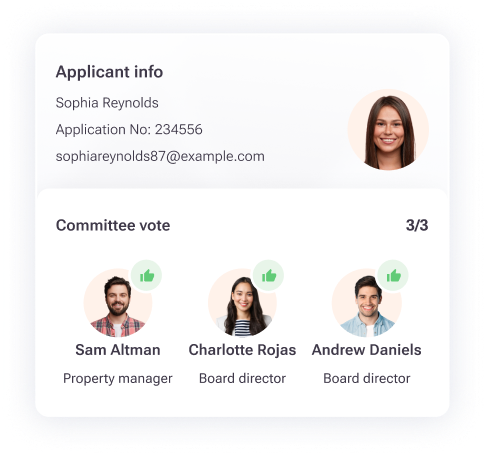
Security measures include end to end encryption, PCI Level 1 compliant payments, and automatic redaction of sensitive data. The QuickApprove dashboard gives board members concise summaries, status tracking, and voting tools so decisions stay organized and transparent.
Real World Impact: Operational Efficiency and Financial Gains
Management companies using Tenant Evaluation report large reductions in manual hours and faster processing for each file. One Florida firm cut approval times in half and redirected dozens of staff hours per day from paperwork to resident services, while also reducing risk tied to handling sensitive data manually.
Explore Tenant Evaluation to see how a Florida focused onboarding platform can support your board.
Beyond Basic Screening: Broader Benefits of Advanced Resident Onboarding
Modern onboarding platforms go beyond background checks, reshaping how communities collect information, communicate with applicants, and document decisions.
Improved Operational Efficiency
Centralized portals, status tracking, and automated reminders reduce back and forth communication. Staff spend less time chasing missing items and more time resolving exceptions or supporting residents.
Stronger Risk Mitigation and Compliance
Digital records document who reviewed each file, when decisions were made, and which rules applied. Secure storage and redaction features help protect privacy while supporting FCRA and Florida specific obligations.
Higher Satisfaction Across Stakeholders
Applicants appreciate clear instructions and faster answers, realtors gain predictable timelines, and boards see organized files that match community rules. These improvements often translate into fewer disputes and smoother move ins.
Choosing the Right Tenant Evaluation Solution for Your Community
Each community has different needs, so the ideal approach depends on scale, staffing, and regulatory complexity.
Small, Self Managed Communities
Smaller associations often need simple tools that do not require IT teams or custom integrations. An all in one onboarding platform with clear workflows can replace spreadsheets and paper packets without adding complexity.
Large Property Management Companies
Enterprises benefit from solutions that support many communities, different rule sets, and detailed reporting. Tenant Evaluation supports configuration by property so each association can enforce its own documents while leadership sees portfolio wide insights.
Communities Prioritizing Florida Regulatory Compliance
Associations in highly regulated cities or buildings with complex documents need detailed rule configuration, consistent decisions, and solid documentation. A Florida centric platform supports these needs more directly than generic property management tools.
Long Term Value of Modern Resident Onboarding Platforms
Resident onboarding technology affects daily operations and also shapes long term cost structures, risk exposure, and revenue reliability.
Implementation and Ongoing Support
Specialized onboarding vendors guide communities through setup, rule mapping, and training. Continuous support, including multilingual assistance, helps managers and boards adapt as rules or leadership change.
Maximizing Return on Investment
Reduced staff hours per file, lower error rates, and more consistent fee collection add up over time. When platforms also share revenue or simplify payment flows, the technology often funds itself through operational savings.
Empowering Your Choice: A Decision Framework for Modern Resident Onboarding
Clear structure helps boards and managers compare options and justify decisions to owners. A simple framework keeps evaluations objective and aligned with your governing documents.
- Define current pain points, including delays, compliance concerns, or board frustrations.
- List Florida specific and document specific rules that any solution must support.
- Estimate staff time spent per application today and target a reduction goal.
- Review how each option handles security, audit trails, and role based access.
- Compare total value, including training, support, and ongoing financial impact.
Frequently Asked Questions (FAQ) about Tenant Evaluation Services
How modern resident onboarding platforms address Florida HOA and condo regulations
Resident onboarding platforms designed for Florida embed community bylaws, screening criteria, and document rules into the application flow. Tenant Evaluation configures credit thresholds, occupancy limits, and document lists by association so each approval follows the correct standards.
Integration of specialized onboarding solutions with existing software
Many onboarding platforms connect to or work alongside existing property management systems. Tenant Evaluation operates as a complete onboarding hub while still allowing managers to keep accounting and maintenance in their current software stack.
How dedicated platforms improve transparency and control for boards
Board dashboards consolidate applications, summaries, and votes in one place. Tenant Evaluation uses QuickApprove to show status, notes, and history so board members can review and decide without searching through emails.
Expected benefits for Florida HOAs that adopt advanced onboarding tools
Florida communities that move to modern onboarding often see shorter approval times, fewer incomplete applications, reduced manual tracking, and stronger documentation. These gains lower operational strain while supporting consistent, defensible decisions.
Security of sensitive applicant data in advanced solutions
Advanced platforms protect data with encryption, access controls, and redaction of personally identifiable information. Tenant Evaluation pairs these safeguards with PCI Level 1 compliant payments so communities can handle applications without storing exposed financial details.
